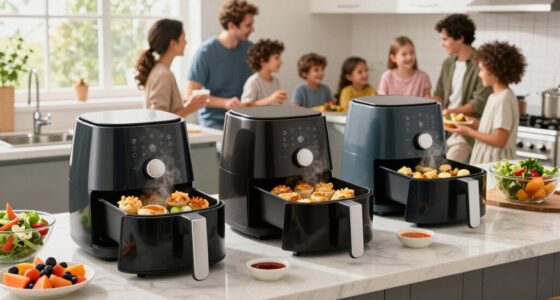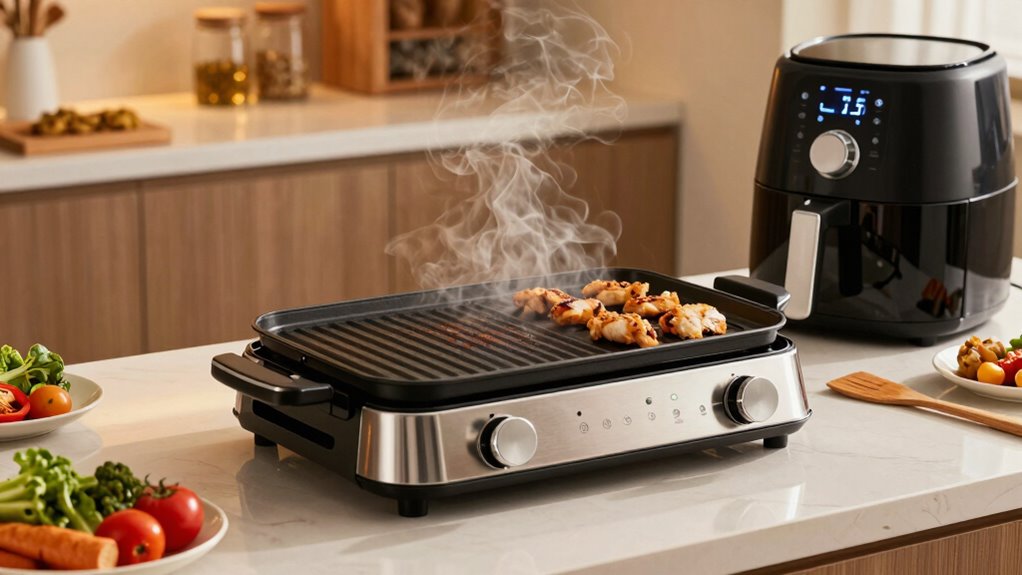
To cut smoke from your indoor grill and air fryer combos without losing flavor, start by choosing appliances with good ventilation features and non-stick surfaces. Keep your cooking temperature moderate, use high smoke point oils, and dry your ingredients to reduce splattering. Regularly clean grease buildup and control airflow with exhaust fans or windows. If smoke persists, proper maintenance and tweaking your techniques can help; explore these tips further for a safer, tastier experience.

Get kitchen gear delivered free with Prime
- Fast, free delivery on millions of items
- Prime Video, Amazon Music and more included
- Member-only deals all year
Key Takeaways
- Choose appliances with effective ventilation, grease traps, and non-stick surfaces to minimize smoke production.
- Use high smoke point oils like avocado or refined coconut oil for cooking.
- Keep cooking temperatures moderate and avoid overly high heat settings.
- Ensure proper airflow by turning on exhaust fans before cooking and opening windows for cross-ventilation.
- Regularly clean appliances, drip pans, and filters to prevent grease buildup that causes smoke.
indoor grill with ventilation system
As an affiliate, we earn on qualifying purchases.
As an affiliate, we earn on qualifying purchases.
Why Does Indoor Grilling and Air Frying Cause So Much Smoke?

Indoor grilling and air frying often produce a lot of smoke because these methods cook food at high temperatures, causing fats and juices to vaporize and burn. When you cook, grease buildup on heating elements or the basket can ignite or create excess smoke, especially if it accumulates over time. The key factor is the smoke point—the temperature at which fats and oils start to break down and produce smoke. If you’re cooking with oils or fats that have a low smoke point, smoke levels increase rapidly. Additionally, burned grease or food debris can also contribute to smoke generation. To reduce smoke, you need to manage grease buildup and choose ingredients that won’t exceed the smoke point easily.
How to Choose Equipment That Minimizes Smoke During Indoor Cooking
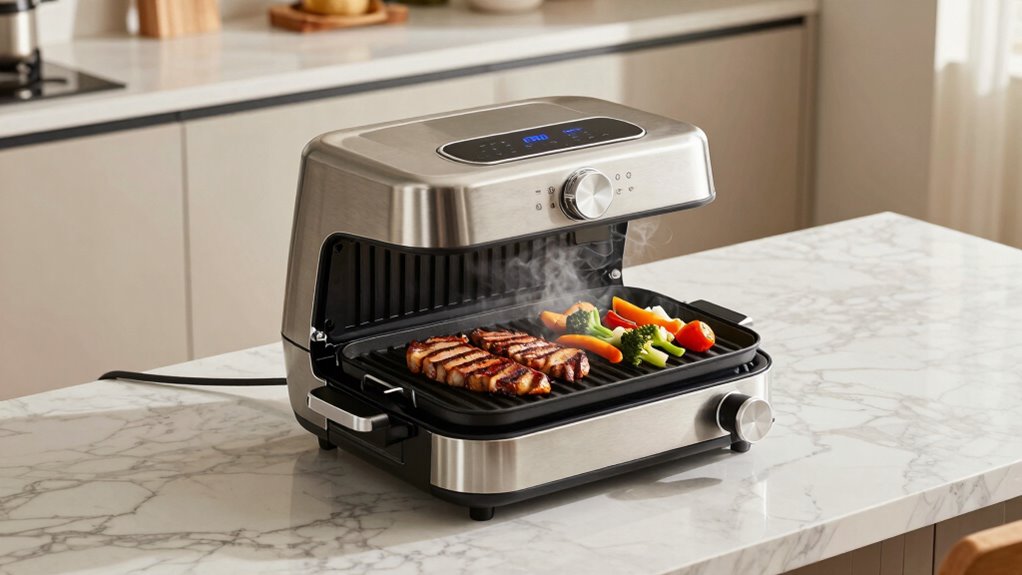
When selecting indoor cooking equipment, focus on features that reduce smoke, like effective ventilation systems and non-smoking cooking options. Consider the material and design, such as non-stick surfaces and vented lids, to keep smoke levels lower. Additionally, choosing appliances with proper safety features can prevent accidental smoke buildup and ensure safe operation. Installing air filtration systems can further help to capture airborne particles and improve indoor air quality, making your cooking experience healthier and more comfortable. Incorporating color accuracy concepts can also help create a more relaxed and natural ambiance in your indoor space.
Ventilation System Effectiveness
Ever wonder how to keep smoke from filling your kitchen while using an indoor grill or air fryer? The key is a ventilation system that effectively manages smoke and odors. Look for an exhaust fan with strong airflow capacity, ideally one designed for cooking appliances. An efficient exhaust fan quickly removes smoke through proper air exchange, replacing contaminated air with fresh air. Make sure the fan is appropriately vented outside, rather than recirculating air indoors, to maximize its effectiveness. Regularly clean and maintain the system to guarantee excellent performance. A well-chosen ventilation setup minimizes smoke buildup, keeps your kitchen smelling fresh, and protects your indoor air quality—so you can enjoy flavorful cooking without the lingering smoke. Proper airflow management is essential for maintaining a healthy cooking environment. Additionally, selecting equipment with appropriate ventilation features can further enhance smoke control and overall kitchen air quality. Ensuring your system has adequate airflow capacity can make a significant difference in smoke reduction and overall kitchen comfort, especially when combined with smart ventilation controls that optimize operation based on cooking activity. Incorporating automatic sensors that detect smoke levels can also help in adjusting ventilation speed automatically for optimal performance.
Non-Smoke Cooking Features
Choosing appliances with non-smoke cooking features can substantially reduce indoor smoke and odors. Look for models that operate at higher smoke points, which means they can cook oils and ingredients without producing excess smoke. Appliances designed with precise temperature controls help you maintain ideal heat levels, preventing overheating that leads to smoke. These features also support better flavor retention, ensuring your food stays tasty without the need for excessive seasoning or added fats. Some units include built-in fans or filters that actively minimize smoke and odors during cooking. Additionally, selecting equipment with energy-efficient technology can further reduce emissions and promote sustainable indoor cooking. Incorporating smart ventilation systems can enhance air quality by automatically adjusting airflow based on cooking activity. Modern appliances also often feature advanced filtration systems that trap airborne particles and odors, contributing to a healthier indoor environment. By selecting equipment with these non-smoke cooking features, you can enjoy flavorful meals indoors without the lingering smell or health concerns associated with smoke. This approach lets you cook confidently while keeping your space fresh and air quality.
Material and Design Choices
Selecting cookware with the right materials and design features plays a crucial role in minimizing smoke during indoor cooking. When evaluating grill construction, focus on models with well-designed airflow systems that direct smoke away from the cooking surface. Opt for materials known for durability, such as stainless steel or ceramic coatings, which resist warping and staining, ensuring consistent performance over time. A sturdy construction reduces vibrations and gaps that can trap smoke and grease, preventing flare-ups. Look for features like grease traps and drip pans, which help contain and manage smoke and odors. Additionally, choosing equipment with proper ventilation and airflow design can significantly improve indoor air quality. Incorporating advanced airflow systems into grill design can further enhance smoke reduction and heat distribution. By choosing equipment with robust build quality and thoughtful design, you enhance airflow and heat distribution, making indoor grilling safer and less smoky without sacrificing flavor. Proper maintenance and cleaning of your equipment also plays a vital role in preventing smoke buildup and ensuring optimal performance.
Easy Prep Tips to Cut Down Smoke Before You Start Cooking

To reduce smoke before you start cooking on your indoor grill and air fryer combo, preparing your equipment properly is essential. First, clean the cooking surfaces thoroughly to remove excess grease and food residue that can cause flare-ups. Next, choose seasoning techniques that avoid oils with low smoke points, which tend to produce more smoke during cooking. Consider lightly drying meats and vegetables to minimize splattering. Using a drip tray or foil can catch drippings that might smoke. Finally, preheat your device without food for a few minutes to burn off any residual oils or debris, reducing smoke when you begin cooking. These simple steps help keep smoke levels down without sacrificing flavor. Additionally, understanding the Air Purifier Maintenance Dos and Don’ts can provide insight into maintaining your kitchen environment and ensuring optimal air quality during cooking. Proper ventilation and air quality management are also crucial steps to minimize smoke and odors during indoor cooking sessions. Engaging in kitchen ventilation best practices can further enhance your efforts to keep your indoor air fresh and safe. Incorporating proper air filtration can further lower airborne particles and smoke, making your indoor cooking experience more pleasant.
Cooking Techniques to Reduce Smoke Without Losing Flavor
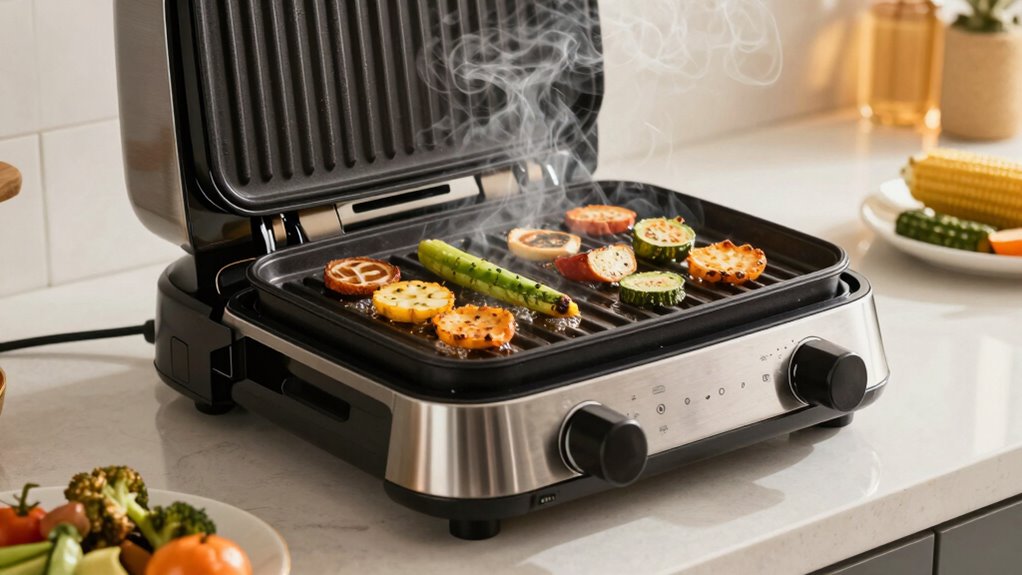
To minimize smoke while keeping your food flavorful, focus on proper ventilation strategies and choose the right cooking temperatures. Using ideal temperatures prevents excess splattering and smoke, while good airflow helps vent fumes quickly. Selecting low-smoke ingredients also makes a big difference in keeping your indoor cooking experience enjoyable. Additionally, understanding the types of foraged foods that produce less smoke during cooking can further enhance your culinary results. Employing proper cookware designed for indoor use can also significantly reduce smoke production by containing splatters and improving heat distribution. Incorporating cooking techniques that emphasize gentle heat can further decrease smoke generation while maintaining optimal flavor, and being mindful of cooking surface selection can help control smoke output even more effectively. Incorporating ventilation methods such as range hoods or air purifiers can further help reduce indoor smoke levels during cooking.
Proper Ventilation Strategies
Effective ventilation is essential when using an indoor grill and air fryer combo, especially since these appliances can produce smoke and strong odors. Proper air circulation helps dissipate smoke quickly, preventing buildup and lingering smells. To improve ventilation, turn on your exhaust fan before cooking, and keep it running throughout. Position the fan near the cooking area to maximize airflow. Open windows or doors to create cross-ventilation, allowing fresh air to enter and smoky air to escape. Use a portable fan if needed to boost air circulation. Regularly clean your range hood filters to maintain efficiency. These strategies work together to reduce smoke without sacrificing flavor, ensuring a healthier, more comfortable cooking environment. Additionally, choosing appliances with built-in ventilation systems can further enhance indoor air quality and reduce smoke buildup during cooking.
Optimal Cooking Temperatures
Maintaining the right cooking temperature is key to reducing smoke when using an indoor grill and air fryer combo. Proper temperature control guarantees you don’t push fats and oils beyond their smoke point, which produces smoke and can affect flavor. Start by setting your appliance to a moderate heat, especially for fatty cuts or marinated foods. Using too high a temperature causes oils to burn quickly, releasing smoke and potentially damaging your appliance. Pay attention to the appliance’s temperature settings and adjust as needed to keep it within safe limits. By managing temperature carefully, you can prevent excess smoke while ensuring your food cooks properly and retains its flavor. Remember, lower, steady heat often produces the best results for indoor cooking without sacrificing taste.
Choosing Low-Smoke Ingredients
Choosing the right ingredients can substantially reduce smoke while cooking with an indoor grill and air fryer combo. Your goal is to focus on ingredient selection, prioritizing those with higher smoke points to minimize smoking. Foods with low smoke points tend to release smoke quickly, so choosing lean proteins or vegetables over fatty cuts or oily items helps.
Consider these tips:
- Opt for oils with high smoke points, like avocado or refined coconut oil
- Use lean meats such as chicken breasts or fish instead of fattier cuts
- Select fresh, dry ingredients to prevent excess moisture that creates smoke
- Avoid marinades high in sugar or sugary sauces
- Incorporate vegetables with naturally high smoke points, like bell peppers and zucchini
This approach keeps flavor intact while reducing smoke production.
Ventilation Tips for a Smoke-Free Kitchen Environment

To keep your kitchen smoke-free while using an indoor grill or air fryer combo, proper ventilation is vital. Good airflow improves indoor air quality and enhances kitchen safety. Use exhaust fans or range hoods that vent outside to remove smoke efficiently. Open windows and doors whenever possible to promote cross-ventilation. Consider placing a portable air purifier nearby to filter airborne particles.
| Ventilation Method | Benefits | Tips |
|---|---|---|
| Range Hood | Removes smoke at source | Ensure it vents outside |
| Open Windows | Natural airflow | Use during cooking |
| Air Purifier | Filters airborne particles | Choose HEPA filters |
| Ceiling Fan | Circulates air | Use alongside other methods |
Troubleshooting Persistent Smoke Problems and When to Repair

Even with proper ventilation in place, persistent smoke during indoor grilling or air frying can indicate underlying issues that need attention. Grease buildup inside the appliance often causes smoke to linger, so regular cleaning is vital. If smoke alarms go off frequently, it’s a sign that your unit may need repairs or deep cleaning. You should also check for damaged heating elements or broken fans, which can cause excessive smoke. Additionally, improper use of high-fat foods can contribute to smoke production. Finally, verify the drip tray is correctly positioned and emptied regularly to prevent grease overflow. Monitoring these factors can help you identify when it’s time to repair or replace parts, keeping your cooking safe and smoke-free.
Cleaning and Maintenance Hacks for Smarter, Safer Indoor Grilling

Regular cleaning is essential to keep your indoor grill and air fryer functioning safely and efficiently. Establishing simple cleaning routines after each use prevents grease buildup, which can cause smoke and fire hazards. Follow your appliance’s maintenance schedules to guarantee all components, like filters and drip trays, stay in top condition. Use non-abrasive cleaners and avoid harsh chemicals that might damage surfaces. Regularly wipe down heating elements and interior surfaces to prevent residue accumulation. Check seals and vents periodically to ensure proper airflow and prevent overheating. Keeping your appliances clean not only extends their lifespan but also improves flavor and reduces smoke. Incorporate these maintenance hacks into your routine to enjoy safer, smarter indoor grilling with ideal flavor and minimal smoke.
Frequently Asked Questions
Are There Specific Brands Known for Low-Smoke Indoor Grill and Air Fryer Combos?
You’ll find brands like Ninja and Cosori highly regarded for their low-smoke indoor grill and air fryer combos. Their brand reputation is solid, backed by positive customer reviews praising minimal smoke output and excellent flavor retention. These brands prioritize smoke management technology, making them ideal choices if you want a flavorful experience without excess smoke. Be sure to verify specific models, as features can vary, to ensure you get the best low-smoke performance.
Can Using Alternative Cooking Oils Reduce Smoke Production Significantly?
Using alternative oils can markedly reduce smoke production in your indoor grill and air fryer combos. Opt for oils with higher smoke points, like avocado or grapeseed oil, instead of lower smoke point options like olive or flaxseed oil. This switch promotes smoke reduction without sacrificing flavor. Always preheat your device and avoid overusing oils to maintain a low-smoke environment while enjoying delicious, flavorful meals.
What Are the Best Times of Day to Cook With Minimal Smoke Impact?
You should cook during times when your indoor environment is well-ventilated, like mornings or early evenings, to maximize smoke minimization. Timing strategies such as avoiding peak cooking hours can help reduce smoke impact. Additionally, using fans or opening windows during and after cooking can improve air circulation. These steps allow you to enjoy flavorful meals while keeping smoke levels low, making your indoor cooking experience more comfortable and safe.
Do Certain Food Types Inherently Produce More Smoke When Cooked Indoors?
Fatty foods and high-temperature cooking naturally produce more smoke when cooked indoors. When you grill or air fry these items, the excess fats tend to drip and vaporize, creating smoke. To diminish this, lower your cooking temperature slightly, trim excess fat beforehand, and ensure good ventilation. You can also use a drip tray to catch fats and minimize smoke, helping you enjoy flavorful meals without overwhelming smoke.
How Does Ambient Humidity Affect Smoke Levels During Indoor Grilling and Air Frying?
Higher ambient humidity helps reduce smoke during indoor grilling and air frying by improving humidity control, which keeps smoke particles from dispersing and lingering in the air. When humidity is low, smoke tends to disperse quickly, making it more noticeable. To minimize smoke, maintain ideal humidity levels, use proper ventilation, and keep your cooking area well-ventilated to facilitate better smoke dispersion and keep your space smelling fresh.
Conclusion
Remember, a little effort goes a long way in keeping your indoor grill and air fryer smoke-free. Choose the right equipment, prep properly, and practice smart cooking techniques to enjoy flavorful meals without the smoke. Good ventilation and regular maintenance are key, too. As the saying goes, “An ounce of prevention is worth a pound of cure”—so stay proactive and enjoy delicious, smoke-free cooking every time.
Fall Picks
fall essentials
As an affiliate, we earn on qualifying purchases.