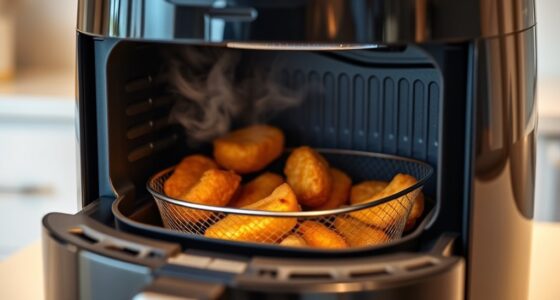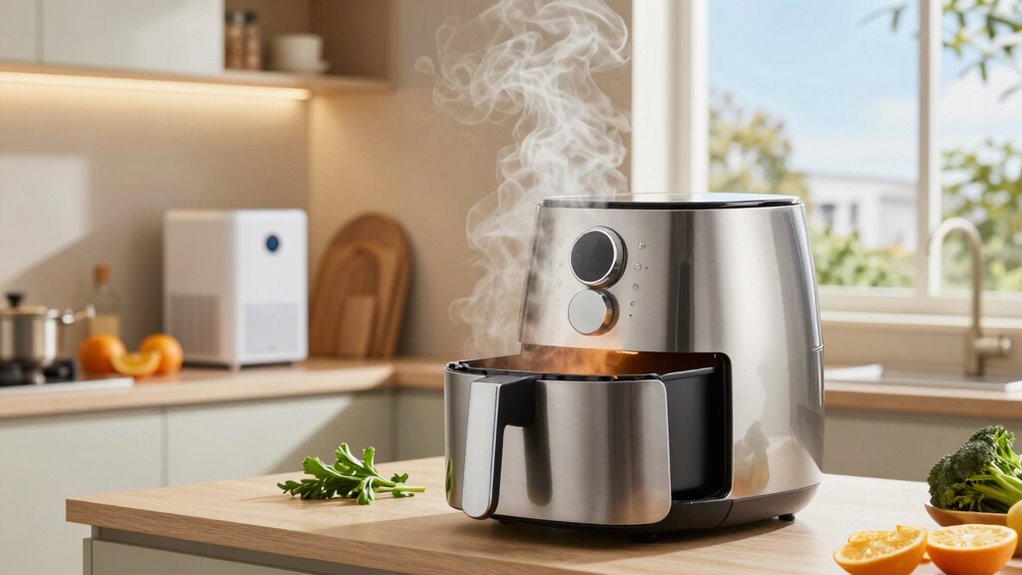
To improve indoor air quality while air frying, make certain good ventilation by opening windows and using exhaust fans during and after cooking. Clean your air fryer regularly to prevent odor buildup and consider placing a bowl of vinegar or lemon juice nearby to absorb smells. You can also use air purifiers with activated carbon and HEPA filters for extra odor control. Maintaining these habits and exploring more tips will help keep your kitchen fresh and safe.
Key Takeaways
- Keep the air fryer partially open during cooking to allow odors and aerosols to escape effectively.
- Use proper ventilation, such as exhaust fans and opening windows, to disperse airborne particles and smells.
- Regularly clean the air fryer, including the basket, interior, and heating element, to prevent odor buildup and aerosol production.
- Place air purifiers with activated carbon and HEPA filters nearby to absorb odors and remove airborne contaminants.
- Avoid overfilling the air fryer and cook at appropriate temperatures to minimize smoke, aerosols, and strong odors.
How to Reduce Odors and Aerosols When Air Frying
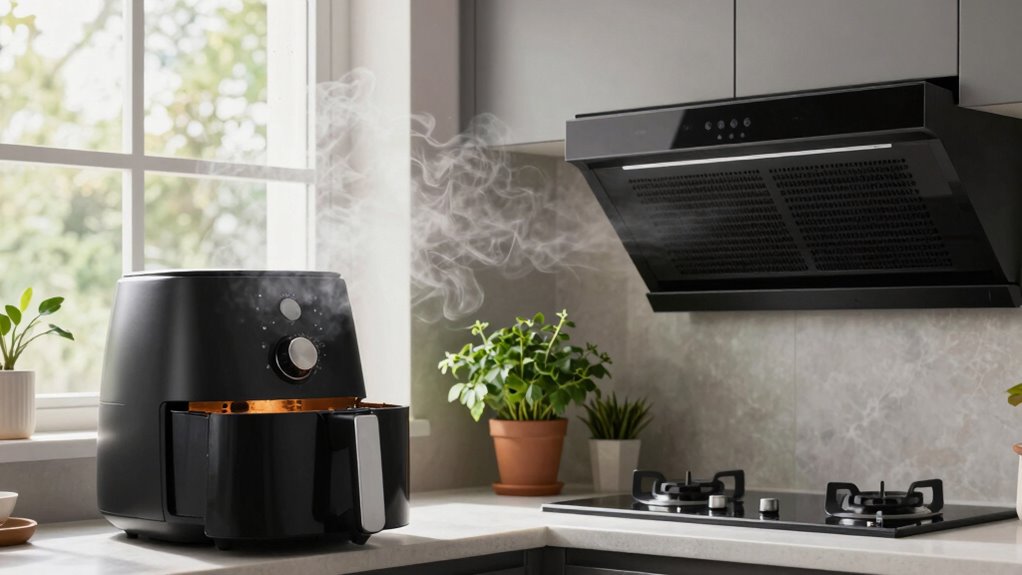
To minimize odors and aerosols when air frying, it’s important to take proactive steps before cooking begins. Start by choosing foods with less strong smells and avoid overly greasy ingredients that produce more aerosols. Using a light coating of oil can help reduce splatters and airborne particles. Keep the air fryer lid or basket partially open during cooking to allow some odors to escape, aiding odor control and aerosol reduction. Placing a small bowl of vinegar or lemon juice nearby can also help absorb odors in the kitchen. Regularly cleaning your air fryer prevents buildup that can intensify smells and aerosols over time. Additionally, understanding the air filtration capabilities of your kitchen setup can further improve indoor air quality by removing airborne contaminants during air frying. Proper ventilation strategies such as using exhaust fans or opening windows enhance this effect. Being aware of airborne particles and how they behave can help you implement more effective odor and aerosol control measures. Incorporating air circulation techniques, such as using oscillating fans, can additionally disperse airborne contaminants more effectively. Using airflow management techniques, like adjusting the position of fans or vents, can further improve air quality and reduce lingering odors. These simple measures help keep your indoor air quality better by actively managing odors and reducing airborne particles during air frying.
Ventilation Tips for a Fresher Kitchen During Air Frying
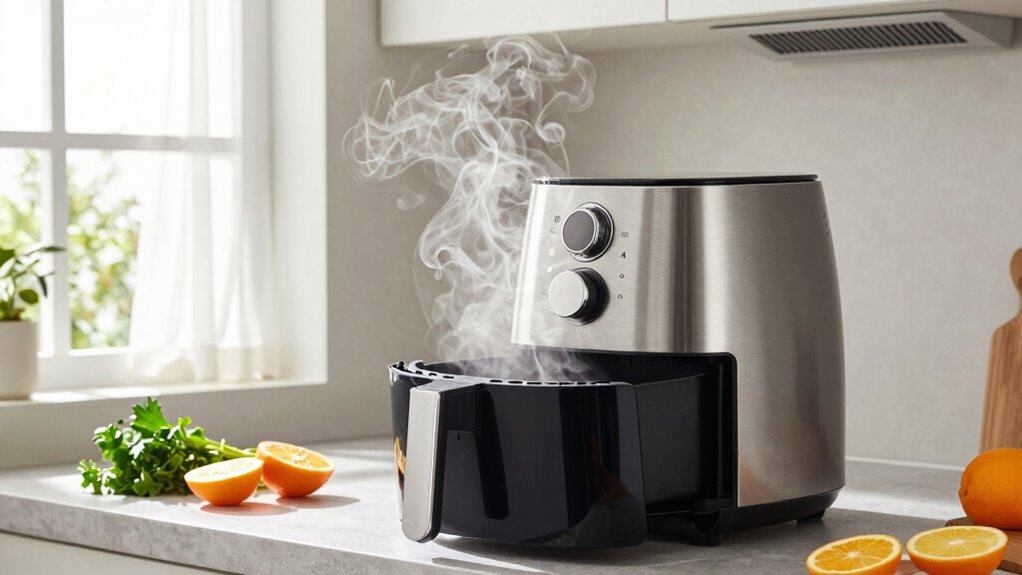
To keep your kitchen smelling fresh during air frying, make sure to open windows to let out odors and bring in fresh air. Turn on exhaust fans to quickly remove airborne particles and humidity. Using both strategies together can considerably improve your indoor air quality while cooking. Additionally, utilizing proper ventilation devices designed for kitchen environments can further enhance air circulation and odor control. Incorporating air quality monitoring devices can help you track and maintain optimal indoor conditions during cooking sessions, especially when combined with smart home automation systems that can automatically adjust ventilation based on air quality levels. Implementing ventilation effectiveness techniques can ensure that odors and aerosols are minimized more efficiently. Employing airflow optimization methods can further improve the efficiency of your ventilation system.
Proper Window Usage
When air frying, opening your windows is one of the simplest and most effective ways to improve indoor air quality. Proper window usage enhances natural ventilation, helping aerosols and smells escape quickly. To maximize this, consider these tips:
- Choose windows with good cross-ventilation to create a steady airflow.
- Open windows on opposite sides of your kitchen for better air exchange.
- Adjust window placement based on wind direction to boost airflow.
- Keep windows open during and after cooking to clear lingering odors.
- Being aware of indoor air quality can help you make informed decisions about ventilation practices.
Use Exhaust Fans
Using exhaust fans during air frying is one of the most effective ways to keep your kitchen air fresh. Turn on your exhaust fan before you start cooking to maximize air circulation and quickly remove aerosols and odors. Keep the fan running throughout the cooking process and for a few minutes afterward to ensure all airborne particles are vented outside. Proper air circulation helps prevent the buildup of smells and reduces indoor air pollution. Make certain your exhaust fan is clean and functioning properly for peak performance. If your kitchen has multiple fans or vents, use them together to improve airflow. This simple step greatly improves indoor air quality, making your kitchen a healthier, more comfortable space during and after air frying. Additionally, ensuring good ventilation can help minimize indoor air pollution caused by cooking aerosols and smells. Regularly inspecting and maintaining your ventilation system ensures optimal operation and further enhances air quality. Incorporating additional air purification devices like air purifiers can further reduce airborne contaminants and odors. Proper maintenance of these systems is essential to sustain their effectiveness over time.
Choosing an Air Fryer With Built-In Air Filtration
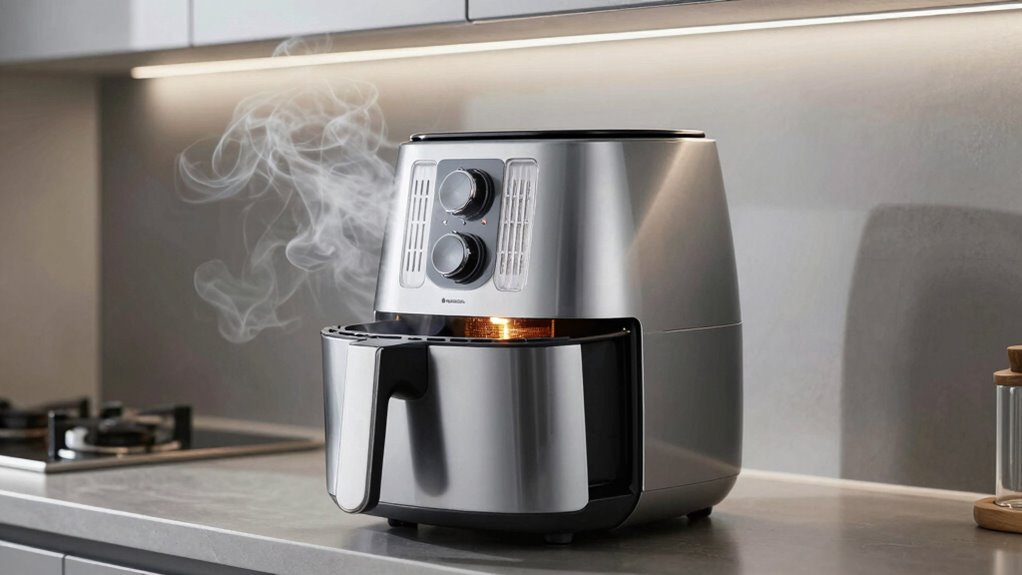
Ever wondered how to enjoy crispy, delicious fried foods without compromising your indoor air quality? Choosing an air fryer with built-in air filtration can help. These models often feature advanced air fryer filters that trap grease, aerosols, and odors at the source. Look for options with strong odor absorption capabilities to keep your kitchen smelling fresh. When selecting, consider these key points:
- Check for effective air fryer filters designed for aerosol and odor reduction
- Ensure the filtration system is easy to clean or replace
- Opt for models with quiet operation during filtration cycles
- Verify that the air fryer’s filtration covers all cooking fumes efficiently
- Choose models with trustworthy filtration systems that effectively reduce airborne particles and maintain healthier indoor air while you cook. Additionally, selecting models equipped with advanced air filtration can further enhance the removal of airborne contaminants, ensuring cleaner indoor air during air frying sessions.
Using Air Purifiers and Carbon Filters to Eliminate Smells
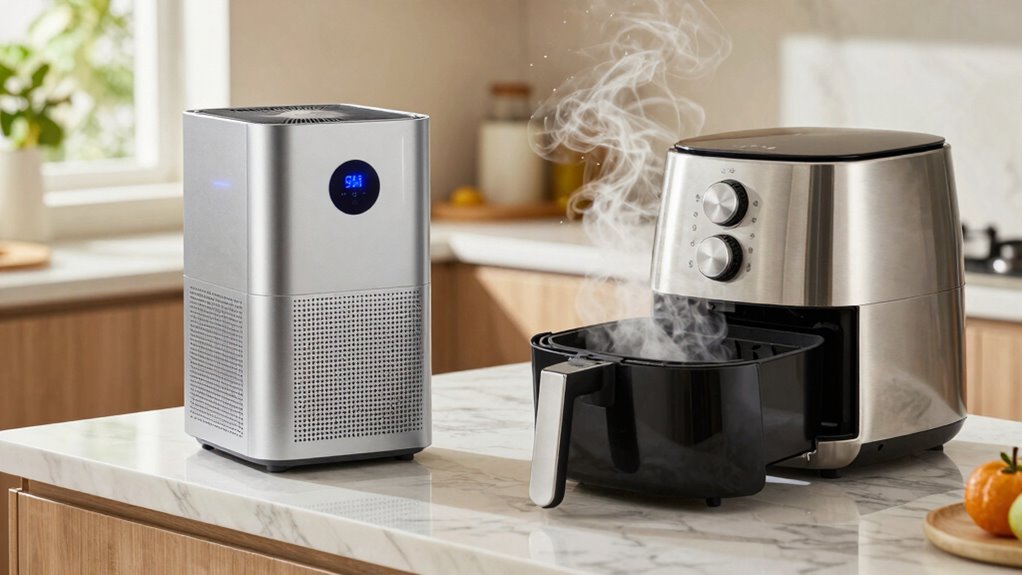
Air purifiers equipped with activated carbon filters are highly effective tools for removing lingering cooking odors from your indoor environment. To maximize their efficiency, consider proper air purifier placement—ideally near the source of the smell but not obstructed. Regular carbon filter maintenance is essential; replace filters according to the manufacturer’s instructions to ensure peak odor absorption. The table below highlights key points:
| Placement Tip | Maintenance Frequency | Effectiveness Boost |
|---|---|---|
| Near the air fryer | Every 3-6 months | Removes odors faster |
| Away from vents | As needed | Prevents odor spread |
| Elevated position | Regular checks | Improves air circulation |
Additionally, understanding the importance of air quality management can help you create a healthier indoor environment. Incorporating electric dirt bikes as a means of sustainable transportation can reduce outdoor pollution, indirectly contributing to better indoor air quality. Regularly ventilating your space by opening windows or using exhaust fans is also crucial for dispersing aerosols and odors effectively.
Cleaning Your Air Fryer to Keep Odors at Bay
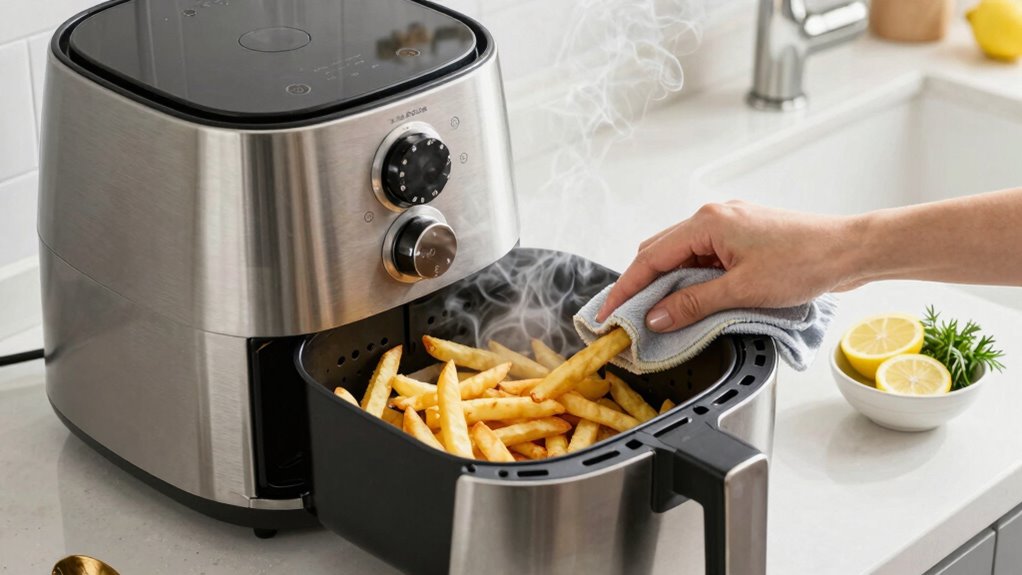
To keep odors from lingering, you should clean your air fryer regularly with a deep cleaning. Using baking soda during the process helps absorb stubborn smells and freshen the unit. Staying consistent with these steps guarantees your cooking environment stays pleasant and odor-free. Incorporating effective storytelling techniques when sharing your cooking tips can also enhance your kitchen’s ambiance and connection with your audience. Additionally, maintaining good ventilation practices can significantly reduce aerosol buildup and prevent lingering odors during air frying. Regular cleaning, proper airflow, and choosing the right garbage disposal can help eliminate sources of indoor smells, making your kitchen a more inviting space. Proper maintenance and airflow are especially important for AI Ethicist Jobs, as ethical considerations extend to managing smart appliances and ensuring they do not contribute to indoor air quality issues. Using air purifiers with HEPA filters can further improve indoor air quality and remove residual odors effectively.
Regular Deep Cleaning
Have you noticed lingering odors after using your air fryer? Regular deep cleaning is essential for proper air fryer maintenance and keeping your kitchen smelling fresh. It prevents buildup that traps smells and reduces aerosol particles. To keep odors at bay, consider these steps:
- Disassemble removable parts and soak them in warm, soapy water.
- Wipe down the interior with a damp cloth, removing grease and food debris.
- Clean the heating element gently to prevent smoke and odor.
- Check and clean the air intake and exhaust vents to improve airflow.
- Regular cleaning helps maintain air quality and prolongs the lifespan of your appliance.
Incorporate these tasks into your kitchen cleaning routines weekly. Regular deep cleaning guarantees your air fryer functions efficiently, minimizes odors, and contributes to better indoor air quality. Keep your appliance in top shape with consistent maintenance.
Use of Baking Soda
After thoroughly cleaning your air fryer, using baking soda can help keep odors at bay. Baking soda applications are simple and effective for odor neutralization techniques. To use, sprinkle a generous amount of baking soda inside the air fryer basket and leave it overnight. The next day, wipe it clean with a damp cloth. This method absorbs residual smells and prevents future odor buildup. You can also create a paste with baking soda and water to scrub stubborn spots. Regularly applying baking soda after cleaning helps maintain fresh air quality and reduces lingering smells from fried foods. Incorporating baking soda into your cleaning routine is an inexpensive, natural way to enhance your indoor air environment and keep odors from affecting your home’s air quality.
Additional Tips to Keep Indoor Air Fresh While Air Frying
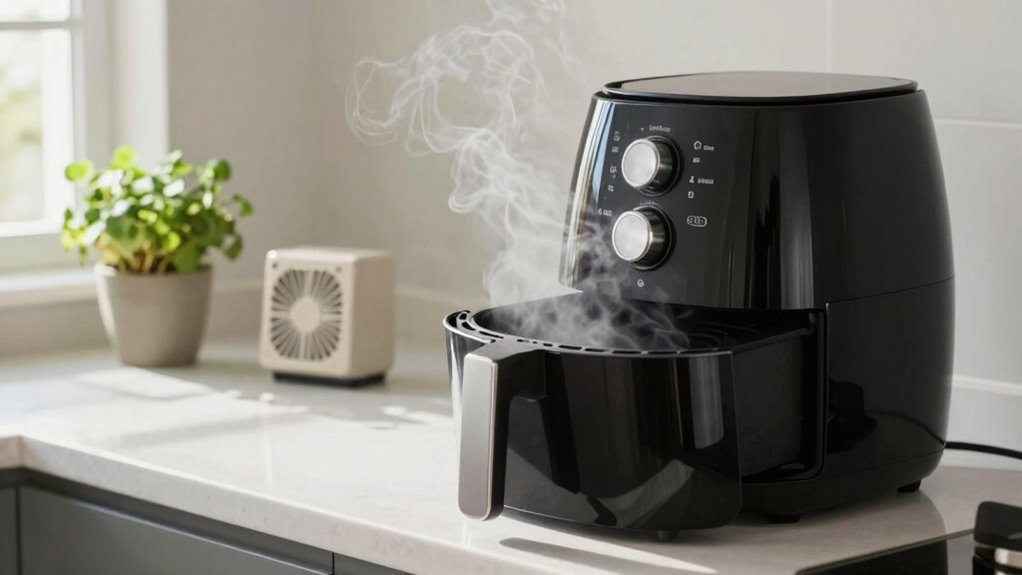
While air frying offers a healthier way to cook, it can also produce strong odors and airborne particles that affect indoor air quality. To keep your air smelling fresh, consider these tips:
- Always monitor air fryer safety by avoiding overfilling the basket, which can increase smoke and odors.
- Use the correct cooking temperature; lower temperatures reduce smoke and aerosol release.
- Ventilate your kitchen well by opening windows or running an exhaust fan during and after cooking.
- Clean your air fryer regularly to prevent lingering smells and build-up that can affect air quality.
Frequently Asked Questions
Can Air Frying Impact Indoor Humidity Levels?
Air frying can impact indoor humidity levels by increasing moisture in your kitchen. As you cook, moisture from the food escapes, raising humidity and affecting humidity control. To manage this moisture impact, use a vent fan or open a window to vent excess humidity. This helps prevent dampness, mold growth, and maintains a comfortable indoor environment while enjoying your air frying.
Are There Specific Ingredients That Produce More Aerosols?
Certain ingredients, like oily or heavily processed foods, produce more aerosols and smells when air frying. If you’re ingredient sensitive or want to improve aerosol reduction, opt for lean proteins, vegetables, or marinated items with less oil. Avoid ingredients that tend to splatter or release strong odors. Using a lid or vent can also help minimize aerosol spread, making your air frying experience cleaner and more comfortable.
How Often Should I Replace Air Filters for Optimal Air Quality?
You should replace your air filter based on its lifespan and your home’s air quality needs, typically every 90 days. Check your filter monthly; if it looks dirty or clogged sooner, replace it earlier. A proper replacement schedule guarantees ideal air quality, reduces aerosols and smells, and keeps your HVAC system running efficiently. Regularly changing filters helps maintain fresh indoor air and prevents buildup of airborne particles.
Do Different Types of Air Fryers Emit Varying Levels of Odors?
Sure, some air fryers seem like they’re auditioning for a perfume commercial, while others smell like last week’s leftovers. The difference? The air fryer material and its odor absorption capabilities. Stainless steel models tend to emit fewer odors and absorb less smell, whereas cheaper plastics might release and trap smells longer. So, if you hate lingering odors, pick a high-quality, odor-absorbing air fryer material—your nose will thank you.
What Safety Precautions Should I Take With Ventilation Systems?
Make sure you regularly maintain your ventilation system to keep it functioning properly. Always follow safe exhaust practices, like using a range hood that vents outdoors and ensuring filters are clean. Keep vents unobstructed and check for any leaks or blockages. Properly operating your ventilation system reduces aerosol buildup and odors, improving indoor air quality and safety while air frying. Prioritize maintenance and safe exhaust practices for a healthier kitchen environment.
Conclusion
By following these tips, you can enjoy healthier, fresher indoor air while air frying. Did you know that indoor air can be up to five times more polluted than outdoor air? Using proper ventilation and air filtration methods helps reduce aerosols and odors effectively. Keep your kitchen well-ventilated, clean your air fryer regularly, and consider an air purifier—small changes that make a big difference for a cleaner, more comfortable home.