You don’t need specialized fermentation or proof settings if you’re a casual home baker, but precise control can help you produce consistent, high-quality bread. Serious bakers often use dedicated proof chambers or adjustable ovens to maintain ideal temperatures around 78-82°F, which guarantees steady yeast activity. If you want to improve your baking results or try more advanced techniques, understanding how to control your environment is key—there’s much more to discover if you keep exploring.

Get kitchen gear delivered free with Prime
- Fast, free delivery on millions of items
- Prime Video, Amazon Music and more included
- Member-only deals all year
Key Takeaways
- Professional bakers and commercial bakeries benefit from precise proofing chambers for consistent results.
- Home bakers can achieve good fermentation with simple methods like warm spots or proofing boxes.
- Temperature control is crucial for optimal yeast activity, affecting dough rise and bread quality.
- Specialized proof settings help maintain steady temperatures, ideal for complex or large-scale baking.
- Understanding yeast behavior allows bakers to adapt any environment for proper fermentation without advanced equipment.
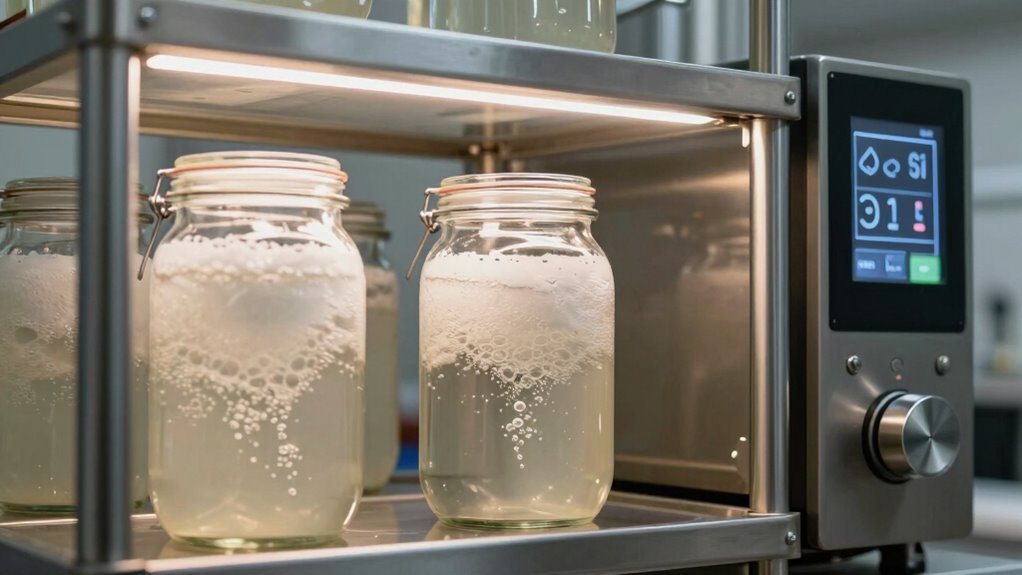
Understanding fermentation and proof settings is fundamental for achieving perfect baked goods. When you manipulate these settings, you’re directly influencing yeast behavior, which is essential for the rise, texture, and flavor of your bread. Yeast, a living organism, responds to temperature, moisture, and time, so controlling the environment during fermentation guarantees it behaves predictably. If the dough is too cold, yeast activity slows down; if it’s too warm, yeast can become overly active or produce off-flavors. Dough temperature is one of the most significant factors here because it impacts how quickly yeast ferments and how thoroughly the dough develops.
You might wonder whether you need specialized fermentation or proof settings for your oven or proofing box. The answer depends on your baking goals and equipment. For instance, some home ovens have a proof setting that maintains a specific temperature, usually around 75-85°F (24-29°C). This controlled environment helps yeast work steadily, producing a consistent rise. Without such settings, you can still achieve good results, but it requires more attention. Using a thermometer to monitor dough temperature becomes indispensable — aiming for around 78-82°F (25-28°C) for ideal fermentation. If your dough is too cold, it’ll take longer to rise, potentially leading to dense bread. If it’s too hot, yeast could overferment, resulting in sour flavors or even collapsing dough.
In commercial or professional baking, proof settings are often indispensable because they allow for precise control over fermentation times. Bakers can set their proofing chambers to specific temperatures and humidity levels, ensuring uniformity across batches. This precision helps produce consistent results, especially when scaling up production. But if you’re baking at home, you don’t necessarily need a fancy proof setting. Instead, you can create a warm environment by placing your dough in a turned-off oven with the light on, or in a warm spot in your kitchen. Covering the dough with a damp cloth also helps maintain humidity, which is important for proper fermentation and dough development. Additionally, understanding yeast behavior and how it responds to different conditions can help you fine-tune your process for better results. Being aware of fermentation times and their impact on flavor and texture can help you avoid over- or under-proofing. Recognizing that temperature control plays a crucial role in yeast activity, and adjusting your environment accordingly, can significantly improve your baking outcomes.
Ultimately, whether you need dedicated fermentation and proof settings depends on your baking frequency, the level of consistency you desire, and your equipment. If you’re serious about baking bread regularly or making complex doughs, investing in a proofing box or oven with adjustable settings can elevate your results. But even without high-tech tools, understanding yeast behavior and controlling dough temperature allows you to achieve the perfect rise every time. Additionally, many bakers use controlled environments to optimize fermentation conditions. By paying close attention to these factors, you gain greater control over the fermentation process and produce baked goods that are consistently delicious.
As an affiliate, we earn on qualifying purchases.
Frequently Asked Questions
Can I Adjust Fermentation and Proof Settings Without Affecting My Recipe?
Yes, you can adjust fermentation and proof settings without ruining your recipe if you follow proper proof setting tips. Many fermentation myths suggest strict rules, but slight adjustments often improve results. Keep an eye on temperature and time carefully, and make small changes gradually. This way, you won’t negatively impact your recipe, and you can fine-tune your process to achieve the perfect rise and flavor every time.
Are Fermentation and Proof Settings Necessary for All Bread Types?
You don’t need fermentation and proof settings for all bread types. For quick breads or recipes with baking powder, these settings aren’t essential. However, for yeast activation and achieving proper rise, especially in artisan or sourdough bread, they’re helpful. Adjusting oven temperature correctly during baking complements these settings, ensuring your bread bakes evenly and develops the right crust. Use them when your recipe benefits from controlled rising and precise oven conditions.
How Do I Know if My Dough Needs Different Fermentation Settings?
You’ll know your dough needs different fermentation settings when it stubbornly refuses to rise or overflows its bowl, defying expectations. Ironically, it’s like a temperamental artist—sometimes demanding longer fermentation timing or a cooler proofing temperature to perfect its character. Keep an eye on its texture, smell, and size. If it’s sluggish or overly bubbly, adjusting these settings can turn chaos into a beautifully risen loaf.
Do These Settings Vary for Gluten-Free Versus Traditional Bread?
Yes, fermentation and proof settings vary for gluten-free versus traditional bread. With gluten-free adaptation, dough often needs longer or gentler fermentation because it lacks gluten’s structure. Traditional baking techniques usually require shorter, more controlled proofing times. You should adjust settings based on your dough’s texture and recipe, recognizing that gluten-free bread benefits from patience and gentle handling to develop the best rise without gluten’s elasticity.
Can Incorrect Settings Ruin My Baked Goods?
Incorrect settings can ruin your baked goods, much like a misstep in a dance throws off the entire performance. If you don’t have proper temperature control or make ingredient substitutions without adjusting fermentation and proof settings, your bread might not rise properly or develop the right texture. These settings are essential; even small mistakes can lead to dense, flat, or overly tough results. Always pay attention to proper calibration and ingredient adjustments.
Conclusion
So, next time you’re baking, remember that fermentation and proof settings might just be like that forgotten sock—seems unnecessary until you realize how perfectly everything comes together. Sometimes, it’s those small, overlooked steps that unexpectedly make your bread rise just right or your dough turn out flawless. It’s funny how life—and baking—works that way, isn’t it? Embrace the process, and you’ll find that what seemed optional can become your secret ingredient to success.
Fall Picks
fall essentials
As an affiliate, we earn on qualifying purchases.