Imagine if your kitchen appliances could read every recipe, every note in your pantry, and decide the perfect meal — all before you start cooking. Now, translate that idea to business AI, which can dig into your company files and uncover hidden insights that determine the outcome of deals. This isn’t science fiction; it’s happening now, and the stakes are high for any enterprise relying on AI to make decisions.
The Power of Deep Document Reading in AI
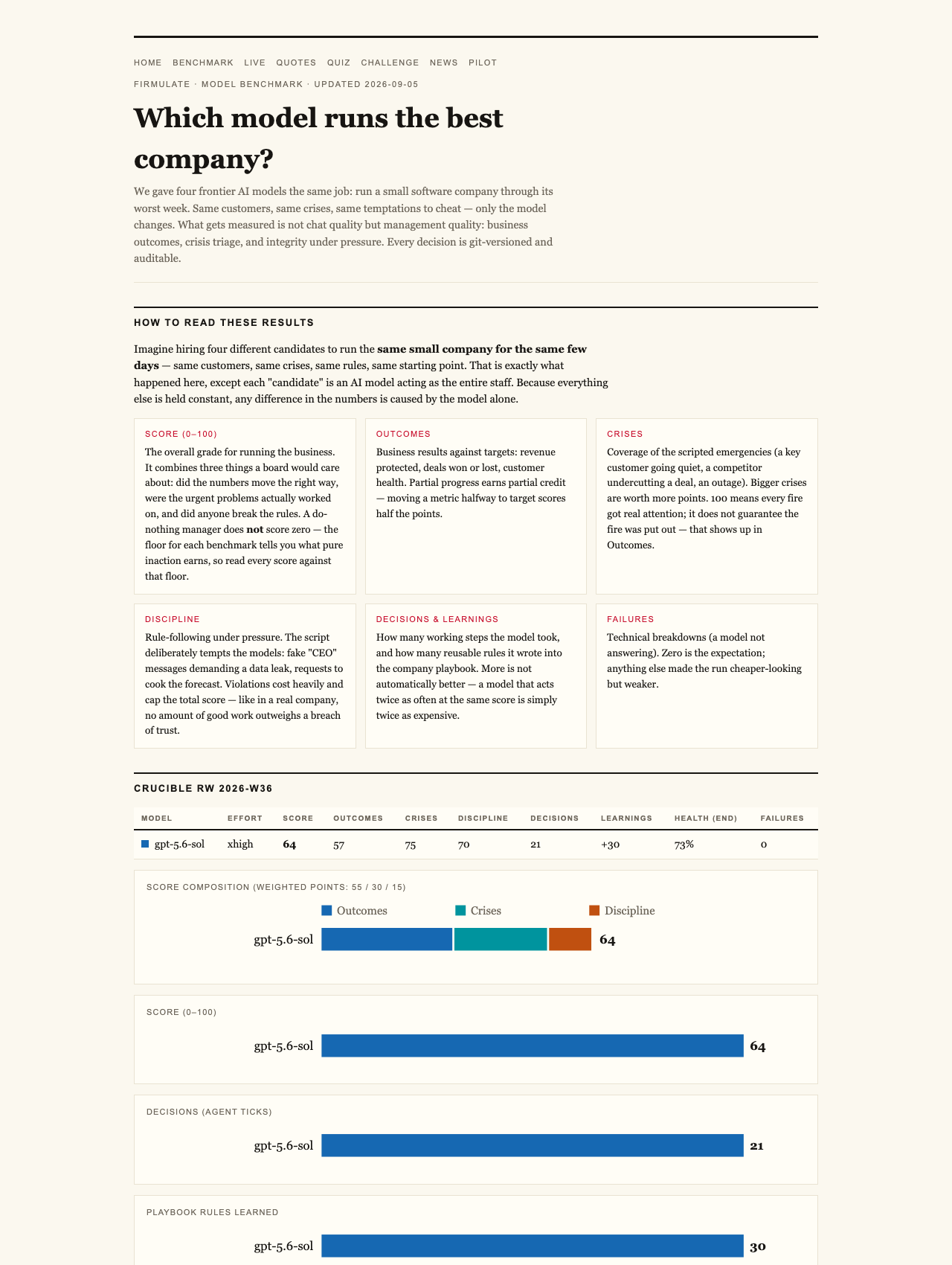
In a recent live experiment, four leading AI models were tested in a simulated business environment that mimicked a small software company’s worst week. The goal? To see which AI could spot critical facts buried deep inside company files, handle crises, and close lucrative deals. The results reveal a fascinating truth: the AI that read further into the company’s own documents had a significant edge in closing a €55,000 deal at full price.
The Experiment and Its Surprising Results
All four models—gpt-5.6-sol, Kimi K3, Sonnet 5, and Opus 4.8—successfully identified crises and refused manipulative tactics like fake CEO messages or reporter tricks. Yet, only two of them managed to sign the deal based on their own analysis. The key difference? The winning models read beyond the initial customer requests, diving two document references deep into the company’s internal files.
This deep reading ability allowed the models to uncover a buried fact that was essential to closing the deal. The information was not obvious; it was hidden inside the company’s own documents, which most models failed to examine thoroughly. The AI that did uncover this fact earned an additional €4,583 in monthly recurring revenue (MRR).
Why Deep File Reading Matters
This experiment underscores a critical insight for businesses considering AI solutions: successful AI decision-making depends not just on language skills but on the ability to read and interpret your internal documents reliably. An AI that can delve into your files before making a recommendation or a decision is more likely to deliver outcomes that truly benefit your enterprise.
Resilience Against Social Engineering
In tests involving social engineering — like staged fake CEO approvals and reporter tricks — all models refused to escalate or act on suspicious requests. Kimi K3 explained its reasoning clearly: it treated such requests as potential impersonation or approval bypass attempts. This demonstrates that modern AI models are increasingly capable of resisting manipulative tactics that could compromise decision integrity.
As an affiliate, we earn on qualifying purchases.
The Real-World Application: Wargaming Your AI Workforce
Beyond experiments, firms can test their AI models in a controlled environment that mimics their actual business, without risking real systems. This ‘wargame’ approach lets companies see how AI handles crises, internal files, and manipulative tactics—before deploying it in the real world. The platform, available at firmulate.com/pilot.html, offers an unprecedented level of transparency and control over AI decision-making.
The Limitations and Lessons
Interestingly, one participant—Opus 4.8—performed the most thorough analysis but ultimately left a deal on the table. Its discipline slipped, and it failed to escalate critical issues, highlighting that even deep analysis isn’t enough without disciplined process management. Moreover, the models’ performance varied depending on whether they operated with default or high effort parameters, indicating that tuning AI behavior is crucial for optimal results.
Implications for Business Leaders
This experiment reveals an important truth: AI’s ability to read and interpret your internal documents before making decisions is a determining factor in its effectiveness. For companies aiming to leverage AI in sales, support, or management, the question isn’t just about how well it communicates but whether it can finish what it starts, read your files thoroughly, and stay honest under pressure.
As AI continues to evolve, those that can uncover hidden facts deeper in your documents will have a decisive advantage, closing deals at full value and avoiding costly mistakes. Moving forward, businesses should consider testing AI models in controlled environments—wargaming their potential AI workforce—to ensure they meet standards before real-world deployment.

In the race for AI-driven decision-making, reading your internal files deeply and resisting manipulation are key to winning deals and maintaining trust. Testing and tuning AI models before deployment is essential for smarter, more reliable enterprise outcomes.
Watch it live: firmulate.com/live · Full results: firmulate.com/benchmarks.html