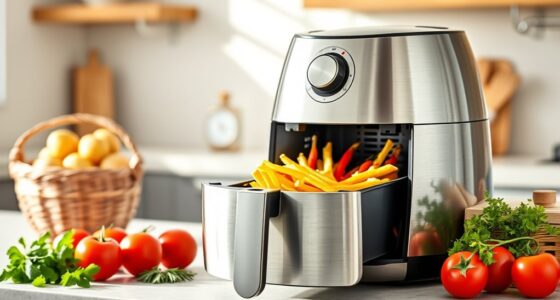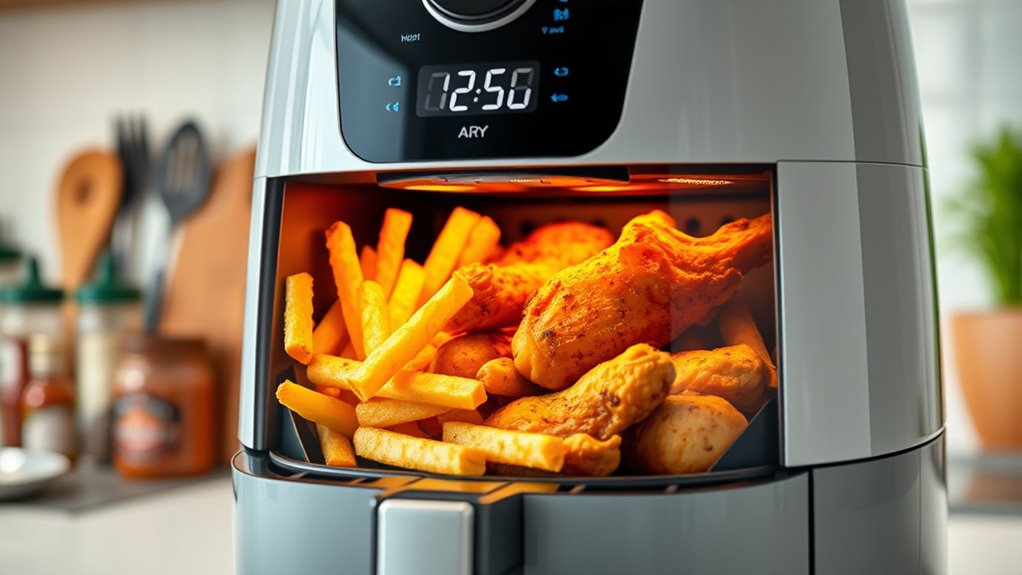

To master your air fryer, keep in mind that most foods cook at 350-400°F for 10-25 minutes, depending on the item. Thinner foods like fries or chicken wings usually need higher temps and shorter times, while thicker cuts take longer at slightly lower temps. Always preheat if your model recommends it, and check food early to avoid overcooking. Following these guidelines helps you achieve crispy, delicious results every time—if you want more tips, keep exploring next.
Key Takeaways
- Follow manufacturer guidelines for recommended temperatures and cooking times for various foods.
- Preheat the air fryer to ensure even cooking and better results.
- Use the recommended temperature range (usually 350°F-400°F) for crispy, tender dishes.
- Adjust times based on food thickness and quantity, avoiding overloading the basket.
- Regularly check food during cooking to prevent burning or undercooking.

An air fryer is a versatile kitchen gadget that can quickly turn frozen or fresh ingredients into crispy, delicious meals. However, to get the best results and guarantee your appliance lasts, you need to understand proper cooking safety and appliance maintenance. When using your air fryer, always follow the manufacturer’s instructions, especially regarding maximum fill lines and recommended cooking times. Overloading the basket can lead to uneven cooking and may pose safety hazards like overheating or even fire. Keep the air fryer in a well-ventilated area, away from flammable materials, and never leave it unattended while in use. Checking the cord and plug for damage before each use helps prevent electrical issues, guaranteeing safe operation every time.
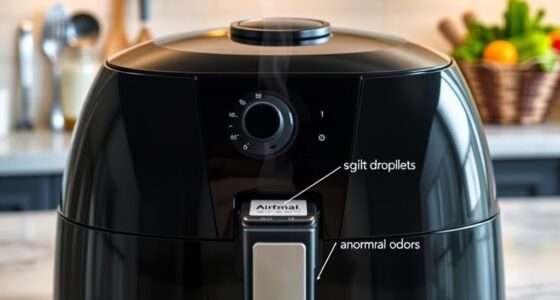
Cooking safety also involves being cautious about hot surfaces and hot oil vapors. The basket and tray can become very hot during cooking, so always use tongs or heat-resistant gloves when handling them. Allow the appliance to cool completely before cleaning or performing maintenance to avoid burns. When cooking foods that release juices or oils, like bacon or greasy chicken, be mindful of excess drips that can cause smoke or even fires if not managed properly. Using the drip tray and cleaning it regularly helps maintain a safe environment and keeps your air fryer functioning at its best.
Appliance maintenance is crucial for longevity and safety. Regularly inspect the heating element and fan for dust, grease, or food debris, and clean them with a soft brush or cloth. Many air fryer parts, like the basket and tray, are dishwasher safe, but check your manual for specific cleaning instructions. Proper maintenance also involves periodically checking the seals and vents to prevent blockages that may impair airflow and cause overheating. If your air fryer starts making unusual noises or stops working correctly, consult the troubleshooting section of your manual or contact customer support before attempting repairs.
Additionally, understanding the importance of security measures can help protect your appliance from theft or damage, especially if you store it in an accessible area. Lastly, to keep your appliance in top shape, avoid using metal utensils that could scratch non-stick surfaces, and never immerse the main unit in water. Regular cleaning and cautious operation not only extend the life of your air fryer but also guarantee your safety while cooking. When you combine good maintenance practices with attention to cooking safety, you’ll enjoy consistently perfect results and a reliable appliance for years to come.
Frequently Asked Questions
Can I Cook Frozen Foods Directly in the Air Fryer?
Yes, you can cook frozen foods directly in the air fryer. It’s perfect for frozen snacks like mozzarella sticks or chicken nuggets, which cook quickly and evenly. You can also prepare raw vegetables from frozen; just toss them with some oil and seasoning first. Adjust the temperature and time slightly to guarantee everything cooks thoroughly and gets crispy without overcooking. Always check for doneness before serving.
How Do I Adjust Cooking Times for Different Air Fryer Models?
You can adjust cooking times for different air fryer models by considering air fryer calibration and cooking time variations. Start by checking your specific model’s manual for recommended adjustments, then monitor your food closely. Use a timer and thermometer to fine-tune your settings, recognizing that some models may cook faster or slower. With practice, you’ll learn how to tweak times for perfect results, regardless of differences in your air fryer.
Is It Necessary to Preheat My Air Fryer Before Cooking?
Preheating your air fryer isn’t always necessary, but it can improve cooking results by ensuring even heat distribution. Preheating benefits include faster cooking and better crispiness. Plus, it promotes air fryer safety, reducing the risk of undercooked food. If you’re cooking delicate items or recipes requiring precise temps, preheat for a few minutes. For quick snacks, skipping preheat is fine, but always follow your air fryer’s guidelines for best results.
What’s the Best Way to Prevent Food From Sticking?
To prevent food from sticking, you should lightly spray your air fryer basket with non-stick sprays before adding food. Using parchment paper can also help, especially for delicate items or sticky sauces. Make sure to cut the parchment to fit the basket and poke small holes for airflow. These steps create a smooth surface, making cleanup easier and ensuring your food releases effortlessly.
How Do I Achieve Crispy Results Without Extra Oil?
To attain crispy results without extra oil, you can utilize healthy alternatives like a light spray of cooking spray or a drizzle of water to help crisp up your food. Focus on crisping techniques such as shaking the basket halfway through cooking or increasing the temperature slightly at the end. These methods ensure your food stays crispy and delicious without relying on added oils, making your meals healthier.
Conclusion
Now that you know the ideal temperatures and times, you can cook with confidence, experiment with flavors, and enjoy perfectly crisp results every time. You’ll master the art of timing, perfect your dishes, and elevate your cooking game. With just a bit of practice, you’ll turn simple ingredients into delicious meals, create crispy snacks, and enjoy stress-free cooking. Embrace the process, trust your instincts, and let your air fryer become your favorite kitchen tool.