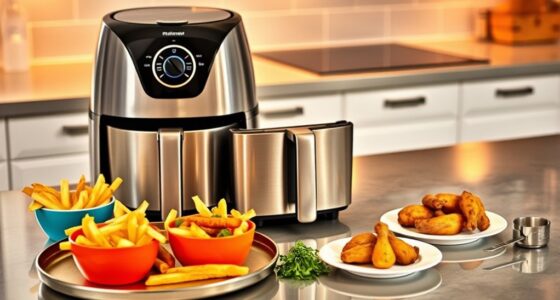
Wattage shows how much energy an air fryer uses, but higher power doesn’t always mean faster or better cooking. Factors like design, heat technology, and airflow play a big role in performance. A lower-wattage model can cook just as well if it’s efficient. If you’re curious about choosing the right wattage for your needs and optimizing your air fryer’s results, there’s more to discover below.
Key Takeaways
- Higher wattage speeds up cooking but doesn’t guarantee better or more evenly cooked results.
- Performance depends on design, heat technology, and airflow, not just wattage.
- Lower wattage models can still deliver quality results with proper use and technique.
- In small kitchens, lower wattage appliances save space and energy without sacrificing performance.
- Optimal wattage balances cooking speed, energy efficiency, and your specific kitchen needs.
What Does Wattage Mean in Air Fryers?

Have you ever wondered what wattage really means in an air fryer? It’s all about power measurement—specifically, how much energy the appliance uses to generate heat. Wattage indicates the energy consumption required to operate the device, impacting how efficiently it heats and cooks your food. Higher wattage generally means more power, which can lead to faster cooking times. However, it doesn’t automatically mean better results; it’s just a measure of how much energy the air fryer uses during operation. Understanding wattage helps you compare models and choose one that fits your needs. Keep in mind that energy consumption relates directly to wattage, so a more powerful air fryer might use more electricity, affecting your utility bills over time. Additionally, the power output of an air fryer influences its ability to maintain consistent temperature levels, which is crucial for optimal cooking performance. Recognizing the energy efficiency of an appliance can help you select models that balance performance with lower electricity costs. Sometimes, a lower-wattage model with good heat distribution can achieve results comparable to higher-wattage ones. Moreover, considering the cooking speed can help you find an appliance that meets your lifestyle needs without unnecessary energy use. It’s also helpful to look at temperature control features, which play a significant role in cooking precision and energy consumption.
Does Higher Wattage Make Air Fryers Cook Faster?

Higher wattage in an air fryer generally leads to faster cooking times because it delivers more power to generate heat quickly. While it might seem like more power always means better performance, this isn’t the whole story. Higher wattage can boost cooking speed, but it can also affect power efficiency and energy consumption. If you choose a high-wattage model, you’ll cook food faster, but it might use more energy and generate more heat. Keep in mind, efficiency varies based on design, insulation, and how well heat is transferred. So, a higher wattage doesn’t guarantee better results. Instead, consider your cooking needs and how energy-efficient the appliance is. Additionally, understanding energy consumption can help you optimize your appliance choices for better energy management. Being aware of power efficiency can help you select models that balance speed and energy use effectively. To make an informed choice, it’s useful to look at performance metrics that compare different models beyond just wattage. Recognizing the importance of heat transfer efficiency can also influence your selection of a high-performance air fryer.
Are There Myths About Wattage and Air Fryer Performance?

Many people believe that simply choosing an air fryer with the highest wattage guarantees faster or better cooking results. This is a common wattage misconception, but it’s a myth busting opportunity. Higher wattage doesn’t automatically mean superior performance; other factors like design, heating technology, and airflow matter more. Some assume that more power equals better crispy results or quicker cooking, but that’s not always true. The myth that wattage directly correlates with quality can lead you to overlook models that perform well at lower wattages. Understanding these wattage myths helps you make smarter choices. It’s important to remember that performance depends on the whole system, not just wattage. Additionally, air fryer design and how well the components work together influence overall cooking efficiency. This is why evaluating the overall system performance is crucial rather than relying solely on wattage figures. In fact, performance factors such as heat distribution and airflow play a significant role in cooking results. Don’t fall for the misconception that more wattage guarantees better air frying.
What Factors Besides Wattage Affect Air Fryer Performance?
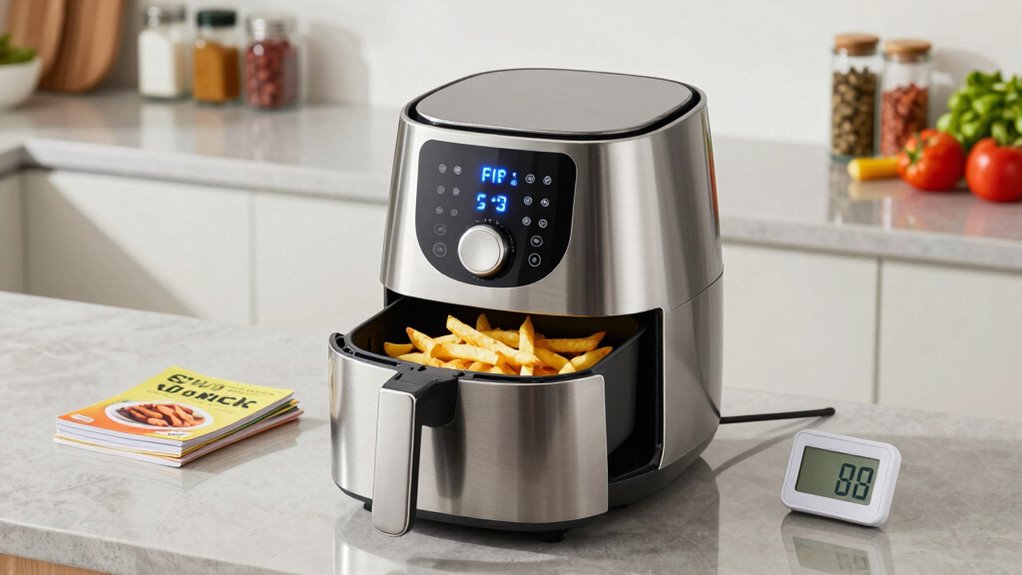
While wattage plays a role in an air fryer’s performance, several other factors considerably influence how well it cooks. Power efficiency affects how effectively the appliance uses energy to produce consistent results. The design of the heating element and airflow also matter, ensuring even heat distribution for thorough cooking. Noise levels can impact your experience, especially if you prefer a quieter kitchen. Additionally, the quality of components like the fan and thermostat controls influence overall performance and durability. These factors combined determine how well your air fryer performs, regardless of wattage. Understanding power efficiency is essential for selecting a model that delivers reliable cooking results without unnecessary energy consumption. Moreover, paying attention to component quality can extend the lifespan of your appliance and maintain optimal performance over time. Ensuring proper airflow within the unit can significantly improve cooking uniformity and reduce cook times. A balanced combination of factors ensures your air fryer meets your cooking needs effectively and efficiently. Recognizing the importance of energy use can also help you choose a more sustainable and cost-effective appliance.
How Do I Choose the Right Wattage for My Kitchen?
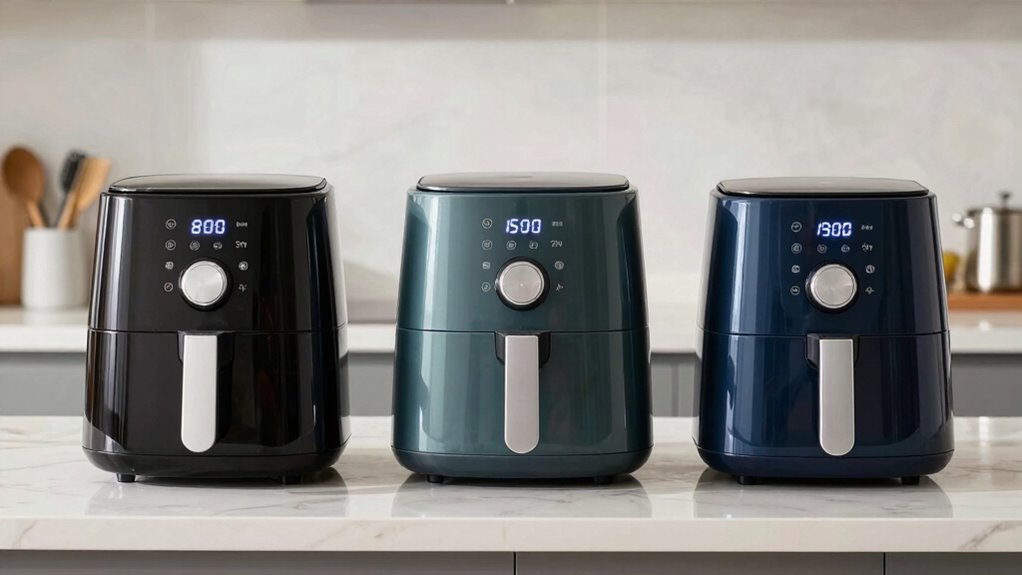
Choosing the right wattage for your kitchen depends on how you plan to use your air fryer and the size of your household. If you have a small kitchen or cook for one or two people, a lower wattage model (around 800-1200 watts) can be sufficient, offering quick heat-up times without wasting energy. For larger households or frequent cooking, a higher wattage (1500-1800 watts) provides faster, more even results, especially for bigger batches. Your cooking habits matter too—if you prefer quick snacks or reheating, lower wattage might work fine. However, if you often cook complex meals or larger portions, higher wattage can save you time. Understanding how deep-sky imaging compares different setups can help you optimize your choices for efficiency and results. Additionally, considering power consumption can help you select an energy-efficient model that meets your needs. Matching wattage to your cooking routines ensures better performance and energy savings over time. Selecting the appropriate wattage also depends on understanding the essential oils that enhance your cooking experience, ensuring your appliances work harmoniously with your culinary needs. Moreover, being aware of battery lifecycle and performance metrics can help you choose appliances that maintain optimal operation over time.
Comparing Low, Medium, and High Wattage Air Fryers: What’s Best?
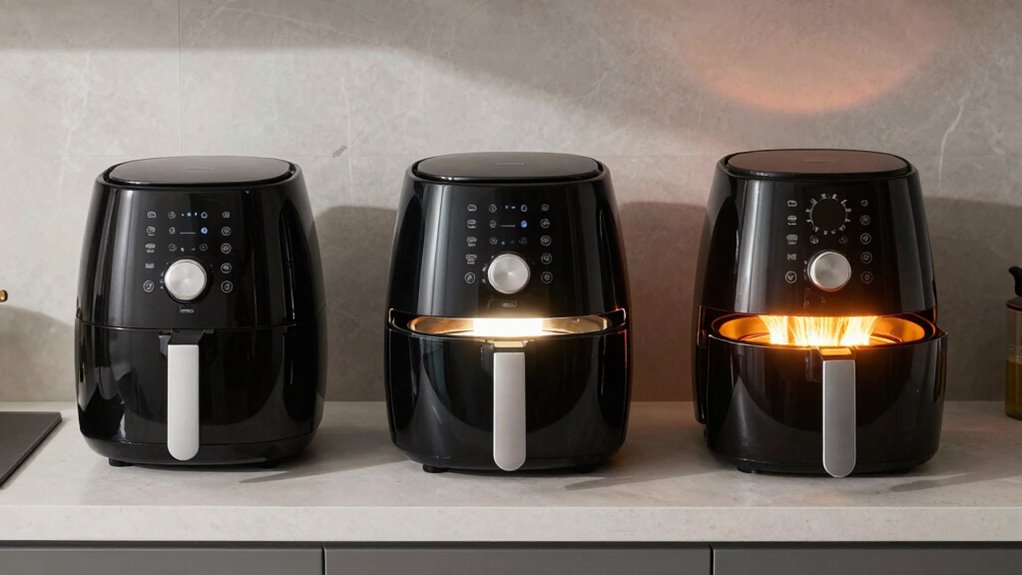
Are you wondering which wattage setting is best for your air fryer? Low wattage air fryers (around 800-1200W) are more energy-efficient and ideal for smaller countertops, but they cook more slowly. Medium wattage models (around 1400-1600W) strike a balance, offering decent cooking speed and energy use. High wattage air fryers (1800W and above) cook faster and handle larger portions, but may consume more energy and require a bigger countertop space. Consider your cooking habits and kitchen size when choosing. The right wattage guarantees efficient energy use without sacrificing performance, especially if space or energy savings matter most. Additionally, adaptive cooking features in some models can optimize performance based on wattage and food type.
Tips to Get the Most Out of Your Air Fryer, No Matter the Wattage
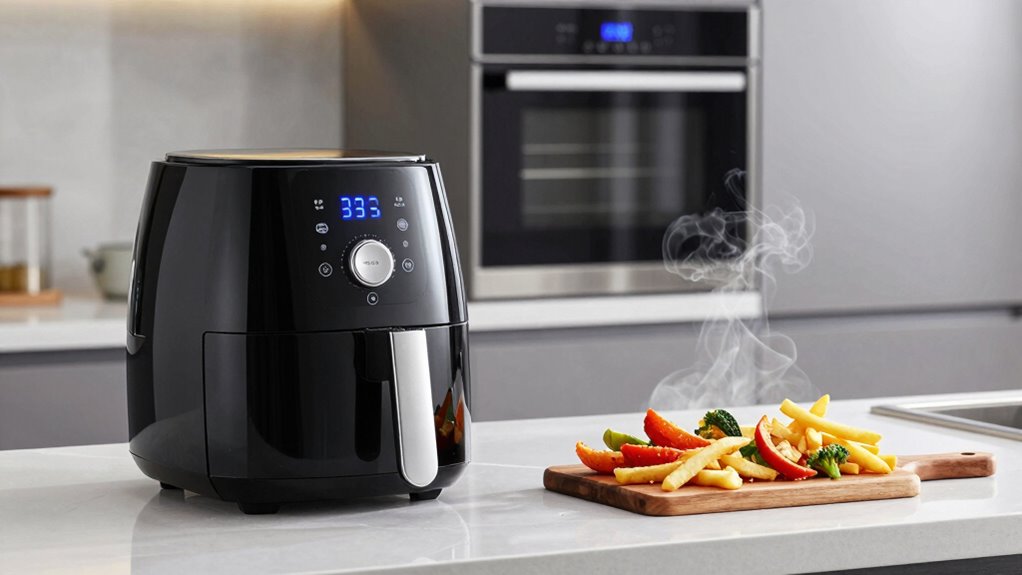
Maximizing your air fryer’s performance doesn’t depend solely on wattage; it also involves understanding how to use it effectively. To boost energy efficiency, avoid overcrowding the basket, ensuring proper airflow for even cooking. Adjust cooking times based on your model’s wattage—higher wattage may cook faster, while lower wattage needs longer. Always follow safety considerations, like unplugging the unit after use and keeping it on stable surfaces. Regularly clean the basket and heating element to maintain ideal performance and prevent fire hazards. Using the right temperature and preheating appropriately can improve results regardless of wattage. Additionally, familiarizing yourself with your appliance’s performance features can help optimize its efficiency and lifespan. Understanding your power consumption can help you manage energy use more effectively and reduce costs.
Frequently Asked Questions
How Does Wattage Impact the Energy Efficiency of an Air Fryer?
Wattage impacts your air fryer’s energy consumption and overall efficiency. Higher wattage means it uses more energy, which can increase your electricity bill. However, it also cooks faster, saving time. If you choose a lower wattage model, it may consume less energy but take longer to cook, potentially reducing overall efficiency. Balance wattage with your cooking needs to optimize both energy use and performance.
Can a Lower Wattage Air Fryer Still Produce Crispy Results?
Yes, a lower wattage air fryer can still produce crispy results. While it may take a bit longer, you can achieve good cooking speed and flavor development by adjusting your cooking time and temperature. Keep in mind, patience is key; with proper technique, lower wattage models can deliver satisfying crispiness without sacrificing taste, making them a practical choice for efficient, flavorful cooking.
What Safety Considerations Are Associated With Higher Wattage Air Fryers?
Think of a higher wattage air fryer as a fast-moving river—powerful but potentially dangerous. You need to be cautious about electric shock risks if you mishandle the cord or plug. Also, higher wattage increases fire hazards if the device overheats or isn’t properly maintained. Always follow safety instructions, guarantee proper ventilation, and avoid overloading to keep your cooking safe and avoid accidents.
Do Different Brands Have Varying Wattage Standards for Similar Models?
Yes, different brands do have varying wattage standards for similar models. Brand variation impacts the wattage, meaning two air fryers with similar features might operate at different power levels. When comparing models, you should check each brand’s wattage standards to understand their power output. This variation can affect cooking performance, so don’t assume that higher wattage always means better results; consider overall design and features too.
How Does Wattage Influence the Noise Level of an Air Fryer?
Higher wattage in your air fryer can increase noise levels because it often means a faster fan speed to circulate hot air efficiently. As the fan speeds up, it generates more sound. So, if you prefer quieter operation, choose an air fryer with lower wattage or adjustable fan settings. Keep in mind that louder models might cook faster, but they can also be noisier during operation.
Conclusion
Remember, wattage is just one piece of the puzzle in your air fryer journey. Think of it as the engine’s horsepower—more doesn’t always mean smoother sailing. Your perfect match depends on your cooking style, space, and patience. By understanding the nuances, you turn your kitchen into a symphony of flavors, not just a race for speed. Embrace the dance of power and performance, and let your culinary creativity truly take flight.