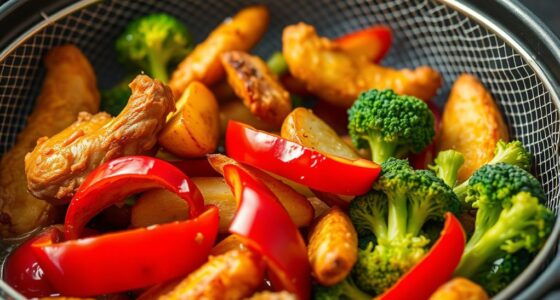

Whether you need to flip food in an air fryer depends on what you’re cooking and your specific appliance. For even crispiness and thorough cooking, flipping or shaking thicker or uneven pieces halfway through helps a lot. Some models with powerful fans cook more uniformly without flipping, while others do better with it. If you want perfectly crispy results, knowing when and how to flip can make a big difference—discover more tips to optimize your air frying experience.
Key Takeaways
- Flipping depends on the dish type and thickness; thicker or uneven foods often require flipping for even cooking.
- Air fryer design and airflow influence the need to flip; more powerful fans may reduce flipping needs.
- Following recipe instructions on whether to flip or shake ensures optimal crispiness and even cooking.
- Flipping can shorten cooking time and prevent overcooking or sogginess of one side.
- Monitoring food appearance and texture helps determine if flipping is necessary during the cooking process.
Have you ever wondered whether you need to flip food in an air fryer? It’s a common question among air fryer users, especially when trying to achieve perfectly crispy results. The good news is, whether you need to flip your food depends on what you’re cooking and the design of your specific air fryer. Generally, air fryers work by circulating hot air around the food using a fan, which means the air circulating creates a crispy exterior without the need for deep frying. However, this air circulation can sometimes cause uneven cooking, particularly with thicker or larger pieces. Knowing how to manage cooking times and when to flip can make all the difference in getting that evenly cooked, crispy outcome you want.
Flipping food in an air fryer depends on the dish and appliance design for even, crispy results.
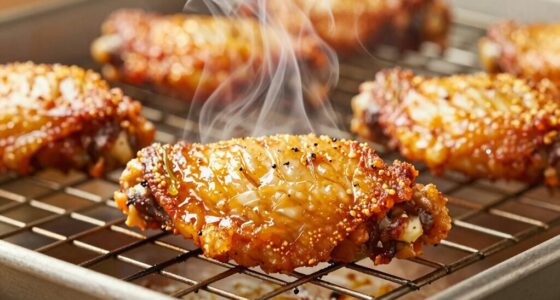
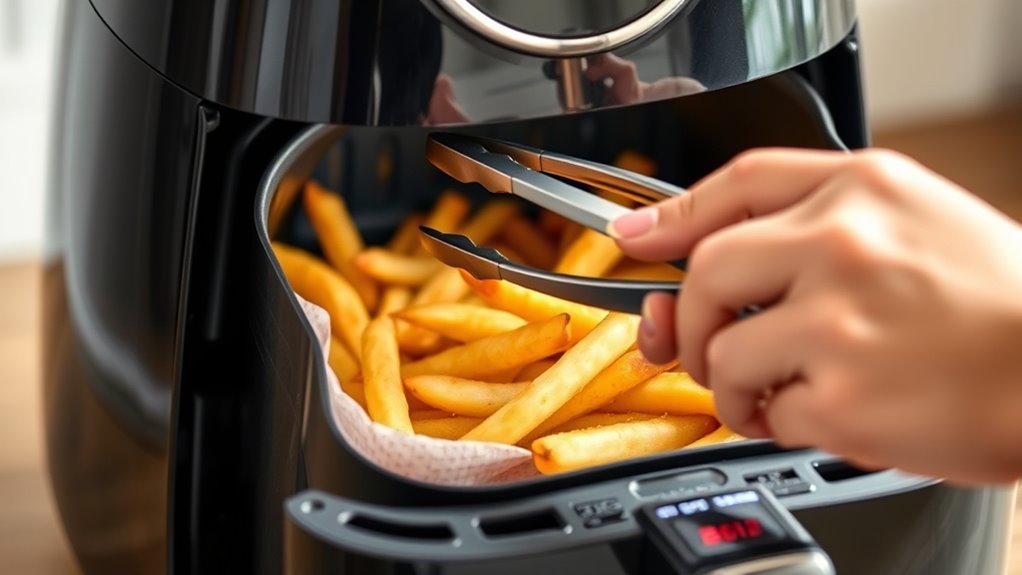
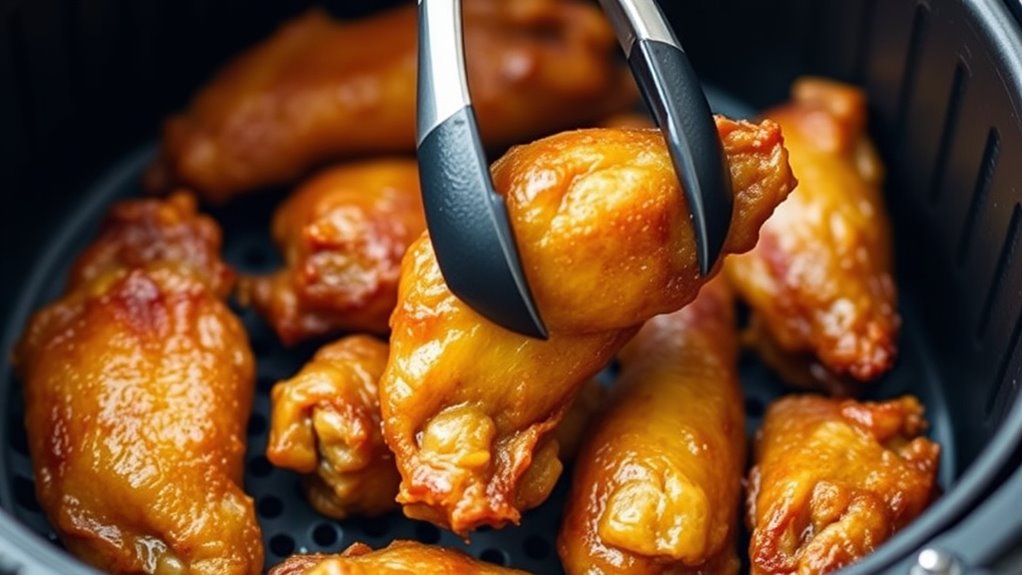
When you’re cooking in an air fryer, it’s important to pay attention to the recommended cooking times. Many recipes specify whether you should flip or shake the food halfway through the cooking process. This is because, despite the efficient air circulating, some areas of the food might cook faster than others. For example, items like chicken wings or French fries tend to benefit from flipping or shaking to ensure all sides are evenly crisped. If you don’t, you might end up with one side overcooked while the other remains soggy or underdone. Adjusting the cooking time slightly and flipping when needed helps to compensate for these differences, especially with thicker cuts or unevenly shaped foods.
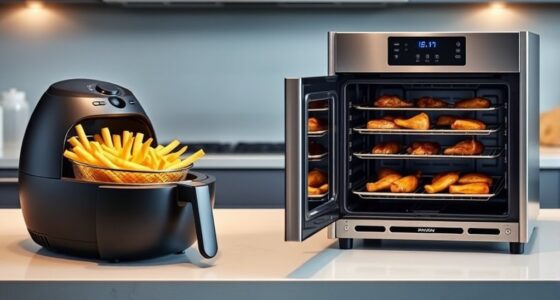
The design of your air fryer also influences whether flipping is necessary. Some models have a more powerful fan that can promote more uniform air circulation, reducing the need to flip food. Others may have less effective circulation, making flipping or shaking essential for even results. It’s a good idea to check your appliance’s manual or experiment with small batches to see how your specific air fryer performs. Over time, you’ll develop a sense of when flipping is necessary based on the food’s size and the appearance of the cooked product.
In many cases, flipping food in an air fryer isn’t just about even cooking; it’s about optimizing cooking times. Properly flipping or shaking can shorten cooking times slightly, preventing overcooking and preserving the food’s texture. Keep in mind that the goal is to maximize the air circulating effect, so you should flip or shake foods that are prone to uneven browning or cooking. Additionally, understanding the airflow and how it affects cooking can help you make better decisions about when to flip or shake your food. Ultimately, understanding your air fryer’s airflow and adjusting your process accordingly will help you achieve the best results with minimal effort.
Frequently Asked Questions
Can I Use Oil Instead of Flipping for Crispiness?
Yes, you can use oil instead of flipping for crispiness enhancement. Applying a light spray of oil helps achieve a golden, crunchy exterior without needing to turn the food. Oil substitution guarantees even crispiness, especially for items like fries or chicken wings. Just remember, a little oil goes a long way—too much can cause smoke or sogginess. Keep it light for the best crispy results in your air fryer.
Does Flipping Affect Cooking Time in an Air Fryer?
A stitch in time saves nine, and flipping your food can save you from uneven cooking. Flipping does impact cooking time slightly but mainly guarantees even crispiness and don’t markedly extend or shorten your cook time. When using air fryer tips, remember that some foods benefit from flipping as a simple yet effective cooking technique. Keep an eye on your food’s progress and adjust as needed for perfect results.
Are Some Foods Better Left Unflipped?
Some foods are better left unflipped because proper air circulation and food placement ensure even cooking. Items like small, evenly shaped pieces or delicate foods, such as French fries or chicken wings, benefit from remaining undisturbed. Flipping too often can disrupt airflow, leading to uneven results. Trust your air fryer’s design and keep foods spaced out, so the circulating hot air cooks everything consistently without needing frequent flipping.
How Often Should I Flip Food During Cooking?
Think of your air fryer as a dance partner—timing is everything. You should flip your food halfway through cooking to make certain even crispiness and thorough cooking. Keep air fryer safety in mind by avoiding overcrowding and sticking to recommended cooking temperatures. Usually, flipping every 10 to 15 minutes works well for most foods, but always check for doneness. This keeps your meals perfectly cooked and safe to enjoy.
Does Flipping Improve Even Browning?
Flipping your food does improve even browning by promoting better air circulation around all sides, guaranteeing consistent crispiness. When you flip, you help distribute seasoning more evenly and prevent sticking. Using effective seasoning techniques beforehand enhances flavor, while flipping ensures all surfaces get equal exposure to hot air. So, yes, flipping your food in an air fryer leads to more evenly browned, delicious results.
Conclusion
In most cases, flipping food in an air fryer is like turning the page in a good book — it keeps things fresh and evenly cooked. While some foods need a flip for that perfect crisp, others can cook beautifully without it. Think of your air fryer as a dance partner; a gentle turn here and there ensures everything moves smoothly. So, trust your instincts and your food will turn out just right every time.