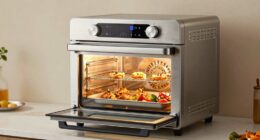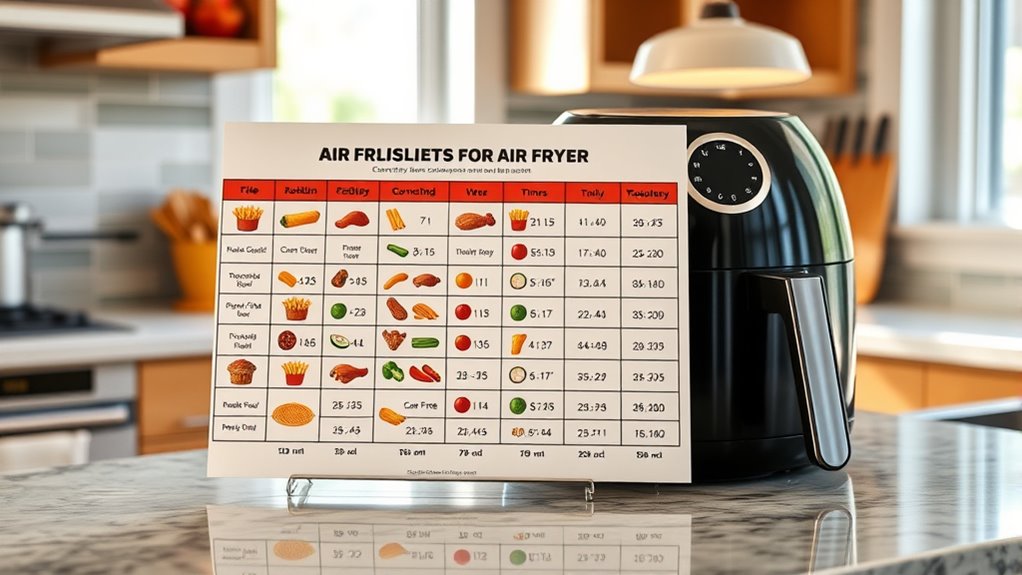
To convert oven recipes for your air fryer, reduce the temperature by about 25°F and cut the cooking time by roughly 20%. Keep an eye on your food to prevent overcooking, and consider preheating for even results. Using a print-friendly chart can help guide your adjustments for common dishes. Staying attentive and experimenting will improve your results; if you keep exploring, you’ll find even more tips to perfect your air frying.
Key Takeaways
- Reduce oven temperature by about 25°F and decrease cooking time by roughly 20% for air fryer conversions.
- Preheat the air fryer for 3–5 minutes and avoid overcrowding for even cooking.
- Shake or flip food halfway through to promote uniform crispiness and prevent hot spots.
- Use perforated trays or silicone liners to enhance airflow and cooking consistency.
- Adjust times and temperatures based on ingredient density, size, and observed results for optimal outcomes.
Understanding the Basics of Oven to Air Fryer Conversion

When converting recipes from a traditional oven to an air fryer, understanding the basics is vital for successful results. One key aspect is adjusting baking techniques to suit the smaller, more efficient appliance. Since air fryers circulate hot air rapidly, you often need to reduce cooking times and temperatures. This helps prevent overcooking or burning your food. Additionally, maintaining flavor preservation is essential; using proper preheating and not overcrowding the basket ensures even cooking and ideal taste. Keep in mind that some recipes may require slight modifications to achieve the same texture and richness as oven-baked dishes. For example, automation in business demonstrates how technology can optimize processes and improve efficiency. By mastering these fundamental principles, you’ll get consistent, delicious results while making the most of your air fryer’s capabilities.
Key Factors Affecting Cooking Times and Temperatures

Several factors influence how long and how hot your air fryer needs to cook food properly. Food density can change cooking times, while air circulation efficiency affects evenness. Additionally, recipe ingredients vary, impacting the ideal temperature and duration for perfect results. Incorporating tuning modifications can further optimize cooking performance and efficiency.
Food Density Impact
Food density plays a crucial role in determining how quickly and evenly your air fryer cooks different ingredients. When ingredients have higher cooking density, they typically require longer cooking times because heat penetrates more slowly. Conversely, less dense foods heat up faster, affecting cook time and food texture. To optimize results, consider these factors:
- Denser foods, like thick-cut meats or root vegetables, need additional time to cook thoroughly.
- Lighter, less dense items, such as thin fish fillets or sliced vegetables, cook quickly and may need reduced times.
- Food texture influences cooking density; crispy or crunchy foods may require adjustments to achieve desired results without overcooking.
- Additionally, understanding headphone compatibility can help enhance your listening experience while cooking or multitasking in the kitchen.
Understanding these elements helps you adjust time and temperature for perfectly cooked, evenly textured dishes.
Air Circulation Efficiency
Effective air circulation within your air fryer guarantees that heat is evenly distributed around your food, leading to consistent cooking results. Proper airflow patterns ensure that hot air flows smoothly around all sides, preventing hot spots and undercooked areas. Vent placement plays a vital role in maintaining ideal airflow; a well-positioned vent allows excess moisture to escape and fresh air to circulate efficiently. If airflow is restricted by overcrowding or improper placement of food, cooking times can increase or temperatures may need adjustment. To maximize circulation, arrange food in a single layer and leave space between items. Regularly check and clear vents to avoid blockages. Cookie management also impacts airflow efficiency, helping you achieve evenly cooked results while reducing cooking time and energy use.
Recipe Ingredient Variations
Variations in recipe ingredients can substantially impact cooking times and temperatures in your air fryer. When you make ingredient substitutions or adjust seasonings, expect changes in how quickly food cooks or browns. For example, replacing fresh vegetables with frozen may require longer cook times, while using leaner meats might need slightly lower temperatures to prevent drying out. Consider these key factors:
- Seasoning adjustments can influence browning and flavor development, sometimes requiring shorter or longer cooking.
- Ingredient substitutions, like swapping chicken for beef, often demand different cook times due to moisture content and density.
- Size and cut of ingredients matter—thinner slices cook faster, thicker pieces need more time, regardless of recipe specifics.
- Cooking times and temperatures can also vary based on the specific appliance used, as different models may heat differently and affect overall cooking performance.
Always monitor your food to adapt cooking times based on ingredient variations for ideal results.
Step-by-Step Guide to Converting Your Favorite Recipes
Converting your favorite recipes for the air fryer can seem intimidating at first, but with a straightforward approach, it becomes much easier. Start by reducing the oven temperature by about 25°F and decreasing the cooking time by roughly 20%, checking for doneness early. Use the right air fryer accessories, like a perforated tray or silicone liners, to ensure even cooking and easy cleanup. Always preheat your air fryer for consistent results. After cooking, follow cleaning tips such as soaking removable parts in warm soapy water and avoiding abrasive scrubbers. Proper temperature calibration is essential for precise cooking outcomes and consistent quality. These steps help maintain your appliance’s performance and longevity. With practice, you’ll quickly get the hang of adjusting recipes, making your favorite oven dishes just as delicious in your air fryer.
Sample Conversion Chart for Common Oven Dishes
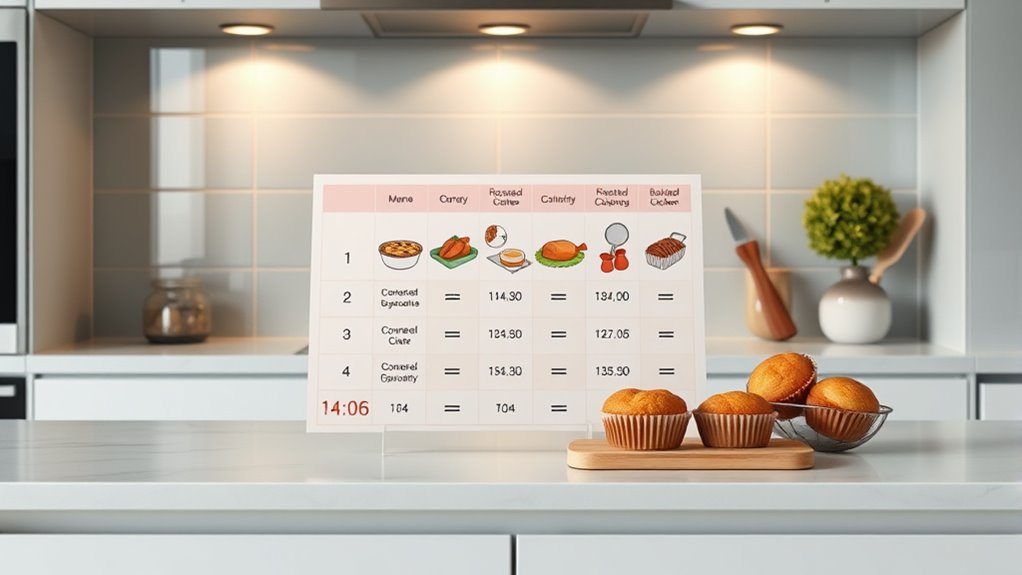
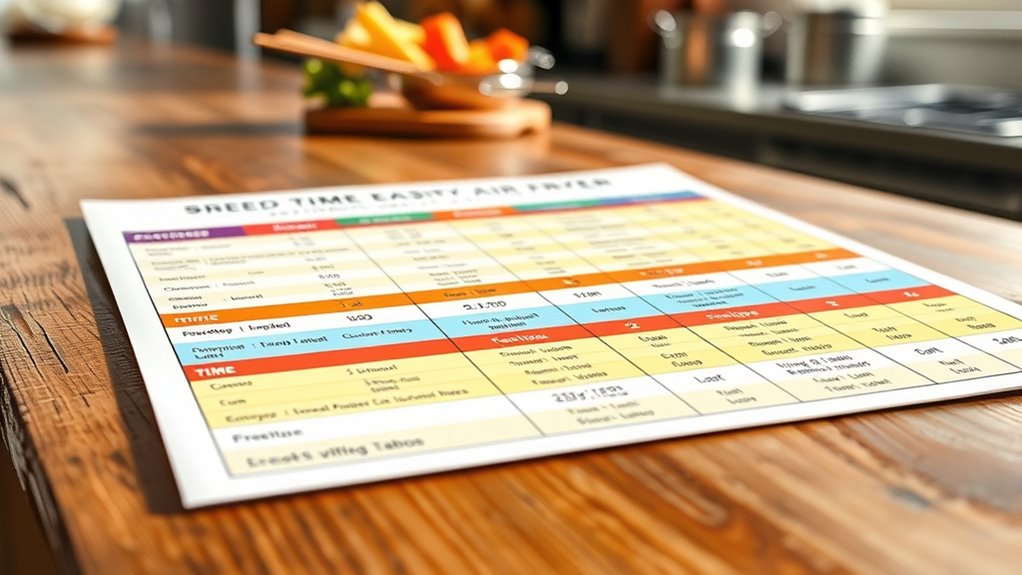
To make your changeover to air frying smoother, a sample conversion chart for common oven dishes can be incredibly helpful. This chart guides you through adjusting baking techniques and seasoning adjustments, ensuring your dishes turn out just right. It highlights typical oven recipes and their air fryer equivalents, saving you time and guesswork. Using this chart, you’ll learn how to modify cooking times and temperatures effectively. For example:
Transform oven recipes to air fryer perfection with this handy conversion chart—save time, guesswork, and enhance flavor.
- Roast vegetables at 375°F for 10–12 minutes in the air fryer instead of 400°F in the oven.
- Bake chicken breasts at 375°F for 15–20 minutes, reducing the time from oven baking.
- Reheat casseroles at 350°F for 8–10 minutes, adjusting seasonings as needed for crispiness and flavor.
This approach helps you refine your baking techniques while maintaining flavor integrity.
Tips for Perfect Results When Using an Air Fryer
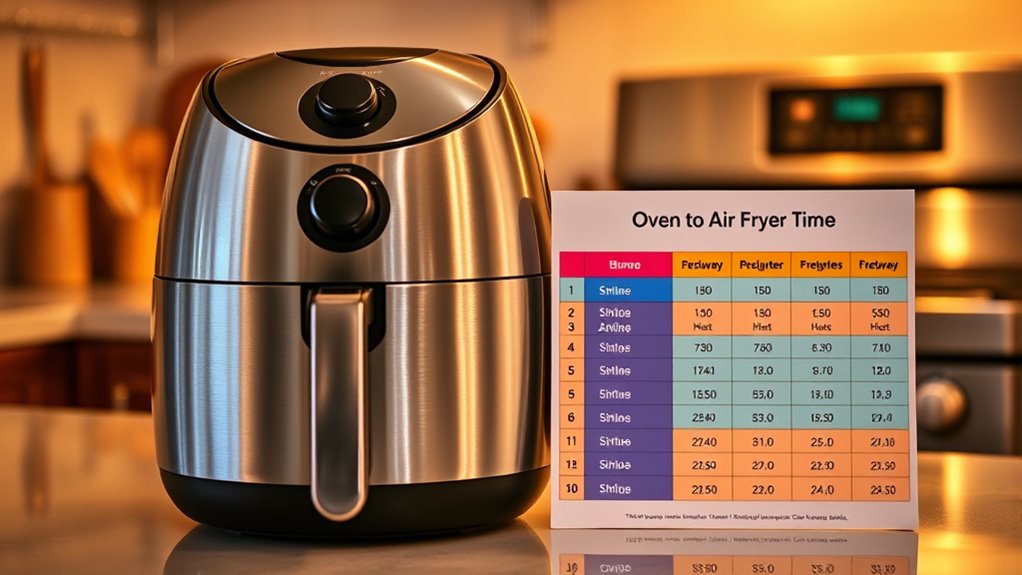
Achieving perfect results with your air fryer depends on paying attention to a few key tips. First, use seasoning techniques that enhance flavor without adding excess moisture, which can affect crispiness. Toss ingredients in a light coat of oil for even browning. Proper storage tips also matter: store leftovers in airtight containers and reheat at lower temperatures to prevent dryness. Keep your air fryer clean to avoid flavor transfer and ensure ideal performance. Consider these guidelines:
| Tip | Why it matters | Example |
|---|---|---|
| Seasoning techniques | Boosts flavor without sogginess | Rub spices evenly before cooking |
| Storage tips | Maintains freshness and prevents spoilage | Use airtight containers for leftovers |
| Preheating | Ensures even cooking | Preheat for 3–5 minutes |
| Shake or flip | Promotes uniform crispiness | Turn ingredients halfway through |
Additionally, paying attention to consistent messaging can help you develop a reliable routine that yields better results over time.
Troubleshooting Common Issues With Air Fryer Conversions
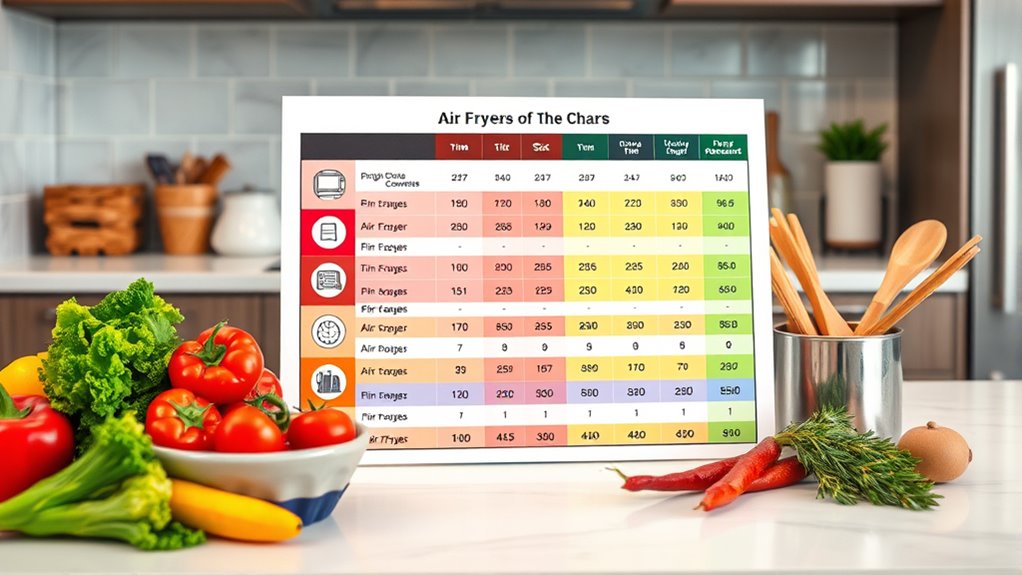
If your food isn’t cooking evenly, it’s time to adjust your time and temperature settings. Uneven results often mean your air fryer needs a little tweak to match the recipe. Let’s explore how to troubleshoot these issues effectively. Incorporating proper home decoration elements can also enhance your overall kitchen experience, making your cooking space more inviting and functional.
Uneven Cooking Results
Ever wonder why your air fryer sometimes cooks unevenly when converting recipes? Clogged vents and uneven heating can cause hot spots, leading to inconsistent results. To fix this, check and clean your vents regularly to ensure proper airflow. Also, avoid overcrowding the basket, which blocks heat circulation. Here are some tips:
- Maintain clear, unobstructed vents for even heat distribution
- Rotate or shake food halfway through cooking to promote uniformity
- Use a thermometer to verify the air fryer’s heating accuracy
- Regularly inspect and maintain your appliance to prevent performance issues
These steps help reduce uneven heating, preventing hot spots and ensuring your food cooks evenly. Regular maintenance and mindful placement are key to consistent results when adapting oven recipes for your air fryer.
Adjusting Time and Temp
When adjusting time and temperature for your air fryer, it’s important to remember that recipes often need slight modifications to achieve perfect results. Preheating is essential; it ensures even cooking and helps you avoid undercooked or overcooked food. If your results aren’t ideal, try increasing or decreasing the temperature by a few degrees or adjusting the cooking time slightly. Keep in mind that preheating requirements vary by model, so check your user manual. Additionally, regular cleaning and maintenance of your air fryer improve heat circulation and cooking accuracy. A clean, well-maintained appliance cooks more evenly, reducing the need for major adjustments. Proper hydration and nutrition also play a role in maintaining optimal cooking performance and food quality. With practice, you’ll develop a feel for how your air fryer responds to different adjustments, leading to consistently better results.
Frequently Asked Questions
Can I Convert All Oven Recipes to the Air Fryer?
You can convert many oven recipes for your air fryer, but not all. Air fryer adaptations often require adjustments in cooking time and temperature, as they cook faster and more intensely. Embrace recipe flexibility by experimenting with small batches first. Keep in mind, some dishes may not turn out as expected due to differences in moisture and heat circulation. With patience, you’ll discover which recipes adapt best to your air fryer.
Do Cooking Times Vary Between Different Air Fryer Models?
Think of your air fryer as a car; just like different models have varying speeds, air fryer models differ in cooking times. Your air fryer’s capacity and features influence how quickly food cooks. I noticed my smaller model takes less time than a larger one with different settings. Always check your specific model’s manual or run a test to adjust times, ensuring perfect results every time.
How Do I Adjust Recipes for Large or Small Air Fryers?
When adjusting recipes for different air fryer sizes, you need to take into account size adjustments and capacity considerations. For smaller models, reduce cooking time and portion sizes to prevent overcrowding, which can affect air circulation. Larger air fryers can handle bigger batches, but you might need to increase cooking time slightly. Always monitor your food and make adjustments based on how your specific model cooks, ensuring even crispiness and doneness.
Are There Foods That Don’T Work Well in an Air Fryer?
Think of your air fryer as a modern-day Icarus—delicate and prone to mishaps if not careful. Foods with non-stick coatings tend to work well, but avoid those with liquid batters, as they can drip and cause smoke or damage. Also, foods that are overly wet or greasy may not crisp up properly. Stick to drier, sturdier items for the best results and to keep your air fryer flying high.
How Do I Modify Recipes With Delicate Ingredients?
When working with delicate ingredients, you should make careful recipe modifications to prevent overcooking or damage. Use lower temperatures and shorter cooking times, and consider covering delicate items with foil or parchment to prevent burning. Check the food frequently to prevent overdone results. Adjust your recipe based on these tips, and always start with a test batch to ensure your delicate ingredients cook perfectly without overprocessing.
Conclusion
Now that you know how to convert oven recipes for your air fryer, you can cook with confidence, save time, and enjoy crispy perfection every time. Understand the basics, consider the key factors, follow the steps, and use the chart as your guide. Adjust, experiment, and learn from each attempt. With practice, you’ll master your air fryer’s potential, create delicious meals, and make every cooking moment easier, quicker, tastier, and more enjoyable.