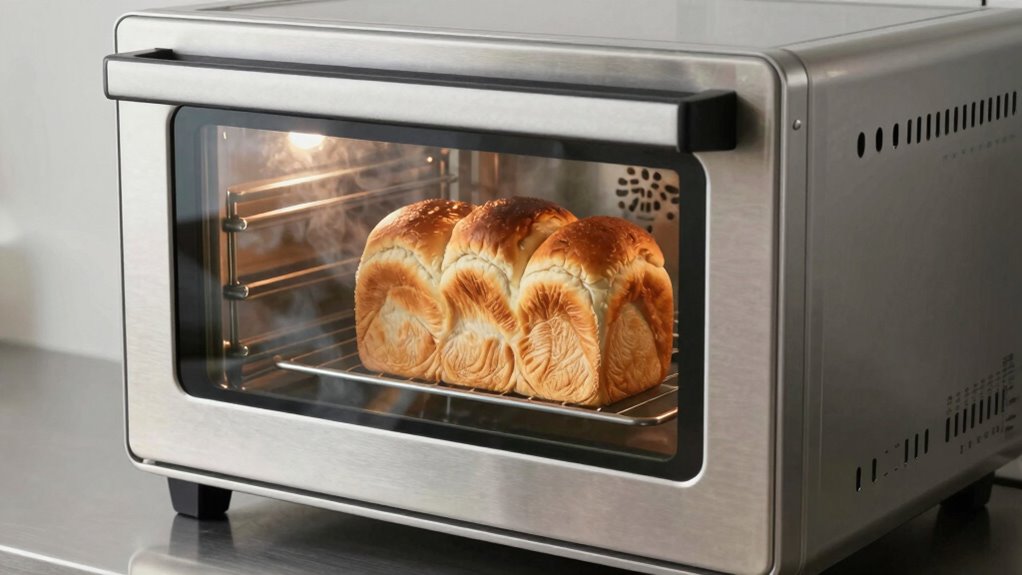

Using a steam countertop oven helps your bread turn out better because steam creates a crisp, shiny crust while keeping the inside soft and moist. The moisture enhances browning, flavor, and dough expansion, resulting in bakery-quality results at home. Proper steam control guarantees even crust development and improved texture. If you want to understand the science behind these benefits and how to get the most out of your oven, there’s more to uncover.
Key Takeaways
- Steam creates a moist environment that delays crust formation, allowing better dough expansion and a lighter, airy crumb.
- Proper steam promotes Maillard reactions, enhancing crust color, flavor, and shine without sacrificing interior softness.
- Controlled humidity in steam ovens ensures consistent oven spring and even crust development, reducing baking variability.
- Injecting steam prevents premature drying, maintaining dough hydration and resulting in bakery-quality texture and appearance.
- Precise moisture management in countertop steam ovens leads to superior crust, flavor, and overall baking results backed by science.
Why Use Steam in Bread Baking? The Science Made Simple
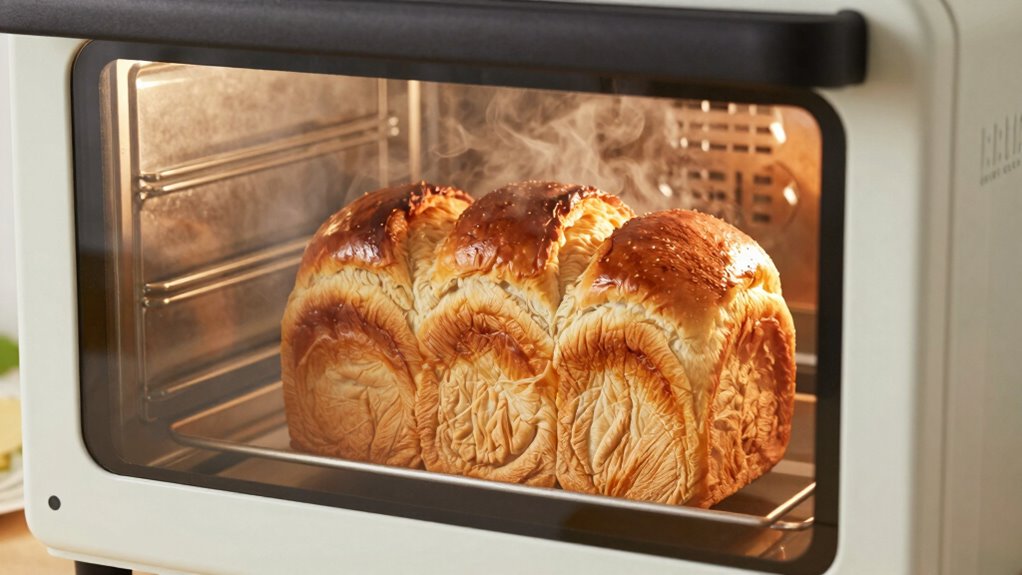
Using steam in bread baking is essential because it helps create the perfect crust and improves overall texture. The steam effects include keeping the dough surface moist during the initial baking phase, which allows it to expand fully without tearing. This process enhances dough elasticity, giving the bread a better rise and a lighter crumb. When steam surrounds the dough, it prevents a thick, hard crust from forming too early, allowing the bread to develop a tender, shiny exterior. As the moisture evaporates, it also promotes caramelization, giving your bread a beautiful color. Understanding how steam influences dough elasticity helps you control the baking environment, resulting in a more consistent, professional-quality loaf every time. Proper humidity control during baking is also important in achieving the best results. Steam is a simple yet crucial ingredient in achieving bakery-quality results and understanding the baking environment can help you optimize your bread’s texture and appearance. Additionally, maintaining consistent baking conditions ensures your bread turns out with optimal texture and flavor every time. Incorporating knowledge about steam’s role in crust formation can further enhance your baking outcomes.
How Steam Creates a Perfect Crust and Tender Crumb

Steam plays an essential role in creating both a crisp crust and a soft, tender crumb in your bread. When you preheat your oven properly, it guarantees the steam can do its job right from the start. As you score your bread before baking, you allow steam to escape in controlled ways, helping the crust develop evenly. The steam’s moisture keeps the outer layer flexible longer, enabling the dough to expand fully before the crust sets. This process results in a beautifully crisp crust with a tender interior. Without enough steam, the crust might be hard or uneven, and the crumb could be dense. Proper oven preheating and careful bread scoring work together to maximize the benefits of steam, giving you bakery-quality bread at home. Additionally, maintaining the correct contrast ratio in your baking environment can help in achieving the ideal crust coloration and texture. Achieving optimal steam distribution throughout the baking process ensures consistent results and enhances crust development. Proper humidity control during baking also plays a vital role in achieving the perfect balance between crust and crumb.
How Moisture Boosts Flavor and Color in Your Bread
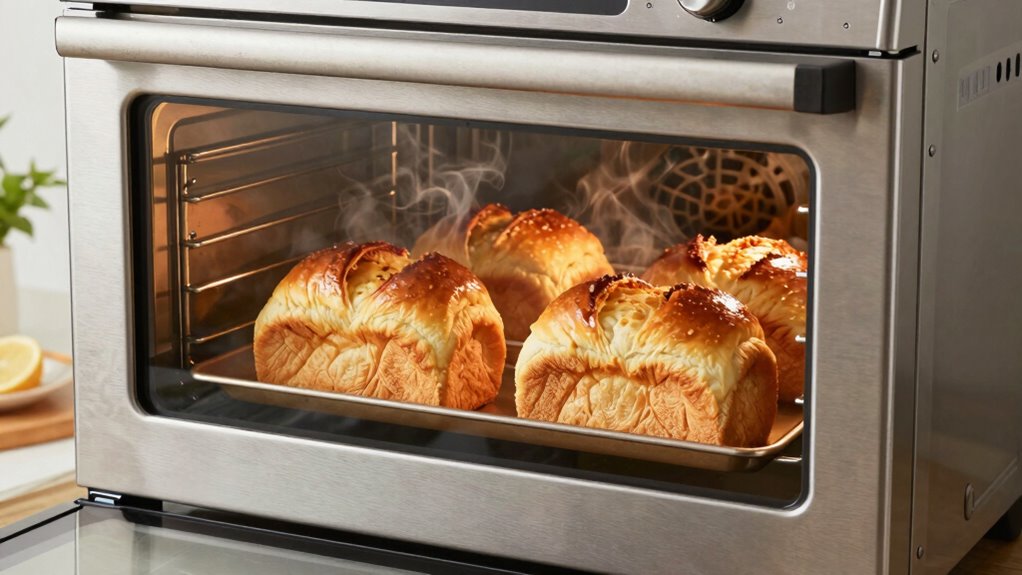
Adding moisture during baking helps your bread develop a richer flavor and more appealing color. It promotes better crust formation and triggers the Maillard reaction, giving your bread a beautiful, golden-brown finish. Plus, moisture retention keeps your bread softer and more enjoyable with every bite. Incorporating the right essential oils into your baking process can also enhance aroma and flavor profiles, making your bread even more delightful. To ensure optimal moisture levels, consider utilizing water air purifiers to maintain consistent humidity in your baking environment. Additionally, understanding free floating principles can help bakers adapt to varying conditions and improve their results. Embracing practical mindfulness can also help bakers stay attentive to these subtle but important factors for perfect results. Understanding art care and living principles can further support maintaining your baked goods’ quality and presentation.
Improved Crust Formation
Moisture plays an essential role in creating a beautifully crisp and flavorful crust on your bread. During baking, steam helps with crust enhancement by controlling surface temperature and moisture levels, which influence how the crust forms. According to baking science, moisture delays the formation of the crust’s outer layer, allowing the interior to expand fully and develop better structure. As the surface dries out, the crust becomes richer in color and more textured. Steam also promotes even caramelization of sugars, resulting in a deeper, more appealing crust. Without adequate moisture, your bread’s crust can turn out dull, thick, or uneven. Using a steam-infused environment ensures your bread develops that desirable, bakery-quality crust—crisp, flavorful, and visually stunning. Incorporating moisture control techniques can further enhance crust development during baking, especially when combined with proper temperature management. Additionally, understanding the science behind moisture and crust formation can help bakers fine-tune their techniques for optimal results. For example, utilizing steam injection systems in countertop ovens provides consistent moisture levels, leading to more reliable crust quality.
Enhanced Maillard Reaction
When moisture is properly managed during baking, it markedly enhances the Maillard reaction—a chemical process that creates rich flavors and deep color in bread. The right level of humidity helps develop a crust with complex aromas while preserving the bread’s interior moisture, improving bread preservation. Steam in your countertop oven keeps the crust tender initially, allowing the Maillard reaction to occur more evenly. This results in a more flavorful and appealing loaf. Additionally, maintaining proper moisture levels makes oven cleaning easier, as excess dough or crust residues are less likely to burn onto the walls. Proper moisture management also influences oven performance, leading to more uniform baking results. Controlling moisture also supports baking consistency, ensuring each loaf turns out just as delicious as the last.
Moisture Retention Benefits
Maintaining adequate moisture during baking is essential because it directly enhances both the flavor and color of your bread. Steam infusion plays a vital role in this process by increasing moisture retention in the oven. When moisture stays in the environment, the crust remains softer initially, allowing the bread to expand fully and develop a more even, appealing color. This moisture barrier also helps prevent the crust from drying out too quickly, which preserves the bread’s tender interior and boosts overall flavor. Proper moisture management through steam infusion technology helps ensure consistent results and better crust quality. Additionally, controlling humidity levels through steam infusion can influence crust texture, resulting in a more desirable and artisanal finish. By controlling humidity levels through steam infusion, your oven guarantees maximum moisture retention throughout baking. This not only results in a better crust but also promotes richer taste and improved appearance, making your bread more delicious and visually enticing.
Comparing Steam Countertop Ovens to Traditional Baking Methods

When you compare steam countertop ovens to traditional baking methods, you’ll notice they excel at retaining moisture and delivering consistent results. The added humidity helps keep baked goods tender and prevents them from drying out. This makes steam ovens a great choice if you want reliable, high-quality baked items every time. Additionally, using a steam oven can foster a growth mindset by encouraging experimentation with different recipes and techniques. The incorporation of moisture retention techniques can also lead to more innovative baking outcomes and improved texture. Embracing modern cooking technology can further enhance your baking skills and expand your culinary repertoire. Moreover, integrating smart home automation features can optimize your baking environment for even better results and convenience. Incorporating precise temperature control can help achieve optimal baking conditions and elevate your results.
Enhanced Moisture Retention
Have you ever noticed how baked goods from traditional ovens can turn out dry or crusty? This happens because maintaining proper dough hydration and oven humidity is challenging with conventional methods. Steam countertop ovens improve moisture retention by injecting steam during baking, which keeps the dough hydrated and the oven environment humid. This prevents the crust from forming prematurely, allowing the bread to expand fully and develop a moist, tender interior. The added moisture also helps produce a shiny, crispy crust without sacrificing softness inside. Unlike traditional ovens, which often struggle to regulate humidity, steam ovens actively maintain ideal moisture levels throughout the baking process. As a result, your baked goods come out with better texture, flavor, and appearance—thanks to enhanced moisture retention.
Consistent Baking Results
Unlike traditional ovens, steam countertop ovens deliver more consistent baking results by actively controlling humidity and temperature throughout the process. This precise environment helps maintain ideal dough hydration, ensuring your bread rises evenly and develops a better crust. Unlike conventional ovens, which rely on manual adjustments and occasional oven calibration, steam ovens adjust humidity levels automatically, reducing variability caused by fluctuating conditions. This consistent control minimizes the chances of under- or over-baking, leading to reliably excellent results. Whether you’re baking sourdough or baguettes, the stability in humidity and temperature means your bread’s texture and crust remain predictable. Over time, this consistency builds confidence in your baking process, making steam countertop ovens a valuable tool for achieving professional-quality bread at home.
Do You Really Need a Steam Oven? Myths and Facts Debunked
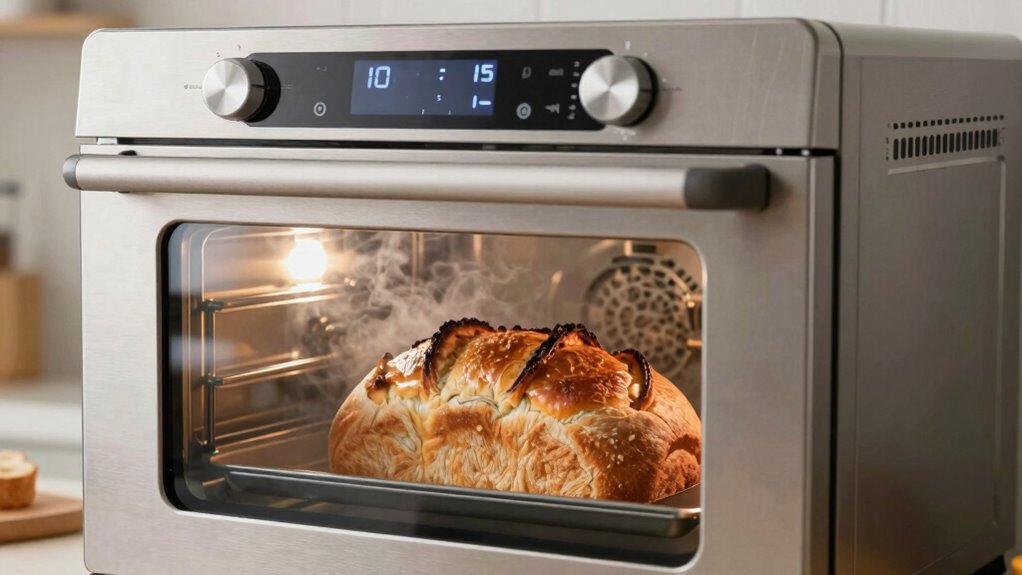
Many people wonder if investing in a steam oven is truly necessary, especially with so many kitchen gadgets available. The truth is, a steam oven offers unique benefits that can elevate your cooking, but it’s not a must-have for everyone. Some myths suggest it’s only about fancy kitchen aesthetics, but it’s more about improving food quality—especially breads and pastries. When considering brand comparisons, focus on features that match your cooking style rather than hype. If you bake often or want crisp, moist results, a steam oven is worth it. However, if you prefer simple appliances, you might not need one. Ultimately, whether it’s worth the investment depends on your culinary goals and how much value you place on consistently better results.
How to Choose the Best Steam Oven for Your Home Kitchen

Choosing the right steam oven for your home involves evaluating your cooking habits and specific needs. To guarantee you pick the best model, consider these factors:
Selecting the ideal steam oven ensures your cooking habits and needs are perfectly met.
- Steam Intensity and Control – Look for ovens with adjustable steam levels to optimize bread fermentation and overall baking consistency.
- Size and Capacity – Match the oven’s size to your typical batch sizes and available countertop space.
- Ease of Oven Maintenance – Choose models with easy-to-clean features and reliable water reservoirs to keep your oven functioning smoothly.
- Additional Features – Consider convection options or programmable settings that enhance versatility and convenience.
Focusing on these points helps you find a steam oven that supports your baking goals while offering straightforward maintenance.
Tips for Baking Perfect Bread With a Steam Oven

To bake perfect bread with a steam oven, mastering the right technique is essential. First, guarantee your dough rises properly by placing it in a warm, draft-free spot until it doubles in size. This step develops the gluten structure needed for a good rise. When you’re ready to bake, preheat your steam oven to the correct temperature—usually around 450°F (232°C). The high oven temperature, combined with steam, creates a crisp, golden crust and helps the dough expand fully. Don’t open the oven door too early; the steam and heat should be maintained to ensure ideal oven spring. Using steam during the initial baking phase keeps the crust moist, allowing for better dough expansion and a more professional-looking loaf.
Is a Steam Countertop Oven Worth It? Final Tips for Home Bakers

A steam countertop oven can be a valuable addition to your kitchen, especially if you enjoy baking bread, roasting vegetables, or cooking delicate foods. It enhances bread fermentation by maintaining ideal oven temperature and moisture, leading to better crust and crumb. To decide if it’s worth it, consider these tips:
- Assess how often you bake bread and if improved crust justifies the investment.
- Use the steam function to regulate oven temperature for consistent results.
- Experiment with bread fermentation times, as steam helps achieve better rise.
- Maintain the oven properly to ensure steam functions effectively and prolongs its lifespan.
A steam oven offers precision and consistency, making your baking easier and more professional. If you bake frequently and value quality, it’s a worthwhile addition.
Frequently Asked Questions
How Does Steam Affect the Gluten Development in Bread?
Steam helps maintain moisture in your dough, which is essential for proper gluten structure development. As you bake, the steam prevents the crust from forming too quickly, allowing the gluten network to fully develop and become more elastic. This results in a dough with better elasticity, leading to a lighter, airier bread. Without steam, the gluten structure can become tough or underdeveloped, affecting the bread’s overall texture and rise.
Can Steam Ovens Be Used for Baking Other Pastries Besides Bread?
You can definitely use steam ovens for more than bread, unblocking incredible pastry versatility and dessert applications. Unlike traditional baking, steam creates moist heat, perfect for delicate pastries like éclairs or choux. It helps achieve crisp exteriors while keeping interiors tender. So, if you’re looking to expand your baking repertoire, a steam oven offers the moist environment needed for a variety of pastries, elevating both flavor and texture.
What Maintenance Is Required to Keep a Steam Oven Functioning Properly?
To keep your steam oven functioning properly, you should regularly run cleaning cycles to prevent mineral buildup and bacteria. Also, use good water quality—preferably filtered—to avoid mineral deposits that can damage the heating elements or clog the steam generator. Wipe down the interior after each use, and check the water reservoir for leaks or blockages. Proper maintenance guarantees consistent performance and longer appliance lifespan.
Are There Specific Types of Bread That Benefit More From Steam Baking?
You’ll find that artisanal crusts, like sourdough or ciabatta, benefit most from steam baking because it creates a crisp exterior and chewy interior. If you’re gluten-sensitive, steam helps develop a better rise and texture without extra additives. Steam ovens enhance the crust’s shine and crunch, making these breads especially suited for steam baking. So, if you love rustic, crusty loaves, using steam will elevate your baking results considerably.
How Does the Size of a Steam Countertop Oven Influence Baking Results?
Size substantially shapes your baking success. A spacious steam countertop oven boosts oven capacity, allowing you to craft larger loaves with consistent crusts and moist interiors. On the other hand, a compact countertop space encourages efficient, smaller batches, perfect for quick, quality baking. Larger ovens provide more flexibility, while smaller ones focus on finesse. Choose your size based on your baking needs, balancing space constraints with desired results.
Conclusion
If you haven’t tried a steam countertop oven, you’re missing out on bread that’s so perfect, it’ll make your old oven look like a toy. Imagine crusts so crispy they crack like glass and insides so tender they melt in your mouth—all thanks to a little steam magic. Don’t settle for mediocre bread. Upgrade your baking game and turn every loaf into a masterpiece. Your taste buds will thank you—trust us, it’s a game-changer!