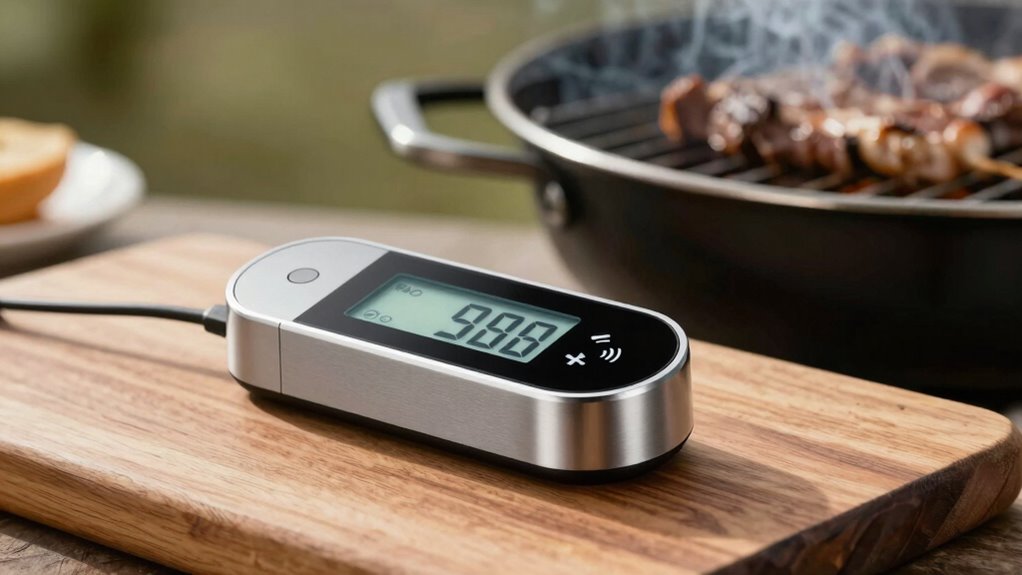
Wireless meat thermometers use Bluetooth and Wi-Fi signals that can be affected by obstacles, interference, and device placement. Bluetooth typically works within about 30 feet, but walls and metal objects can cut this down. Wi-Fi offers a longer range, often over 100 feet, yet interference reduces stability. To keep your connection strong, make certain of clear line of sight and proper placement. Keep exploring to discover how to maximize your thermometer’s performance and accuracy.
Key Takeaways
- Bluetooth typically offers a 30-foot range, but obstacles like walls and metal surfaces can significantly reduce it.
- Wi-Fi provides a broader coverage area, often exceeding 100 feet, but is more susceptible to interference from other devices.
- Signal strength and stability depend on device placement, clear line of sight, and minimizing interference sources.
- Environmental factors such as thick walls, electronic devices, and metal objects weaken wireless signals and limit effective range.
- Regular updates, proper device positioning, and reducing obstacles enhance Bluetooth and Wi-Fi connection reliability.
Why Does My Wireless Thermometer’s Signal Keep Dropping?
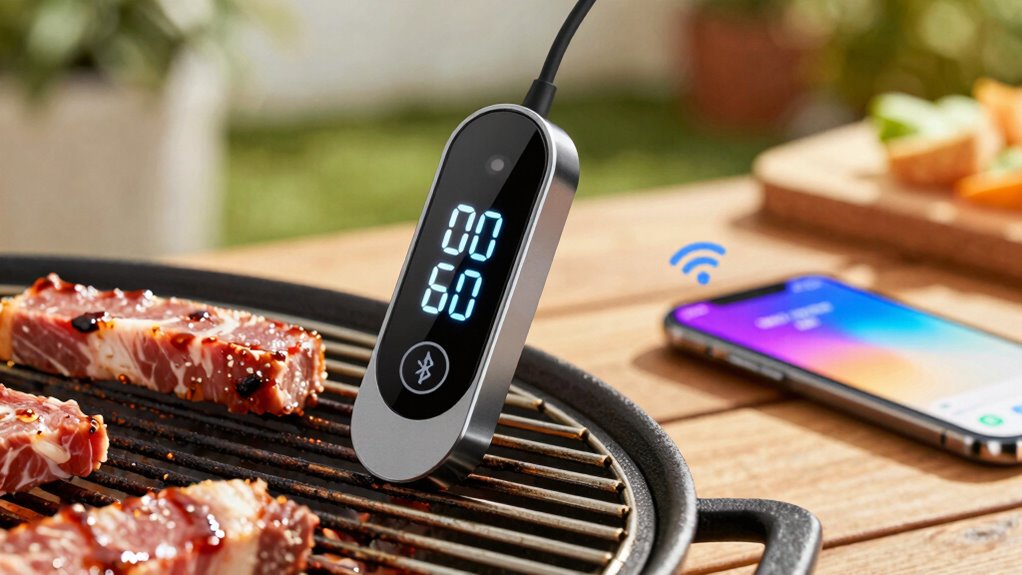
If your wireless meat thermometer’s signal keeps dropping, it can be frustrating and make monitoring your food difficult. The main culprit is often radio frequency interference, which disrupts the communication between your thermometer and receiver. Devices like Wi-Fi routers, microwave ovens, or cordless phones emit signals that can interfere with your thermometer’s designated frequency. Additionally, thick walls, metal surfaces, or other electronic devices can weaken the signal, causing dropouts. Make sure your thermometer uses a less crowded frequency band, and keep it away from other electronics during use. Moving closer to your receiver or reducing obstacles between the devices can also improve signal stability. Understanding how radio frequency and signal interference affect your thermometer helps you troubleshoot common connectivity issues. Being aware of wireless communication protocols can further assist in optimizing device placement and maintaining a stable connection. Properly configuring your device’s frequency settings can also minimize interference from nearby electronics. Ensuring your devices operate on less congested frequency bands can significantly improve connection reliability.
How Bluetooth and Wi-Fi Connect Your Thermometer to Your Smartphone
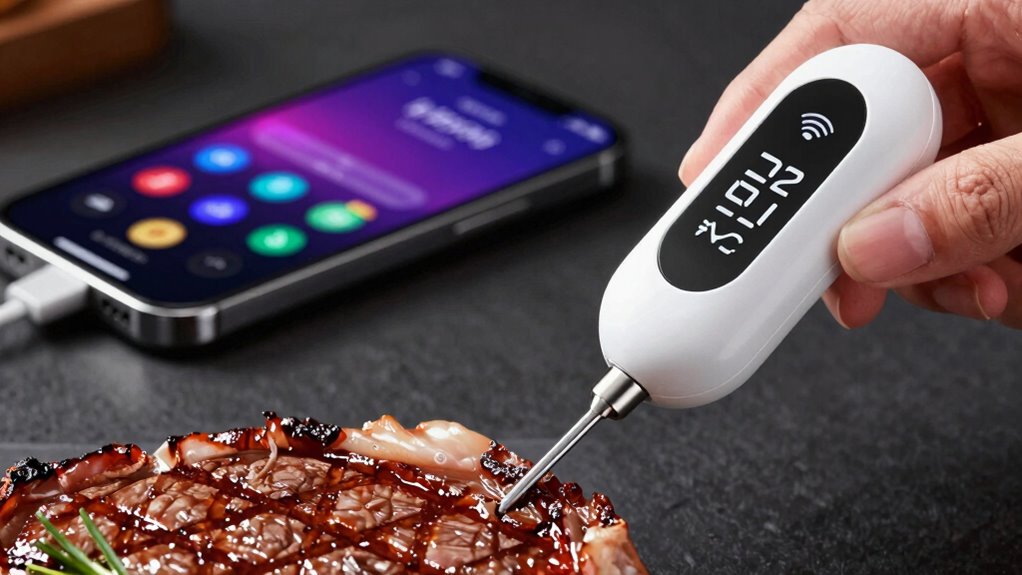
Connecting your wireless thermometer to your smartphone is straightforward with Bluetooth pairing and Wi-Fi setup. You’ll need to follow specific steps to guarantee a secure connection and smooth data transfer. Keep in mind that signal range and stability can affect your thermometer’s performance during cooking. Utilizing sound design skills can help optimize the audio cues in your device’s interface, ensuring better user interaction. Additionally, understanding the wireless technology involved can assist in troubleshooting connectivity issues and improving overall performance. Being aware of signal range limitations can help you position your device more effectively for reliable communication, especially considering the impact of interference from other wireless devices.
Bluetooth Pairing Process
Have you ever wondered how your wireless meat thermometer pairs seamlessly with your smartphone? It all starts with device discovery, where your phone scans for nearby Bluetooth devices. Once your thermometer appears on the list, you select it to initiate pairing. During the process, your device communicates with the thermometer to confirm compatibility. After successful communication, you’ll see a pairing confirmation message on your screen, indicating the connection is secure. This process is quick and straightforward, often requiring no more than a tap. The thermometer and smartphone exchange security keys to establish a trusted link, allowing data to flow smoothly. Bluetooth security is crucial for protecting your device and personal information during this process. With pairing complete, your device is ready to transmit temperature readings wirelessly, ensuring accurate cooking control. Bluetooth pairing process is essential for establishing a secure connection between your devices. Additionally, understanding how wireless range works can help optimize your device’s performance during cooking. Knowing the signal strength can help you place your thermometer for the best connection and avoid interruptions, especially since radio frequency plays a crucial role in maintaining a stable connection.
Wi-Fi Network Setup
Once your meat thermometer has paired via Bluetooth, setting up its Wi-Fi connection is the next step to enable remote monitoring. To do this, open the thermometer’s app and select the Wi-Fi setup option. You’ll need to connect it to your home network by choosing your Wi-Fi name and entering the password. During this process, guarantee your network security by using a strong, unique password to prevent unauthorized access. The thermometer uses signal encryption to protect your data as it transmits between your device and the thermometer, enhancing privacy and security. Additionally, understanding wireless range limits can help you position your thermometer optimally within your home network for consistent connectivity. It’s also beneficial to consider network security best practices, such as enabling firewalls and updating firmware, to further safeguard your connected devices. Follow the app prompts to complete the connection. Once connected, your thermometer will communicate with your smartphone through your Wi-Fi network, allowing you to monitor your meat remotely with confidence in the security of your data.
Signal Range and Stability
Ever wonder how well your meat thermometer stays linked to your smartphone during cooking? Signal range and stability depend on factors like signal interference and device compatibility. Bluetooth typically offers a short range, around 30 feet, but walls or metal objects can weaken the connection. Wi-Fi provides a broader range, often up to 100 feet or more, but it’s more susceptible to signal interference from other networks or electronic devices. Ensuring your thermometer and smartphone are compatible with the same Bluetooth or Wi-Fi standards helps maintain a stable connection. Regular updates and proper placement of your router or device can also improve signal stability. Being aware of these factors helps you keep your thermometer connected, so you get accurate readings without interruptions. Incorporating knowledge about sound vibrations and their effect on cellular health can also inspire innovative features in smart kitchen devices. Additionally, understanding wireless communication protocols can help optimize device setup for improved performance, especially as signal interference can disrupt connectivity and data transfer. Recognizing signal strength indicators can also assist in troubleshooting connection issues and ensuring optimal device performance.
What Factors Affect the Range of Your Wireless Thermometer
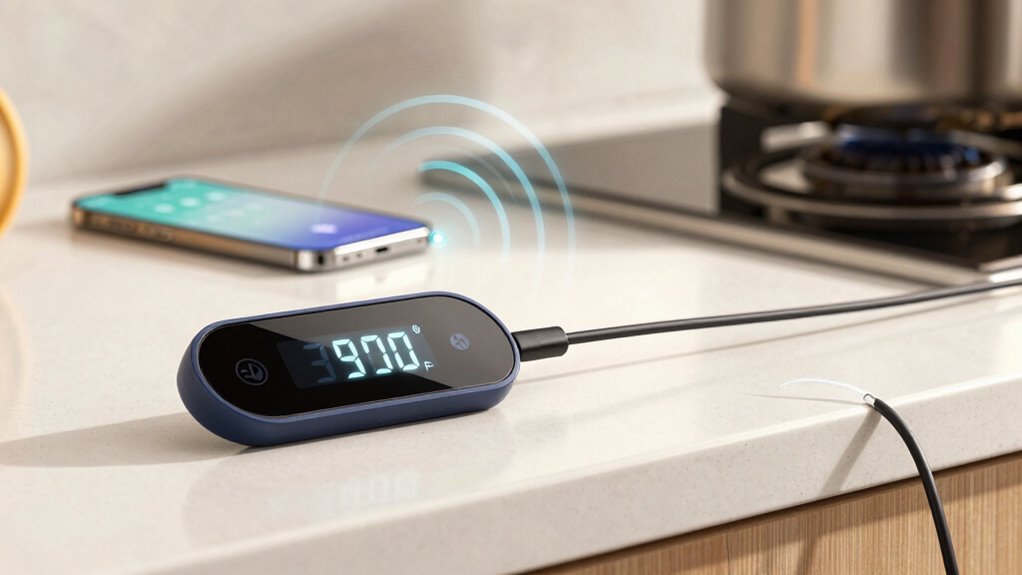
Several factors can influence the effective range of your wireless meat thermometer, impacting how far you can monitor your food remotely. First, sensor calibration affects accuracy and signal strength; poorly calibrated sensors may transmit weaker signals. Battery lifespan is also vital—if your device’s batteries are low, the signal may weaken or drop entirely, reducing range. Environmental conditions like walls, metal objects, and interference from other electronics can obstruct signals, diminishing effective distance. Additionally, the quality of the transmitter and receiver components determines how well signals are transmitted and received. Proper sensor calibration ensures reliable communication, while maintaining fresh batteries keeps the connection stable. External interference sources can further disrupt signal quality, impacting overall range. Understanding the cruise industry and how environmental factors influence signal transmission can help you understand and optimize your thermometer’s range for better cooking control.
Tips to Maximize Bluetooth and Wi-Fi Range for Better Cooking
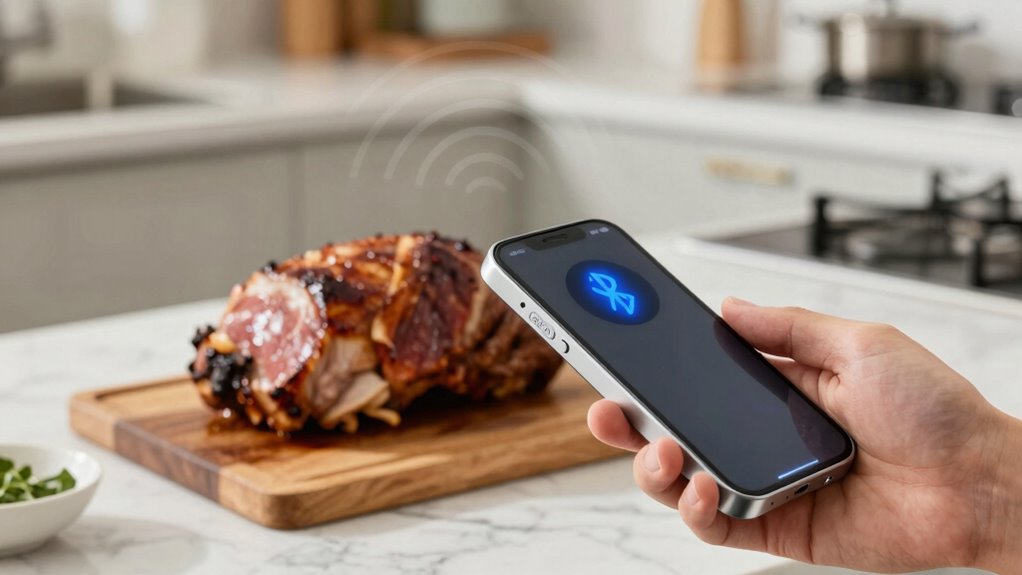
To get the most out of your wireless thermometer, focus on optimizing device placement by keeping it within a clear line of sight. Avoid placing it near metal objects or electronic devices that can cause interference. By reducing these obstacles, you’ll guarantee a stronger connection for more accurate and reliable readings. Additionally, understanding wireless communication principles can help you troubleshoot and improve your device’s range effectively. For example, knowing about Bluetooth and Wi-Fi frequency bands can assist in selecting optimal channels to minimize signal congestion. Familiarizing yourself with radio frequency interference can also provide insights into potential disruptions that impact connectivity, ensuring a more seamless cooking experience. Exploring signal propagation can further help you understand how environmental factors influence wireless signals, leading to better setup choices. Exploring Soul Sanctuaries can also provide insights into calming environments that may influence your cooking experience and device performance.
Optimize Device Placement
Optimizing the placement of your wireless meat thermometer guarantees a stronger Bluetooth or Wi-Fi connection, which is essential for accurate temperature readings and real-time updates. To achieve ideal positioning, consider these tips:
- Keep the device within a clear line of sight to your receiver, avoiding walls or obstructions.
- Place the thermometer away from metal objects that can interfere with signal strength.
- Elevate the device slightly, such as on a countertop or stand, to reduce interference from surfaces.
- Position the receiver closer to the cooking area during use, especially if you notice weak signals.
Reduce Interference Sources
Reducing interference sources is key to maintaining a strong Bluetooth or Wi-Fi connection during cooking. Signal obstacles like thick walls, metal objects, and electronic devices can disrupt your wireless signal, causing drops or slow data transfer. To minimize interference sources, keep your thermometer and router in open, unobstructed areas away from large metal appliances or other electronics that emit electromagnetic signals. Avoid placing your device near microwaves, cordless phones, or Bluetooth speakers, as these can create competing signals. Also, try to reduce the number of active wireless devices in the vicinity, especially those on the same frequency. Additionally, understanding wireless signal interference can help you better troubleshoot connection issues. By creating a clear environment free of signal obstacles, you’ll maximize the range and reliability of your wireless meat thermometer, ensuring accurate readings every time.
How to Troubleshoot Common Connectivity Problems
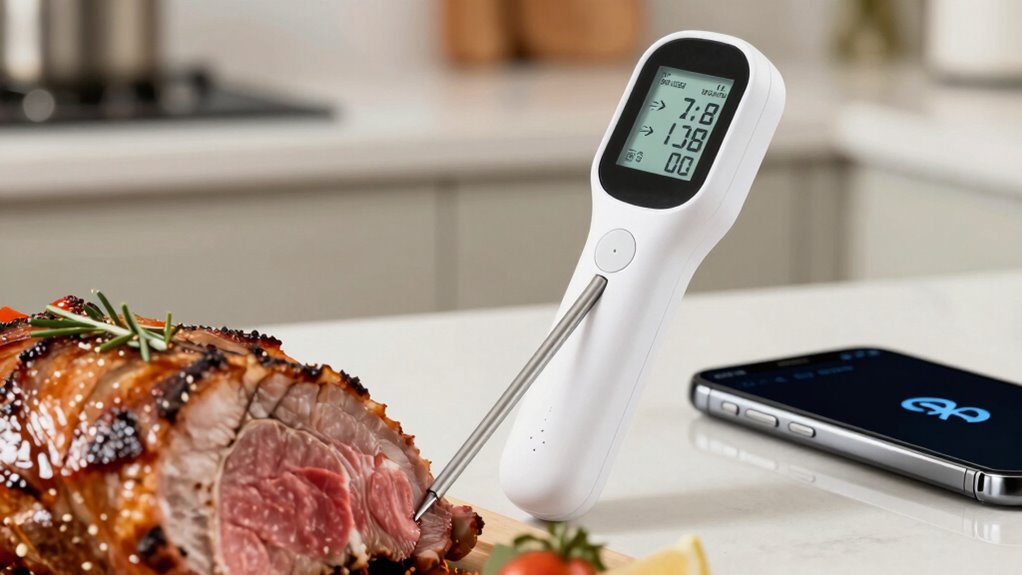
Connectivity issues with wireless meat thermometers can be frustrating, but many problems are easy to resolve with some simple troubleshooting steps. First, check the battery lifespan; low batteries can cause weak signals. Next, ensure your device’s firmware is up to date, as updates often improve connectivity. If problems persist, try these steps:
- Restart both thermometer and receiver to reset connections.
- Keep devices within recommended Bluetooth or Wi-Fi range, avoiding obstacles.
- Reduce interference sources like other electronics or Wi-Fi networks.
- Re-pair the devices, removing existing connections before reconnecting.
Following these steps can often restore reliable communication. Regularly replacing batteries and installing firmware updates helps maintain peak performance and minimizes connectivity issues.
How Far Can You Use Your Wireless Thermometer and Still Get Accurate Data?

Wireless meat thermometers are designed to provide accurate temperature readings over a specific range, but understanding that range is key to getting reliable data. Typically, Bluetooth thermometers work best within 30 feet, while Wi-Fi models can reach up to 200 feet or more, depending on obstacles. Keep in mind that the device’s battery life impacts how long it can stay connected and maintain accurate readings; a low battery might weaken the signal. Device compatibility also matters—some thermometers perform better with certain smartphones or tablets. To ensure accuracy, avoid obstructions like thick walls or metal appliances that can reduce signal strength. Knowing your thermometer’s range and maintaining good device health will help you get consistent, precise readings throughout your cooking.
Frequently Asked Questions
Can Obstacles Like Walls Affect Bluetooth and Wi-Fi Signal Strength?
Yes, obstacles like walls can affect your Bluetooth and Wi-Fi signal strength. Obstacle interference causes signal attenuation, weakening the connection between your device and thermometer. Thick walls or metal objects block or reflect signals, reducing range and reliability. To improve performance, keep your device closer to the thermometer and avoid placing obstacles in the signal path. This helps minimize interference and maintain a strong, stable connection.
How Do Different Smartphone Models Impact Wireless Thermometer Connectivity?
Imagine you’re wielding a magic wand in a castle tower—your smartphone’s model influences your wireless thermometer connection. Different smartphones vary in Bluetooth and Wi-Fi capabilities, affecting compatibility and range. Some models might experience signal interference from certain cases or other devices, leading to drops or lag. To guarantee a smooth experience, check your phone’s compatibility and minimize potential interference, making cooking less of a quest and more of a feast.
Is There a Difference in Range Between Bluetooth 4.0 and Bluetooth 5.0?
Yes, Bluetooth 5.0 offers a longer range than Bluetooth 4.0, typically up to 240 meters compared to 10 meters. Bluetooth versions improve signal strength and reduce interference, so you’ll notice fewer dropouts and more reliable connections. Keep in mind, signal interference from other devices or walls can still impact your wireless thermometer’s range, regardless of the Bluetooth version. Upgrading to Bluetooth 5.0 generally provides better performance and distance.
Do Firmware Updates Improve Wireless Thermometer Signal Stability?
Firmware updates can definitely improve your wireless thermometer’s signal stability. When manufacturers release updates, they often fix bugs, optimize performance, and enhance connectivity features. By keeping your device’s firmware current, you guarantee better Bluetooth or Wi-Fi connection reliability, which means fewer dropouts and more accurate readings. So, regularly updating the firmware is a simple way to maintain and even boost your thermometer’s signal stability during your cooking sessions.
How Does Battery Life Influence Wireless Signal Performance During Cooking?
Battery life critically impacts your wireless thermometer’s signal performance during cooking. As the battery drains, the device may reduce power output, leading to weaker Bluetooth or Wi-Fi signals. Proper power management helps conserve battery life, ensuring consistent connectivity. To maintain ideal signal, avoid overusing features that drain the battery quickly, and keep your thermometer charged or with fresh batteries. This way, your thermometer stays connected and accurate throughout your cooking session.
Conclusion
Imagine you’re preparing a big roast and your wireless thermometer keeps losing signal. By understanding how Bluetooth and Wi-Fi work, you can troubleshoot issues and maximize your range. For example, keeping your phone close and minimizing interference guarantees accurate readings. With these tips, you’ll enjoy hassle-free cooking, confident your thermometer stays connected from start to finish. Good connections mean perfectly cooked meat every time, making your culinary experience smooth and successful.