
If you want an authentic sear and smoky flavor, a grill pan on the stovetop is your best choice, as it provides direct contact and creates classic grill marks. However, if you prefer quick, even crispiness with less cleanup, an air fryer is ideal, offering tender interiors and minimal fuss. For a balanced approach or more detailed insights, keep exploring—there’s much more to discover about these options.
Key Takeaways
- Grill pan creates authentic sear marks and smoky flavors, ideal for charred, flavorful dishes.
- Air fryer provides even crispiness and tender interiors without smoky taste, focusing on uniform texture.
- Searing with a grill pan enhances marinade flavors through caramelization, while air fryers preserve delicate marinade nuances.
- Cleaning a grill pan is more labor-intensive due to grease and char buildup; air fryers are easier with dishwasher-safe parts.
- Choose a grill pan for smoky, charred textures; opt for an air fryer for quick, crispy, oil-free results.
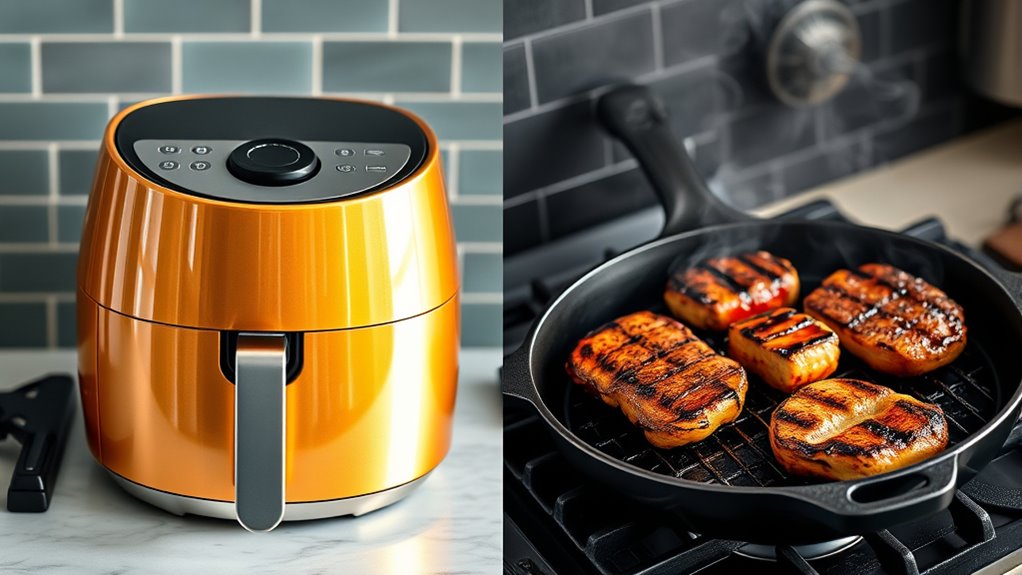
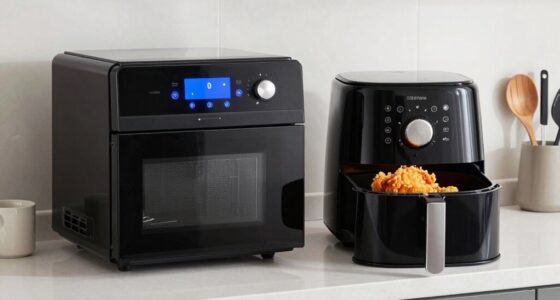
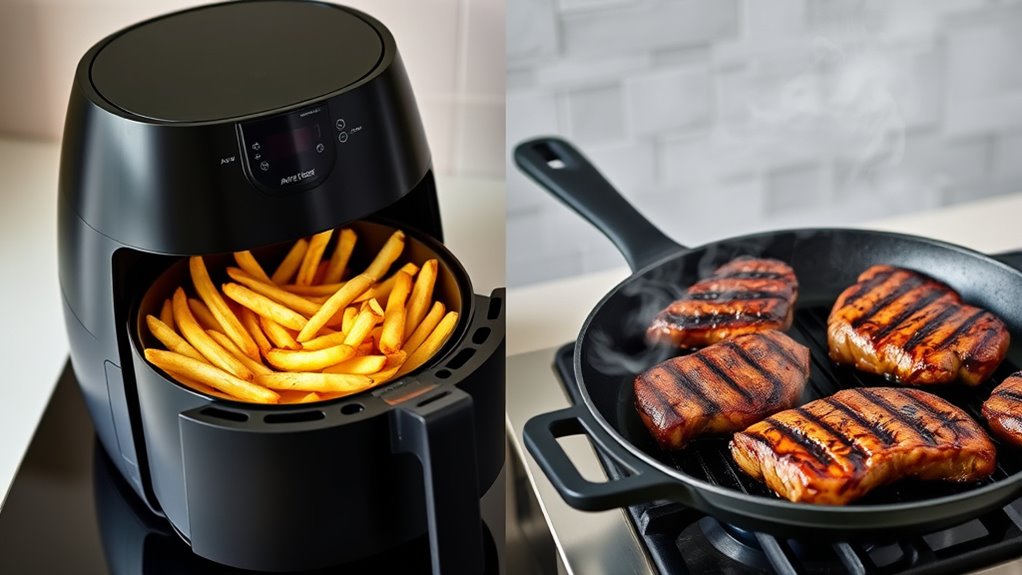
When choosing between an air fryer and a grill pan, it’s important to contemplate how each appliance fits your cooking style and needs. If you love that smoky sear and crispy exterior, a grill pan offers a direct contact surface that mimics outdoor grilling, giving you authentic grill marks and a charred flavor. On the other hand, an air fryer circulates hot air rapidly around your food, producing a crispy exterior without the need for excess oil. When it comes to searing and texture, these differences matter. The grill pan excels at creating those classic sear lines and imparting a smoky taste, making it ideal for steaks, chicken breasts, or vegetables that benefit from a charred surface. The air fryer, however, focuses on even crispiness and a tender interior, perfect for foods that need a uniform crust without the grill’s smoky flavor.
Choose a grill pan for smoky sear marks; opt for an air fryer for quick, crispy, oil-free results.
Marinade effects are also a consideration. A grill pan’s high heat enhances marinade flavors, creating caramelization that locks in juices and intensifies taste. Foods marinated beforehand will develop a more pronounced flavor profile when grilled, thanks to the searing process. Conversely, an air fryer’s rapid air circulation preserves delicate marinade flavors better, especially for lighter marinades or glazes. Because it cooks quickly and evenly, the marinade’s subtle nuances aren’t lost, making it a good choice for dishes where you want a balanced flavor without the smoky char.
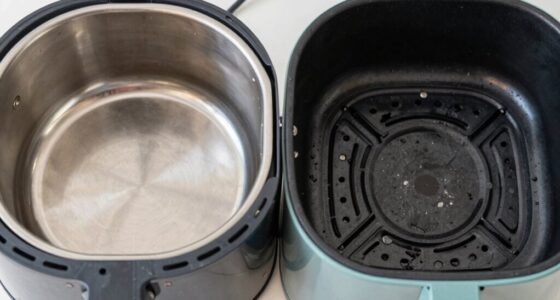
Additionally, the self watering plant pots concept highlights the importance of moisture management in cooking, as proper moisture retention can influence food texture and flavor. Cleanup comparison is another essential factor. A grill pan, especially if it has ridges, can be more challenging to clean due to trapped grease and charred bits. You often need to scrub the ridges thoroughly or soak it beforehand. An air fryer, with its non-stick basket and removable parts, tends to be easier to maintain. Most components are dishwasher safe, simplifying cleanup after cooking. This convenience can save you time and effort, making the air fryer more appealing if you prefer quick, hassle-free cleaning routines.
Ultimately, your choice depends on what kind of sear and texture you prefer, how much you value marinade effects, and how much time you want to spend on cleanup. If you crave that authentic grilled flavor with visible char marks and don’t mind a bit more effort cleaning, the grill pan is your go-to. But if you want quick, crispy results with minimal fuss and better preservation of marinade nuances, an air fryer delivers. Both appliances have their strengths, so consider your priorities to determine which best aligns with your cooking habits.
Frequently Asked Questions
Which Method Is More Energy-Efficient for Daily Cooking?
You’ll find the air fryer more energy-efficient for daily cooking because it uses less energy overall due to faster cooking times and better heat retention. Its usage efficiency is higher since it heats quickly and evenly, reducing energy consumption. The grill pan on the stovetop might use more energy over longer periods, especially if you’re cooking large or thick items. For energy savings, the air fryer is the smarter choice.
How Do Cleanup and Maintenance Compare Between Air Fryers and Grill Pans?
Think of cleanup like a knight’s armor—some are easier to maintain. With a non-stick coating, a grill pan is simpler to wipe clean after use, but it may wear out faster, reducing its appliance lifespan. Air fryers typically require more effort to clean due to their removable parts and baskets. Regular maintenance extends both, but you’ll find the grill pan’s cleanup quicker and more straightforward overall.
Can Both Methods Achieve the Same Level of Smoky Flavor?
Both methods can deliver a smoky flavor, but a grill pan on the stovetop generally achieves greater flavor depth due to direct contact with the heat and grill marks. An air fryer might lack that authentic smoky taste unless you add smoked spices or liquid smoke. If you want a richer smoky flavor, using a grill pan is your best bet, but with some flavor enhancements, an air fryer can come close.
Which Appliance Is Better for Cooking Delicate or Thin Cuts of Meat?
For cooking delicate or thin cuts of meat, the grill pan on your stovetop is the better option. It provides direct heat and better control, allowing you to sear gently without overcooking. The appliance’s suitability for high heat guarantees you get a nice crust while maintaining tenderness. An air fryer might be too harsh or uneven for delicate cuts, risking overcooking or losing moisture, so stick to the grill pan for best results.
Are There Specific Foods That Are Unsuitable for Either Method?
You might find that delicate fish or tender vegetables aren’t suitable for either method, as they risk overcooking or losing texture. While an air fryer offers fast, crispy results, it can dry out fragile foods. A grill pan preserves sear and texture but may not evenly cook thin cuts. For ideal food compatibility and texture preservation, choose your method based on the delicacy and moisture of what you cook.
Conclusion
So, whether you opt for the air fryer’s “fryer-fantasy” or the grill pan’s “authentic char,” remember, you’re just playing culinary roulette. One promises convenience, the other, that smoky ‘je ne sais quoi.’ In the end, it’s all about pretending you’re a chef while secretly just chasing that perfect Instagram shot. So go ahead—embrace the sizzle or the sizzle-less—because, really, who needs real flavor when you’ve got filters?