TL;DR
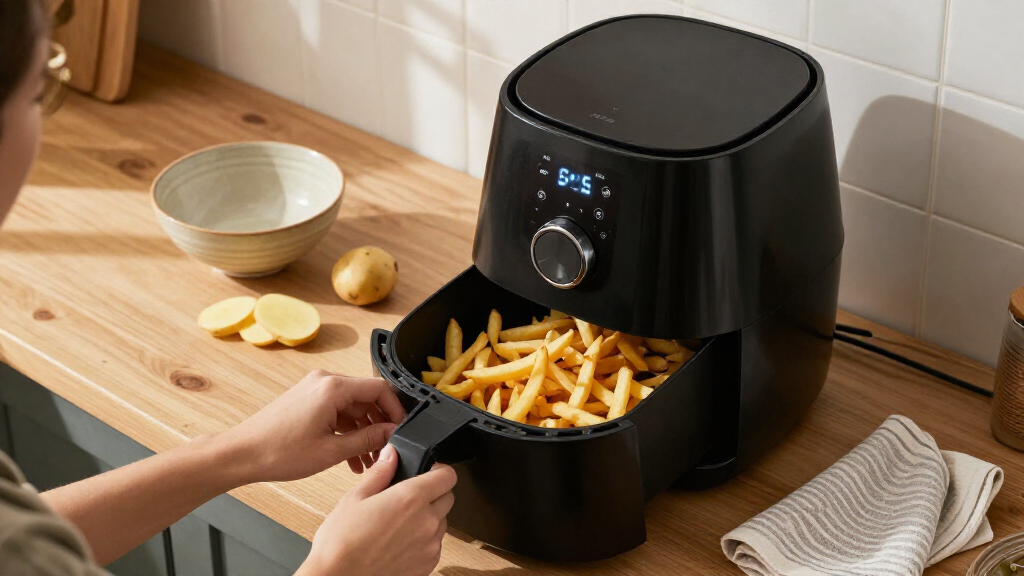
Air fryers with digital displays use a fan to circulate hot air around food, while a screen lets you set time and temperature and may offer reminders or presets. Digital controls can make cooking easier to repeat, but they do not guarantee better results: basket space, food quantity, and how you use the appliance matter more. Compare the usable cooking area, footprint, cleaning instructions, and controls before buying.
A screen can count down every second while your fries still come out soft. That’s because an air fryer’s display controls the settings; the fan, heat, food, and available basket space shape what happens to dinner.

Get kitchen gear delivered free with Prime
- Fast, free delivery on millions of items
- Prime Video, Amazon Music and more included
- Member-only deals all year
Air fryers with digital displays use a countertop convection system that moves hot air around food, often with a little oil. The screen can make it easier to choose a temperature and cooking time, and some models add presets, reminders, or separate basket controls. Those features can help, as long as you know what they can and can’t do.
This guide explains what digital controls offer, how to judge capacity and cleaning, and where these appliances fit in a real kitchen. You’ll also get a practical buying checklist, so you can compare the details you’ll use on a busy Tuesday rather than counting presets you may never touch.
A digital display makes time and temperature easier to set and read, but it does not promise better cooking or more accurate temperature control.
Presets are useful starting points; check food and adjust for portion size, thickness, and how full the basket is.
Compare usable basket area and counter footprint, not just advertised capacity or the number of programs.
Check the manual to learn which parts are dishwasher-safe and what clearance the appliance needs around its vents.
Air fryers suit many small-batch meals and reheating jobs, while a full-size oven offers more room for large meals and multi-tray baking.
What a digital air fryer actually does
An air fryer with a digital display is a countertop convection appliance that circulates heated air around food while letting you set cooking time and temperature on a screen or electronic controls. It can brown and crisp many foods, often with less added oil than deep frying, but it does not fry food by immersing it in hot oil.
Inside, you’ll usually find a heating element, a fan, and a removable basket or tray. Basket-style models keep food in a drawer-like compartment; oven-style versions add racks and a wider cooking area. The controls may be a touchscreen, physical buttons, or a dial paired with a display, so “digital” doesn’t always mean a glossy touchscreen.
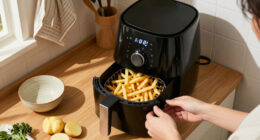
Think about a weeknight batch of frozen potato wedges. You set the temperature and time on the screen, spread the wedges in the basket, and the fan pushes hot air around their surfaces. The result can be crisp and browned, but a crowded basket blocks airflow and may leave the pieces pale and soft. A small amount of oil can help some foods brown, while the right quantity of food matters just as much.
Convection cooking explains why the appliance can crisp food, while the screen makes settings easier to see and repeat. It is still a countertop appliance with limits: it may be handy for small batches of vegetables or reheating leftovers, but its basket cannot fit a full sheet-pan dinner or a large roast.
Products Worth Considering

Breville Barista Pro Espresso Machine with Grinder, Brushed Stainless Steel

Vitamix Touch & Go Advance 32-Ounce Bar Blender, White
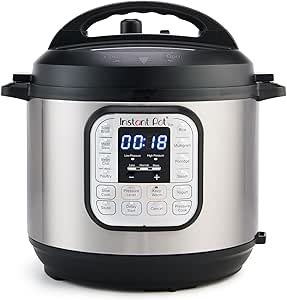
Instant Pot Duo 6 Qt 7-in-1 Electric Pressure Cooker, Stainless Steel
As an affiliate, we earn on qualifying purchases.
Which digital features make weeknight cooking easier
Digital controls can make it easier to choose a specific time and temperature, then see how much cooking time remains. Depending on the model, you may also get food presets, an end-of-cycle alert, a pause button, a shake reminder, or separate controls for two baskets. Those conveniences can make repeat meals easier to manage.
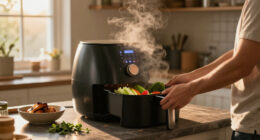
Imagine cooking chicken bites for a child and broccoli for yourself. A dual-basket model may let you choose different settings and coordinate the finish time, so one side doesn’t sit cooling while the other cooks. That can be useful if you routinely make two small dishes at once. If you mostly prepare a handful of fries, though, the extra controls might add cost and take up counter space without changing your routine.
Presets are starting points, not guarantees. A fries setting can’t know whether the basket holds a single layer or a heaped pile, or whether your food is fresh, frozen, thick, or thin. Digital displays use programmed values to control the appliance, but they don’t automatically adjust to every ingredient or portion.
- Timer and countdown: Help you keep track of a short cooking cycle.
- Shake or turn reminder: Prompts you to move food when a recipe needs it.
- Pause and adjust: Let you check food and change settings mid-cook, if supported.
- Dual-basket controls: Let you run different programs in separate compartments on some models.
If you’re trying a preset for the first time, check food before the timer ends. For example, thin broccoli florets may brown sooner than thick chicken pieces. Adjust by what you see and taste, rather than assuming the screen’s countdown can judge doneness for you.
How to compare models without getting lost in presets
Compare digital air fryers by usable cooking area, controls, footprint, and cleaning requirements before you count their presets. These details decide whether the appliance fits your kitchen and can handle the portions you actually make.
- Measure the counter space. Check the unit’s width and depth, then leave the ventilation clearance its manual calls for. A model that fits beneath your cabinets on paper may not have enough room around its vents.
- Look at the usable basket area. Advertised capacity alone doesn’t tell you how much food can sit in one layer. Imagine cooking fries for two: spread-out pieces may brown more evenly than a deeper pile in a larger-looking basket.
- Try the controls mentally. Are the labels readable? Can you change time or temperature without digging through unclear menus? If you like simple routines, clear buttons may suit you better than a screen full of icons.
- Check which parts you can clean easily. Confirm whether the basket, tray, and racks are dishwasher-safe individually. The manual, not the product headline, tells you which parts can go in the dishwasher.
- Match extras to your habits. Pay more attention to a second basket, viewing window, or oven-style racks if you’ll use them often. Don’t pay extra just because a feature sounds clever.
For a practical comparison, picture two kitchens: one has room for a wide oven-style unit and regularly cooks for four; the other has a compact counter and mainly reheats lunch. The first cook may value racks and extra capacity, while the second may get more from a small basket and simple controls. Neither shopper needs to treat the largest model as the automatic winner.
What changes the taste and texture of your food
Air-fryer results depend on the food, its portion size, and how freely hot air can circulate—not on whether the display is digital. A basket that’s too full can leave one side of dinner crisp and another limp, while a thinner layer often gives food more room to brown.
Say you tip frozen fries into the basket until it’s nearly full. The timer runs, but the fries in the middle remain soft. On the next batch, you cook fewer fries and shake them when prompted; the hot air reaches more surfaces, and the fries brown more evenly. That small change in quantity may matter more than switching to a model with a longer preset menu.
Some air fryers cook faster than a conventional oven, particularly for small portions, but recipes may need adjustment. Follow the appliance manual and recipe where they give instructions about preheating or cooking time. One model may call for preheating, while another recipe may start with a cold appliance; the display doesn’t settle that question by itself.
Air frying often uses less added oil than deep frying, but it doesn’t turn every food into a healthy choice. A basket of vegetables with a light coating of oil is still different from heavily processed snacks. A good first run with new food might mean checking early, looking for golden edges, and adding time in small increments if the center needs more heat. Let the food, rather than the preset name, guide your adjustments.
Where an air fryer helps—and where an oven still wins
An air fryer can handle many small-batch jobs, including crisping, reheating, and roasting, but it may not replace a full-size oven for large meals or baking that needs more room. A countertop convection appliance is useful when its compact cooking space matches the task.
Picture Sunday dinner for six: there’s a tray of vegetables, a pan of lasagna, and a roast that needs oven space. A basket air fryer can’t take over that whole meal. But on Monday, it might reheat two slices of pizza until the crust firms up and the cheese bubbles at the edges, without asking you to heat a large oven for a small portion.
Capacity and design affect the tradeoff. Basket models suit compact batches and are often straightforward to load. Oven-style models offer racks, which can help when you want to cook different items or use more of the unit’s interior. Yet extra space does not promise even browning if you crowd the racks, and a larger appliance may claim more counter space between meals.
Before buying, ask yourself what you’ll cook most often. If your usual meal is a single portion of salmon and green beans, the air fryer may become a reliable companion. If you want to bake multiple trays of cookies or cook a full family roast, your oven likely remains the better tool. The right choice depends on the food and serving size, not a promise that one appliance can do everything.
How to use and clean your new air fryer with care
Use a digital air fryer safely by following its manual, placing it on a stable, heat-resistant surface, and leaving the recommended space around its vents. The basket and exterior can become hot, so use care when removing food and handling the parts.
For example, after cooking a batch of chicken, set the hot basket on a heat-resistant surface and let it cool as the manual directs. Check the cleaning instructions for each removable part before washing it. “Dishwasher-safe” may apply to the basket but not every rack, tray, or accessory, and abrasive scrubbers can damage some nonstick coatings.
These simple habits make everyday use less frustrating:
- Check the manual for setup, ventilation, preheating, and approved cleaning methods.
- Keep the vents clear and don’t place the appliance where steam or hot air can damage nearby surfaces.
- Give hot food room to cook; use oven mitts or the handling method the manufacturer recommends.
- Clean removable parts as directed once they are safe to handle, using non-abrasive tools where the manual calls for them.
After washing, dry components as instructed before returning them to the unit. If grease collects around the basket or tray, regular cleaning is easier than trying to remove a hardened layer later. A little attention after each use keeps cooking smells fresher and makes the appliance ready for tomorrow’s lunch.
Frequently Asked Questions
Are air fryers with digital displays better than manual models?
A display can make a specific time and temperature easier to set and read, and some models add useful reminders or presets. Manual models can be simpler and may cost less. The controls alone do not determine cooking quality; the food, basket space, and appliance design matter too.
Do air fryer presets cook food perfectly?
No. Presets use programmed times and temperatures, but they can’t account for every portion size, food thickness, or preference. When trying a recipe for the first time, check the food as it cooks and adjust the settings if needed.
Can an air fryer replace a conventional oven?
An air fryer can handle many small-batch tasks, such as reheating, roasting, and crisping. It may not suit a large meal or baking that needs several trays or a lot of room. A pizza slice can reheat nicely in a basket; a full family dinner still may need the oven.
How much food can I cook at once?
It depends on the basket’s usable area and the food. Many items brown more evenly when hot air can reach them, so a crowded basket may produce uneven results. Check your model’s guidance and cook in batches if one layer fits better.
Do I need to preheat an air fryer?
Some models and recipes call for preheating, while others do not. Follow the appliance instructions and your recipe, especially for short cooking times where starting temperature can affect consistency.
Are air fryer baskets dishwasher-safe?
Some baskets are, but this varies by model and component. Check the manual for the basket, tray, and any racks separately. Use the recommended cleaning method to protect nonstick surfaces.
Are air-fried foods healthy?
Air frying can reduce the need for added oil compared with deep frying, but the method doesn’t make every ingredient healthy. The food itself, the amount of oil, and your overall eating habits still matter.
Conclusion
Choose a digital air fryer for the jobs you’ll actually give it: a crisp lunch, a small batch of vegetables, or a weeknight side dish. Put usable space, clear controls, and easy cleaning ahead of a long preset list, and check the manual for fit and care instructions before you buy.
When dinner comes out soft, try giving the food more room before blaming the screen. A little airflow can make all the difference between a pale pile and a basket of golden edges.