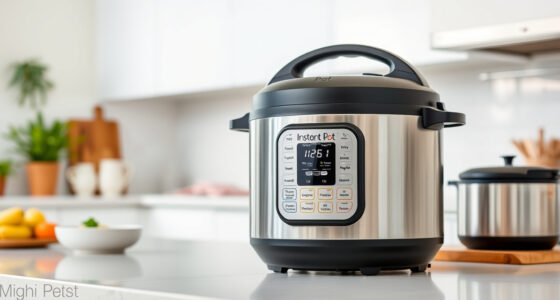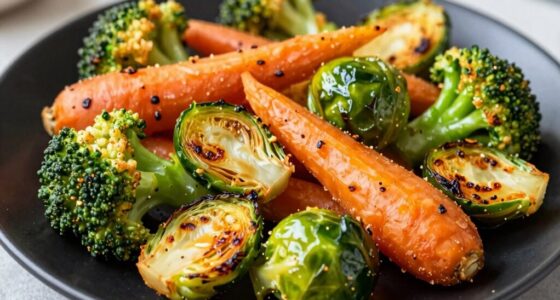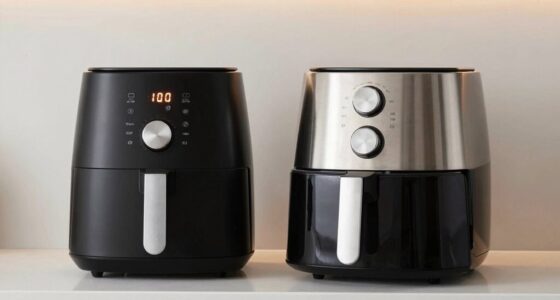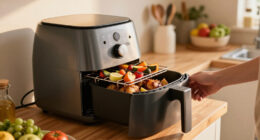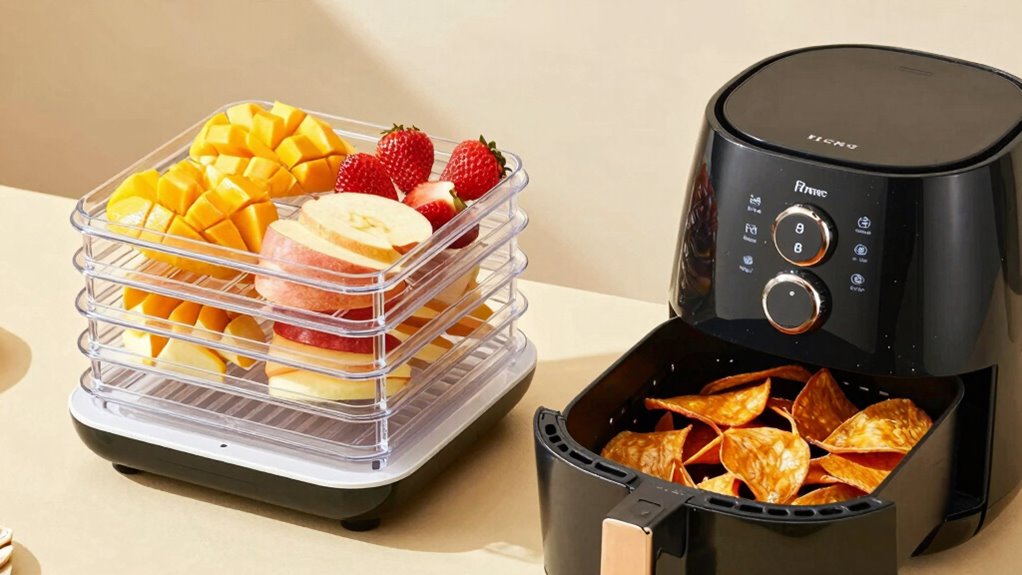

If you’re comparing food dehydrators and air fryer dehydrate modes, consider your needs. Dehydrators are designed for slow, even drying, which helps preserve flavor and nutrients, making them ideal for large batches. Air fryers dry foods faster with rapid air circulation but may cause uneven results and higher energy use. If you’d like to discover which option best suits your drying goals, keep exploring the details below.

Get kitchen gear delivered free — and shop member deals
- Fast, free delivery on millions of items
- Access to Prime Big Deal Days deals on October 6–7
- Prime Video, Amazon Music and more included
Key Takeaways
- Food dehydrators provide slow, even drying that preserves flavor and nutrients better than rapid air fryer dehydration.
- Air fryer dehydrate modes dry food faster but may cause uneven drying or flavor loss.
- Dehydrators are more energy-efficient for large batches, while air fryers are suitable for quick, small-scale drying.
- Dehydrators use consistent heat and airflow for uniform results; air fryers rely on rapid circulation, risking unevenness.
- Choice depends on batch size, drying speed needs, and importance of flavor and nutrient preservation.
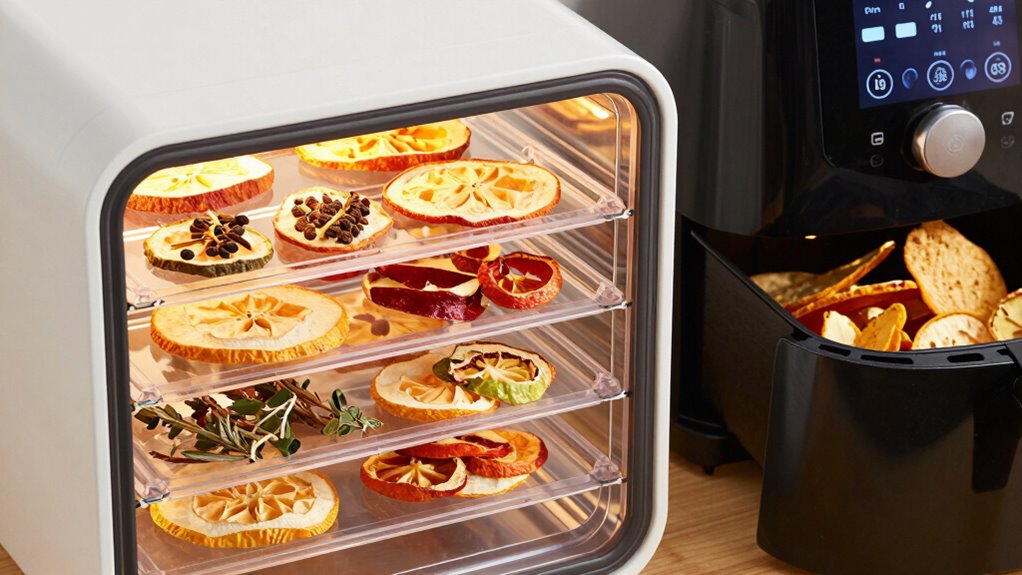
When it comes to preserving food and creating healthy snacks at home, understanding the differences between food dehydrators and air fryer dehydrate modes is vital. Both appliances aim to remove moisture from food, but they do so in ways that impact flavor preservation and energy efficiency differently. Knowing these distinctions helps you choose the best method for your needs.
Food dehydrators are specifically designed for drying fruits, vegetables, herbs, and meats. They typically use a consistent, even heat source and a dedicated fan to circulate air uniformly around the food. This setup ensures that each piece dries evenly, which is essential for flavor preservation. When you use a dehydrator, you maintain the food’s natural taste and nutrients because the process happens slowly and at relatively low temperatures. This gentle drying method prevents the loss of delicate flavors and keeps your snacks tasting fresh and vibrant. Additionally, food dehydrators are generally more energy-efficient for extended drying sessions. Since they are built solely for dehydration, they often consume less power over time, making them a cost-effective choice if you’re planning to dry large batches regularly. Food dehydrator design also influences how evenly the food dries and how well flavors are preserved. Furthermore, the specific drying technology used in dehydrators enhances their ability to preserve food quality over longer periods, especially when combined with proper storage techniques.
On the other hand, many modern air fryers come with dehydrate modes, offering a versatile appliance that can handle multiple functions. When you activate the dehydrate mode on an air fryer, it uses rapid air circulation combined with adjustable temperature controls to remove moisture. While this setup is convenient, it can sometimes lead to uneven drying, especially if the food pieces are not arranged properly. This unevenness might cause some flavors to diminish or become concentrated unevenly, impacting flavor preservation. However, air fryer dehydrate modes are quick, saving you time compared to traditional dehydrators. They tend to consume more energy during the process because of their high-speed fans and rapid heating elements. If you’re only drying small batches or need a quick snack, this trade-off might be acceptable.
In conclusion, understanding the differences in drying methods can help you select the right appliance for your specific needs and preferences.
food dehydrator for fruits and vegetables
As an affiliate, we earn on qualifying purchases.
As an affiliate, we earn on qualifying purchases.
Frequently Asked Questions
Can Both Appliances Dehydrate All Types of Food Equally Well?
No, both appliances don’t dehydrate all foods equally well. Food dehydrators are designed for consistent temperature control, which helps with flavor preservation and texture retention across various foods like fruits and herbs. Air fryer dehydrate modes work best for quick dehydration but may struggle with delicate items or those requiring even, gentle drying. So, if you want ideal results, choose the appliance suited to your specific food type.
Which Appliance Is More Energy-Efficient for Dehydration?
You’ll find that food dehydrators are generally more energy-efficient for dehydration, thanks to their dedicated design and consistent temperature control. This lower energy consumption reduces environmental impact, making them a smarter choice if you’re mindful of sustainability. Air fryers, while versatile, tend to use more energy during dehydration modes due to their multi-functionality and rapid heating. For eco-conscious dehydration, a food dehydrator is your best bet.
Are There Safety Concerns Specific to Dehydrating Foods in Air Fryers?
Yes, there are safety concerns when dehydrating foods in air fryers. You need to guarantee proper food safety by avoiding overloading the appliance and maintaining it well to prevent overheating. Regular appliance maintenance is essential to keep it functioning safely and efficiently. Always follow the manufacturer’s guidelines, and monitor the process closely to prevent fire hazards or food contamination. Proper safety measures protect you and ensure your dehydrated foods are safe to eat.
How Does Dehydration Speed Compare Between Food Dehydrators and Air Fryers?
You’ll find dehydration speed varies between food dehydrators and air fryers because of temperature control and dehydration time. Food dehydrators typically offer precise temperature settings, which can optimize dehydration, but they usually take longer—around 8-12 hours. Air fryers, with rapid airflow and quick heat adjustments, can dehydrating in less time, often around 4-6 hours. Your choice depends on how fast you want results and the level of control needed.
Can Dehydrated Foods Be Rehydrated Effectively After Processing?
Coincidentally, dehydrated foods can be rehydrated quite effectively if you use proper techniques. You should soak them in warm water or broth, gently pressing to release trapped air and guarantee even absorption. Rehydration techniques like simmering or steaming help restore texture while preserving flavor retention. Keep in mind, some foods rehydrate better than others, but with patience, you can often bring dried ingredients back to a usable, flavorful state.
Conclusion
Choosing between a food dehydrator and an air fryer’s dehydrate mode is like picking between a steady river and a rushing stream. Both can dry your food beautifully, but each flows differently—one with patience, the other with speed. Think of your decision as shaping your culinary journey: do you want the slow, deliberate craft of a dehydrator or the quick, versatile touch of an air fryer? Either way, you’re crafting delicious, preserved goodness that nourishes your life.
Fall Picks
fall essentials
As an affiliate, we earn on qualifying purchases.