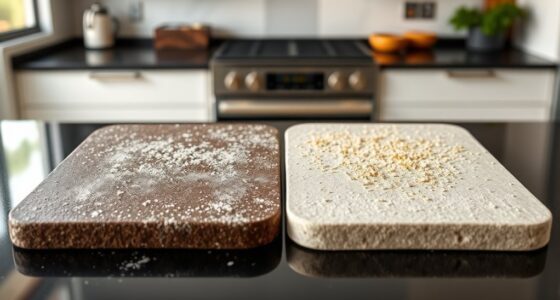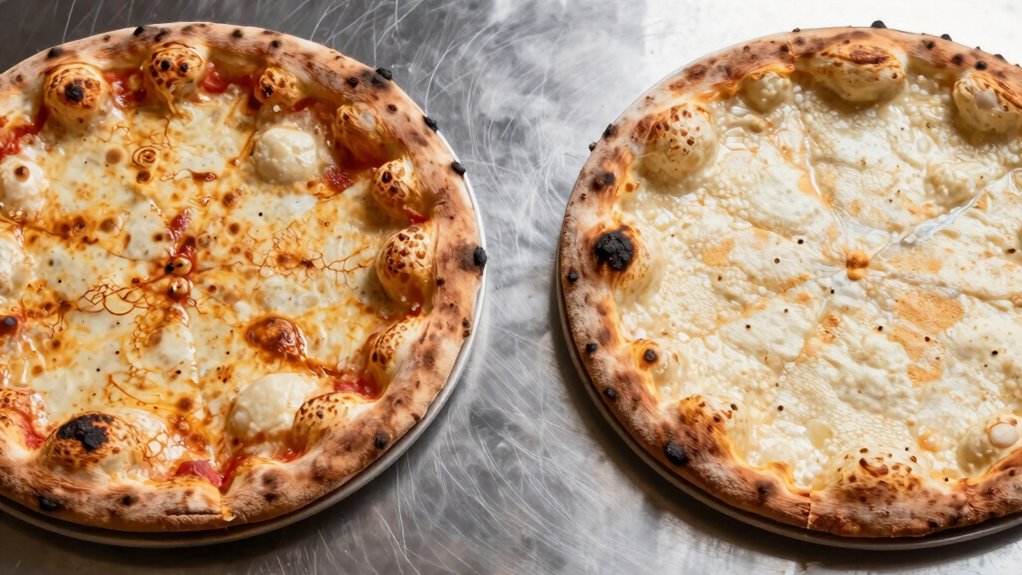

If you want a fast, crispy crust, steel heats up quickly and transfers heat faster, giving you a crispier pizza in less time. Pizza stones absorb heat more slowly but retain it longer, promoting even baking and a moist crust. Your choice depends on how you prefer your pizza—steel for speed and crispiness, stones for evenness and moistness. Keep exploring to discover which surface suits your style best.
Key Takeaways
- Steel heats up faster, producing a crisper and more browned crust quickly compared to stones.
- Stones offer even heat distribution and moisture absorption, leading to a more uniformly baked, tender crust.
- Steel’s rapid heat transfer results in shorter baking times and a crunchier crust, while stones provide gradual, controlled baking.
- Proper preheating is crucial for both; stones require longer warm-up to prevent cracking, steel is more forgiving.
- The crust’s texture depends on heat response: steel favors quick, crispy results; stones promote even, softer crust development.
What Are Pizza Stones and Steel Surfaces?
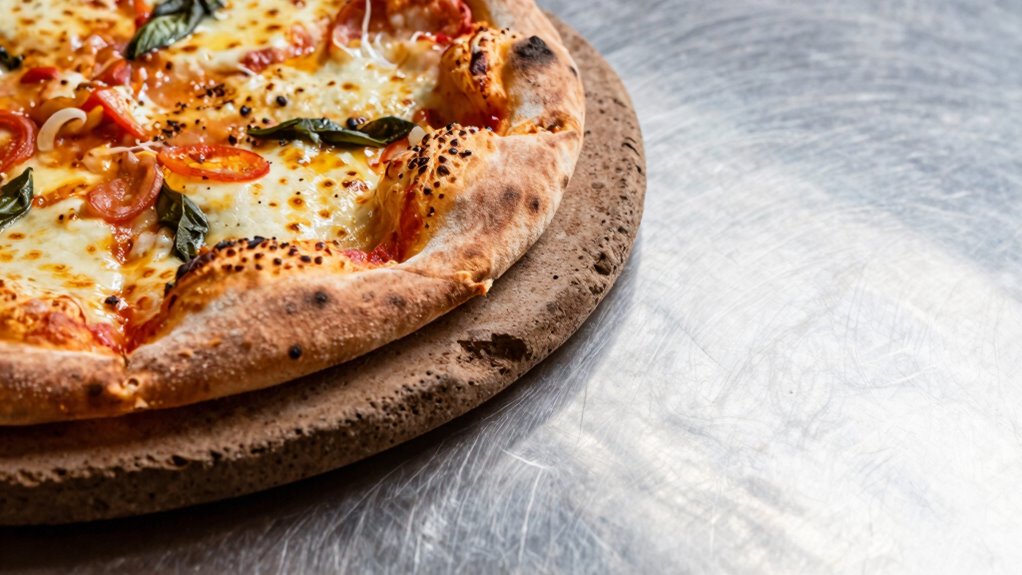
Pizza stones and steel surfaces are popular tools for achieving restaurant-quality pizza at home. They help you create a crisp crust by evenly conducting heat, which influences dough hydration and overall texture. A well-hydrated dough benefits from these surfaces because they retain heat and promote a better oven spring. Steel surfaces, being highly conductive, heat up quickly and transfer heat efficiently, leading to faster baking times. This rapid heat transfer allows for a shorter bake time and a crispy crust with less risk of overcooking. This results in a more uniform cheese melt and crisp crust. Pizza stones, typically made from ceramic or cordierite, heat more slowly but retain heat longer, giving you more control over the baking process. Both tools elevate your pizza game, but their differences in heat response considerably impact how your cheese melts and crust develops. Understanding the heat transfer properties of each material can help you select the best surface for your specific pizza style and baking preferences. Additionally, the thermal mass of these materials influences how evenly and consistently heat is distributed during baking. Recognizing the thermal response of each surface can help you optimize your baking technique for better results. Moreover, knowing about the thermal conductivity of the materials can assist you in choosing the optimal surface for your desired pizza outcome.
How Do Pizza Stones and Steels Conduct Heat Differently?
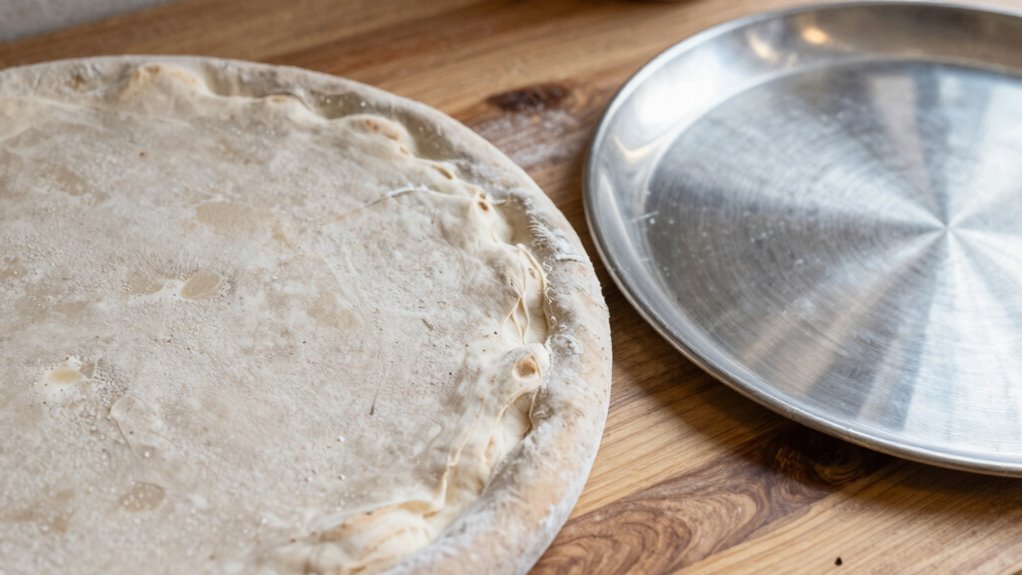
While pizza stones and steel surfaces both help achieve a perfect crust, they do so through different heat conduction properties. Steel has a much higher thermal conductivity than stones, meaning it transfers heat quickly and efficiently. This rapid heat transfer allows steel to heat up faster and deliver intense, direct heat to your pizza crust. In contrast, pizza stones have lower thermal conductivity, so they absorb and distribute heat more slowly. This slower heat transfer results in a more gradual cooking process, which can promote even baking and a crispy crust without scorching. Your choice affects how quickly and evenly your pizza cooks, with steel offering faster heat transfer and stones providing a steadier, more gentle conduction. Additionally, understanding heat conduction can help you choose the right surface for your preferred baking style. For example, thermal mass influences how well a surface retains and distributes heat over time, impacting your baking results. Recognizing the heat capacity of each material can also help you anticipate how they will perform during extended baking sessions. Furthermore, the material’s durability determines how long your surface will last under high temperatures and frequent use.
Which Bakes a Faster, Crispy Pizza Crust?
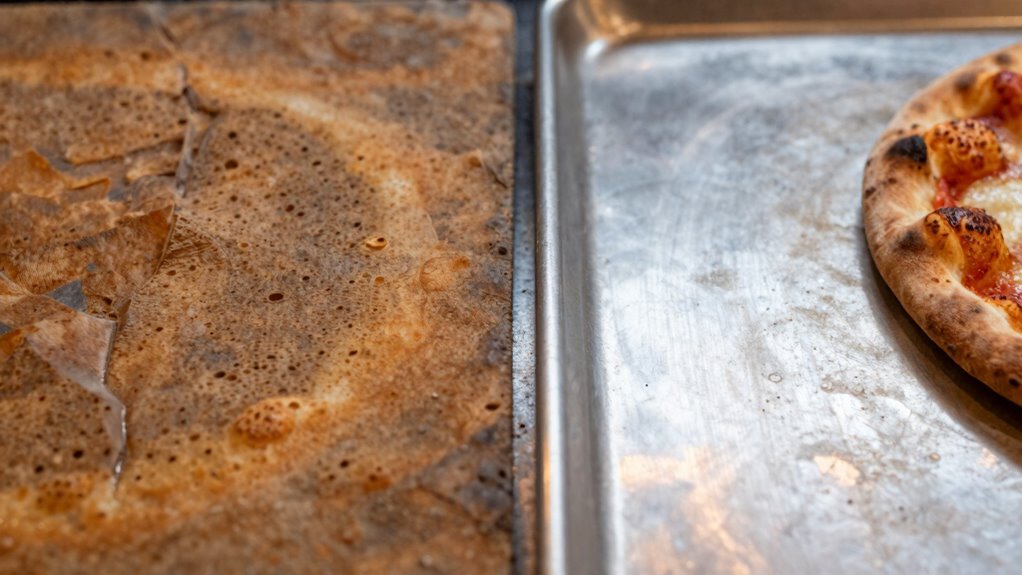
Steel heats up much faster than pizza stones, so it can produce a crispy crust more quickly. This rapid heat transfer accelerates the baking process, especially if your dough has higher hydration, which can sometimes delay crispiness. To maximize speed and crispness with steel, focus on proper topping placement; keep toppings light and avoid overloading, which can trap moisture and hinder crust development.
Key points include:
- Higher dough hydration can slow crust crisping on stones but bakes faster on steel.
- Light, even topping placement ensures heat reaches the crust effectively.
- Steel’s quick heat-up time shortens overall bake time, creating a faster, crispier crust.
In short, if you want speed and crunch, steel’s quick heat-up combined with mindful dough hydration and topping placement makes it your best choice.
How Do Heat Retention and Recovery Affect Your Pizza?

Your pizza’s crust depends on how well your baking surface retains and releases heat. A high heat storage capacity means your oven stays hot longer, helping you get that perfect crust. Faster temperature recovery ensures your surface remains consistently hot, making your pizza bake evenly. Moreover, choosing the right material for your pizza stone or steel can optimize heat retention and recovery, resulting in better crust quality. Selecting a material with advanced technology can further enhance heat transfer efficiency, leading to superior baking results. Additionally, understanding the thermal properties of each material can help you make more informed choices for your ideal pizza, especially when considering heat transfer dynamics for optimal baking. Recognizing how material composition influences heat behavior can also guide you toward the best setup for your outdoor oven.
Heat Storage Capacity
Heat storage capacity plays a crucial role in how evenly and consistently your pizza cooks. A high thermal mass and greater heat capacity mean the material can absorb and hold more heat, leading to better heat distribution during baking. This helps prevent uneven crusts and ensures a crispy, well-cooked base. Materials with excellent heat storage can maintain consistent temperatures, even when you open the oven. Keep in mind:
- Thicker materials typically have higher thermal mass
- Greater heat capacity allows for sustained heat release
- Better heat storage reduces temperature fluctuations
This means your pizza will cook more evenly, with a crisper crust and perfectly melted toppings. Understanding heat storage capacity helps you choose the right tool for achieving professional-quality results at home, especially when considering the thermal properties of different baking surfaces. Incorporating heat retention qualities can further enhance your baking outcomes and consistency in cooking. Trusted reputation in the market
Temperature Recovery Speed
When it comes to baking pizza, how quickly a material can recover its temperature after opening the oven door is essential for achieving consistent results. Steel, with its high thermal conductivity, transfers heat rapidly back to the crust, enabling faster recovery. Pizza stones, on the other hand, absorb heat more slowly but retain it longer, resulting in a steadier heat transfer. The table below compares their recovery speeds:
| Material | Thermal Conductivity | Recovery Time |
|---|---|---|
| Steel | High | Fast |
| Pizza Stone | Moderate | Slower |
| Both | Varies by thickness | Depends on thickness |
A material’s heat transfer efficiency directly influences how quickly your oven’s surface is ready for the next pizza. Understanding heat retention can help you choose the right baking surface for consistent results, especially when considering thermal properties that impact overall performance. Additionally, factors like size and thickness play a significant role in how quickly a pizza stone or steel heats up and recovers. Being aware of these thermal characteristics allows for better control over your baking process and results.
What Are the Advantages and Disadvantages of Pizza Stones?
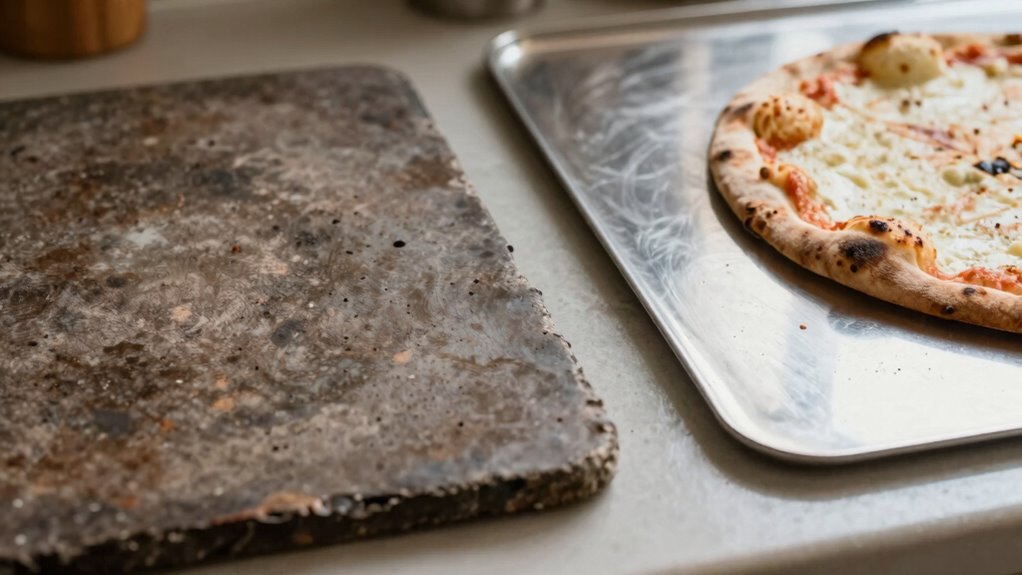
Pizza stones are popular because they can produce a crisp crust by evenly distributing heat and absorbing moisture from the dough. One advantage is their ability to create a deliciously crispy base, enhancing your pizza experience. However, there are some drawbacks to contemplate. – Pizza stone durability: While they can last a long time, dropping or improper handling can cause cracks. – Heat retention: They hold heat well but take longer to heat up and cool down, affecting cooking timing. – Maintenance: Cleaning pizza stones can be tricky; they shouldn’t be soaked or washed with soap, as this can damage their porous surface. Unlike steel, they require careful handling to prevent damage. Additionally, understanding proper thermal management techniques can help improve your overall cooking and sensory experiences. Proper thermal shocks are essential to avoid sudden temperature changes that could crack the stone and affect cooking results. Being aware of the thermal properties of your pizza stone can help you optimize its performance and longevity.
What Are the Benefits and Drawbacks of Steel Baking Surfaces?
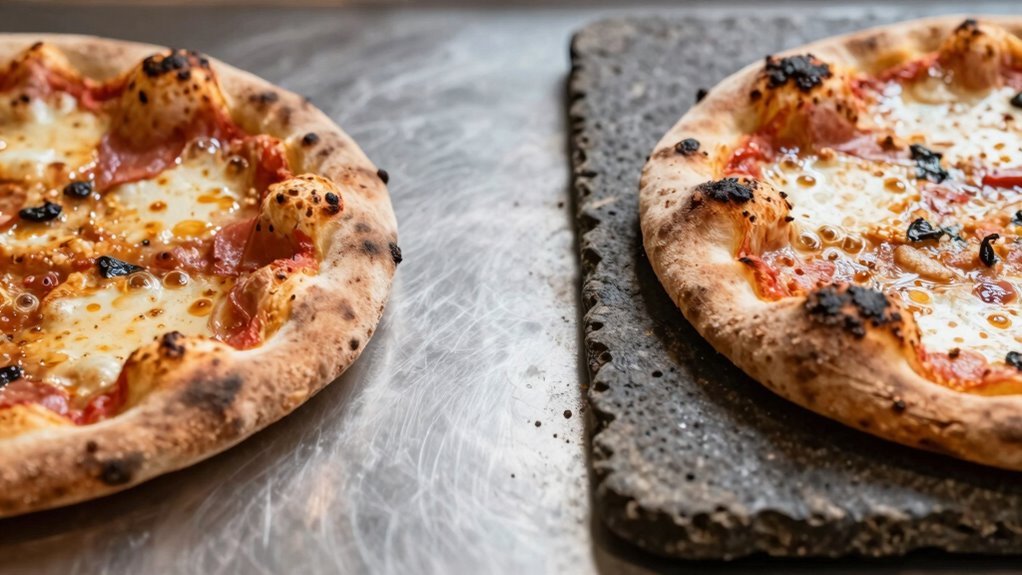
Steel baking surfaces have gained popularity for their durability and quick heating capabilities, offering a compelling alternative to traditional pizza stones. Because of their material resilience, steel surfaces resist cracking and chipping, making them long-lasting even with frequent use. They heat up rapidly, which can save you time and help achieve a crisp crust faster. Additionally, many users appreciate the architectural solutions that steel can support due to its strength and versatility. However, the cost considerations are worth noting; high-quality steel can be more expensive initially than pizza stones. Additionally, steel requires careful handling to prevent warping or damage over time. While maintenance is straightforward, you need to ensure proper cleaning and seasoning to prevent rust. Overall, steel offers excellent performance and longevity, but its higher upfront cost and specific upkeep might influence your decision.
How Easy Is It to Use and Maintain Pizza Stones Compared to Steel?
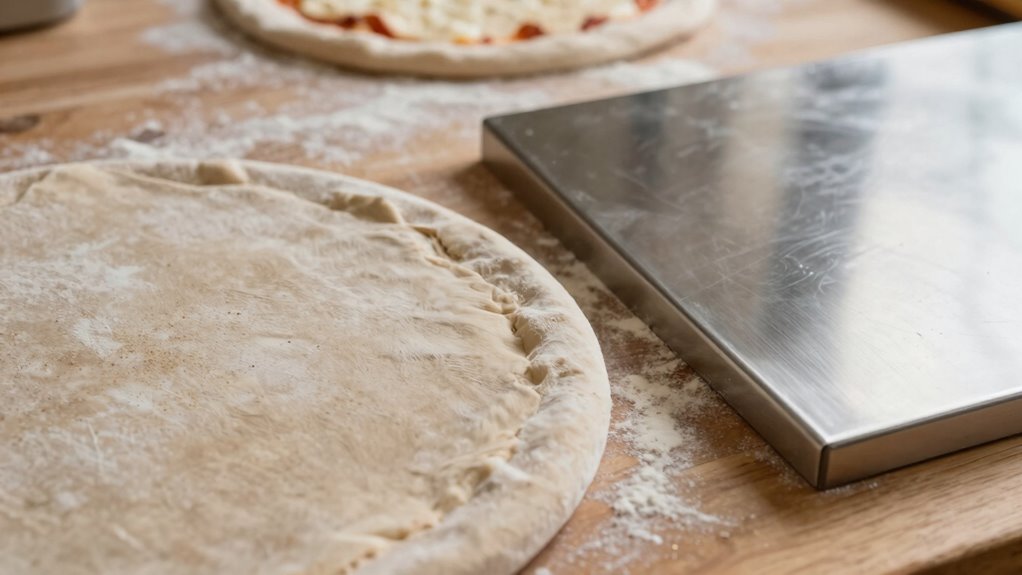
Using a pizza stone requires a bit more effort to set up and care for than a steel surface. You’ll need to preheat it thoroughly and handle it carefully to avoid cracking. Cleaning methods for stones involve scraping off food residue and avoiding soap, which can be absorbed. For storage tips, keep your stone in a dry, accessible spot to prevent moisture buildup. Steel surfaces are more forgiving, as they’re easy to wipe down and don’t require special handling. To maintain your pizza stone:
- Avoid sudden temperature changes
- Scrape off baked-on bits gently
- Store in a dry place away from humidity
These steps help extend the life of your stone and keep it performing well. Steel, on the other hand, requires less maintenance and is more straightforward to use regularly.
Which Baking Surface Is Better for Home Bakers on a Budget?
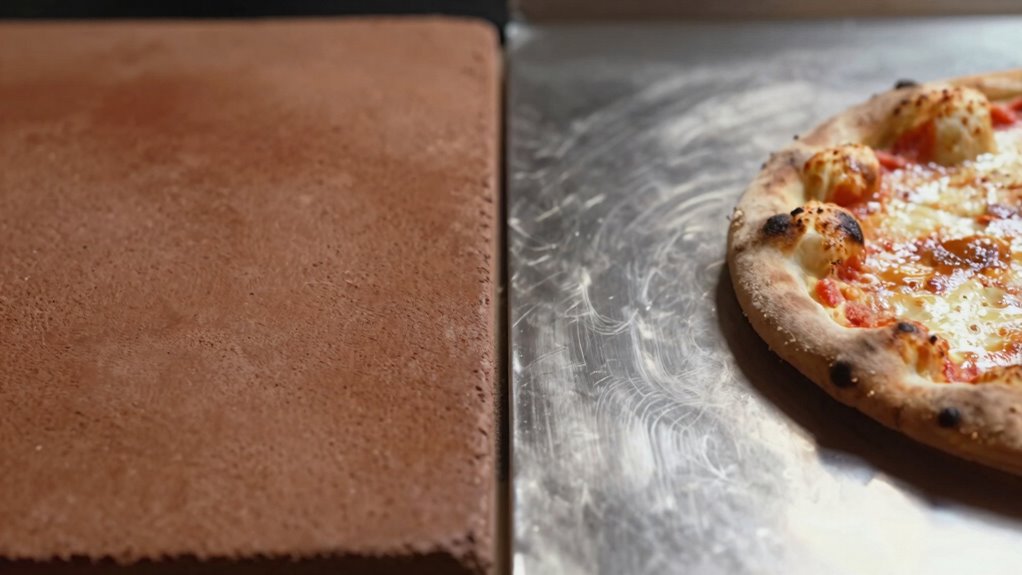
For home bakers watching their budget, choosing the right baking surface means considering both cost and practicality. When comparing pizza stones and steels, a clear cost comparison shows that stones are generally more affordable upfront, making them suitable for tighter budgets. Steel, however, tends to be more durable over time, resisting cracking and chipping better than stones. Durability factors are key: while pizza stones can last years if cared for properly, they may need replacement sooner if they crack or break. Steel offers longevity with less maintenance, often just requiring regular seasoning. If affordability is your priority, a pizza stone provides a low-cost option. But if you want a long-term investment with fewer replacement concerns, steel might be the better choice, despite the higher initial cost.
Can You Use Stones and Steels in Different Types of Ovens?
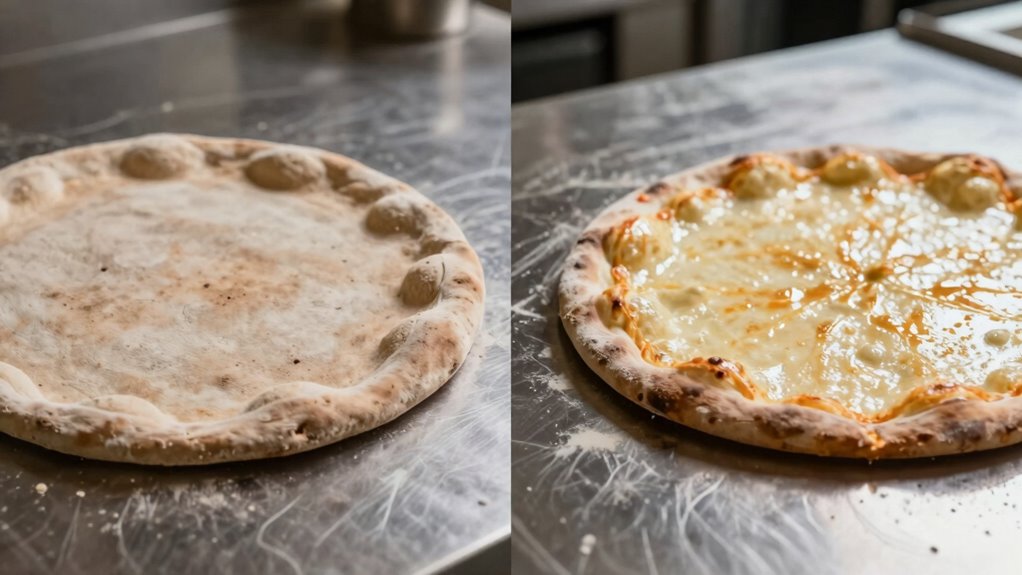
You might wonder if stones and steels work well in various ovens, like gas, electric, or convection models. Each oven type interacts differently with these baking surfaces, affecting heat transfer and crust quality. Understanding their compatibility helps you choose the best option for your setup.
Compatibility With Gas Ovens
Gas ovens are versatile, and both pizza stones and steels can typically handle their high temperatures. They are generally compatible with gas oven settings, making them suitable choices for gas oven users. However, consider the material limitations to guarantee safety and performance.
- Steel is highly durable and can withstand rapid temperature changes without cracking.
- Stones are more fragile; they may crack if not preheated gradually or if exposed to thermal shock.
- Always check the manufacturer’s recommendations for your specific oven and baking surface.
While gas oven compatibility is usually straightforward, keep in mind that some stones may have restrictions due to their material composition. Proper handling and adherence to guidelines will help you avoid damage and achieve the best crust.
Effectiveness in Electric Ovens
Electric ovens are versatile tools that work well with both pizza stones and steels, but their effectiveness depends on proper use. Because electric ovens often have excellent oven insulation, they can maintain high baking temperatures essential for pizza. To maximize performance, preheat your oven thoroughly, ensuring the stone or steel reaches the desired temperature before baking. Steel heats up faster and retains heat more efficiently, which is beneficial in electric ovens with stable insulation. Conversely, pizza stones require longer preheating to avoid thermal shock and achieve optimal crust development. Adjust your baking temperature accordingly—higher for steels, slightly lower for stones if needed. Proper preheating and temperature control help you get the best crust, regardless of your oven type.
Performance in Convection Ovens
Convection ovens can enhance pizza baking by circulating hot air, which promotes even cooking and crispier crusts. When using stones or steels in convection ovens, evaluate oven insulation and baking surface durability. Stones tend to insulate well, maintaining high heat, but may crack if subjected to thermal shock. Steels, being more durable, transfer heat quickly and withstand rapid temperature changes, making them ideal for convection environments.
Key points to consider:
- Stones require careful handling to prevent cracking due to thermal shock
- Steels are more resilient and suitable for frequent use
- Both surfaces benefit from proper oven insulation to maintain consistent heat
In convection ovens, steels often outperform stones in durability, but stones excel with insulation, helping you achieve consistent, crispy crusts without risking damage.
Which Surface Is Best for Your Pizza Style and Needs?
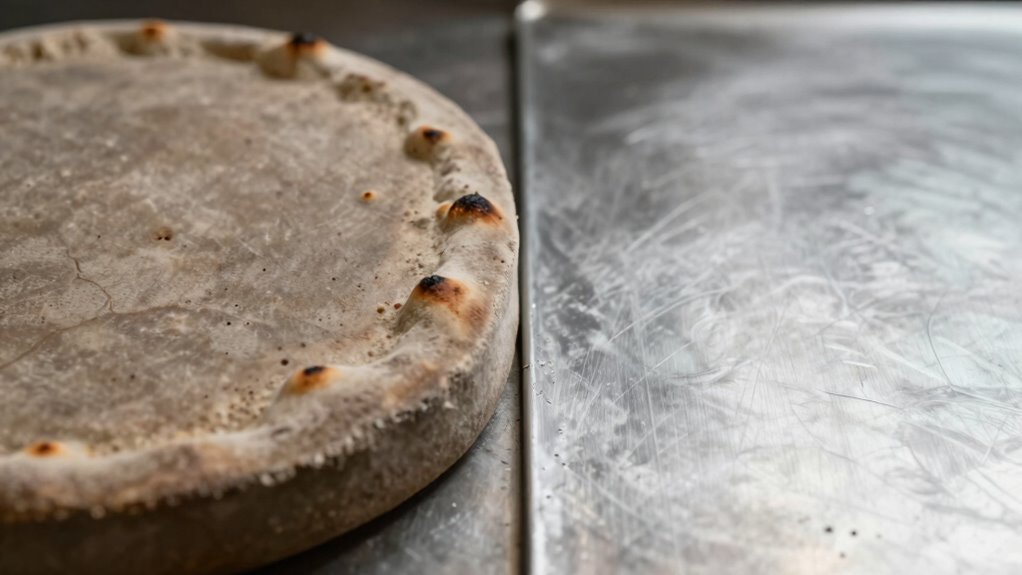
Choosing the right surface for your pizza depends on your specific baking style and preferences. If you want a highly durable surface that can withstand frequent use, steel is a great choice because of its excellent pizza durability. It heats quickly and maintains high temperatures, ideal for thin, crispy crusts. However, steel tends to have a higher material cost upfront, which might be a consideration if you’re on a budget. On the other hand, pizza stones are more affordable and can produce a traditional, crispy crust, especially if you prefer baking at lower temperatures. They’re also less prone to cracking if handled carefully. Ultimately, your choice depends on whether you prioritize durability and quick heating or cost and a classic baking experience.
Frequently Asked Questions
How Do I Prevent Sticking When Using Pizza Stones or Steels?
To prevent sticking, start by dusting your pizza stone or steel with a thin layer of flour dust before placing your dough. You can also lightly oil the surface or your dough to create a barrier. Make sure your dough isn’t too wet, and always slide your pizza quickly onto the hot surface. These steps help reduce sticking and guarantee a smooth, crisp crust every time.
Can Pizza Stones or Steels Crack or Break Easily?
Yes, pizza stones can crack or break easily due to material durability issues, especially if you expose them to sudden temperature changes. Steel is much more resistant to thermal stress, making it less likely to break. To avoid damage, always preheat your stone gradually and handle it carefully, while steel’s durability allows for more flexibility. Keep these tips in mind to make sure your equipment lasts longer and performs well.
What Cleaning Methods Are Safe for Pizza Stones and Steels?
Think of your pizza stone or steel as a loyal garden tool—careful cleaning keeps it in top shape. Use a soft brush or plastic scraper to remove food, avoiding soap which can seep in. Regularly clean after baking, but don’t overdo it—once a few uses is enough. Season your stone or steel with gentle techniques, and always let it fully dry before storing, ensuring it stays resilient and crack-free.
Are There Health Concerns With Using Steels or Stones at High Temperatures?
You don’t need to worry about health safety when using steels or stones at high temperatures, as long as you follow proper guidelines. Both materials are safe, but there’s a small chance of material leaching if they’re made from low-quality or untreated metals. To minimize risks, use high-quality, food-grade steels and natural stones, and avoid any coatings or treatments that could release harmful substances during baking.
How Long Do Pizza Stones and Steels Typically Last With Regular Use?
With regular use, pizza stones typically last 2 to 5 years, while steels can last indefinitely if properly maintained. Durability expectations depend on how often you cook and how carefully you handle them. To extend their lifespan, follow maintenance tips like avoiding thermal shocks, cleaning gently, and storing properly. You’ll find steels are more durable overall, but both require proper care to keep them performing well over time.
Conclusion
Ultimately, choosing between a pizza stone and steel is like picking your culinary soulmate—each has its own charm and quirks. Do you crave that instant, crispy crust as if touched by magic? Or prefer steady heat and durability that stand the test of time? Remember, the perfect pizza isn’t just about the surface beneath it, but about how you harness its power. So, which will you choose to elevate your homemade pies? The decision is yours to make.