Choosing between semi-automatic and super-automatic espresso machines depends on how much control versus convenience you want. With a semi-automatic, you get manual control over grind size, tamping, and extraction, giving you more flavor customization but requiring effort. A super-automatic handles everything at the push of a button, offering quick, consistent results but less hands-on involvement. Still, each has trade-offs. Learn more about what fits your lifestyle and preferences to make the best choice.
Key Takeaways
- Semi-automatic machines offer more customization but require manual effort for grinding, tamping, and brewing.
- Super-automatic machines prioritize convenience, automating grinding, tamping, and extraction with less user control.
- Choosing semi-automatic sacrifices ease of use for flavor control; super-automatic sacrifices some customization.
- Semi-automatic models may need more maintenance and skill; super-automatic machines are simpler but often more expensive upfront.
- Both types involve trade-offs between control, convenience, cost, and maintenance needs.
What Are the Main Differences Between Semi-Automatic and Super-Automatic Espresso Machines?
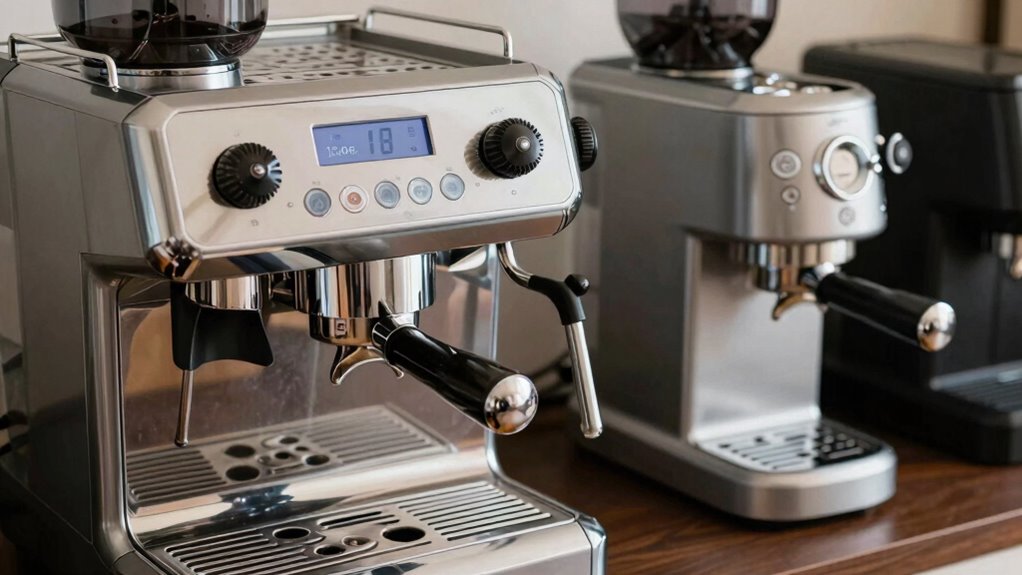
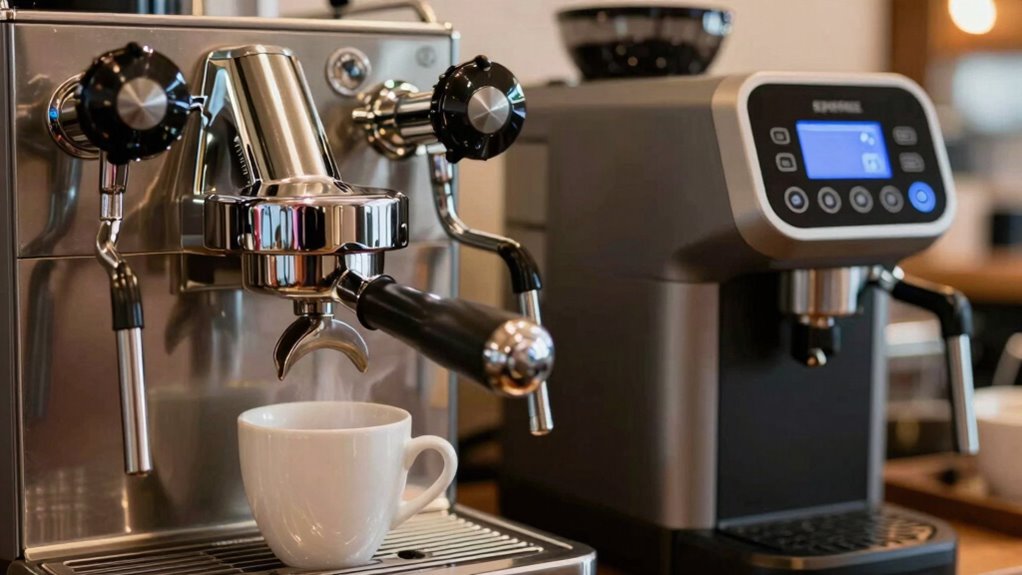
Ever wondered what sets semi-automatic and super-automatic espresso machines apart? The main difference lies in how much you regulate during brewing. With a semi-automatic, you handle grind size and tamp pressure yourself, giving you more control over flavor. You grind your beans to the right size, then tamp the coffee with just the right pressure to ensure proper extraction. The machine then takes over once you start the shot, stopping automatically. In contrast, super-automatic machines handle everything—from grinding to tamping and extraction—at the push of a button. While this offers convenience, it means less control over grind size and tamp pressure. Understanding these differences helps you choose the machine that matches your coffee preferences and how involved you want to be in the brewing process. Additionally, calibration of the machine can significantly affect the consistency and quality of your espresso.
How Do Control and Customization Vary Between These Machines?
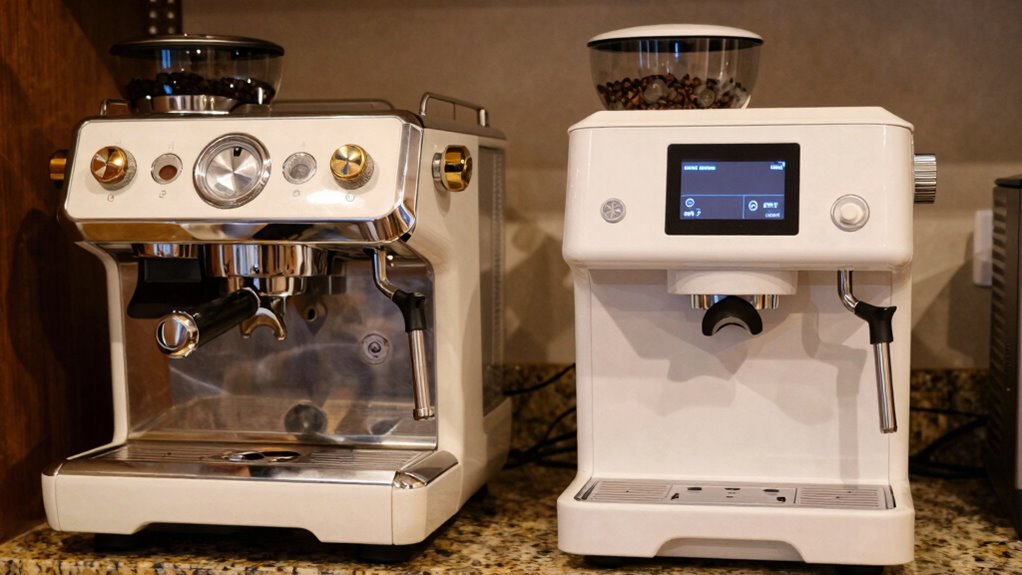
When it comes to control and customization, semi-automatic espresso machines offer much more flexibility because you’re actively involved in each step of the brewing process. You have manual control over grind size, tamping pressure, extraction time, and steam pressure, allowing for personalized user customization. This hands-on approach enables you to tailor your espresso to match your preferences or experiment with different techniques for the perfect shot. In contrast, super-automatic machines automate most functions, limiting your control and customization options. You rely on preset programs, which simplifies brewing but reduces your ability to modify the process. Additionally, understanding home energy considerations can help you optimize your setup and maintenance practices for a better espresso experience at home.
Which Machine Offers the Best Convenience and Consistency?
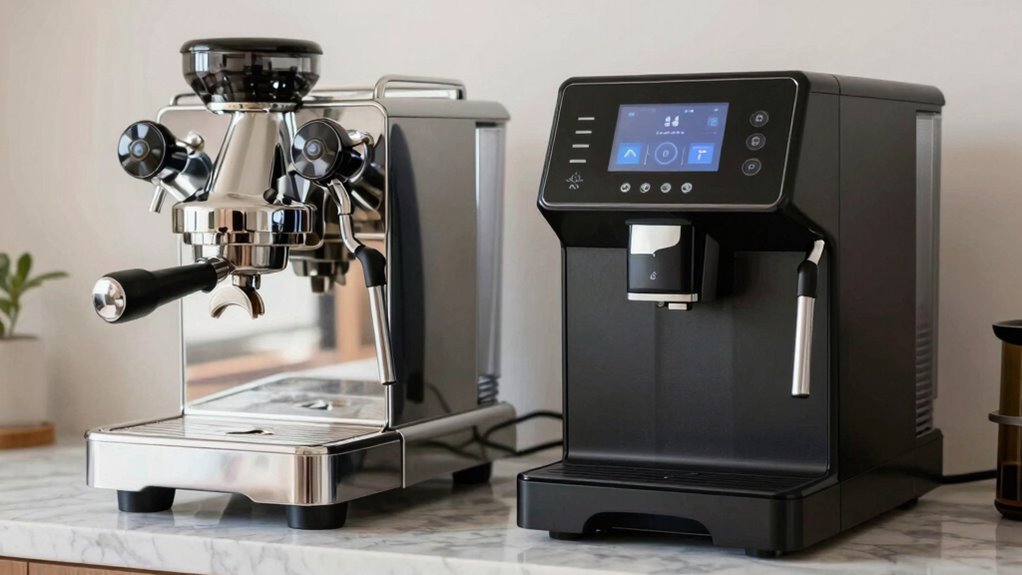
Super-automatic espresso machines excel in convenience and consistency because they handle almost every step of the brewing process with minimal input from you. They automatically grind with precise grinding settings, ensuring best extraction every time. Their built-in grinders and dosing mechanisms deliver consistent coffee grounds, reducing variability caused by manual grinding. When it comes to milk frothing, super-automatics often feature automatic steam wands or milk frothing systems that produce smooth, creamy foam effortlessly. This means you don’t need to master the art of steam wand technique, making it easier to achieve café-quality drinks at home. Overall, these machines offer reliable results, requiring little effort, which makes them ideal if you prioritize convenience without sacrificing consistent quality. Built-in grinders ensure that each brew starts with freshly ground beans, further enhancing consistency and convenience. Additionally, many models incorporate automatic cleaning systems, simplifying maintenance and ensuring optimal performance over time. For those seeking a hassle-free experience, automated functions significantly reduce the learning curve and maintenance efforts. Furthermore, some models include smart technology integrations, allowing for customizable settings and remote operation for even greater ease.
What Factors Should You Consider When Choosing Your Espresso Machine?
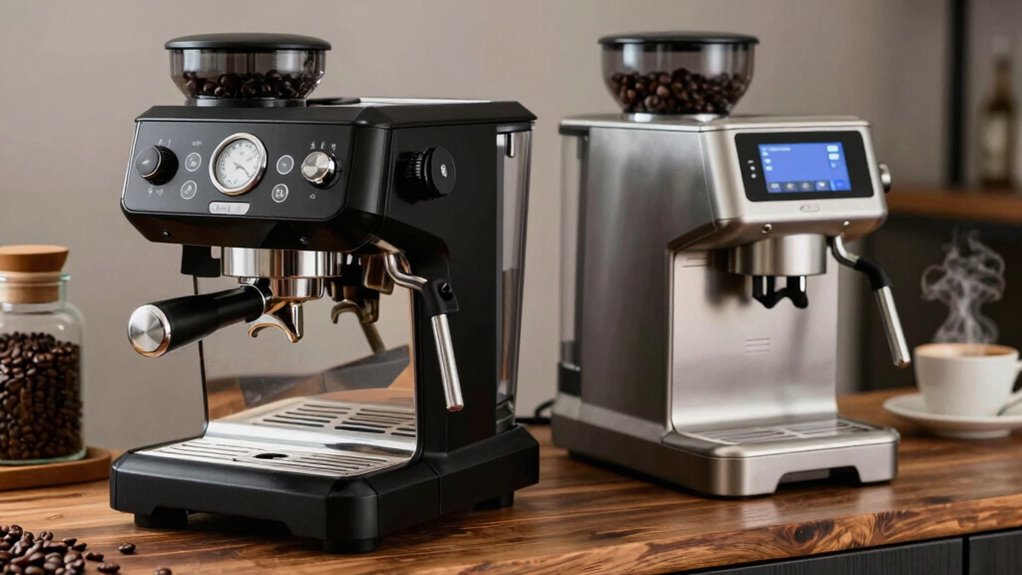
Choosing the right espresso machine depends on several key factors that match your brewing preferences and lifestyle. First, consider your budget and price considerations, as machines vary widely in cost. Next, evaluate your space requirements; if you have a small kitchen, a compact model might be best. Additionally, think about how hands-on you want to be—do you prefer full control or convenience? It’s also helpful to assess the level of automation offered by different machines, as this can significantly impact your user experience and satisfaction.
Is Cost, Maintenance, or Features More Important for Your Perfect Brew?

Deciding what’s most important—cost, maintenance, or features—depends on your priorities and how you plan to use your espresso machine. If you want durability and a reliable brand reputation, investing in a higher-quality model might cost more upfront but save you money long-term. Conversely, if budget is tight, a semi-auto machine could fit better, though it may require more maintenance. Features like programmable settings or built-in grinders can enhance convenience but might increase costs and complexity. Here’s a quick comparison:
| Aspect | Pros | Cons |
|---|---|---|
| Cost | Lower initial investment | Potential for higher maintenance |
| Maintenance | Fewer parts, easier upkeep | Might sacrifice advanced features |
| Features | Customization and automation | Increased expense and complexity |
| Durability | Longer-lasting, reputable brands | Higher initial cost |
Additionally, understanding the long-term durability of various models can help inform your investment decisions. When considering different espresso machines, it’s also helpful to evaluate brand reputation to ensure you choose a reliable and well-supported product. Recognizing the importance of product reliability can make a significant difference in your overall satisfaction and savings over time.
Frequently Asked Questions
How Does User Skill Level Impact Machine Performance and Satisfaction?
Your skill level directly impacts your machine performance and satisfaction. As you develop your user experience, you’ll better understand how to operate your espresso machine efficiently, especially with semi-auto models that require more manual control. If you’re a beginner, a super-auto machine offers ease and convenience, but honing your skills can lead to improved results and greater satisfaction over time. Your growing skill development enhances your overall coffee-making experience.
What Are the Long-Term Durability Differences Between Semi-Auto and Super-Auto Models?
Like a trusted old friend, a semi-auto often offers better machine longevity and repairability factors, making it easier to maintain over time. Super-auto models, while convenient, tend to have more complex parts that can wear out faster and be pricier to repair. If durability matters most to you, opting for a semi-auto might be a smarter choice, as it’s built for long-term performance and easier fixes.
Can These Machines Be Easily Repaired or Upgraded Over Time?
You can generally repair or upgrade semi-auto and super-auto espresso machines, but semi-autos tend to offer easier maintenance and upgrade potential. With semi-autos, you can often replace individual parts like the grinder or steam wand, making repairs simpler. Super-autos, however, may require professional help for complex repairs or upgrades due to their integrated systems. Regular maintenance keeps both models running smoothly, but semi-autos give you more DIY flexibility.
How Do Energy Consumption and Environmental Impact Compare?
Imagine you’re in the 21st century, not the age of steam. When comparing energy consumption, super-automatic machines tend to be more energy-efficient, thanks to eco-friendly features like automatic shut-off. They use less power during idle times, reducing your carbon footprint. Semi-auto machines may consume more energy, but they give you more control. Overall, choosing a machine with eco-friendly features helps you save energy and lessen environmental impact.
Are There Specific Brands Known for Better Reliability in Each Category?
You’ll find that brands like Breville and DeLonghi are known for better reliability in both semi-auto and super-auto espresso machines. They have strong brand reputations and offer solid warranty coverage, giving you peace of mind. While semi-auto models may lean on more established brands like Rancilio, super-auto machines often come from brands like Jura. Always check warranty details and user reviews to make sure you’re choosing a dependable machine.
Conclusion
Choosing between semi-auto and super-auto espresso machines depends on your preferences for control and convenience. Did you know that 60% of coffee enthusiasts prefer super-automatics for quick, consistent brews? If you value customization, semi-autos give you more hands-on control. But if ease and speed matter most, super-autos are the way to go. Consider your budget and maintenance needs, and you’ll find the perfect machine to elevate your coffee experience.