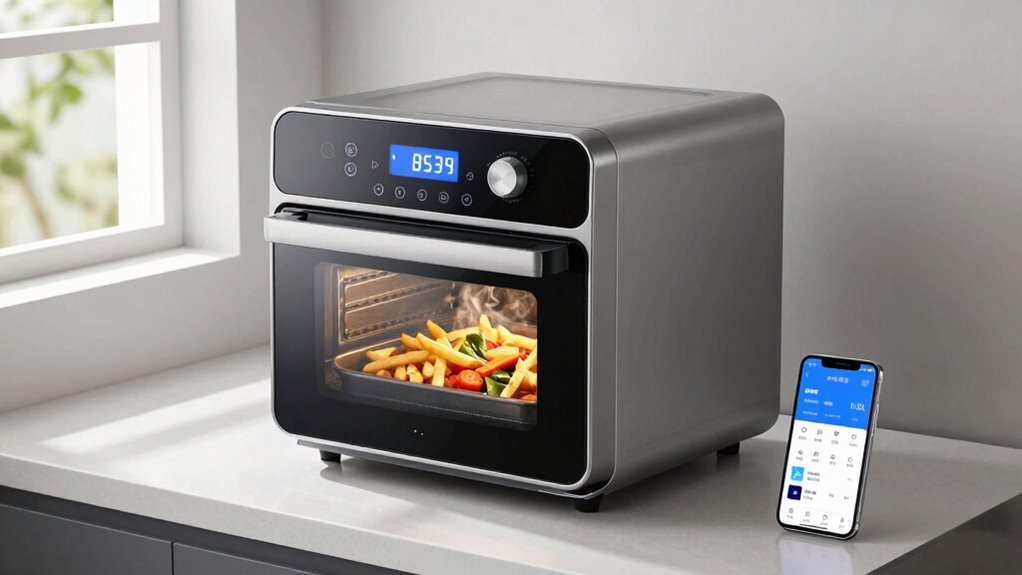
Sensor cooking in microwave-air fryer combos can be really useful because it adjusts cooking times and power levels automatically, saving you time and guesswork. However, it might also be confusing if you prefer more control over your recipes or want to experiment with different textures. While the presets are great for quick meals, they can limit customization. If you want to understand how to balance automation with flexibility, there’s more to discover below.

Get kitchen gear delivered free with Prime
- Fast, free delivery on millions of items
- Prime Video, Amazon Music and more included
- Member-only deals all year
Key Takeaways
- Sensor cooking simplifies meal prep by automatically adjusting time and power based on food moisture and steam levels.
- It offers convenience but may lack customization for specific preferences like crispiness or doneness.
- Manual controls allow precise adjustments, essential for recipes outside preset parameters or experimenting.
- Combining sensor and manual modes provides versatility, balancing automation with flexibility.
- Understanding sensor technology helps determine if it aligns with your cooking style and need for control.
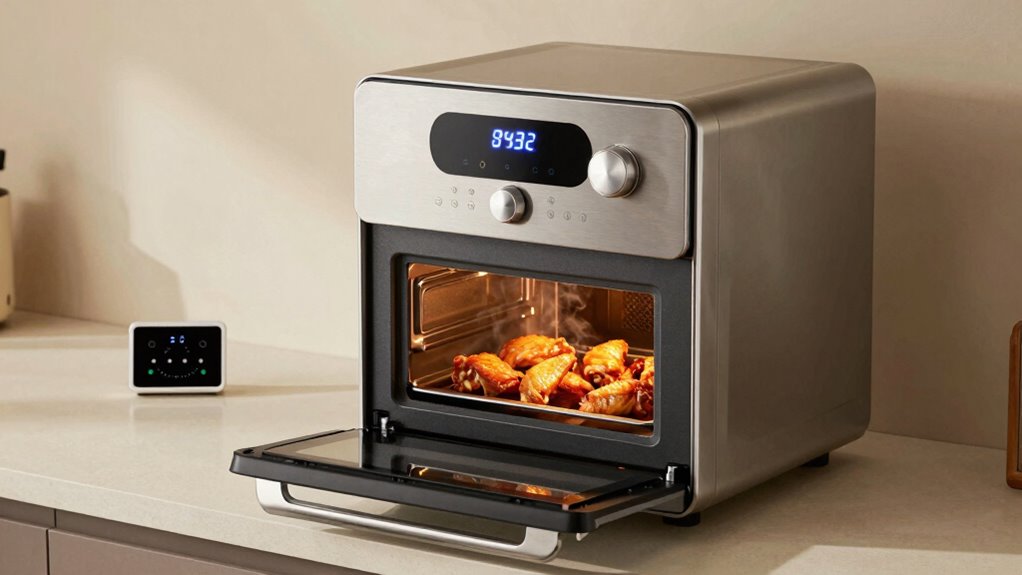
With sensor cooking, many models include a variety of cooking presets tailored for specific foods like popcorn, vegetables, or reheated leftovers. These presets are designed to optimize the cooking process based on sensor data, saving you from manually inputting cooking times and power levels. However, some users find these presets too automatic, feeling limited in their ability to customize the process. That’s where manual control comes into play. A good microwave-air fryer combo should offer a balance—allowing you to override preset functions and adjust cook times, power levels, or temperature settings manually. This flexibility becomes crucial when dealing with foods that vary in moisture content or when you prefer a specific level of crispiness or doneness that presets might not accommodate.
If you prefer a more hands-on approach, manual control gives you the freedom to fine-tune your cooking. You can set exact times and temperatures, ensuring your dish turns out just how you like it. This is especially useful when cooking items that aren’t covered by the presets or when experimenting with new recipes. On the other hand, relying solely on sensor cooking presets can be a real time-saver for everyday meals, especially when you’re in a hurry or juggling multiple tasks. The automatic adjustments mean less guesswork and fewer kitchen mishaps, which makes sensor cooking appealing for busy households.
Ultimately, whether sensor cooking in microwave-air fryer combos is useful or confusing depends on your cooking style. If you value simplicity and quick results, presets paired with sensor technology make life easier. But if you prefer experimenting or need full control over your cooking process, look for models that combine sensor features with manual options. The best appliances give you the flexibility to switch between automatic and manual modes, ensuring you’re never limited or overwhelmed. Additionally, understanding the sensor technology behind these appliances can help you make more informed choices. So, consider what matters most—convenience or control—and choose a combo that suits your culinary habits.
sensor microwave air fryer combo
As an affiliate, we earn on qualifying purchases.
As an affiliate, we earn on qualifying purchases.
Frequently Asked Questions
Can Sensor Cooking Be Used for All Food Types Effectively?
Sensor cooking isn’t effective for all food types because it depends on sensor calibration and food moisture. For foods with consistent moisture levels, like vegetables or reheated leftovers, it works well. However, for foods with variable moisture, such as baked goods or fried items, it can be unreliable. You should manually monitor or adjust settings in these cases to guarantee proper cooking, as sensor feedback may not always be accurate.
How Does Sensor Cooking Affect Energy Consumption?
Sensor cooking can boost energy efficiency by adjusting power levels precisely, preventing overcooking and unnecessary energy use. Imagine a device that senses moisture, fine-tunes power, and stops when your food’s perfectly cooked—saving energy. This feature promotes power optimization, reducing waste and lowering your utility bills. While it might seem complex, sensor cooking actually streamlines cooking, making your kitchen more efficient and eco-friendly with smarter energy consumption.
Is Sensor Cooking More Accurate Than Manual Settings?
Sensor cooking is generally more accurate than manual settings because it uses sensor calibration to detect moisture and temperature, adjusting cook time automatically. This leads to better cooking consistency, reducing the chances of overcooking or undercooking your food. You’ll appreciate how the microwave-air fryer combo adapts in real-time, ensuring your meals turn out just right without constant monitoring or guesswork, making your cooking experience more reliable and convenient.
Do Sensor Cooking Features Increase Appliance Maintenance Needs?
Sensor cooking features can increase your appliance’s maintenance needs because they rely on moisture detection and sensor calibration. Over time, sensors may become less accurate due to dirt, grease, or mineral buildup, requiring regular cleaning and recalibration. This added upkeep helps guarantee sensor cooking functions correctly, but it also means you need to stay mindful of sensor maintenance to keep your appliance performing at its best.
Can Sensor Cooking Be Customized for Specific Recipes?
Yes, sensor cooking can be customized for specific recipes. You’ll need to explore recipe customization options and sensor calibration to guarantee perfect results. Imagine adjusting the sensor settings for delicate pastries or crispy fries—each with tailored calibration that’s seamlessly integrated into your appliance. This way, you open up precise control, making your cooking experience more intuitive and personalized, transforming your combo into a versatile kitchen hero.
Conclusion
Sensor cooking in microwave-air fryer combos promises convenience and precision, but it can also lead to confusion if you’re unfamiliar with how it works. On one hand, it takes the guesswork out of cooking, ensuring your food’s perfectly done every time. On the other, it might feel like an unnecessary complication, especially when manual settings seem just as effective. Ultimately, whether it’s useful or confusing depends on your comfort with technology and your cooking style.
Halloween Picks
halloween
As an affiliate, we earn on qualifying purchases.