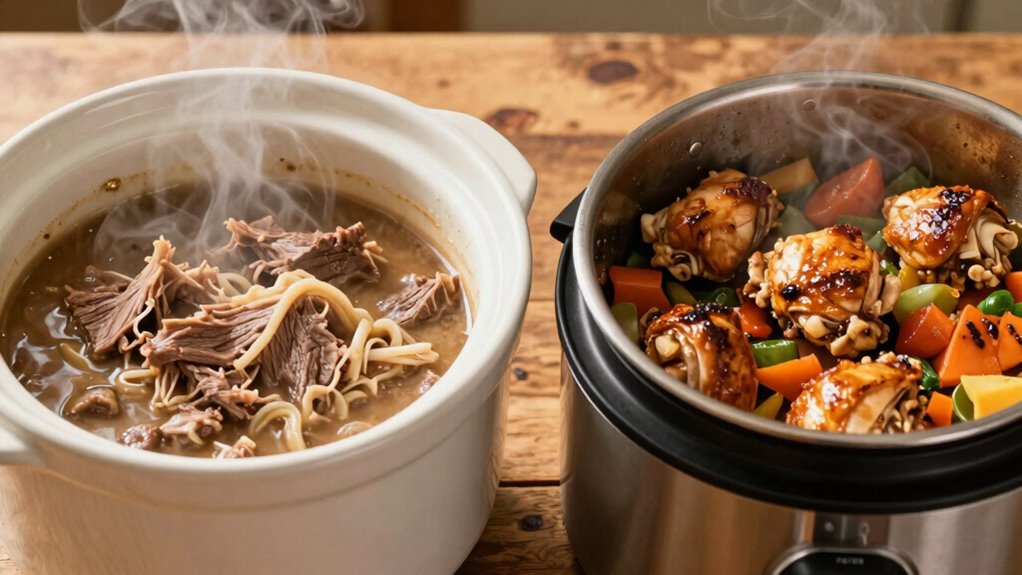
Slow cookers excel at tenderizing tough cuts with low, steady heat over hours, producing moist, flavorful dishes. Multi-cookers offer more versatility, combining functions like pressure cooking and sautéing, which can speed up meal prep while controlling textures more precisely. If you prefer long, gentle cooking for rich flavors or quick results with multiple techniques, your choice impacts texture and timing. Keep exploring to find the best fit for your cooking style and dish preferences.
Key Takeaways
- Slow cookers provide gentle, consistent heat over hours, resulting in tender, moist textures ideal for stews and braises.
- Multi-cookers offer faster cooking times with precise temperature controls, enabling quick texture development and versatile dish preparation.
- Slow cookers excel at long, low-temperature cooking, producing softer textures, while multi-cookers can replicate this and accelerate results through pressure settings.
- Moisture retention in slow cookers is high due to long, sealed cooking, whereas multi-cookers’ moisture varies depending on the mode used.
- Multi-cookers allow fine-tuning of timing and techniques, offering more control over final texture and cooking speed compared to the more straightforward slow cooker.

Ninja® 12-in-1 PossibleCooker™ PLUS | 8.5-qt – Sous Vide & Proof Multi-Cooker | Slow Cooker, Dutch Oven & More | Glass Lid & Integrated Spoon | Nonstick | Oven Safe Pot to 500°F | Black | MC1010
REPLACES 12 COOKING TOOLS & APPLIANCES: This cooker replaces the need for a slow cooker, food warmer, nonstick…
As an affiliate, we earn on qualifying purchases.
As an affiliate, we earn on qualifying purchases.
How Do Slow Cookers and Multi-Cookers Differ in Function?
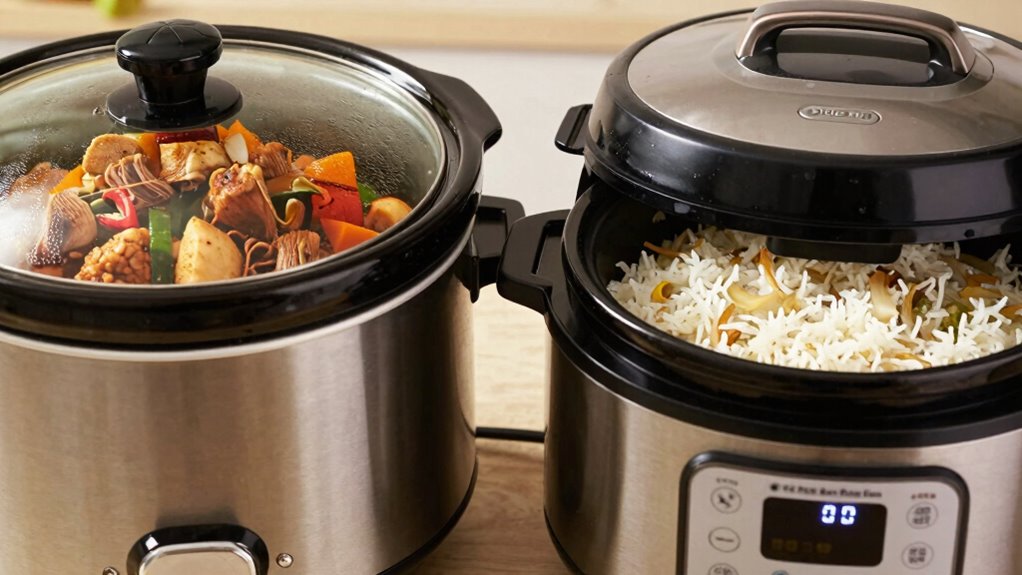
While both slow cookers and multi-cookers are designed to simplify meal preparation, they differ considerably in how they operate. Slow cookers use low, steady heat over several hours, primarily relying on simple cooking techniques like braising and simmering. They require minimal appliance maintenance—just occasional cleaning and checking the cord. Multi-cookers, on the other hand, combine multiple functions, such as pressure cooking, sautéing, and steaming, making them more versatile. Their advanced controls and different cooking modes demand a bit more attention to appliance maintenance, like cleaning the inner pot thoroughly after each use. Additionally, understanding cooking techniques can help you optimize the use of each appliance for better results. For example, mastering temperature control is essential to prevent overcooking or undercooking your dishes. Incorporating water management strategies can also improve cooking efficiency and results. Recognizing the importance of proper timing in recipes ensures food reaches the desired texture and doneness. Moreover, understanding sound and vibration properties can enhance your ability to troubleshoot or optimize certain cooking modes. Understanding these differences helps you choose the right appliance based on your cooking techniques and ease of maintenance, ensuring efficient and effective meal preparation.
Ninja® 12-in-1 PossibleCooker™ PLUS | 8.5-qt – Sous Vide & Proof Multi-Cooker | Slow Cooker, Dutch Oven & More | Glass Lid & Integrated Spoon | Nonstick | Oven Safe Pot to 500°F | Black | MC1010
REPLACES 12 COOKING TOOLS & APPLIANCES: This cooker replaces the need for a slow cooker, food warmer, nonstick…
As an affiliate, we earn on qualifying purchases.
As an affiliate, we earn on qualifying purchases.
What Features Affect Food Texture and Cooking Speed?
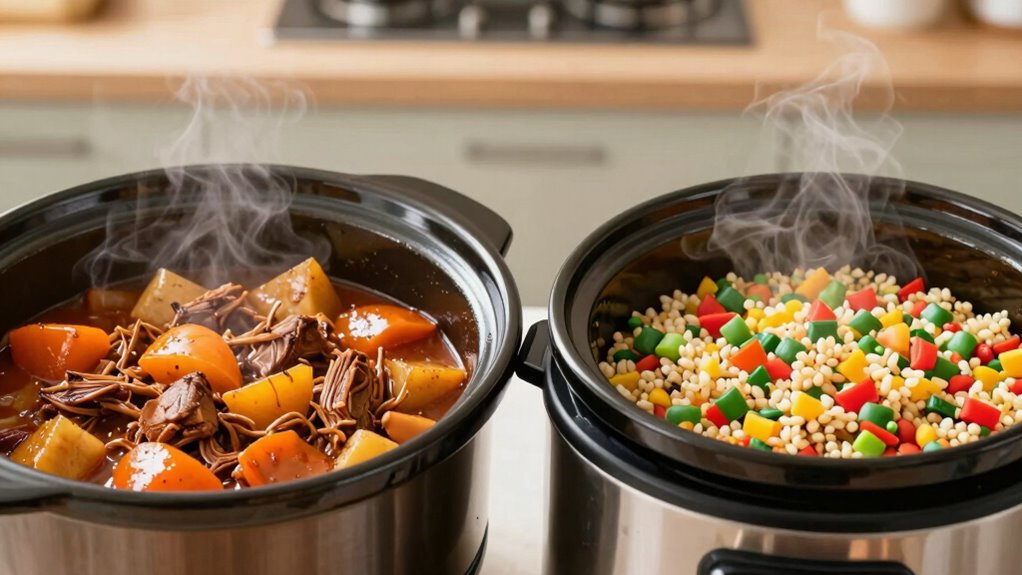
The features of your appliance considerably influence both the texture of your food and how quickly it cooks. For example, a multi-cooker often offers advanced temperature controls, which enhance texture through precise heat management, promoting better texture enhancement. Additionally, its multiple cooking modes can improve cooking consistency, ensuring your dishes turn out uniformly every time. In contrast, slow cookers usually operate at a fixed low temperature, which affects how quickly food tenderizes but may limit texture variation. Features like sealed lids and heat distribution also play a role; efficient heat retention and even cooking help achieve desired textures faster. Furthermore, European cloud innovation in appliance design emphasizes energy-efficient components that optimize cooking performance. These innovations contribute to cooking efficiency by reducing energy consumption without sacrificing quality. The integration of smart sensors and precise temperature control further enhances both speed and texture outcomes, making modern appliances more adaptable to various recipes. Modern appliances with adaptive settings can automatically adjust cooking parameters to suit different ingredients, improving results. Incorporating advanced technology into appliance design ensures better control over cooking processes, leading to superior texture and faster results. Ultimately, selecting a device with adjustable settings and effective heat management directly impacts both cooking speed and the quality of your food’s texture.

Elite Gourmet MST-275XS Electric Oval Slow Cooker, Adjustable Temp, Entrees, Sauces, Stews & Dips, Dishwasher Safe Glass Lid & Crock (2 Quart, Stainless Steel)
PERSONAL 2 QUART slow cooker makes cooking fork-tender roasts and poultry a breeze. Cool-touch handles and knob protect…
As an affiliate, we earn on qualifying purchases.
As an affiliate, we earn on qualifying purchases.
Why Are Slow Cookers Perfect for Long, Low-Temperature Dishes?

Slow cookers excel at preparing long, low-temperature dishes because their design maintains a consistent, gentle heat over extended periods. This steady temperature allows for slow cooking, which gradually breaks down tough fibers and connective tissues, resulting in tender, flavorful meat and rich, developed flavors. The low heat prevents the food from overcooking or burning, making it ideal for stews, braises, and soups that benefit from prolonged simmering. As your dish cooks slowly, flavors meld together, intensifying and enhancing the overall taste. This controlled environment encourages flavor development without the need for constant attention. Additionally, the thermal regulation of slow cookers ensures safety and consistent results during long cooking times. Ultimately, slow cookers deliver tender, deeply flavorful results, making them perfect for dishes that require long, low-temperature cooking.

COMFEE’ 12-in-1 Electric Pressure Cooker, Instant Multi, Non-Stick Pot, Yogurt Maker, Rice Cooker, Slow, Sauté Steamer, Pressure Cooker 6 Quart Black
9 IN 1 MULTI PRESSURE COOKER: Work as pressure cooker, slow cooker, rice cooker, steamer, Sauté, yogurt maker,…
As an affiliate, we earn on qualifying purchases.
As an affiliate, we earn on qualifying purchases.
How Do Multi-Cookers Offer Versatility and Faster Results?
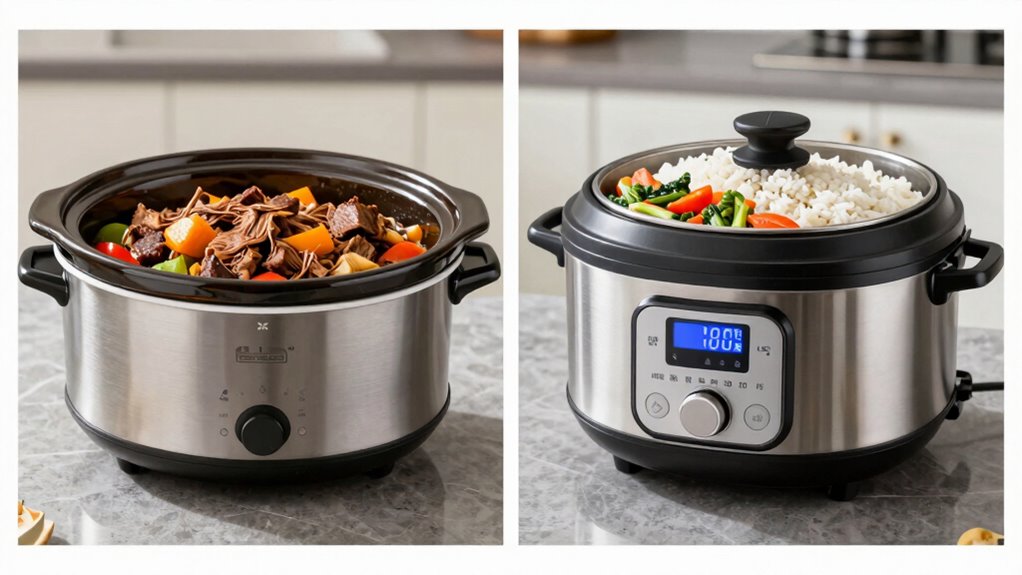
Multi-cookers combine several cooking functions into one appliance, offering unmatched versatility and speed. This integration boosts cooking efficiency by allowing you to switch seamlessly between functions like pressure cooking, slow cooking, steaming, and sautéing without needing multiple devices. With just one appliance, you can prepare a variety of dishes—from tender stews to rice to desserts—saving time and counter space. The multiple settings and programmable options enable you to customize cooking times and methods, ensuring faster results without sacrificing quality. By consolidating these functions, multi-cookers make meal prep more efficient, letting you tackle complex recipes or quick meals with ease. Their appliance versatility helps you save time and effort, delivering a broader range of cooked dishes in less time. Additionally, cooking efficiency can be further improved by selecting models with preset programs tailored to specific dishes, streamlining the process even more.
How Do These Appliances Impact Meal Moisture and Texture?

Your choice between a slow cooker and a multi-cooker affects how moist and tender your meals turn out. Slow cookers tend to lock in moisture over long cooking times, while multi-cookers can vary depending on settings. Factors like cooking duration and temperature control influence the final texture and juiciness of your dishes. Additionally, cooking technology in multi-cookers allows for more precise adjustments, impacting the final meal quality. Understanding thermal regulation can help you better control moisture retention and achieve desired textures. Recognizing the importance of temperature consistency can further enhance your ability to produce perfectly cooked meals. Moreover, navigation and mapping features in some advanced multi-cookers can optimize heat distribution for consistent results, leveraging thermal sensors for better control.
Moisture Retention Differences
Because of their different designs, slow cookers and multi-cookers influence how moisture stays locked into your meals. Slow cookers typically have a low evaporation rate, which helps retain moisture over long cooking times, resulting in juicy, tender dishes. They minimize moisture loss because the lid stays on tightly, trapping steam inside. Multi-cookers, especially those with pressure-cooking functions, can sometimes increase evaporation rate during high-pressure cycles, potentially reducing moisture if not carefully managed. However, many multi-cookers also offer moisture control settings that help preserve the meal’s juiciness. Additionally, proper sealing during pressure cooking is crucial to maintaining optimal moisture levels. Overall, your choice affects how much moisture stays locked in, impacting the final texture—slow cookers generally produce more moist, tender results, while multi-cookers offer versatility with moisture retention depending on the setting used.
Texture Variability Factors
The way moisture is retained during cooking directly influences the final texture of your dishes. Your choice between a slow cooker and a multi-cooker can cause noticeable differences in meal texture, impacted by factors like ingredient freshness and cookware material.
- Fresh ingredients release moisture differently, affecting tenderness and juiciness.
- Cookware material, such as ceramic or metal, influences heat distribution and moisture retention.
- Longer cooking times in slow cookers can lead to softer textures, especially with tender cuts.
- Multi-cookers often have precise temperature controls, helping you manage moisture levels for desired textures.
- Proper food storage techniques also play a crucial role in maintaining ingredient moisture and quality throughout the cooking process.
- Considering water retention properties of cookware materials can further optimize moisture preservation and texture.
- Additionally, understanding the moisture absorption capabilities of different cookware can help you choose the best vessel for achieving your preferred dish consistency.
- Incorporating essential oils or other flavoring agents can influence moisture retention and aroma during cooking, enhancing overall dish quality.
Understanding these factors helps you optimize your cooking style, ensuring ingredients stay fresh, and cookware materials enhance or preserve moisture, resulting in the perfect final texture.
When Should You Use a Slow Cooker Versus a Multi-Cooker?
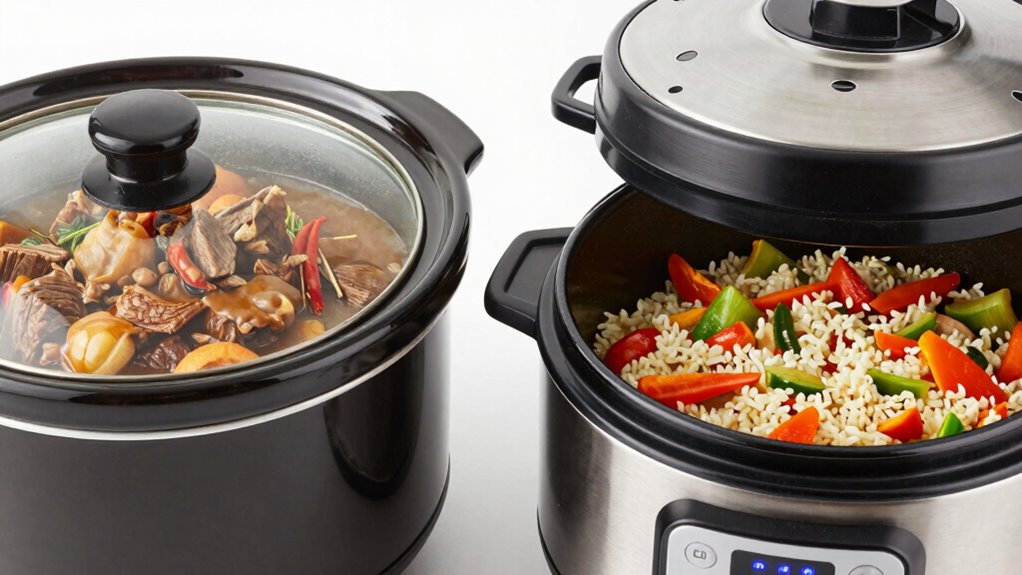
Choosing between a slow cooker and a multi-cooker depends on the type of meal you’re preparing and how quickly you want it done. Use a slow cooker when you prefer hands-off cooking, especially for recipes that benefit from slow simmering, like stews and pulled meats. It’s ideal for recipe adaptation, allowing flavors to develop over hours without constant attention. A multi-cooker is your go-to when you need versatility or faster results, combining pressure cooking and other functions. Keep in mind, multi-cookers require regular appliance maintenance to ensure safety and performance, especially if you switch between different cooking modes. Use the slow cooker for simple, long-duration meals, and turn to the multi-cooker when you need quick, multi-functional options. For safe operation, understanding the fundamentals of air-based cooking techniques can help optimize your results and appliance lifespan.
Which Appliance Is Better for Specific Recipes or Desired Textures?

When choosing between a slow cooker and a multi-cooker, consider how the ideal cooking times and texture control options match your recipes. Some dishes benefit from precise texture adjustments or shorter cooking periods, which multi-cookers often provide. Think about your favorite dishes and which appliance can better deliver the desired results. Additionally, connected equipment and apps can help optimize cooking settings for specific textures and times, making your decision even more tailored to your needs.
Ideal Cooking Times
Determining the ideal cooking times depends heavily on the appliance and the recipe you’re preparing. Both slow cookers and multi-cookers have different strengths in timing, influenced by temperature control and lid seals. A slow cooker generally requires longer cook times for tender results, usually several hours, while a multi-cooker can adjust timing more precisely with its digital controls. Understanding temperature control in multi-cookers is crucial for achieving consistent results across various recipes.
- Slow cookers excel at low, extended cooking, perfect for stews and braises.
- Multi-cookers provide faster results for recipes like rice or sautéed dishes.
- Precise temperature control in multi-cookers ensures accurate timing for delicate recipes.
- Secure lid seals help maintain consistent heat, affecting overall cooking time and texture.
Texture Control Options
If you’re aiming for specific textures in your dishes, understanding how each appliance influence texture control is crucial. Multi-cookers often offer more texture options, allowing you to adjust settings like browning, steaming, or slow cooking to achieve the desired consistency. They provide better consistency control, so you can fine-tune the texture from creamy to chunky. Additionally, adjustable settings in multi-cookers enable you to modify cooking parameters on the fly, giving you more influence over the final dish’s texture. Cooking versatility allows for a range of techniques that can be tailored precisely, enhancing your control over the outcome. Slow cookers usually focus on low, steady heat, which limits variety in texture options but ensures tender results. If you need precise texture control or want to customize how your dish develops during cooking, a multi-cooker is your best bet. It allows you to switch modes and adjust settings mid-cook, giving you more influence over the final dish’s texture.
Best for Specific Dishes
Choosing the right appliance depends heavily on the specific dish you want to prepare and the texture you aim to achieve. For delicate dishes like risottos or steamed vegetables, a multi-cooker offers better cooking precision and control. If you’re making hearty stews or braised meats, a slow cooker excels at tenderizing over long periods with minimal appliance maintenance.
- Multi-cooker provides more precise temperature control for dishes requiring specific textures.
- Slow cookers are ideal for long, slow simmering, producing rich flavors.
- Multi-cookers often include steaming, browning, and pressure functions for versatility.
- Slow cookers are simpler, with fewer settings, making appliance maintenance easier over time.
Ultimately, choose based on the dish’s complexity and the desired outcome, considering how each appliance handles cooking precision and upkeep.
What Are the Pros and Cons for Texture and Timing?
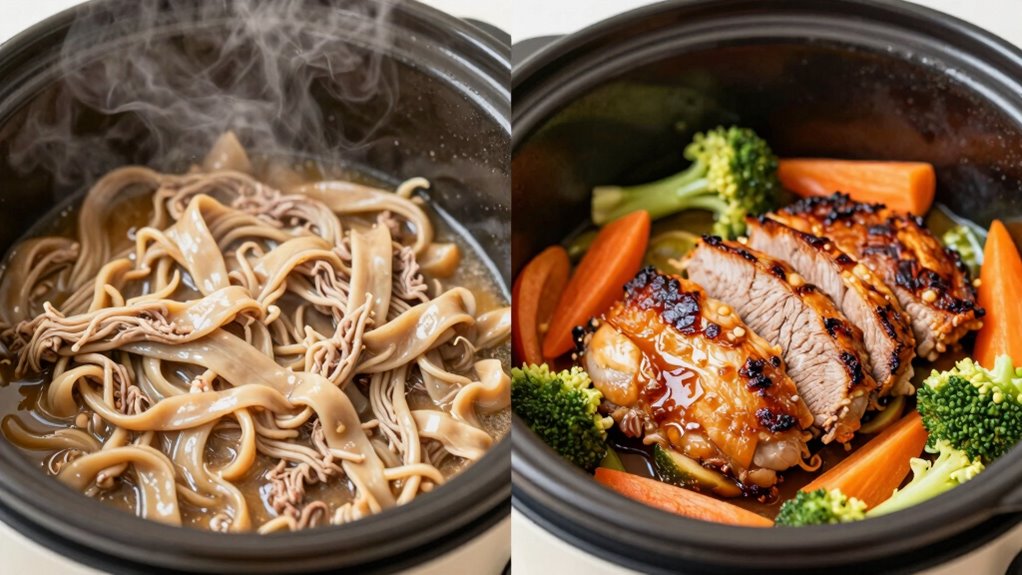
Have you ever wondered how the texture and timing of dishes differ between a slow cooker and a multi-cooker? With slow cooking, you get tender, melt-in-your-mouth results, perfect for stews and braises. A slow cooker excels at developing rich flavors over long periods, but it offers limited control over precise timing. On the other hand, a multi-cooker provides appliance versatility, allowing you to switch between slow cooking, pressure cooking, sautéing, and more. This helps you achieve different textures quickly and with greater control, but sometimes, dishes may lack the same depth of flavor that slow cooking offers. Ultimately, your choice depends on whether you prioritize the rich, uniform texture of slow cooking or the flexibility and speed of a multi-cooker.
How to Choose the Right Appliance Based on Your Cooking Needs

Deciding between a slow cooker and a multi-cooker depends on your specific cooking goals and lifestyle. Consider what matters most: whether you want simple, hands-off cooking or a versatile appliance that can handle multiple tasks.
- If you prioritize cooking efficiency, a slow cooker is ideal for set-it-and-forget-it meals like stews and roasts.
- For appliance versatility, a multi-cooker offers functions like pressure cooking, rice making, and sautéing, saving space and time.
- Think about your meal prep style: do you prefer straightforward cooking or experimenting with different techniques?
- Your schedule also matters—if you need quick results, a multi-cooker can dramatically cut cooking times.
Choose based on whether you need simplicity or multi-functionality for your kitchen.
Frequently Asked Questions
Can Both Appliances Replace Traditional Stovetop or Oven Cooking?
Yes, both appliances can replace traditional stovetop or oven cooking for many dishes. They serve as versatile alternative cooking methods, offering convenience and consistent results. With their kitchen appliance versatility, you can slow cook stews, steam vegetables, or even bake bread. While they might not handle every recipe, they considerably reduce the need for multiple appliances, making meal prep easier and more efficient in your kitchen.
Do Multi-Cookers Consume More Energy Than Slow Cookers?
Multi-cookers generally consume more energy than slow cookers because they have more functions and higher power consumption. You might notice this if you use your multi-cooker frequently or for longer periods. While both appliances offer energy efficiency compared to traditional cooking methods, your choice depends on your needs. If you want versatile cooking with quick results, a multi-cooker might use more power, but it saves time.
Are There Safety Differences Between Slow Cookers and Multi-Cookers?
Yes, there are safety differences between slow cookers and multi-cookers. You should pay attention to electrical safety by ensuring your appliance has proper insulation and grounding. Multi-cookers often feature advanced temperature control, reducing the risk of overheating or electrical faults. Slow cookers typically have simpler safety features, but both devices are safe when used according to manufacturer instructions. Always unplug after use and keep them away from water to minimize hazards.
How Easy Is It to Clean and Maintain Each Appliance?
Cleaning and maintaining your appliances is straightforward for both slow cookers and multi-cookers. You’ll find that cleaning challenges are minimal, especially with removable, dishwasher-safe parts. Maintenance ease is high; just regularly wipe down the exterior and check seals. For longer-lasting performance, follow manufacturer instructions for cleaning and storage. Overall, both appliances are designed for easy upkeep, making your cooking experience hassle-free.
Can You Use Both Appliances for Meal Prep and Batch Cooking?
Yes, you can definitely use both appliances for meal prep and batch cooking. They boost your best batch cooking versatility, saving time and effort. With a slow cooker, you prepare hearty, slow-cooked dishes easily, while a multi-cooker offers quick, quality options with multiple functions. This combo enhances meal prep efficiency, letting you cook large quantities conveniently and creatively. Both appliances make batch cooking simple, satisfying, and super-efficient.
Conclusion
Choosing between a slow cooker and a multi-cooker is like selecting the right brush for your masterpiece. If you crave gentle, enduring flavors, a slow cooker offers the steady hand of time. For vibrant, quick results, a multi-cooker is your versatile palette. Think of each as a tool in your culinary artistry—one patiently blending, the other swiftly creating. Your perfect dish depends on understanding these symbols of slow and fast, patience and speed.