
TL;DR

Get kitchen gear delivered free with Prime
- Fast, free delivery on millions of items
- Prime Video, Amazon Music and more included
- Member-only deals all year
House Beautiful published a roundup of 27 designer approaches to making televisions less visible in home interiors. The examples include hiding screens in cabinets, closets and credenzas, or disguising them with millwork, fabric, artwork and decor-matching displays.
House Beautiful has published 27 designer examples of ways to conceal televisions or make them blend into a room, ranging from hinged cabinetry and closets to artwork-inspired panels and displays styled to resemble photographs. The roundup shows how designers handle a common interior-design trade-off: keeping a TV available for viewing while reducing its visual prominence when it is off.
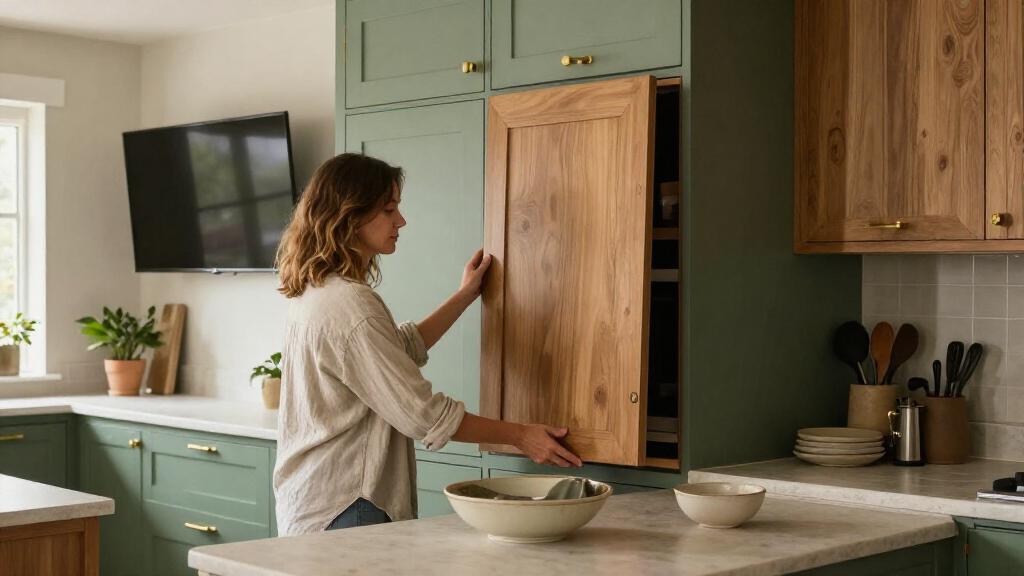
Several projects use doors or furniture to hide the screen completely. Melbourne-based designer Kylie Buhagiar placed a television inside a wall-hung metal joinery unit with hinged doors that stack back. Vancouver designer Gillian Segal used a folding millwork door system in a room that served as both a formal living area and a family space. Other examples place TVs in a closet, a wooden credenza or a cabinet, including a pagoda-shaped cabinet above a fireplace in an outdoor living room designed by Amanda Lindroth.
Other approaches leave the screen in view but try to help it blend with the surrounding decor. Examples include painting a wall dark behind a mounted TV, adding a frame that coordinates with nearby details, and using a Samsung Frame television styled to resemble a photograph. Designer Shazalynn Cavin-Winfrey covered cabinet glass with fabric chosen to pick up colors elsewhere in the room.
The report also describes more custom installations: a floating credenza with steel and walnut details, a TV concealed behind abstract-looking panels above a fireplace, and a bi-fold painting that moves aside to expose a screen. Architect Ken Pursley described the painting’s bronze hinges as a visible sign that it is a movable screen, rather than a fixed artwork. The supplied source material presents selected examples from the 27-item roundup; it does not provide specifications, costs or performance comparisons for the designs.
Design Choices Beyond the Black Screen
The examples matter to homeowners because a television can dominate a room even when it is not in use. Concealment offers one way to make a living room, guest room or shared family space feel less centered on a screen without giving up access to it. The projects also show that the choice is not simply between hiding a TV and leaving it exposed: designers can use furniture, finishes and artwork-like treatments to make a screen more or less prominent.
These are individual design examples, not evidence that one method works best in every home. A cabinet, closet or moving panel changes how the screen is accessed; a decor-matched display keeps it visible. The appropriate approach depends on the room, the household’s viewing habits and the design goals described for each project.
Products Worth Considering

Breville Smart Grinder Pro Conical Burr Coffee Grinder, Brushed Stainless Steel

De'Longhi COM530M All-in-One Coffee and Espresso Machine, 47 oz

Le Creuset Enameled Cast Iron Round Bread Oven, 9.5-Inch, Cerise
As an affiliate, we earn on qualifying purchases.
How Designers Conceal Screens
The House Beautiful report brings together projects by named interior designers and architects, with examples drawn from living rooms, kitchens, guest rooms and outdoor entertaining areas. In some homes, the TV needed to remain useful for children or guests; in others, the stated aim was to preserve a more formal or cohesive interior.
The roundup groups methods that differ in how completely they hide a screen. Cabinetry and millwork can cover it when it is not being watched, while dark paint, a decorative frame or a photo-style display can make it less conspicuous without moving it. The source lists 27 ideas, but the supplied excerpt contains only the first 14 entries and ends during a description of a pop-up installation.
“In the main living room, the TV is discreetly integrated into a wall-hung metal joinery box, with hinged doors that elegantly stack back to reveal the screen when needed.”
— Kylie Buhagiar, designer at Golden
Costs and Practical Details Not Given
The supplied report excerpt does not state what the 27 designs cost, how they were built, or whether any products or installations were tested. It also does not provide details such as ventilation, cable access, screen dimensions or the maintenance needs of the concealed systems. Those factors may vary by project and would need to be checked before adapting an idea to a particular room. Because the supplied text stops partway through the 14th entry, the remaining examples cannot be described from this material.
Consider the Room Before Choosing
The roundup does not announce a product launch, construction project or scheduled follow-up; it is an editorial collection of design examples. Readers considering a similar solution would need to assess their own room, viewing needs and furniture or wall layout, then consult appropriate design and installation professionals for project-specific requirements. The report provides no timeline or further development to track.
Key Questions
What is the House Beautiful report about?
It presents 27 designer approaches to hiding a television or making it less prominent in a home. The supplied excerpt describes selected examples, including cabinets, closets, millwork, artwork and decor-matched displays.
Which methods hide a TV completely?
The examples include placing a screen behind hinged or folding cabinet doors, inside a closet, in a credenza or behind a movable panel. The report does not compare how easy these options are to install or use.
Can a TV blend in without being covered?
Yes. The roundup describes TVs placed against dark walls, framed to match nearby details, or displayed in a style intended to resemble a photograph. These treatments reduce visual contrast but leave the screen visible.
Does the report give costs or installation guidance?
The supplied material does not give project budgets, technical specifications or step-by-step installation instructions. Readers would need to seek details for their specific room and design.
Source: housebeautiful.com