TL;DR

Get kitchen gear delivered free — and shop member deals
- Fast, free delivery on millions of items
- Access to Prime Big Deal Days deals on October 6–7
- Prime Video, Amazon Music and more included
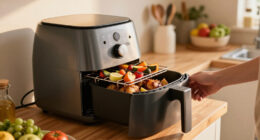
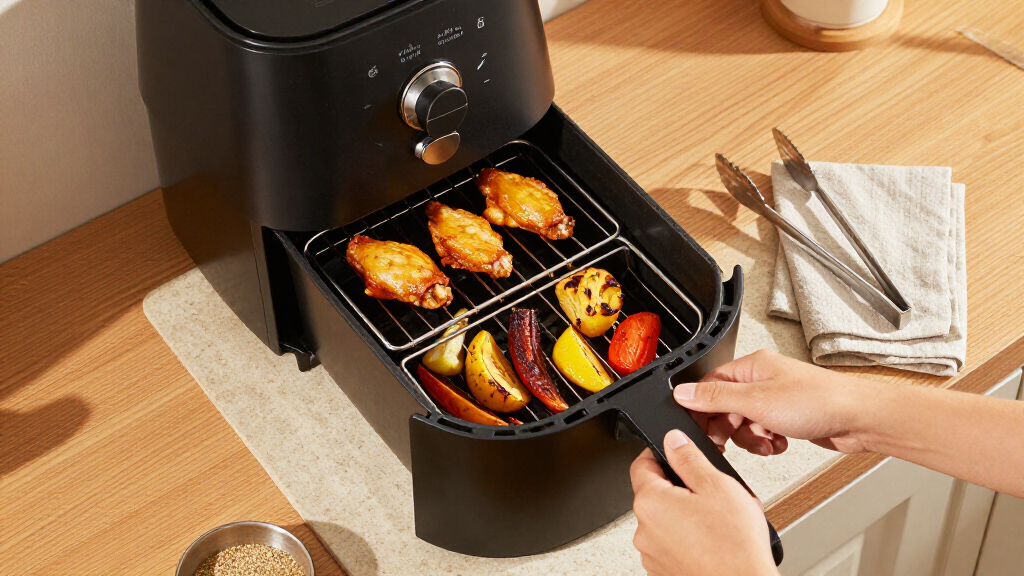
Air fryers with multiple racks (also called multi-tier or multi-level air fryers) stack cooking layers so you can cook two to four foods at once without a bigger countertop footprint. The two main styles are dual-basket drawer models and oven-style air fryers with 2–4 racks; both save time, but lower racks cook slower and usually need a mid-cook rack swap.
Last Tuesday night, my neighbor cooked chicken thighs, roasted broccoli, and crispy potatoes at the same time — in one appliance, in under 30 minutes. No oven. No second batch. No sad, soggy vegetables waiting on a plate while the protein finishes.
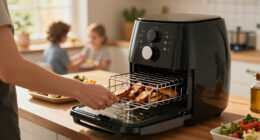
That’s the pitch for air fryers with multiple racks. Instead of one crowded basket, you get stacked cooking layers — two, three, sometimes four — so hot air hits your food on several levels at once. Also called multi-tier or multi-level air fryers, they’re built for people who are tired of cooking in shifts.
But they’re not magic, and they’re not all the same. Some styles crisp better than others. Some are a pain to clean. Here’s what actually matters before you spend $100–$400 on one.
Multi-rack air fryers come in four styles — dual-basket, oven-style racks, stackable insert racks, and dual-zone smart models — and the right one depends on wh…
The bottom rack runs effectively 10–25°F cooler than the top; swap rack positions halfway through cooking to fix uneven results.
A family of 4–6 needs 6–8+ quarts (basket) or 12+ quarts (oven-style), with at least 1,700 watts on larger units.
Overcrowding still blocks airflow even with multiple racks — never stack food directly on top of itself.
Hand wash racks and nonstick trays to extend coating life, even when they’re labeled dishwasher safe.
The 4 Types of Multi-Level Air Fryers (And Who Each One Suits)
Multi-level air fryers come in four designs, and picking the wrong one is the most common mistake buyers make. That’s because each design trades something away: separate temperature zones, total capacity, or versatility beyond air frying — and you can’t get all three in one machine. Understanding what you’re giving up is the whole game.
| Type | What It Looks Like | Best For |
|---|---|---|
| Dual-basket (drawer style) | Two side-by-side pull-out baskets with independent controls | Cooking two different foods at different temps |
| Oven-style with 2–4 racks | Looks like a toaster oven; racks slide in like a regular oven | Families, meal prep, rotisserie and dehydrating |
| Rotating stackable racks | Aftermarket wire racks that fit inside a standard basket fryer | Adding capacity to a fryer you already own |
| Dual-zone smart models | Two baskets plus synced controls and app features | Tech-friendly cooks who want everything to finish together |
The Ninja Foodi DualZone made dual-basket machines famous — you can run chicken wings at 400°F in one basket and fries at 380°F in the other, then hit Sync Finish so both land on the table at the same moment. That independence matters more than it sounds: when two foods need genuinely different temperatures, one shared cavity can’t deliver it, no matter how many racks it has. Oven-style models like the Instant Vortex Plus, Ninja Foodi SP101, and Breville Smart Oven Air go the other direction: one big cavity, multiple racks, and capacities from 8 to 26+ quarts. You sacrifice independent zones but gain the ability to run three or four foods simultaneously — and the tall cavity unlocks rotisserie and dehydrating, which drawer models physically can’t do.
For instance, if you’re dehydrating two trays of apple slices while roasting a chicken below, an oven-style multi-rack unit does all three jobs. A dual basket can’t — not because it’s weaker, but because its design assumes you’re cooking two things, not three jobs at once.
The stackable insert racks deserve a caveat: they’re the cheapest path to multi-level cooking, but stacking layers inside a single basket restricts the very airflow that makes air frying work. You gain capacity and lose crisp. Treat them as a low-risk experiment for a fryer you already own, not a substitute for a purpose-built multi-rack machine.
Why Cooks Love Them: The Real Benefits
The biggest benefit of multi-rack air fryers is time — and the math is more dramatic than it first appears. Batch cooking doesn’t just double cook time; it doubles warm-up, resting, and cleanup cycles too. For a family of four, a 50-minute staggered dinner can collapse into a single 25-minute run, because every food cooks in parallel rather than waiting its turn.
The wins stack up fast, and each one solves a specific failure mode of single-basket cooking:
- Bigger capacity without a bigger footprint — an oven-style unit at 16 quarts takes roughly the same counter space as a 6-quart basket model. You’re exploiting vertical space your kitchen already has, which is why this upgrade rarely requires a kitchen reshuffle.
- Protein and vegetables together — salmon on one rack, asparagus below. Because foods sit on separate levels rather than jumbled in one basket, you get distinct cook times and textures instead of a compromise where everything is slightly wrong.
- Meal prep in one session — four racks means four days of lunches. The implication: your Sunday prep window shrinks from an entire afternoon to under an hour.
- Extra functions — rotisserie, dehydrate, broil, and convection bake come standard on most multi-rack oven models. You’re effectively buying a second oven and a dehydrator in the same footprint, which reframes the higher price tag.
- Less electricity than a full-size oven — you’re heating a small cavity, not a 4.5 cubic foot oven. The difference compounds if you’re running it nightly instead of heating a big oven for one tray of fries.
Imagine Wednesday at 6 p.m.: breaded chicken on the top rack getting golden, sweet potato wedges on the middle rack, and frozen egg rolls below. One appliance, one timer, dinner done. The deeper payoff isn’t just speed — it’s that everything finishes simultaneously, so nothing sits cooling while something else catches up. That’s the everyday reality once you stop batch cooking.
The Tradeoffs Nobody Mentions in the Ads
Multi-rack air fryers have three honest downsides: lower racks cook slower, there are more parts to wash, and prices run higher than single-basket models. None of these are dealbreakers, but each one represents a real tradeoff you’re accepting in exchange for capacity — and knowing why they exist helps you decide whether the trade is worth it for you.
First, the physics problem. Air frying works by a heating element plus a fan blasting hot air at food. The top rack sits closest to that element, so it crisps and browns fastest; the bottom rack can effectively lag by 10–25°F. The consequence isn’t just slower cooking — it’s that the same food on different racks finishes at different times, which is exactly the problem multi-rack buyers thought they were escaping. The mitigation is simple but non-negotiable:
Swap rack positions halfway through cooking. It takes ten seconds and it’s the single biggest fix for uneven multi-level results.
Second, cleaning. An oven-style unit means washing racks, a drip pan, and sometimes a rotisserie spit — every time you cook. This is the hidden cost of capacity: more surface area means more grease-covered surface area. Most parts are dishwasher safe, but hand washing extends the life of nonstick coatings, which matters because a flaking rack isn’t just ugly — degraded coating makes food stick and airflow suffer. Third, price. Expect to pay more than a basic basket fryer; premium models like the Breville Smart Oven Air sit at the top of the range. Whether the premium is justified depends on how often the extra racks earn their keep — a nightly family cook justifies it far faster than occasional use for two.
One more trap: overcrowding still ruins everything. Stacking food directly on top of itself blocks the airflow that makes air frying work. This is worth internalizing, because it’s the most common way new owners sabotage themselves — they treat extra racks as extra permission to pile food. Multiple racks give you more layers, not more density. The appliance’s speed comes from air moving freely around each piece, and anything that interrupts that converts your air fryer into a slow, soggy steamer.
5 Rack Tricks That Fix Uneven Cooking
Getting evenly cooked food from a multi-rack air fryer comes down to airflow management and rack rotation. Each trick below addresses a specific physical cause of uneven results — understand the cause and you can improvise fixes for situations the manual never covers:
- Leave breathing room. Space items at least half an inch apart on each rack so hot air can circulate between pieces. Air that can’t move can’t transfer heat, which means densely packed food steams instead of crisps no matter how hot the element runs.
- Put browning jobs on top. The top rack is closest to the element — reserve it for whatever needs the most crisping, like breaded chicken. This turns the temperature gradient from a flaw into a tool: you’re matching each food to the heat level its position provides, instead of fighting physics.
- Swap racks at the halfway mark. Rotate top to bottom mid-cook to cancel out that 10–25°F lag. Halfway matters because each food spends equal time in both positions — the errors average out rather than compound.
- Check internal temps, not just the timer. Pull chicken to 165°F and fish to 145°F with an instant-read thermometer, since lower racks run behind. A timer assumes uniform conditions; your air fryer doesn’t deliver them, so the thermometer — not the beep — is the actual doneness signal.
- Secure lightweight foods. Breaded items and thin veggies can blow around from the fan — use mesh racks or weigh them down with a toothpick skewer. If food is moving, it’s cooking unevenly: a spinning piece of breading loses contact with the hot rack surface where much of the bottom crisping happens.
Yes, you can use foil or parchment on the racks — just poke holes for airflow and secure the edges so the fan doesn’t launch it. The reason this works as a system: every trick either improves airflow, compensates for the temperature gradient, or verifies results despite it. When something cooks unevenly, diagnose which of those three failed and you’ll know which fix to reach for.
How to Buy the Right One: Capacity, Wattage, and Controls
A family of 4–6 needs roughly 6–8+ quarts in a basket-style fryer, or a multi-rack oven of 12 quarts or more. The reason to size honestly rather than generously: an oversized cavity you never fill still costs you preheat time and counter space, while an undersized one pushes you right back into batch cooking — the exact habit you’re paying to escape. Match capacity to your real household, then check these four things before checkout, because each one quietly determines daily usability:
- Wattage: look for at least 1,700 watts on larger units. Why it matters: a weak element can’t recover heat after you open the door, so every peek adds minutes and softens results — a problem multiplied on multi-rack models where you’re checking several foods at once.
- Independent zones: dual-basket models should allow different temps and times per basket, plus a sync-finish feature. Without it, a dual basket is just two fryers bolted together; with it, foods that need 15 minutes and 25 minutes finish simultaneously instead of forcing you to juggle timers.
- Accessories: rotisserie spit, drip pan, dehydrating trays, and extra racks add real value on oven models — largely because buying them separately is often impossible (they’re sized to the cavity) or disproportionately expensive.
- Cleaning: confirm dishwasher-safe racks and removable drip pans before you buy. This sounds minor but decides long-term ownership: a machine that’s annoying to clean gets used less, and a $300 appliance you avoid using is the most expensive one you can buy.
On budget: COSORI and Instant Pot’s Instant Vortex line deliver solid multi-rack performance at mid-range prices, while Ninja and Breville anchor the premium tier with smarter controls and better build. The premium tier mainly buys you better temperature stability and insulation — which matters more on multi-rack units, since even cooking is their core weakness. Check current review roundups from Serious Eats, Wirecutter, or America’s Test Kitchen before purchasing — models and pricing shift constantly.
One caution worth repeating: these are countertop appliances drawing serious amperage. Plug directly into a wall outlet — never an extension cord — because undervoltage from a thin cord degrades heating performance and creates a fire risk, and keep the unit clear of cabinets while running so exhaust heat has somewhere to go.
Frequently Asked Questions
Do you really need to rotate racks in a multi-rack air fryer?
Usually yes. Because the top rack sits closest to the heating element, the bottom rack cooks slower — often by an effective 10–25°F. Swapping rack positions halfway through cooking takes seconds and fixes most uneven results. Thin, fast-cooking foods like fries may not need it.
Can you cook two different foods at once without flavors mixing?
Mostly yes, especially with dual-basket models where foods are physically separated. In oven-style units, strong-smelling foods like salmon or garlic-heavy dishes can transfer some aroma to milder items on other racks. Pair compatible foods — protein with vegetables works better than fish with pastry.
Are multi-rack air fryers as crispy as single-basket models?
The top rack is often just as crispy, since it’s closest to the heating element. Lower racks tend to come out slightly less crisp and may need a few extra minutes. For maximum crunch on a finished dish, move it to the top rack for the last 2–3 minutes of cooking.
Can I put foil or parchment paper on the racks?
Yes, as long as you secure it so the fan doesn’t blow it around, and poke holes to keep air flowing. Weigh down the corners or crumple small foil balls underneath. Never let parchment touch the heating element on oven-style models.
Which is better: dual baskets or an oven-style air fryer with racks?
Dual baskets win for cooking two foods at genuinely different temperatures with independent controls. Oven-style rack units win on capacity (up to 26+ quarts), versatility (rotisserie, dehydrating, broiling), and cooking three or more items at once. If you meal prep or cook for five or more, go oven-style; if you mostly cook paired dinners, dual baskets are simpler.
Conclusion
If you cook for more than two people, or you’re tired of eating in shifts while batch three finishes, a multi-rack air fryer pays for itself in reclaimed weeknights. Buy the style that matches how you cook — dual baskets for separate zones, an oven unit for capacity and rotisserie — and master the halfway rack swap.
Because the whole point isn’t the appliance. It’s the moment everything lands on the table at once, hot and crisp, and nobody asks what’s still cooking.
Evergreen bestsellers Picks
bestsellers
As an affiliate, we earn on qualifying purchases.