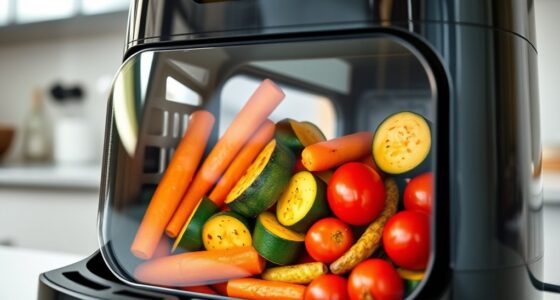
To reduce acrylamide formation when air frying, keep the temperature below 350°F and shorten cooking times to avoid over-browning. Soaking starchy foods like potatoes before cooking can lower acrylamide precursors, and flipping or shaking food halfway through promotes even cooking. Watching for a light golden color indicates less acrylamide. Using these tips helps you enjoy crispy, safer results—stay tuned for more ways to optimize your air frying experience.
Key Takeaways
- Keep air fryer temperature below 350°F to minimize acrylamide formation.
- Shorten cooking times and check for a light golden color to reduce risks.
- Pre-soak starchy foods like potatoes in water before air frying.
- Flip or shake food midway for even cooking and lower acrylamide levels.
- Avoid over-browning; monitor food color for safer, crispy results.
Air frying has become a popular way to enjoy crispy snacks with less oil, but it also raises concerns about acrylamide formation. When you use an air fryer, the key factors influencing acrylamide levels are oil temperature and cooking duration. Higher oil temperatures can lead to more acrylamide because this compound forms when starchy foods are cooked at elevated heat. Similarly, the longer you cook, the more likely it is that acrylamide will develop, especially if you’re aiming for a crispy, golden-brown finish.
To reduce acrylamide formation, you should pay close attention to the oil temperature. Keep it below 350°F (175°C), as temperatures above this threshold considerably increase the risk of acrylamide creation. Most air fryers allow you to set a specific temperature; therefore, choosing a moderate setting can help. For instance, instead of setting your air fryer to 400°F, try cooking at 350°F or lower. This way, you still achieve crispy results without pushing the temperature into a range that fosters acrylamide formation.
To reduce acrylamide, keep air fryer temperature below 350°F (175°C) for safer, crispy results.
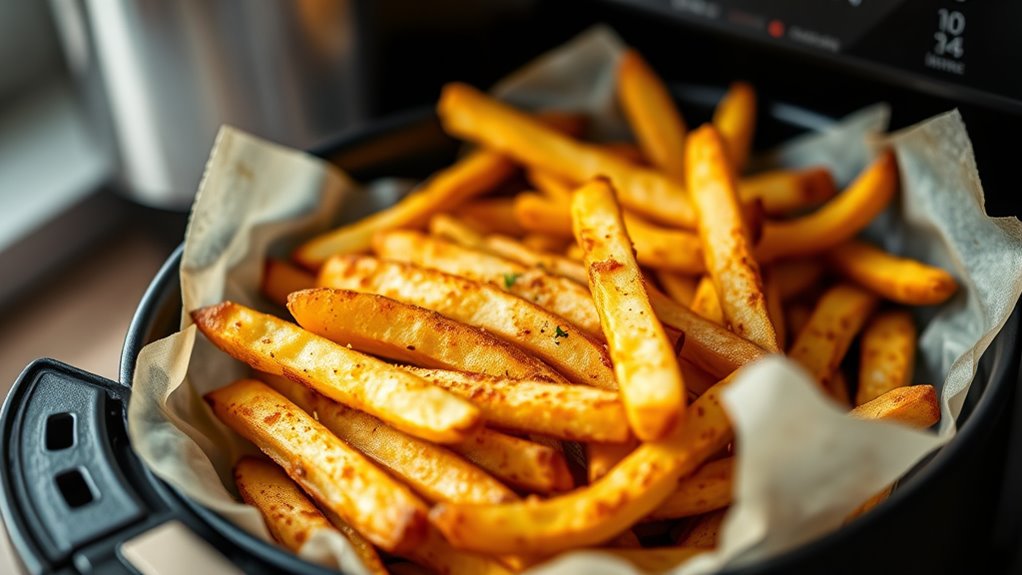
Cooking duration also plays a critical role. The longer your food stays in the air fryer, the more acrylamide can develop. To minimize this, aim for shorter cooking times, checking your food frequently to prevent overcooking. For example, if you’re preparing fries, start with a shorter cook time, around 10-15 minutes, and then increase if needed. Keep an eye on the color; a light golden hue indicates less acrylamide, whereas dark brown or blackened foods suggest higher levels.
Another tip is to pre-soak starchy foods like potatoes in water before air frying. This helps remove some of the surface sugars and starches that contribute to acrylamide formation. Dry the food thoroughly afterward to ensure even cooking and crispiness. Additionally, flipping or shaking the food halfway through cooking promotes even heat distribution, reducing the need for extended cooking times.
Frequently Asked Questions
Does Pre-Soaking Food Reduce Acrylamide Formation During Air Frying?
Yes, pre-soaking food can reduce acrylamide formation during air frying. When you soak food, you increase its moisture content, which helps to dilute acrylamide precursors and prevent high-temperature reactions. This process minimizes the browning and charring that lead to acrylamide formation. To get the best results, soak your food for 15-30 minutes, then pat it dry before air frying to maintain crispiness without risking increased acrylamide levels.
Are Certain Foods More Prone to Acrylamide When Air Fried?
Sure, some foods are more prone to acrylamide formation when air fried. Starchy foods like potatoes and bread, with low moisture content, turn into acrylamide magnets. If you’re craving crispy chips or toasty toast, be warned! These foods tend to produce more acrylamide because their low moisture levels allow the chemical to form more easily during cooking. So, choose your snacks wisely—your health might thank you.
Can Using Lower Temperatures Eliminate Acrylamide Risks in Air Frying?
Lowering the temperature can substantially reduce acrylamide risks in air frying, but it doesn’t eliminate them entirely. You should focus on temperature control and keep cooking durations shorter to minimize acrylamide formation. Avoid overcooking and burning your food, as higher heat and longer cooking times increase the risk. By carefully managing both temperature and time, you can enjoy crispy foods while reducing potential health hazards.
How Does Food Thickness Impact Acrylamide Development in Air Frying?
Imagine giving your food a gentle hug before frying; thicker pieces tend to develop less acrylamide because heat penetrates more slowly. When your food is thicker, it’s less likely to overheat and form acrylamide during air frying. So, by choosing appropriately thick cuts, you help curtail acrylamide development. Keep an eye on food thickness to enjoy crispy treats without worrying about unnecessary chemical formation.
Are There Commercial Air Fryers Designed to Minimize Acrylamide Formation?
Yes, some commercial fryers incorporate innovations aimed at minimizing acrylamide formation. These fryers often feature advanced airflow systems and temperature controls designed with acrylamide reduction techniques in mind. By using such equipment, you can better manage cooking temperatures and times, markedly reducing acrylamide levels in your food. Look for models that emphasize safety and health-focused features to guarantee you’re actively lowering potential harmful compounds during the frying process.
Conclusion
To enjoy air frying while keeping things balanced, it’s wise to be mindful of acrylamide formation. You might find that moderating your cooking time and temperature can gently steer you away from unintended risks. Think of it as choosing a milder path—still delicious, just a touch kinder to your health. Remember, small adjustments can make a big difference, helping you savor your favorites with a little extra peace of mind.