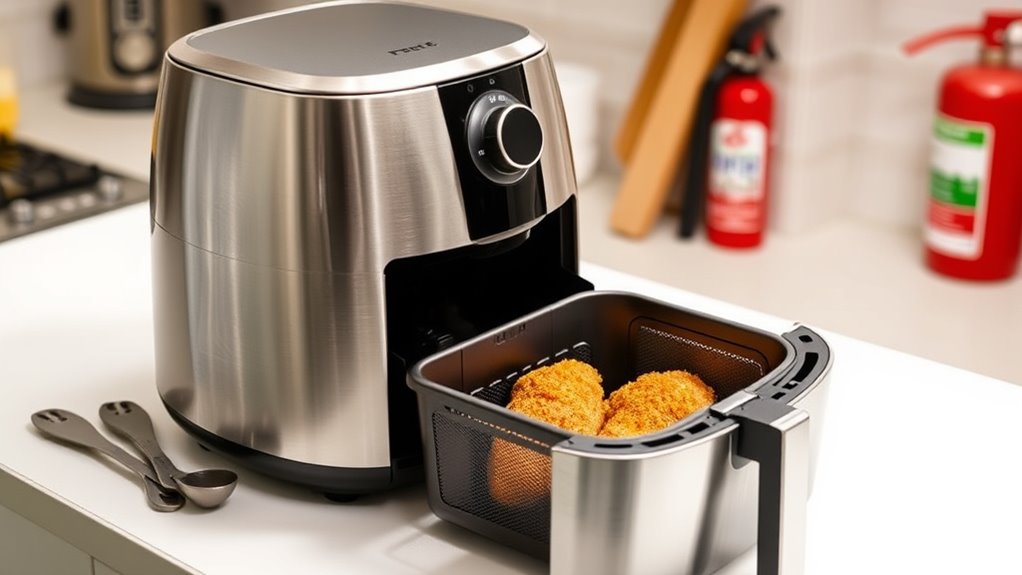

When air frying with celiac disease, it’s essential to prevent gluten cross contact. Keep your air fryer dedicated or thoroughly clean it after use, using separate utensils and racks for gluten-free foods. Store gluten-free ingredients separately and always check labels for hidden gluten. Use parchment paper or silicone liners to line the basket and prepare foods on clean surfaces. Maintaining strict hygiene and dedicated equipment helps keep your meals safe—keep going to learn more tips for gluten-free air frying.
Key Takeaways
- Use a dedicated air fryer or thoroughly clean it after gluten-containing foods to prevent cross contamination.
- Store gluten-free ingredients separately and clearly label all items to avoid accidental mixing.
- Prepare gluten-free meals on separate surfaces and with dedicated utensils to minimize gluten exposure.
- Line the air fryer basket with parchment paper or silicone liners for added protection against gluten residue.
- Always read labels on pre-made or processed foods to ensure they are certified gluten-free before use.
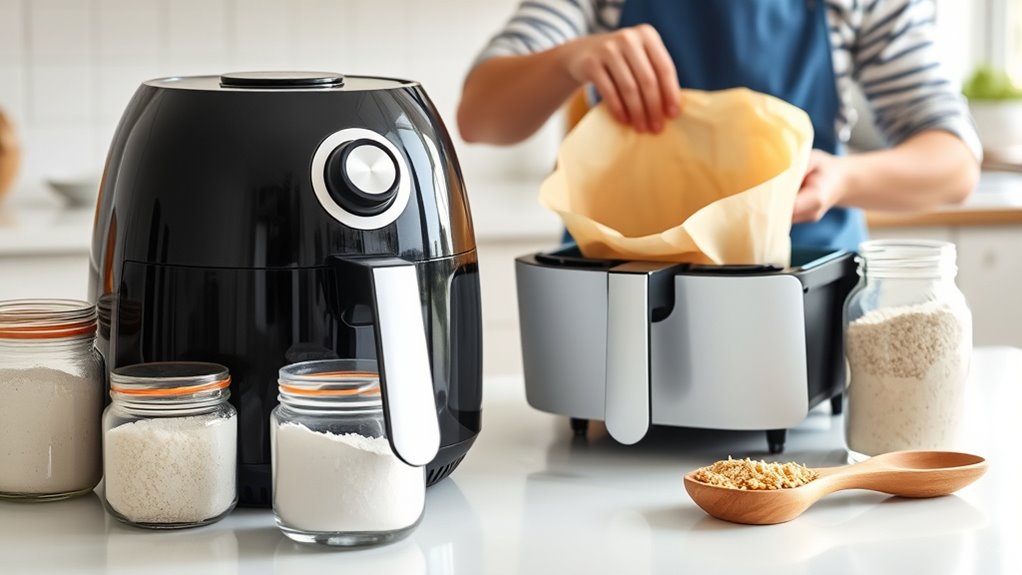
If you have celiac disease, you know how crucial it is to avoid gluten contamination in your food. When it comes to air frying, this means paying close attention to every detail in your kitchen. Cross contamination can happen easily if you’re not careful. For example, using the same utensils, baskets, or racks for both gluten-containing and gluten-free foods increases your risk of exposure. Even tiny crumbs or residue can trigger symptoms, so it’s essential to keep your air fryer clean and dedicated to gluten-free cooking if possible. Regularly washing the basket, tray, and any removable parts with hot, soapy water helps eliminate any lingering gluten particles. Some people prefer to have a separate air fryer or at least a dedicated rack or tray to make sure cross contamination doesn’t occur.
Keep your air fryer dedicated and clean to prevent gluten cross contamination.
When selecting ingredients for your air fryer, look for gluten-free alternatives. Many traditional recipes can be easily adapted with gluten-free flours, breading, or coatings. For example, you can swap wheat flour for almond or rice flour when breading chicken or vegetables. Pre-made gluten-free bread crumbs are also widely available and work well for crispy coatings. Using gluten-free alternatives not only helps prevent accidental gluten exposure but also provides peace of mind during meal prep. Always read labels carefully to confirm products are certified gluten-free, as cross contamination can happen during manufacturing. If you’re buying pre-seasoned or processed foods, double-check ingredients to avoid hidden sources of gluten.
Another key safety measure is to prepare your gluten-free meals on separate surfaces or cutting boards to prevent cross contamination. When using your air fryer, consider lining the basket with parchment paper or a silicone liner designed for air fryers. This barrier reduces contact with any residual gluten and makes cleaning easier. Be cautious with shared accessories like tongs or spatulas—use dedicated tools for gluten-free foods to avoid transferring gluten residues. Also, keep your air fryer in a designated spot, away from gluten-containing foods, to reduce accidental contact. When dining out or ordering takeout, ask whether their equipment is dedicated or thoroughly cleaned to avoid cross contamination.
Maintaining a gluten-free kitchen with vigilance and good habits is essential for safety and peace of mind. By keeping your equipment spotless, choosing gluten-free alternatives, and avoiding cross contamination, you can enjoy delicious, crispy meals without risking your health. Taking these precautions ensures that your air frying experience remains safe and enjoyable, giving you confidence in every bite.
Frequently Asked Questions
Can I Use the Same Air Fryer for Gluten-Containing and Gluten-Free Foods?
You can use the same air fryer for gluten-containing and gluten-free foods, but you should prioritize safety. To prevent cross-contact, thoroughly clean the basket and tray between uses, especially if your air fryer has a large capacity. Adjust cooking times if needed, as gluten-free foods might cook differently. Being diligent with cleaning and monitoring cooking times guarantees safe, delicious meals without risking gluten contamination.
How Do I Prevent Cross-Contact With Gluten When Air Frying?
To prevent cross-contact with gluten when air frying, start with thorough kitchen preparation by cleaning your air fryer and using separate utensils. Use gluten-free coatings and avoid overlapping foods that contain gluten. Always place gluten-free items in a different section of the basket and double-check labels. By maintaining a clean environment and being cautious with your ingredients, you can safely enjoy gluten-free air-fried foods without risk.
Are There Specific Brands of Air Fryers That Are Safer for Celiacs?
Think of a fortress protecting your health; some air fryer brands stand guard better than others. Brands like Cuisinart and Breville prioritize allergen controls and offer safer options for celiacs. Look for models with dedicated gluten-free settings or easy-to-clean, non-stick surfaces. Choosing a reputable brand with clear safety features helps minimize cross-contact risks, letting you enjoy crispy meals without worry. Always verify allergen controls before purchasing.
How Often Should I Clean My Air Fryer to Avoid Gluten Contamination?
You should clean your air fryer after every use to prevent gluten contamination. Follow a strict cleaning routine, including removing and washing the basket and tray thoroughly, to eliminate any residual crumbs or gluten particles. Regular cleaning helps make certain contamination prevention, especially if you cook gluten-free foods frequently. Consistent maintenance minimizes the risk of cross-contact, keeping your meals safe and gluten-free every time you use your air fryer.
Is It Safe to Reheat Gluten-Free Foods in an Air Fryer?
Reheating gluten-free foods in your air fryer is generally safe if you follow proper reheating safety and adhere to gluten-free guidelines. Make sure your air fryer is thoroughly cleaned before use to prevent cross-contamination. Avoid reheating foods that may have come into contact with gluten-containing ingredients. Use separate utensils and avoid overlapping foods with gluten-containing items. This helps ensure your gluten-free meal remains safe and uncontaminated.
Conclusion
Managing air frying with celiac disease is like steering a ship through calm waters—careful, but manageable. By keeping your kitchen free of gluten cross-contact and cleaning your air fryer thoroughly, you create a safe harbor for your health. Remember, your vigilance is the compass guiding you. With these steps, you can enjoy delicious, gluten-free meals without fear, turning your kitchen into a fortress where safety and flavor sail hand in hand.