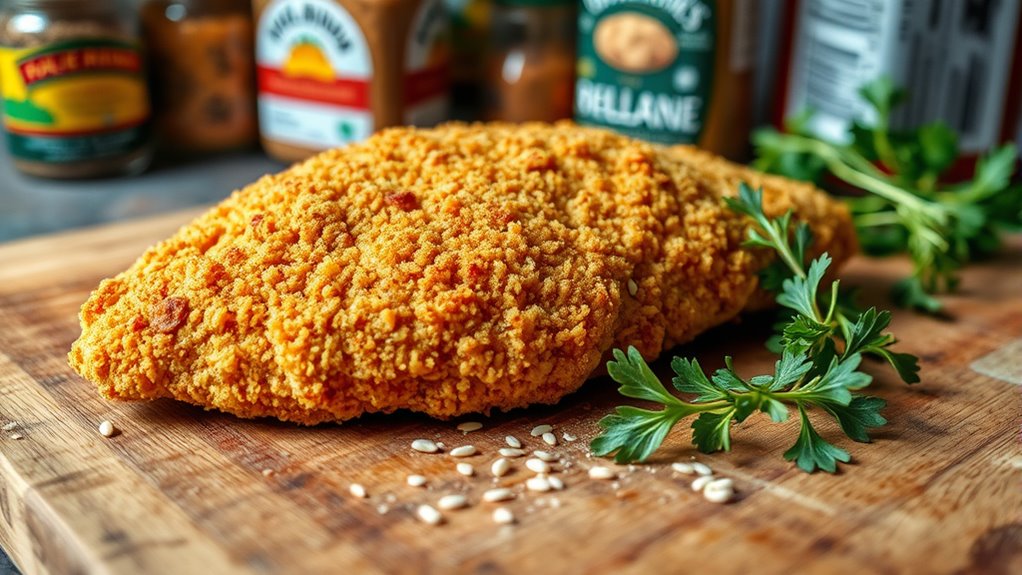

When checking labels for allergens in coatings and breadings, be aware that traces can hide due to cross contact during manufacturing. Even if ingredients don’t list certain allergens, manufacturing processes or shared equipment may introduce them subtly. Look for warnings like “may contain traces” or “produced in a facility that processes” allergenic foods. Staying vigilant helps you manage your allergy risks better. Continuing with this guide will help you understand how to spot and avoid hidden allergens effectively.
Key Takeaways
- Always read ingredient labels carefully to identify explicit allergen listings and caution statements like “may contain traces.”
- Be aware that coatings and breadings can harbor hidden allergens due to cross contact during manufacturing.
- Look for products with certified allergen-free labels or those produced in dedicated allergen-safe facilities.
- Contact manufacturers for detailed information on their processing practices and allergen control measures.
- Recognize that cross contact can occur at multiple stages, including transportation and storage, emphasizing the need for vigilance.
Coatings and breadings are common ingredients used to add flavor and texture to a variety of foods, but they can also be hidden sources of allergens. When you’re shopping or preparing meals, it’s vital to be aware that these products might contain ingredients that trigger allergic reactions. One significant concern is cross contact issues, where allergens from one food come into contact with coatings or breadings during manufacturing or handling. This can happen on processing lines that handle multiple allergens or through shared equipment, making it tricky to determine if a product is truly safe for someone with food allergies. Even if a coating or breading doesn’t list a particular allergen as an ingredient, cross contact issues could still lead to traces of that allergen in the final product. That’s why understanding the manufacturing process and being vigilant about cross contact is essential when managing food allergies.
You should also pay close attention to allergen labeling regulations, which vary by country but generally require manufacturers to clearly list common allergens on packaging. These regulations are designed to help you make informed choices and avoid accidental exposure. However, labeling isn’t always foolproof. Sometimes, allergens are present in trace amounts due to cross contact, but not listed explicitly on the label. This inconsistency underscores the importance of reading labels carefully each time you buy a product, even if it’s a familiar brand. Look for statements such as “may contain traces of” or “produced in a facility that processes…”—these can be red flags that cross contact is possible.
Being proactive also means contacting manufacturers if you’re unsure about how a product is processed or whether it’s safe for your specific allergy. You can ask about their allergen control measures or whether their coatings and breadings are produced in dedicated facilities. In addition, some products are certified allergen-free, which can provide extra peace of mind. But remember, even certified products should be monitored for cross contact issues, especially if you have severe allergies. Ultimately, thorough label reading combined with an understanding of allergen regulations empowers you to make safer choices. It’s also helpful to be aware that cross contact issues can occur in various stages of production, including during transportation or storage, adding another layer of risk. This helps you avoid accidental exposure and manage your allergy with confidence. Staying informed and cautious ensures that your meals are both delicious and safe, giving you peace of mind each time you sit down to eat.

Young Kobras Organic, Gluten-Free Original Sourdough Bread 22oz (2-pack) – Allergen Friendly, Vegan, Gum-Free, Simple Ingredients & Made Fresh to Order
Deliciously Original – Indulge in the delicious taste of our soft, organic sourdough bread. Made with simple, healthy…
As an affiliate, we earn on qualifying purchases.
As an affiliate, we earn on qualifying purchases.
Frequently Asked Questions
Are Gluten-Free Coatings Always Safe for Celiac Disease?
Gluten-free coatings aren’t always safe for celiac disease, even if they have gluten-free certification. You need to check for cross contact prevention measures during processing, as shared equipment can introduce gluten. Always read labels carefully and look for explicit statements about cross contact. When in doubt, contact the manufacturer to confirm the coating’s safety, ensuring it meets strict standards to protect your health.
Can Cross-Contamination Occur During Coating or Breading Preparation?
Did you know that cross-contact risks can increase by up to 60% during coating or breading prep? Yes, cross-contamination can occur if cleaning procedures aren’t thorough. You need to carefully clean surfaces, utensils, and equipment between uses to prevent allergen transfer. Always double-check your cleaning procedures and avoid sharing tools to minimize cross-contact risks, especially when handling allergen-free or gluten-free coatings.
How Can I Identify Hidden Allergens in Coatings?
You can identify hidden allergens in coatings by carefully conducting a visual inspection of ingredient labels. Look beyond obvious allergen mentions and check for ingredients like wheat, soy, or dairy derivatives that might be hidden under different names. Always read the entire ingredient list thoroughly, as allergens can be present in additives, flavorings, or fillers. Staying vigilant helps you avoid unintentional exposure to allergens in coatings.
Do Organic Coatings Contain Fewer Allergens?
Organic coatings often contain fewer allergens because they use organic ingredients, which typically avoid synthetic additives and common allergens. While they may reduce the risk of allergen exposure, it’s still essential to read labels carefully, as organic doesn’t guarantee allergen reduction. You should check for specific allergens and choose products with transparent ingredient lists to guarantee they meet your allergen needs.
Are Allergen Labels on Coatings Always Accurate and Up-To-Date?
You might worry about allergen labels being accurate, but they aren’t always perfectly updated. Manufacturers endeavor for label accuracy, yet allergen updates can lag behind ingredient changes or new risks. Always check for the latest information, especially if you have severe allergies. Relying on labels alone isn’t foolproof, so consider contacting the company directly if you’re unsure. Staying vigilant helps protect you, even when labels seem current.

SMOOCHES, 2 PACK | Allergy Friendly, Vegan Chocolate Silver Foil Wrapped Candy | Dairy Free, Nut Free, Peanut Free, Gluten Free | No Whey Foods
Smooches are not only delicious but also free from the top nine common allergens. We believe that everyone…
As an affiliate, we earn on qualifying purchases.
As an affiliate, we earn on qualifying purchases.
Conclusion
Next time you read that label, picture the crispy coating turning golden in hot oil, each bite a tempting crunch. By checking for hidden allergens, you’re safeguarding your health and savoring your favorite foods worry-free. Imagine biting into perfectly coated chicken, knowing you’ve made a smart choice. So, keep your eyes sharp and your mind alert—your peace of mind is worth every label scan. Enjoy every delicious, allergen-free bite ahead!

500pcs Food Allergy Warning Labels, 1.97×0.98in/5×2.5cm Rectangle Food Allergy Notice Stickers Non-Inspection Statement Decal for Home Kitchen Bakery Restaurant
Product Content: You can get 1 roll of 500 count rectangle food allergy warning labels, providing you sufficient…
As an affiliate, we earn on qualifying purchases.
As an affiliate, we earn on qualifying purchases.

Aleia’s Gluten Free Plain Bread Crumbs – 7 oz (1 Pack) – Classic Gluten Free Breading – Dairy Free, Kosher, Low Sodium, Non-GMO
GLUTEN-FREE. FLAVOR-FULL.: Aleia's is a women-owned, grassroots company established in 2008, A USA-based manufacturer that produces premium quality,…
As an affiliate, we earn on qualifying purchases.
As an affiliate, we earn on qualifying purchases.