
When comparing fat content, air frying uses little to no oil, resulting in markedly lower fat levels—often cutting fat by up to 75%—compared to deep frying, which immerses food in hot oil and absorbs more fat. This makes air frying a healthier choice for reducing calorie intake and unhealthy fats. If you’re curious about how these methods affect nutrition and health, staying informed can help you make smarter cooking decisions.
Key Takeaways
- Air frying typically reduces fat content by 50-75% compared to deep frying.
- Deep-fried foods absorb more oil, increasing their overall fat levels significantly.
- Air-fried items often contain 10-15g of fat per serving, while deep-fried can have 20-25g or more.
- Choosing healthier oils and proper techniques can further lower fat absorption in both methods.
- Overall, air frying offers a healthier alternative with substantially less fat than traditional deep frying.
Understanding the Basics of Air Frying and Deep Frying

While both air frying and deep frying cook foods quickly and create crispy textures, they use different methods to achieve these results. Frying technology in air frying relies on rapid air circulation, which cooks food evenly with little to no added oil. This method reduces the amount of fat absorbed during cooking, promoting healthier choices. Deep frying, on the other hand, immerses food in hot oil, which results in a faster cook time and a distinct crispy exterior. When considering cooking safety, air fryers pose less risk of oil splatters and burns, making them safer for home use. Additionally, the automation of cooking processes in modern kitchen appliances like air fryers can improve consistency and ease of use. Understanding these differences helps you choose the right method based on your health goals and safety concerns, while also appreciating the unique cooking processes behind each technique.
The Impact of Cooking Methods on Fat Content
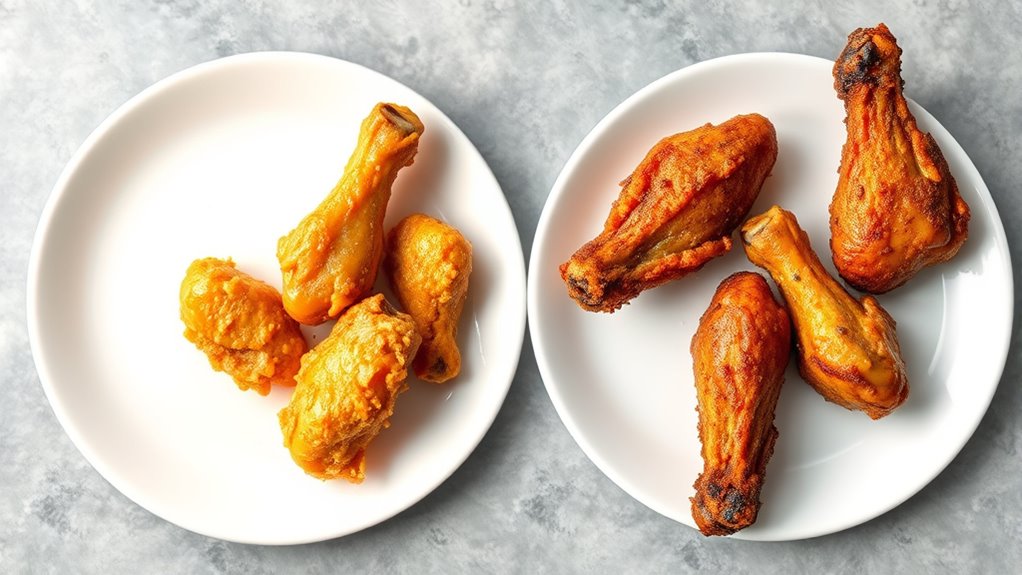
Cooking methods considerably influence the fat content of your meals, with some techniques adding more fat than others. When you deep fry, you typically use more frying oil, which soaks into food, increasing its fat levels. Conversely, air frying uses little to no oil, reducing added fat. The culinary techniques involved determine how much fat your food retains. For example:
- Deep frying absorbs oil directly into food.
- Air frying relies on hot air circulation, minimizing oil use.
- The type of frying oil impacts fat content—heavier oils add more calories.
- Cooking at high temperatures can cause food to absorb less oil, but improper technique may increase fat intake.
Understanding these factors helps you choose healthier cooking methods that control fat content effectively.
Typical Fat Levels in Air-Fried Foods
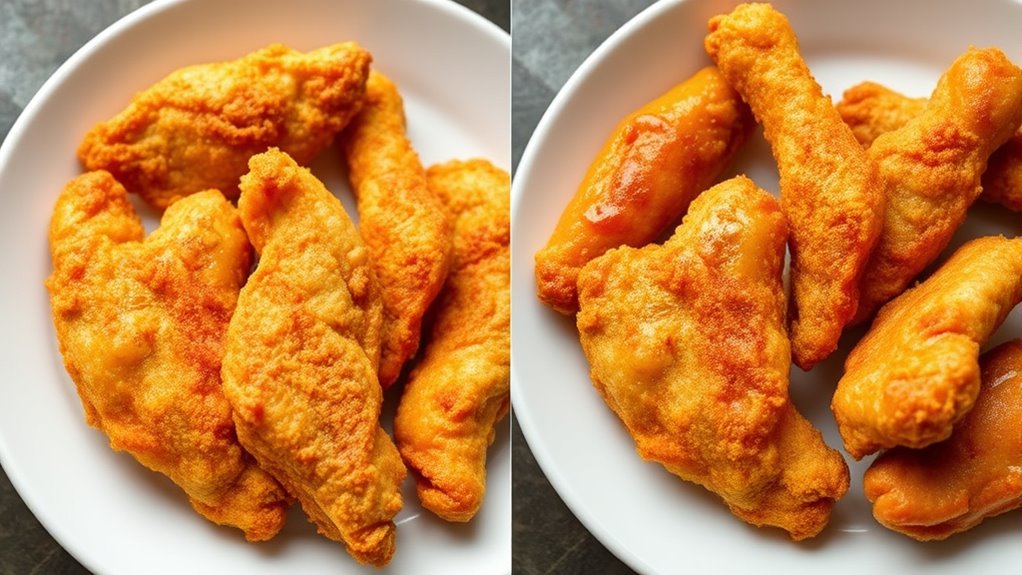
You’ll notice that air-fried foods generally have less fat than their traditionally fried counterparts, making them a healthier choice. Popular options like chicken wings, fries, and mozzarella sticks tend to retain much of their flavor while reducing oil content. This can help you enjoy your favorite foods with fewer calories and less saturated fat. Additionally, using glycolic acid in skincare routines can improve skin texture, which is an example of how targeted ingredients can enhance overall health and appearance.
Fat Reduction Benefits
Have you ever wondered how air frying can help reduce the fat content in your favorite foods? By using healthier cooking techniques, you can enjoy your favorites with less fat. Air frying typically requires little to no oil, which leads to lower fat levels compared to deep frying. Here are some key benefits:
- Minimal oil use keeps fat content low.
- Promotes healthy alternatives without sacrificing flavor.
- Retains crispiness with less added fat.
- Supports overall healthier eating habits.
- Incorporating grocery savings strategies can make healthier cooking more affordable.
This method makes it easier to enjoy crispy foods without the excess calories from traditional frying. By choosing air frying, you adopt a healthier alternative that aligns with your wellness goals. It’s an effective way to enjoy your favorite dishes while reducing your fat intake.
Common Food Examples
Ever wondered how much fat remains in common air-fried foods compared to their traditionally fried counterparts? Air frying often results in lower fat levels because it uses little to no oil, making it a healthier alternative for your favorites. For example, air-fried chicken wings typically contain about 10-15 grams of fat per serving, compared to 20-25 grams when deep-fried. Similarly, French fries made in an air fryer have markedly less fat while still maintaining flavor preservation. These healthier alternatives allow you to enjoy crispy, delicious foods without the excess fat. Keep in mind, the fat content can vary based on ingredients and cooking methods, but overall, air frying helps reduce fat without sacrificing taste. Visual and auditory cues can also assist in making healthier choices by reinforcing good habits.
Fat Levels in Traditionally Deep-Fried Dishes
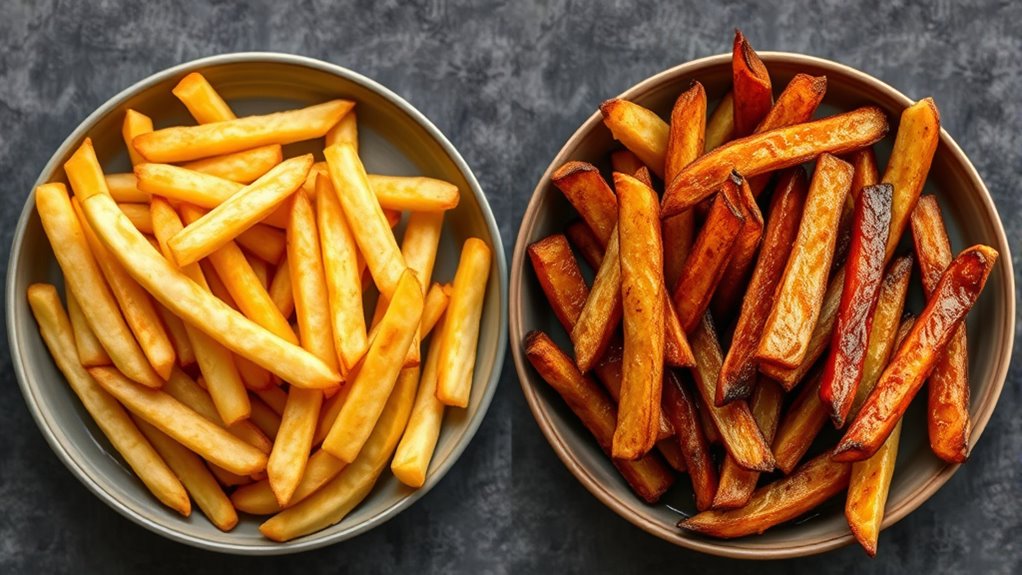
When you compare deep-fried dishes, you’ll notice they absorb more oil, increasing their fat content considerably. The amount of oil each dish takes in depends on cooking methods and batter types. As a result, these dishes often have higher fat levels than their air-fried counterparts.
Oil Absorption Rates
How much oil a food absorbs during deep-frying directly impacts its fat content and overall healthiness. Higher oil absorption means more fat in your dish. Several factors influence this, including:
- Frying temperature: Higher temps reduce oil uptake by creating a crust faster.
- Food moisture content: More moisture leads to less oil absorption.
- Food size and shape: Smaller or thinner pieces tend to absorb less oil.
- Frying efficiency: Proper technique minimizes excess oil retention.
- Oil quality and type: The smoke point and viscosity of the oil can also affect absorption rates.
Understanding oil absorption helps you control fat levels in deep-fried foods. When frying, poor frying efficiency can cause excessive oil absorption, increasing the dish’s fat content. To reduce oil uptake, optimize frying temperature and ensure proper cooking techniques. This way, you enjoy fried foods with less added fat.
Typical Dish Fat Content
Deep-fried dishes typically contain high levels of fat due to the significant oil absorption during cooking. The frying techniques you choose influence how much fat the dish retains; for example, batter-heavy methods tend to absorb more oil. The type of oil used also impacts fat content—softer oils like vegetable or canola oil may lead to higher absorption, while more stable oils like peanut or sunflower oil can reduce it. When you deep fry, the food’s surface quickly soaks up oil, resulting in dishes that can contain 10-20 grams of fat per serving, depending on the recipe and frying process. Oil absorption rates are affected by temperature and the moisture content of the food, which further influences the overall fat content. Understanding how frying techniques and oil types interact helps you gauge the typical fat levels in deep-fried foods.
Comparing Nutritional Profiles: Calories and Fat
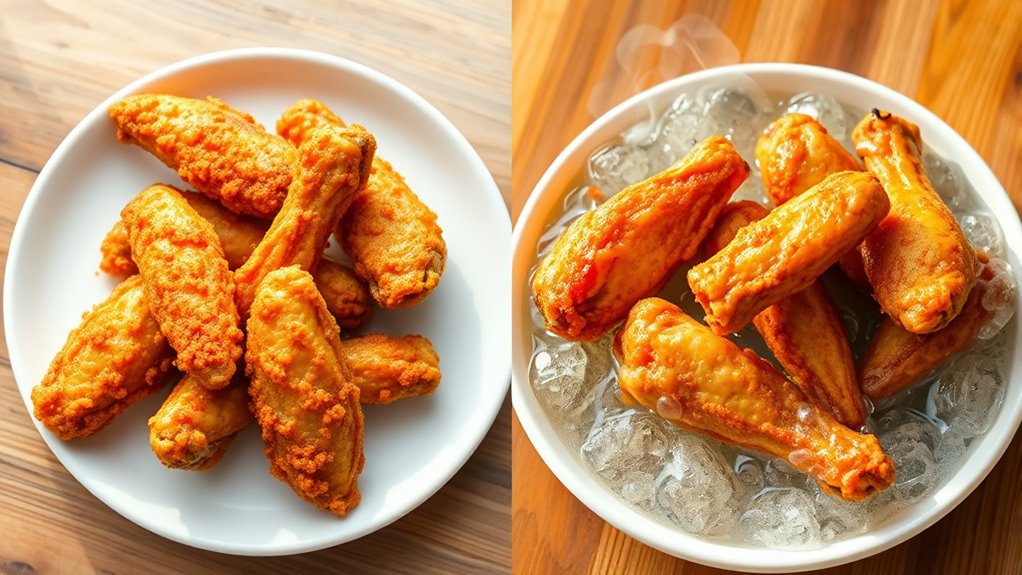
Comparing the nutritional profiles of different foods reveals important differences in calories and fat content that can impact your diet choices. When considering frying technique, the nutritional comparison between air frying and deep frying shows clear distinctions. Air frying generally uses less oil, reducing calorie and fat intake. To understand this better: 1. Air frying typically cuts fat content by up to 75% compared to deep frying. 2. Calories in air-fried foods are lower because less oil is absorbed. 3. Deep frying adds significant fat due to oil absorption during cooking. 4. The choice of frying technique directly influences your overall calorie and fat consumption. Additionally, incorporating remote hackathons can inspire innovative ways to develop healthier cooking methods and recipes.
Health Implications of Using Different Frying Techniques

Have you ever wondered how your choice of frying method affects your health? Using air frying instead of deep frying can markedly reduce your intake of unhealthy fats. Air fryers typically require less or no oil, which means you avoid consuming excess calories and trans fats linked to heart disease. When you choose alternative cooking oils like olive or avocado oil, you benefit from healthier fats that support your cardiovascular health. Additionally, frying methods that use less oil help preserve dietary fiber in foods, maintaining their nutritional value. Deep frying, on the other hand, can diminish fiber content and introduce harmful compounds from overheated oils. The type of oil used can also influence the formation of harmful compounds during the cooking process. Overall, opting for air frying with healthier oils can contribute to better long-term health and improved cholesterol levels.
Tips for Reducing Fat in Fried Foods at Home
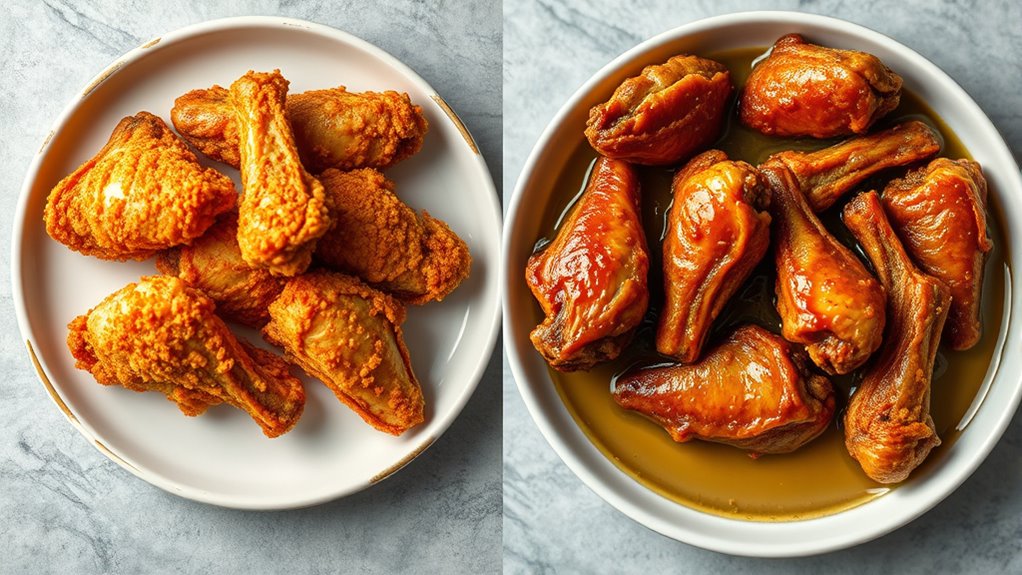
To cut down on the fat content of your homemade fried foods, start by making simple adjustments to your cooking methods. First, use healthier seasoning tips, such as herbs and spices, instead of breading or batter that absorbs excess oil. Second, opt for air frying or shallow frying to reduce oil use. Third, when storing leftovers, choose airtight containers to keep foods fresh without adding unnecessary fats during reheating. Fourth, drain fried items on paper towels immediately after cooking to remove surface oil. Consider using non-stick sprays or minimal oil in your recipes. These small changes can considerably lower fat intake while maintaining flavor. By refining your seasoning tips and storage methods, you can enjoy crispy, tasty fried foods with less fat.
Frequently Asked Questions
How Does Oil Type Influence Fat Content in Frying?
You should consider how oil selection influences fat content in frying. Different oils have varying levels of saturated and unsaturated fats, which affect your dish’s healthiness. Frying temperature also matters; higher temperatures can cause oils to break down and absorb less, while lower temps may lead to more oil absorption. Choosing healthier oils and maintaining proper frying temperature helps control the fat content and makes your fried foods better for you.
Are There Health Benefits to Air Frying Over Deep Frying?
You’ll find that air frying offers healthier alternatives because it uses less oil and relies on rapid circulation of hot air, reducing fat intake. The main cooking method differences mean you get crispy results without the extra calories from deep frying. So, if you’re aiming for a healthier lifestyle, air frying can be a smarter choice, giving you tasty food with fewer health risks associated with traditional deep frying.
Can Modifications in Cooking Time Reduce Fat Absorption?
By adjusting cooking time, you can influence fat absorption, especially when considering cooking temperature and food texture. Lowering the temperature or shortening the cooking duration reduces the amount of fat your food absorbs, resulting in a healthier meal. You’ll notice a crisper texture with shorter cook times and slightly less oil uptake, making your dishes lighter without sacrificing flavor or texture. Experimenting with these factors helps you control fat content effectively.
Does Breading or Batter Affect Fat Levels Significantly?
Breading impact and batter absorption substantially influence fat levels in your fried foods. When you coat items with breading or batter, they tend to absorb more oil, increasing fat content. Thicker coatings or wet batters can trap more oil during frying, making your food greasier. To reduce fat, opt for lighter coatings or use methods like air frying. Remember, the type and thickness of your breading or batter directly affect the final fat levels.
How Do Leftover Fats Impact Nutritional Value?
Leftover fats can impact your food’s nutritional value by promoting fat oxidation, which reduces the quality of fats and may produce harmful compounds. When fats are reused or left over, nutrient preservation declines because heat and exposure break down essential nutrients. To maximize health benefits, avoid reusing fats excessively and store leftovers properly, ensuring minimal nutrient loss and reducing the negative effects of fat oxidation on your meals.
Conclusion
Think of your cooking methods as choosing a path through a garden—some trails are shaded and gentle, while others are sunlit and winding. By opting for air frying instead of deep frying, you’re steering clear of the dense thicket of excess fat, guiding your meals toward a healthier horizon. Small choices in the kitchen can lead to a vibrant, nourishing journey. So, choose wisely, and let your culinary adventure flourish with balance and care.