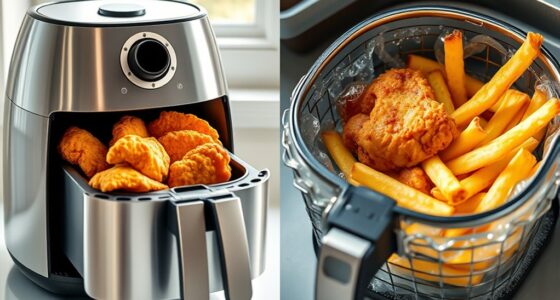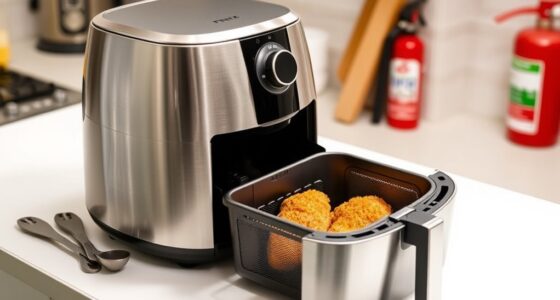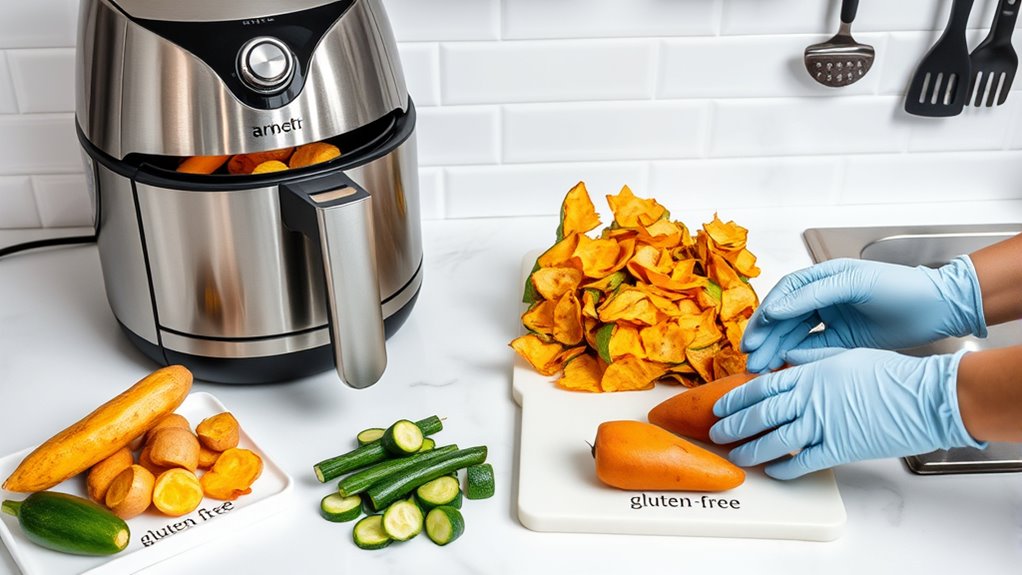

To prevent cross-contamination when air frying gluten-free foods, you should use separate, dedicated utensils, dishes, and accessories for gluten-free cooking. Thoroughly wash the air fryer, racks, and baskets before use, and keep gluten-free ingredients stored in labeled, isolated containers. Maintain a clean workspace and avoid touching gluten-containing foods after handling gluten-free items. These steps are essential, and you’ll discover even more tips to keep your air frying safe as you continue exploring.
Key Takeaways
- Use separate, labeled utensils, baskets, and accessories exclusively for gluten-free air frying.
- Thoroughly clean the air fryer and all tools before each use to prevent gluten residue.
- Store gluten-free ingredients separately in clearly labeled containers to avoid cross-contact.
- Maintain a clean workspace and sanitize surfaces regularly during food preparation.
- Avoid overcrowding the air fryer to prevent spillovers and ensure safe, contamination-free cooking.
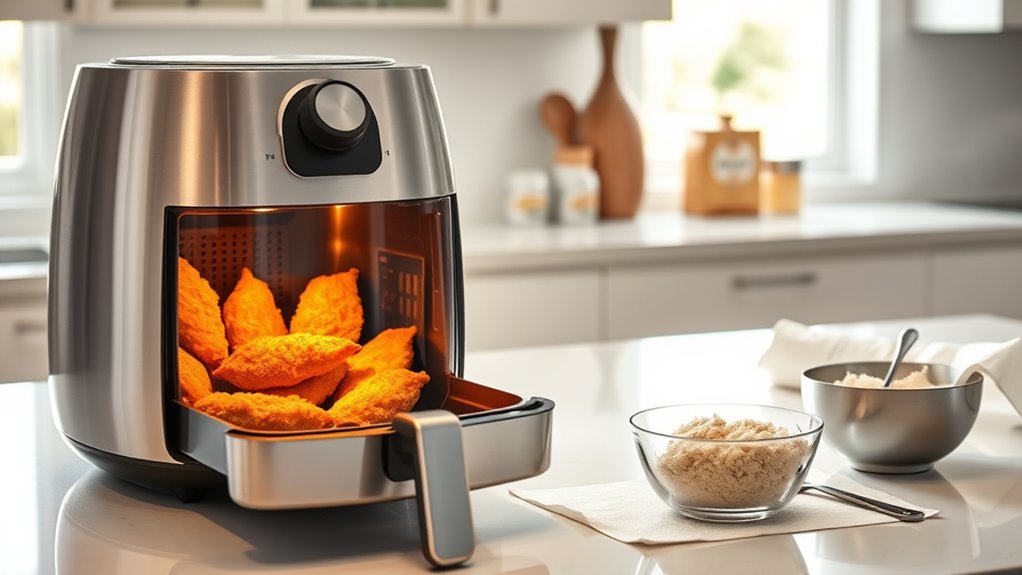
Air frying offers a quick and healthy way to enjoy crispy, delicious meals without the gluten. It’s a convenient method that lets you indulge in your favorites while keeping your diet on track. However, when you’re cooking gluten-free, especially in a shared kitchen, maintaining kitchen safety and avoiding cross-contamination become even more critical. Gluten is pervasive and can easily transfer from utensils, surfaces, or ingredients if you’re not careful. To keep your meals safe and free from gluten, start with a clean workspace. Thoroughly wash your air fryer, utensils, and any cookware beforehand, ensuring no traces of gluten remain from previous meals. Use separate cutting boards and utensils for gluten-free ingredients, labeling them if necessary, to prevent accidental cross-contact.
Ingredient substitutions also play a crucial role in gluten-free air frying. Many traditional recipes rely on wheat flour or bread crumbs, but you can easily swap these out with gluten-free options. Almond flour, rice flour, or gluten-free oats can serve as excellent breading or coating alternatives. For thickening sauces or batters, cornstarch or gluten-free baking mixes work well. When choosing ingredient substitutions, read labels carefully to confirm they’re certified gluten-free, as cross-contamination can occur during processing. This diligence ensures that what you’re using is safe and won’t compromise your dish or your health.
As you prepare your ingredients, keep in mind that cleanliness is essential. Wash your hands thoroughly before handling gluten-free ingredients, and avoid touching gluten-containing foods or surfaces afterward. Use separate storage containers to keep gluten-free ingredients isolated from gluten-containing ones. When filling your air fryer, avoid overcrowding to ensure even cooking and prevent drips or spills that might contaminate other foods. Always double-check that your air fryer accessories—like racks or baskets—are designated for gluten-free cooking, and clean them regularly.

EM Set of 5 Silicone Air Fryer Liners with Egg Bite Mold, Waffle Mold & Mitts – 7.5” Round Reusable Silicone Inserts for 3-5 Qt Airfryers – Easy to Clean & Heat-Resistant Air Fryer Accessories Set
Versatile Round Air Fryer Liners: Our set of 5 silicone airfryer liners set includes two air fryer inserts,…
As an affiliate, we earn on qualifying purchases.
As an affiliate, we earn on qualifying purchases.
Frequently Asked Questions
Can I Use the Same Air Fryer for Gluten and Non-Gluten Foods?
You shouldn’t use the same air fryer for gluten and non-gluten foods without proper cleaning. To guarantee air fryer safety and prevent gluten cross contact, thoroughly wash the basket and tray with soap and water. Consider using separate racks or liners to avoid contamination. Taking these steps helps keep your gluten-free meals safe, preventing allergic reactions or digestive issues caused by cross-contact during air frying.
How Often Should I Clean My Air Fryer to Prevent Cross-Contact?
You should clean your air fryer after every use to prevent cross contact, especially when switching between gluten and non-gluten foods. Follow a regular cleaning schedule that includes wiping down the basket and tray with warm, soapy water and checking for any residue. This consistent cleaning helps maintain cross contact prevention, ensuring your gluten-free meals stay safe. Regular cleaning is key to avoiding any unintended gluten exposure.
Are There Specific Materials to Avoid in Gluten-Free Air Frying?
You should avoid allergenic cookware like non-stick pans with coatings that could contain gluten or other allergens. Stick to gluten-free safe materials such as stainless steel, glass, or silicone, which resist contamination and are easy to clean. Using these materials helps prevent cross-contact, ensuring your gluten-free meals stay safe. Always check that your cookware is labeled gluten-free safe and thoroughly clean it before use to maintain a contamination-free environment.
Can Marinades Cause Cross-Contamination in the Air Fryer?
Yes, marinades can cause cross-contact if they contain allergens like soy, wheat, or other gluten ingredients. When you use a marinade, it can leave residues that transfer allergens to your air fryer surfaces or food. To prevent cross-contact, always use separate brushes or utensils for marinades, and consider marinating foods outside the air fryer. Properly cleaning your appliance afterward is essential for allergen safety.
What Are the Best Storage Practices for Gluten-Free Air Fryer Accessories?
You should store your gluten-free air fryer accessories in separate, airtight containers or designated areas to prevent contamination. Proper storage helps keep gluten-free items safe from cross-contact with gluten-containing tools or ingredients. Wash accessories thoroughly before storing, and label them clearly. By maintaining organized, dedicated storage spaces, you guarantee contamination prevention and keep your gluten-free cooking safe and worry-free.

Air Fryer Basket, OPENICE 2 Set Air Fryer Pan and Crisper Tray for Oven, Non-stick Oven Air Fryer Basket for Baking and Crispy Foods – Large & Medium
【Great Value with Pack of 6】Package includes 2-pieces Large Air Fryer Basket and Tray Set sized at 15.6×11.6…
As an affiliate, we earn on qualifying purchases.
As an affiliate, we earn on qualifying purchases.
Conclusion
Now, as you step into your kitchen, the sizzling air fryer promises crispy delights without gluten worries. It’s a dance of precision and care—avoiding cross-contamination like a secret handshake, yet embracing the freedom of delicious, gluten-free meals. With each careful step, you create a safe haven for your taste buds. So, savor every bite, knowing your kitchen is both a sanctuary and a stage for flavorful, worry-free air frying.

Shazo 2 PC (11L | 372 oz) Flour Sugar Storage Containers with Easy Carry Handle – Plastic Extra Large Food Storage Containers with Lids for Rice Cereal, BPA Free & Airtight Kitchen Pantry Organization
𝐄𝐱𝐭𝐫𝐚 𝐋𝐚𝐫𝐠𝐞 𝐂𝐚𝐩𝐚𝐜𝐢𝐭𝐲 𝐟𝐨𝐫 𝐁𝐮𝐥𝐤 𝐒𝐭𝐨𝐫𝐚𝐠𝐞: Shazo 2-piece set (11L | 372 fl oz each, 11.2"L x 5.2"W…
As an affiliate, we earn on qualifying purchases.
As an affiliate, we earn on qualifying purchases.

XANGNIER Air Fryer Cleaner Brush Kits,6 Pcs Air Fryer Cleaning brush Tools Accessories
Air Fryer Cleaning Solution: Still looking for a cleaning tool that can deeply clean an air fryer? Come…
As an affiliate, we earn on qualifying purchases.
As an affiliate, we earn on qualifying purchases.