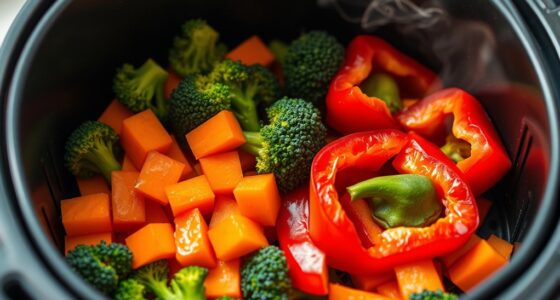

To prep heart-healthy, low-sodium meals in your air fryer, choose fresh, minimally processed ingredients like lean proteins, vegetables, and whole grains. Use herbs, spices, citrus, and garlic to naturally boost flavor without extra salt. Focus on batch cooking nutrient-dense dishes and storage techniques to keep meals fresh. Incorporating colorful vegetables and lean proteins supports heart health while reducing sodium. Keep exploring for practical tips to make delicious, nutritious meals easy and effective.
Key Takeaways
- Use fresh, minimally processed ingredients, herbs, and citrus to naturally enhance flavor without added salt.
- Incorporate low-sodium seasonings, garlic, and spice blends to boost taste while maintaining heart health.
- Batch cook lean proteins, vegetables, and whole grains for quick, nutritious meal assembly and portion control.
- Store leftovers in airtight containers, label with dates, and reheat thoroughly using microwave or air fryer to preserve flavor and safety.
- Focus on colorful, fiber-rich vegetables and lean proteins to support heart health and reduce inflammation in meals.
Choosing Heart-Healthy Ingredients for Your Air Fryer

When choosing ingredients for your air fryer, prioritizing heart-healthy options can make a big difference. Focus on fresh, whole foods that support your goals. For flavor combinations, opt for herbs, spices, and citrus to enhance taste without adding salt. Good ingredient sourcing means selecting lean proteins like skinless poultry, fish, or plant-based options, and fresh vegetables. Avoid processed foods high in sodium or unhealthy fats. Look for high-quality, minimally processed ingredients that retain nutrients and flavor. Incorporating whole grains can also boost the nutritional value of your meals and promote overall heart health. By choosing wisely, you’ll create delicious meals that support your heart health. Remember, the key is balancing taste with nutrition—so select ingredients that naturally complement each other and provide vibrant flavor without sacrificing health benefits.
Tips for Reducing Sodium in Your Air Fryer Meals
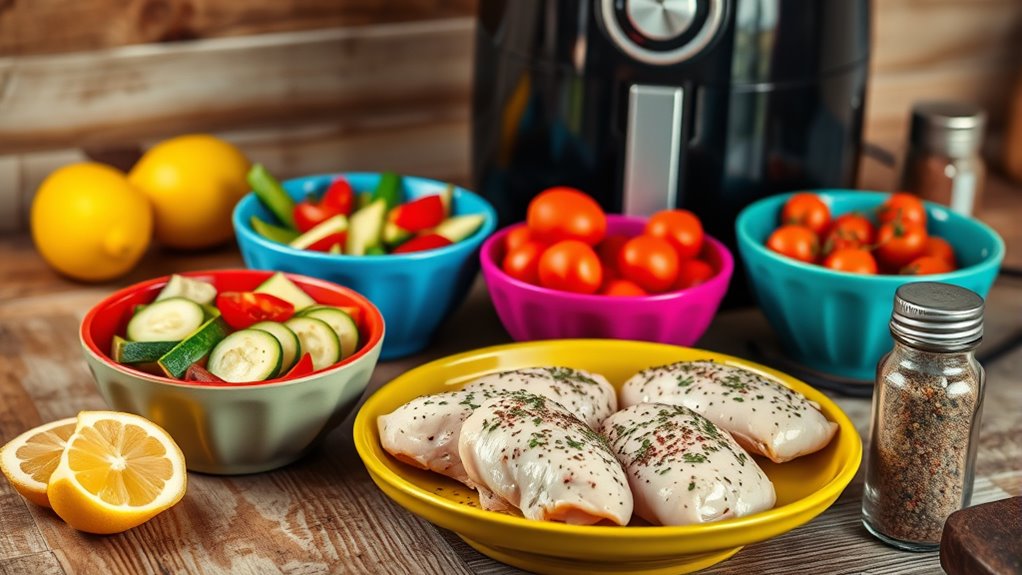
Reducing sodium in your air fryer meals is essential for supporting heart health and overall wellness. To do this, start by using low sodium seasoning options that enhance flavor without excess salt. Experiment with herbs, spices, garlic, and lemon juice to add taste naturally. Instead of reaching for regular salt, try salt alternatives like potassium chloride or specialized salt substitutes designed for low-sodium diets. Be mindful of processed ingredients, as they often contain hidden sodium. When preparing food, taste as you go to avoid over-adding salt. Incorporating these tips allows you to enjoy flavorful, heart-healthy meals while maintaining your sodium intake at a safe level. This simple shift can make a significant difference in supporting your long-term health goals. Additionally, choosing ingredients that naturally have lower sodium content can help you maintain a heart-healthy diet, especially when combined with proper bicycle maintenance for an active lifestyle.
Quick and Tasty Low-Sodium Recipes for Breakfast, Lunch, and Dinner
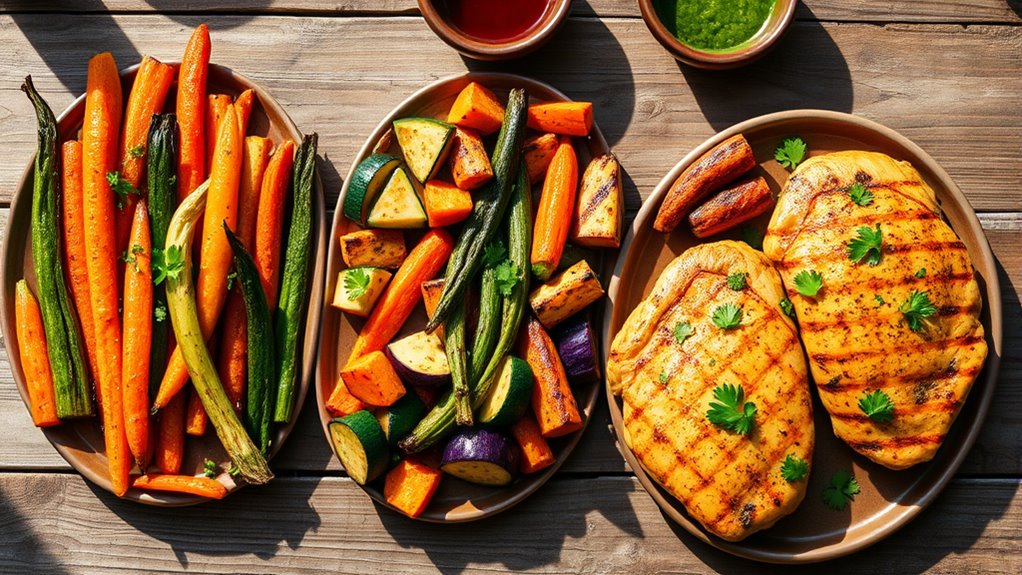
Starting your day with low-sodium breakfast options can set a healthy tone, and luckily, there are quick recipes that don’t compromise on flavor. For breakfast, try air-fried eggs with fresh herbs or whole-grain toast topped with avocado—both are simple and flavorful. For lunch, prepare a colorful veggie stir-fry or a grilled chicken salad using minimal salt. Dinner can feature tender fish fillets or roasted vegetables, cooked quickly in the air fryer. For snack ideas, try air-fried chickpeas or apple slices with cinnamon. When craving something sweet, explore low-sodium dessert options like baked fruit or yogurt parfaits. Incorporating aquatic exercise into your routine can also support a heart-healthy lifestyle by improving circulation and overall cardiovascular health. These recipes keep your meals delicious and heart-healthy without sacrificing convenience. With these ideas, you’ll stay satisfied and energized all day long.
Meal Prep Strategies to Save Time and Maintain Nutritional Balance
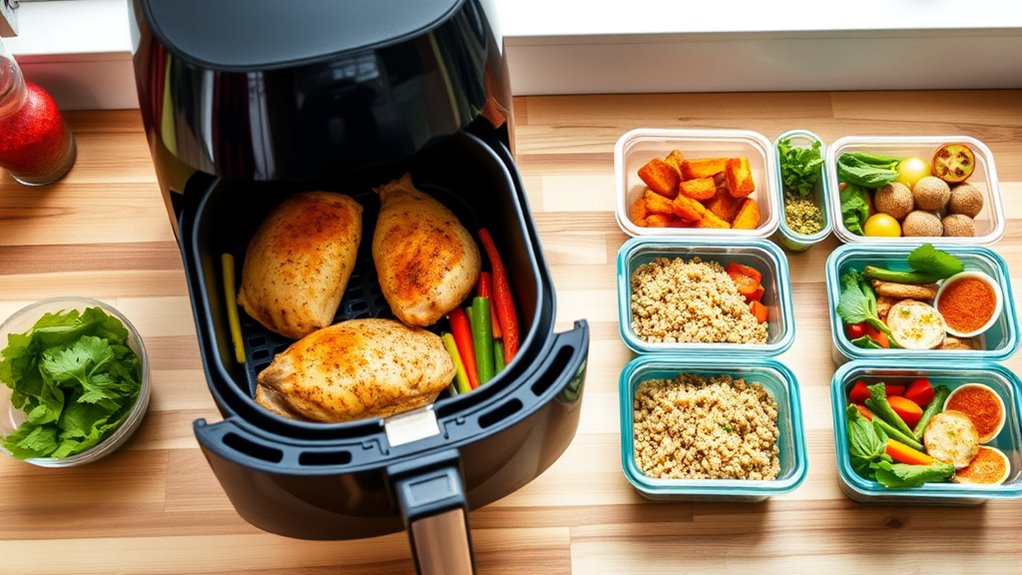
To save time and keep your meals balanced, try batch cooking your ingredients ahead of time. Swap out less nutritious items for nutrient-dense options to boost your meals’ health benefits. These strategies make meal prep more efficient and support your wellness goals. Incorporating electric bike options into your routine can also promote a more active lifestyle, complementing your heart-healthy diet.
Batch Cooking Techniques
Batch cooking is an efficient way to save time and guarantee you maintain a balanced diet throughout the week. By preparing large portions of heart-healthy ingredients, you can easily assemble meals with fresh vegetables, lean proteins, and whole grains. This approach helps you stay on track with low-sodium goals and reduces reliance on processed snacks. You can also create snack alternatives like roasted chickpeas or veggie sticks in advance, making healthy choices more convenient. Pair your meals with beverage pairings such as herbal teas or infused water to enhance flavor without extra sodium. Using batch cooking techniques ensures you always have nutritious options ready, minimizes cooking time, and supports your overall goal of a heart-healthy diet.
Nutrient-Dense Ingredient Swaps
Incorporating nutrient-dense ingredient swaps into your meal prep can boost the nutritional value of your meals without adding extra time. Swap out ordinary ingredients for superfood swaps like kale, quinoa, or chia seeds to pack in vitamins, minerals, and fiber. These choices enhance heart health and keep you full longer. Instead of using high-sodium spice blends, opt for spice alternatives such as turmeric, cumin, or paprika to add flavor without extra salt. These swaps are quick to incorporate into your air fryer recipes, helping you maintain a nutrient-rich diet effortlessly. By making these simple substitutions, you save time while supporting your heart health and overall well-being. Lesser-known camping spots provide tranquil settings that can make your outdoor meals even more enjoyable. Nutrient-dense ingredient swaps make your meal prep smarter, tastier, and more nourishing.
Incorporating Vegetables and Lean Proteins for Heart Support
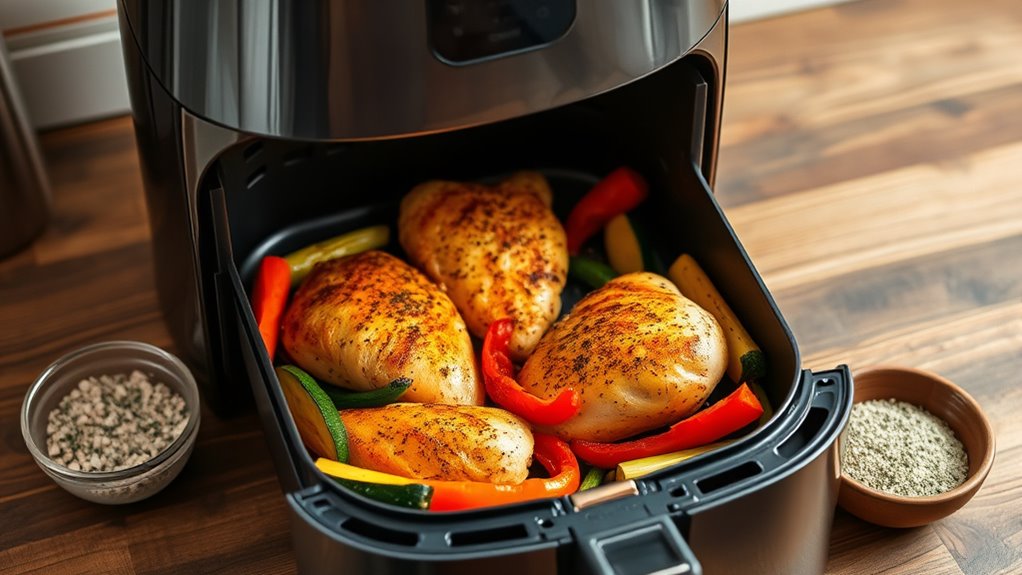
To support your heart health, focus on choosing vegetables rich in fiber and antioxidants, like spinach and broccoli. Pair these with lean protein sources such as chicken, turkey, or fish to keep your meals nutritious and satisfying. Making these smart choices guarantees your air fryer meals promote better cardiovascular health.
Choosing Heart-Healthy Veggies
Choosing heart-healthy vegetables is essential for supporting your cardiovascular system, especially when paired with lean proteins. Incorporate a variety of colorful, nutrient-dense options like kale salads and roasted carrots to boost your intake of fiber, vitamins, and antioxidants. These vegetables help reduce inflammation and lower cholesterol levels, promoting better heart health. To maximize benefits, focus on:
- Choosing leafy greens like kale for salads, rich in potassium and magnesium
- Roasting carrots to preserve their natural sweetness and carotenoids
- Incorporating cruciferous vegetables such as broccoli or Brussels sprouts for added fiber
Including a variety of vegetable preparations can further enhance nutrient absorption and enjoyment.
Selecting Lean Protein Sources
Selecting lean protein sources is essential for supporting heart health, especially when paired with vegetables that add fiber and nutrients. Opt for grass fed options like lean beef or poultry, which tend to have healthier fat profiles. Incorporate plant-based proteins such as beans, lentils, and tofu to diversify your meals and boost fiber intake. These options help reduce saturated fat consumption and support cardiovascular health. When choosing proteins, look for minimally processed options and avoid high-sodium marinades. Using an air fryer, you can easily prepare these proteins with minimal added fats and sodium, keeping your meals heart-healthy. Combining lean proteins with colorful vegetables creates satisfying, nutrient-dense dishes that support your overall heart support goals.
Storing and Reheating Your Prepared Meals for Freshness and Flavor

Proper storage and reheating are essential to maintaining the freshness and flavor of your meal prep dishes. To keep leftovers flavorful and safe, use airtight containers and label them with dates. When reheating, choose methods that preserve texture and nutrients, such as the microwave with a vented cover or the air fryer for crispiness. Proper reheating methods prevent dryness and ensure even heating. For ideal results:
- Store leftovers in small, portioned containers to cool quickly and reheat efficiently.
- Reheat in short intervals, stirring or flipping for even heat distribution.
- Avoid reheating multiple times to prevent nutrient loss and spoilage.
These steps help ensure your meals stay delicious, fresh, and heart-healthy, making your meal prep both convenient and satisfying.
Frequently Asked Questions
How Can I Ensure My Air Fryer Recipes Meet My Specific Sodium Intake Goals?
To meet your sodium intake goals, you should carefully select ingredients and control added salt. Use sodium substitutes like herbs, spices, and citrus for flavor enhancement without extra sodium. Read labels to avoid hidden salts and measure your seasonings. Experiment with different flavor combinations to keep meals tasty. By actively managing ingredients and incorporating sodium substitutes, you can enjoy delicious air fryer recipes that align with your heart-healthy, low-sodium diet.
Are There Any Common Ingredients to Avoid for a Heart-Healthy Air Fryer Diet?
You should avoid high sodium ingredients like soy sauce, cured meats, and salty cheeses, as well as processed foods that often contain hidden sodium. These items can quickly increase your intake beyond healthy levels. Instead, opt for fresh herbs, spices, and natural flavorings to season your meals. By steering clear of processed foods and high sodium ingredients, you make your air fryer meals heart-healthy and flavorful without excess salt.
Can I Adapt Traditional Recipes to Be Low-Sodium Using an Air Fryer?
Think of your recipe as a garden needing careful tending. You can adapt traditional recipes to be low-sodium by focusing on flavor enhancement through ingredient substitution—like herbs, spices, and citrus. Your air fryer acts as the gardener’s tool, helping you prepare healthier dishes without sacrificing taste. With these tweaks, you preserve the essence of your favorite meals while keeping sodium in check, making each bite both satisfying and heart-healthy.
What Are Some Budget-Friendly Options for Heart-Healthy Meal Prep With an Air Fryer?
You can find budget-friendly ingredients like frozen vegetables, whole grains, and affordable lean proteins for cost-effective meal prep. Using your air fryer, you’ll save energy and time, making healthy meals more accessible. Focus on simple seasonings and bulk buys to keep costs down while maintaining heart-healthy options. With a bit of planning, you’ll enjoy nutritious, budget-friendly meals that support your health goals without overspending.
How Do I Prevent Food From Sticking or Drying Out During Air Fryer Cooking?
To prevent food from sticking or drying out in your air fryer, use non-stick sprays or lightly coat the basket with cooking oil. You can also layer parchment paper to create a barrier that keeps food from sticking. Make sure to preheat your air fryer, and avoid overcrowding the basket so air circulates well. These tips help keep your meals tender and prevent messes, ensuring a better cooking experience.
Conclusion
By choosing heart-healthy ingredients and reducing sodium, you can enjoy delicious air fryer meals that support your cardiovascular health. For example, imagine prepping low-sodium chicken and veggie wraps on Sunday—ready to grab for busy weekdays. With these tips, you’ll save time, stay nourished, and keep your taste buds happy. Keep experimenting with flavors and ingredients, and soon, healthy eating will become a natural part of your routine.