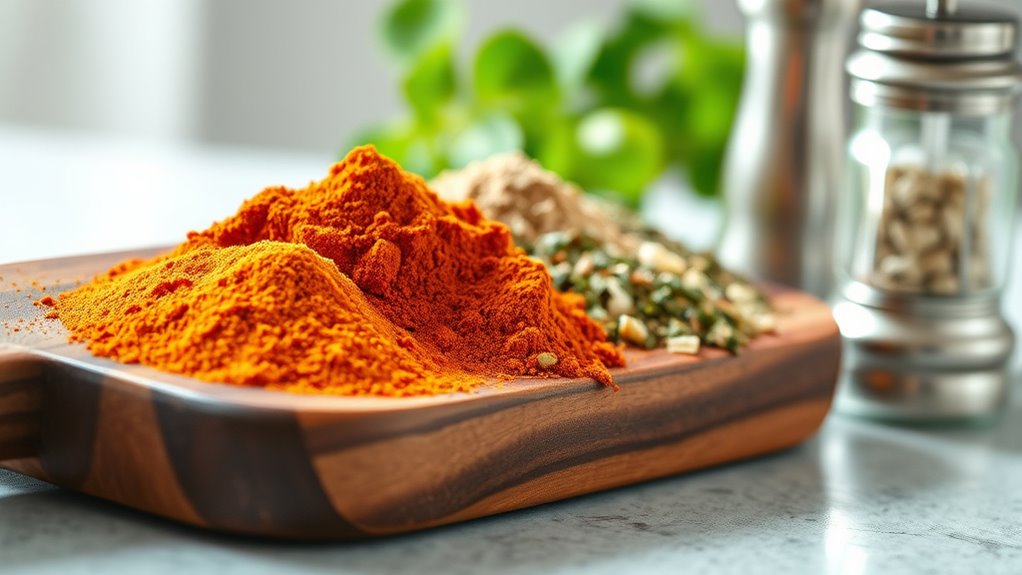

To beat the salt shaker, try seasoning blends that boost flavor naturally. Use herbs like basil, thyme, and oregano combined with spices such as cumin, paprika, or pepper. Add citrus zest and juice for brightness, and incorporate umami-rich ingredients like mushroom powder, seaweed, or nutritional yeast. Aromatic garlic and onion mixes, along with smoky or zesty flavors, create depth without salt. Keep exploring these creative ways to enhance taste naturally.
Key Takeaways
- Use herb and spice blends like oregano, thyme, and cumin to enhance flavor without salt.
- Incorporate umami-rich ingredients such as mushroom powder, nutritional yeast, and seaweed to deepen taste naturally.
- Add citrus zest and juice for brightness and vibrancy, reducing the need for salt while boosting flavor.
- Combine aromatic mixes like garlic, onion, and peppercorns to create savory layers that cut through salt reliance.
- Experiment with herbal infusions, teas, and textured ingredients to build complex, salt-free seasoning profiles.
Herb and Spice Blends for Natural Flavor
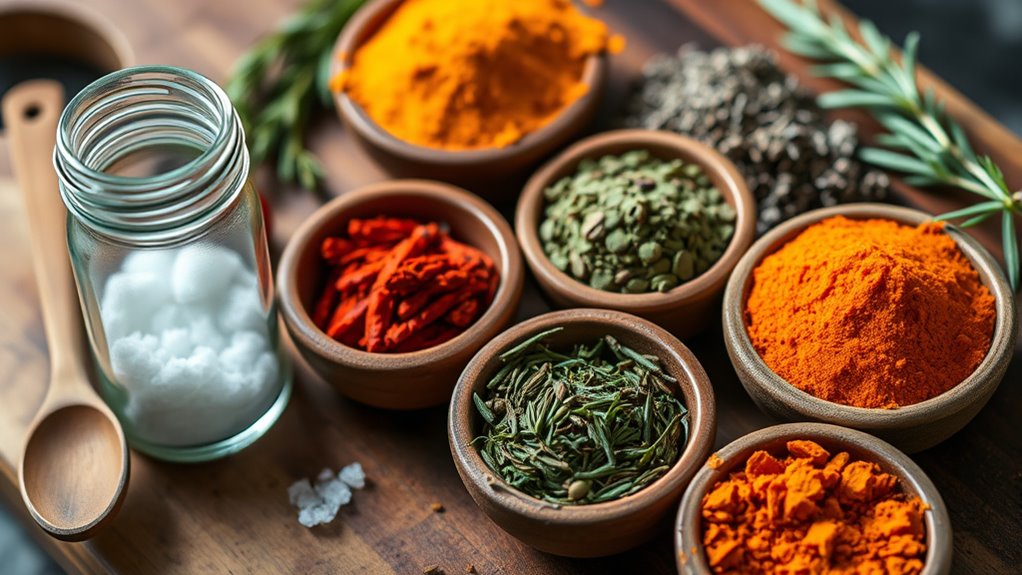
Herb and spice blends are a simple yet effective way to enhance natural flavors without relying on salt. To keep your blends fresh and vibrant, proper seasoning storage is essential—store your spices in airtight containers away from heat and light. When creating your blends, focus on spice blending techniques like balancing flavors and layering herbs with complementary spices. Experiment with common combinations such as oregano, thyme, and basil, or try unique mixes like cumin, coriander, and paprika. Use fresh herbs when possible, but dried herbs work well for longer storage. By mastering seasoning storage and spice blending techniques, you’ll develop flavorful, salt-free dishes that satisfy your taste buds and support your health.
Citrus Infused Seasonings to Brighten Your Dishes
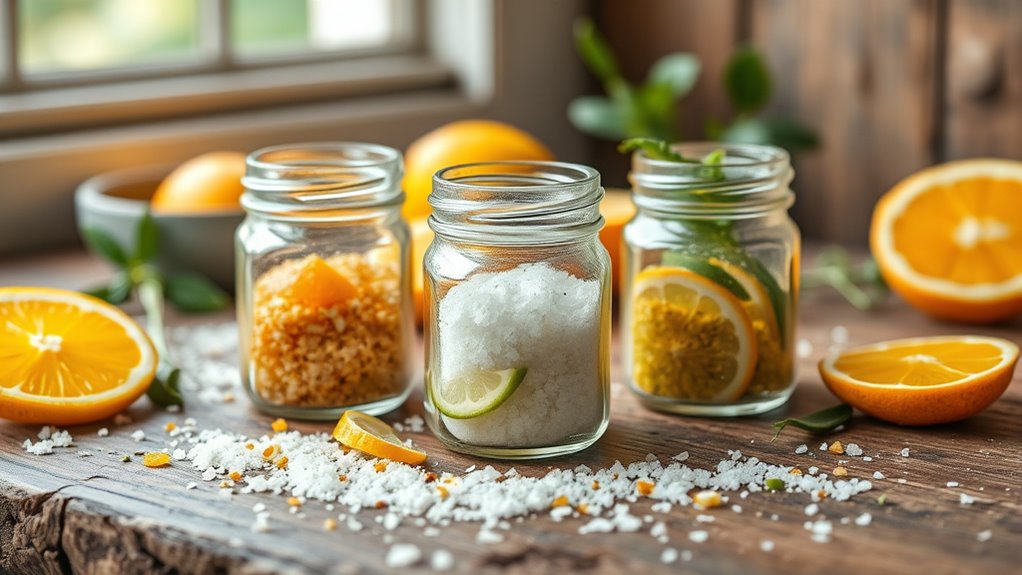
Citrus infusions are a simple and vibrant way to add brightness to your dishes without salt. Using different citrus fruit varieties like lemons, limes, grapefruits, and oranges, you can create fresh, tangy flavors that elevate any meal. To maximize their impact, try citrus zest techniques—grating the outer peel carefully to release aromatic oils. A little zest goes a long way, brightening salads, grilled proteins, or roasted vegetables. You can also add a splash of citrus juice for a quick flavor boost. Experimenting with different citrus fruits and zesting methods allows you to discover new flavor combinations. These natural infusions bring a lively, invigorating dimension to your cooking, making your dishes taste vibrant without relying on salt. Additionally, selecting the right projector type can enhance your home dining or entertainment experience, making your meals and movies more enjoyable.
Aromatic Garlic and Onion Mixes

Aromatic garlic and onion mixes can instantly elevate your dishes with rich, savory flavor. They serve as versatile cooking enhancers, adding depth without extra sodium. Incorporating these blends makes your meals flavorful and healthier at the same time. To create custom blends, experiment with essential oils like garlic or onion scents, but always ensure proper dilution and safety measures.
Flavor Boosters for Dishes
Adding aromatic garlic and onion mixes can instantly elevate the flavor of your dishes without relying heavily on salt. These mixes act as powerful flavor boosters, helping you avoid common seasoning myths that suggest salt is the only way to enhance taste. They promote flavor balancing by providing depth and aroma, making your meals more satisfying. Use them in soups, stews, or marinades to add complexity without extra sodium. Here’s a quick guide:
| Ingredient | Best Uses | Flavor Profile |
|---|---|---|
| Garlic powder | Roasts, stir-fries | Pungent, savory |
| Onion flakes | Salads, sauces | Sweet, umami |
| Shallots | Dressings, sautés | Mild, aromatic |
| Leek powder | Broths, dips | Subtle, onion-like |
These tools help you create vibrant dishes while keeping sodium levels in check, and understanding cybersecurity vulnerabilities can help protect your digital recipes and shopping lists from cyber threats.
Versatile Cooking Enhancers
Garlic and onion mixes are incredibly versatile cooking enhancers that can elevate a wide range of dishes. They’re excellent tools for implementing sodium reduction techniques, allowing you to add robust flavor without relying on salt. These mixes help balance the flavor profile by providing depth and complexity, making your meals more satisfying. When seasoning, use garlic and onion blends strategically to highlight other ingredients and reduce the need for additional salt. Their aromatic qualities can mask the absence of salt, ensuring dishes remain flavorful and engaging. Whether sautéed, roasted, or added raw, these mixes serve as reliable flavor boosters. By incorporating them into your cooking, you create healthier meals that don’t compromise on taste, proving that seasoning doesn’t have to mean extra salt. Additionally, leveraging flavor enhancement techniques like these can help reduce the overall salt content in your diet without sacrificing enjoyment.
Umami-Rich Seasonings Without the Sodium
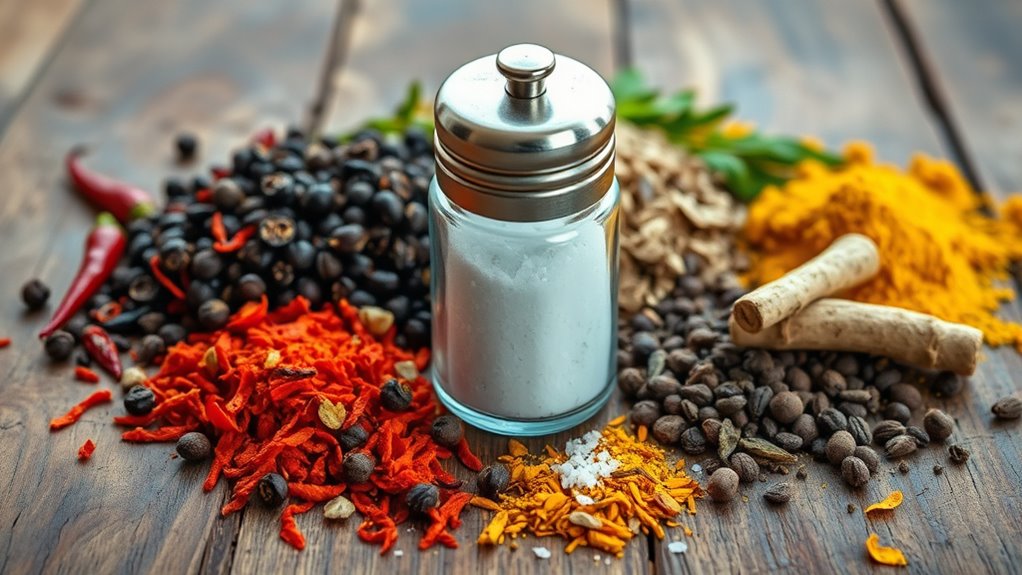
If you’re looking to boost the umami flavor in your dishes without relying on salt, there are plenty of flavorful seasonings that deliver depth without sodium. Salt alternatives like nutritional yeast, mushroom powder, and dried seaweed add rich, savory notes that enhance flavor layering. These ingredients naturally contain umami compounds, giving your meals a satisfying depth without the need for extra salt. You can sprinkle mushroom powder into soups, stir in dried seaweed for a briny kick, or use nutritional yeast to add a cheesy, umami punch to vegetables and grains. Incorporating flavor-enhancing ingredients not only boosts flavor but they also contribute valuable nutrients. Including umami-rich, sodium-free seasonings allows you to create delicious, well-rounded meals while keeping your sodium intake in check.
Smoked and Peppery Blends for Depth

Adding smoked and peppery blends can instantly boost the depth of your dishes. You’ll explore rich, smoky flavors paired with the diverse spectrum of peppercorns. These bold seasonings create complex layers without relying on excess sodium. When using seasonings, consider how the tire pressure on your gravel bike can affect your ride, just as the right spice balance enhances your dish.
Rich, Smoky Flavors
To build depth in your dishes, embracing smoked and peppery blends can add rich, smoky flavors that elevate any recipe. These seasonings enhance the seasoning aesthetics by providing a bold visual and sensory appeal. They contribute to flavor layering, creating complex profiles that surprise and delight the palate. Smoked paprika, chipotle, and black pepper serve as perfect examples, offering warmth and a subtle heat that deepen the overall taste. Using these blends allows you to transform simple ingredients into memorable dishes with a natural, savory richness. Their versatility complements meats, vegetables, and even grains, making them essential tools for adding dimension without relying on excess salt. Incorporating smoked and peppery seasonings thoughtfully can also improve your personal food experience by providing a more satisfying and nuanced flavor profile.
Peppercorn Variety Spectrum
Exploring the spectrum of peppercorns reveals a world of smoky and pungent flavors that can markedly deepen your dishes. The peppercorn variety spectrum includes black, white, green, and pink peppercorns, each offering unique tastes and aromas. Smoked peppercorns add a rich, earthy depth, perfect for hearty recipes. Peppery blends enhance without overpowering, providing complexity and warmth. Beyond flavor, peppercorns offer notable health benefits, such as antioxidant properties and anti-inflammatory effects. Incorporating a variety of peppercorns allows you to elevate your seasoning game while enjoying these health perks. Experimenting with different types accesses new dimensions of taste, making your meals more vibrant and satisfying. With their diverse profiles, peppercorns become an essential tool for adding depth without relying on excess salt. Additionally, natural textures from different peppercorns can contribute to the overall sensory experience of your dishes.
Sweet and Savory Combinations to Enhance Taste
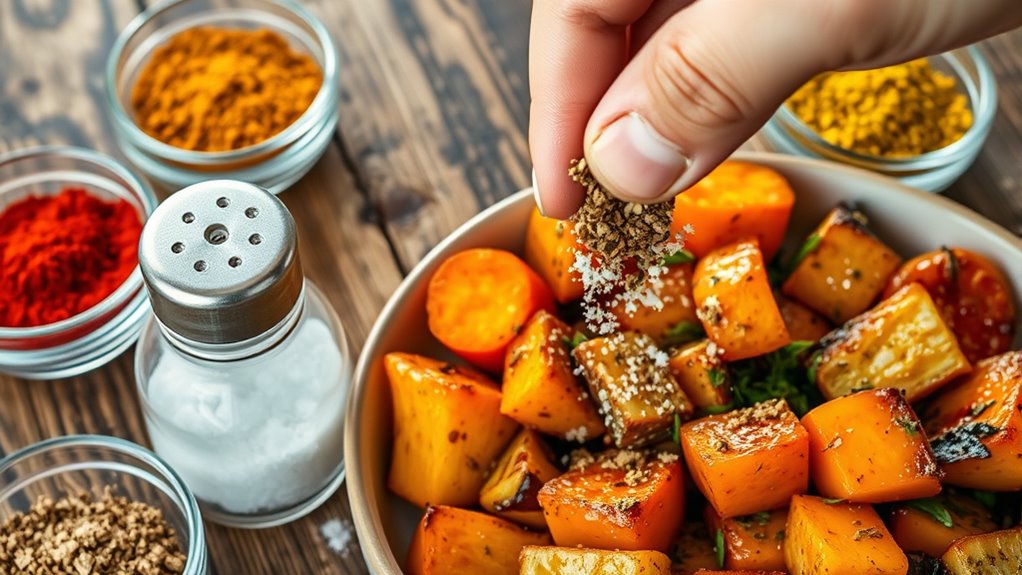
Sweet and savory pairings can transform ordinary dishes into memorable flavor experiences. When you combine sweet flavor pairings with savory spice accents, you create a balanced taste that excites the palate. Think of adding a touch of honey or maple syrup to roasted vegetables or grilled meats; these natural sweeteners enhance the savory depth without overpowering it. Incorporate spices like cinnamon, ginger, or cumin to add complexity and warmth. These combinations bring out the best in both elements, making your dishes more layered and satisfying. Whether you’re seasoning a salad, marinade, or dessert, mixing sweet and savory flavors offers a versatile way to elevate your cooking and surprise your taste buds with every bite. Sustainable fashion is also inspiring chefs to use eco-friendly ingredients and packaging, making your culinary creations both delicious and environmentally conscious.
Zesty Lemon and Lime Seasonings
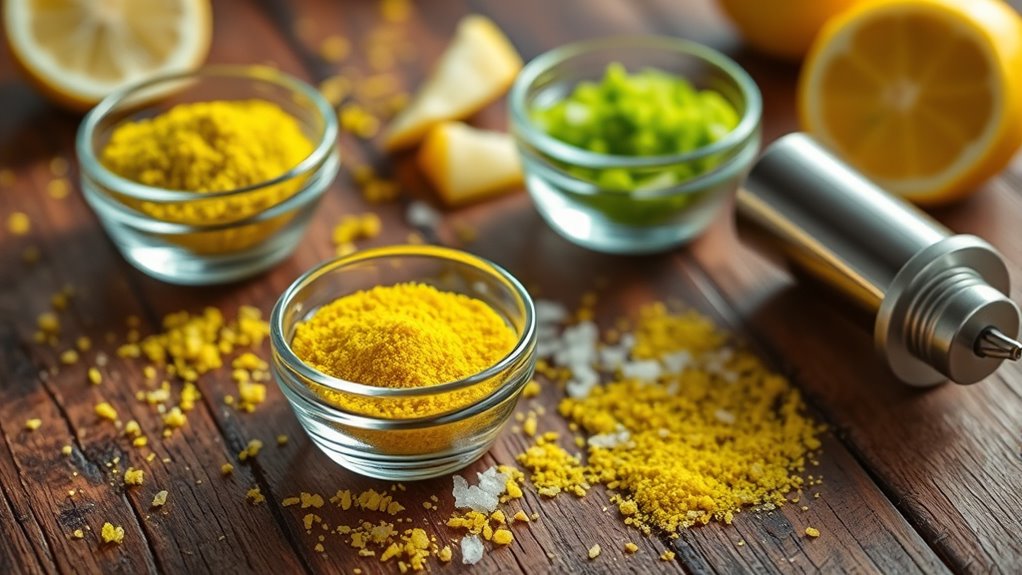
Adding zesty lemon and lime seasonings can instantly brighten up both savory and sweet dishes, creating an invigorating, vibrant flavor profile. Incorporate citrus zest into your recipes to add a punch of natural citrus flavor without extra salt. These seasonings work wonderfully in zesty dressings, giving salads a lively lift while reducing sodium intake. A sprinkle of lemon or lime zest enhances grilled vegetables, seafood, and chicken, providing brightness and complexity. You can also infuse baked goods with citrus zest for a revitalizing twist. The acidity from lemon and lime balances richness, making dishes more appealing. Using these citrus-based seasonings allows you to enjoy bold flavors without relying on salt, helping you cut back on sodium while elevating your culinary creations. Additionally, understanding your personality traits can inspire creativity and confidence in experimenting with new flavor combinations.
Herbal Teas and Infusions as Flavor Enhancers

Herbal teas and infusions can serve as excellent natural flavor enhancers, allowing you to boost the taste of various dishes without adding extra salt. By using tea infusions, you introduce subtle layers of flavor that complement your ingredients. These herbal remedies aren’t just for drinking; they also add depth to soups, stews, and marinades. You can experiment with different herbs like chamomile, peppermint, or hibiscus to find what enhances your dishes best. Incorporating herbal teas into your cooking provides a healthful way to add complexity without sodium. For example:
- Use brewed chamomile or ginger tea in sauces for a mild sweetness.
- Add mint or lemongrass infusions to rice or grains for a fresh aroma.
- Incorporate herbal remedies into dressings to boost flavor naturally.
Savory Mushroom and Seaweed Mixes

Building on the idea of using natural ingredients to enhance flavor, savory mushroom and seaweed mixes offer a powerful way to deepen the umami profile of your dishes. Mushroom broths provide a rich, earthy base that intensifies flavors without added salt. Combining these with crushed seaweed snacks introduces a salty, oceanic note that elevates soups, stir-fries, and grains. You can sprinkle this mix directly onto vegetables or stir it into sauces for a savory boost. The natural umami from mushrooms and seaweed reduces the need for salt, helping you cut back on sodium without sacrificing taste. Plus, these ingredients are versatile, shelf-stable, and easy to incorporate into everyday cooking, making them perfect for creating healthier, flavor-packed meals.
DIY Salt-Free Seasoning Creations

Creating your own salt-free seasoning blends is an easy way to enhance flavor without relying on sodium. By experimenting with salt alternatives, you can develop unique blends that bring out the natural taste of your dishes. Focus on flavor layering by combining herbs, spices, and acids to create depth and complexity. For example, try mixing garlic powder, smoked paprika, and lemon zest for a smoky, tangy kick. You can also incorporate ingredients like dried basil, cumin, or chili flakes to suit your palate. These DIY creations allow you to control the salt content while still making meals exciting. Plus, customizing seasoning blends helps you discover new flavor combinations and reduces dependence on processed salt. Get creative and make seasoning blends that truly elevate your cooking.
Frequently Asked Questions
What Are the Best Herbs for Reducing Salt Intake Naturally?
If you’re looking for herbs to reduce salt intake naturally, try using salt alternatives like garlic, onion, or lemon juice to boost flavor. Herbs such as basil, oregano, thyme, and rosemary act as great flavor enhancers, making your dishes tasty without extra salt. Experiment with these options to enhance your meals and enjoy the benefits of lower sodium consumption, supporting better health while still satisfying your taste buds.
How Can I Make My Own Low-Sodium Seasoning Blends at Home?
Making your own low-sodium seasoning blends is like crafting a symphony of flavors. You can easily create DIY spice blends using herbs like basil, oregano, and thyme, combined with garlic powder, onion powder, and a splash of citrus zest for flavor enhancement. Mix them in small containers, store in a cool place, and sprinkle over your dishes to reduce salt without sacrificing taste. It’s simple and delicious!
Are There Any Health Risks Associated With Using Smoked Seasonings?
Using smoked seasoning can add depth to your dishes, but you should be aware of potential health concerns. Some smoked seasonings contain added nitrates or preservatives, which might pose health risks if consumed in excess. Additionally, inhaling large amounts of smoke from homemade or commercial smoked seasonings could irritate your lungs. Always check ingredient labels and use smoked seasonings in moderation to enjoy their flavor safely.
Which Citrus Fruits Provide the Most Flavor Without Added Salt?
When choosing citrus fruits for flavor without added salt, you’ll find that lemons and limes pack the most punch. Their zest and juice act as natural citrus peel alternatives, offering vibrant flavor and aroma. Use their zest for flavor enhancement techniques like garnishing or marinades, which boost taste without extra sodium. This way, you enjoy fresh, tangy flavor while keeping your salt intake in check.
Can Herbal Teas Be Used Effectively as Seasoning Substitutes?
Herbal teas are like a secret garden of flavors, ready to bloom in your dishes. You can use herbal tea infusions as a seasoning alternative, adding depth and aroma without extra salt. Brew strong herbal tea infusions and use them in marinades, soups, or rice. These seasoning alternative teas elevate your cooking, making your dishes vibrant and flavorful while keeping them healthy and salt-conscious.
Conclusion
By exploring these vibrant, salt-free seasonings, you’re opening a treasure chest of flavor that turns every dish into a masterpiece. Think of your palate as a garden, where each spice and herb is a colorful bloom, bursting with life and aroma. With these creative swaps, you’ll transform your cooking into a symphony of taste, proving that even without salt, your meals can be rich, exciting, and deeply satisfying.