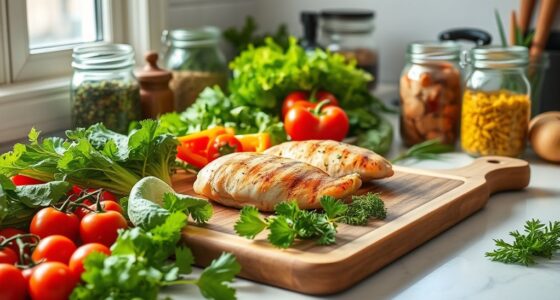
Using a dual-zone fryer makes macro-balanced meal prep easier and more efficient. You can cook proteins, vegetables, and carbs simultaneously in different zones, ensuring each component reaches the right temperature and texture. This setup saves time, prevents cross-contamination, and helps you customize meals for your nutritional goals. With proper preparation and timing, you’ll create colorful, flavorful, and nutrient-rich plates. Keep going to discover how to optimize your dual-zone fryer for perfect, balanced meals every time.
Key Takeaways
- Use separate zones to cook proteins, carbs, and vegetables at optimal temperatures for balanced macro distribution.
- Preheat and calibrate each zone to ensure even cooking and consistent macro component quality.
- Stagger cooking times for different ingredients to maintain freshness and proper macro ratios.
- Choose appropriate oils and set temperatures to enhance flavor, nutrition, and macro balance of each component.
- Prepare and portion each macro component separately for precise control over meal nutrition and variety.
Benefits of Using Dual‑Zone Fryers for Meal Prep

Using dual-zone fryers for meal prep offers significant advantages, especially when it comes to efficiency and meal variety. One key benefit is the ability to manage oil filtration easily. You can remove and filter used oil in one zone without interrupting cooking in the other, ensuring fresher oil and better flavor. This also simplifies fryer cleaning, as you can isolate each zone for maintenance, reducing overall downtime. Dual zones let you prepare different foods at different temperatures simultaneously, saving time and expanding your meal options. Plus, maintaining cleaner oil through regular filtration helps prevent buildup of residue, which can affect taste and safety. Additionally, efficient oil management contributes to prolonged fryer lifespan and consistent food quality. Overall, dual-zone fryers streamline your workflow, improve meal quality, and make fryer maintenance more straightforward.
Setting Up Your Dual‑Zone Fryer for Macro Balance
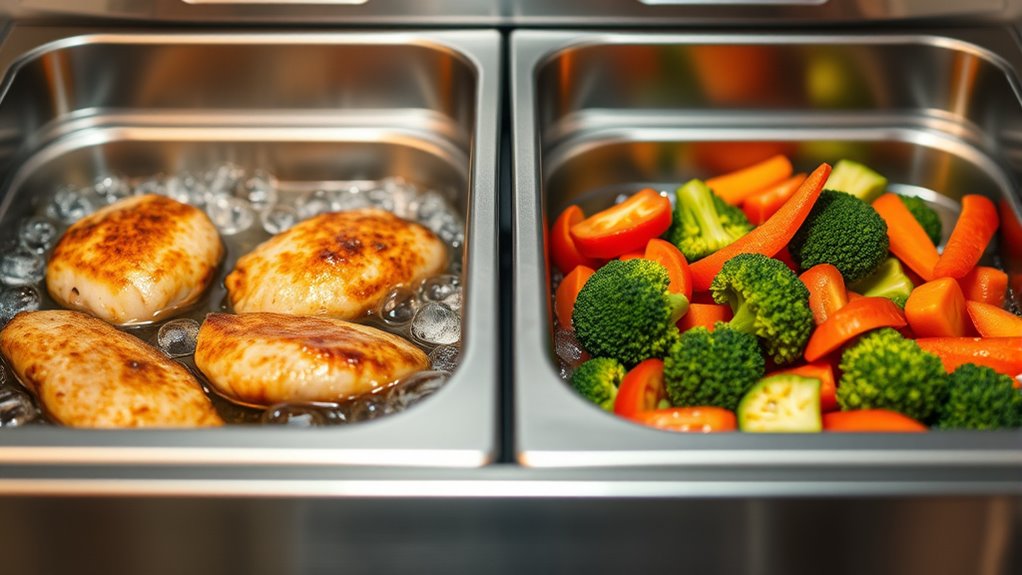
To set up your dual-zone fryer for macro balance, start by preheating and calibrating each zone correctly to guarantee even cooking. Next, choose the appropriate oils for each section based on your meal’s nutrient goals, and then plan your cook times to keep everything balanced. Proper setup helps you optimize flavor and nutrition while maintaining control over your meal prep. Additionally, using cold-pressed vegetable juices can enhance the nutritional profile of your ingredients and support overall health during meal prep.
Preheat and Calibrate Properly
Before you start cooking, it’s essential to preheat and calibrate your dual-zone fryer properly. Proper temperature preheating guarantees your food cooks evenly and achieves the desired crispness. To optimize oil calibration, verify both zones reach the target temperature before adding ingredients—this maintains consistent results. Use a reliable thermometer to check and adjust each zone as needed. Additionally, paying attention to temperature accuracy ensures optimal performance and consistent cooking outcomes. These steps guarantee your fryer operates precisely, helping you achieve macro balance in your meal prep with perfect texture and flavor. Proper setup minimizes cooking errors and maximizes efficiency.
Select Appropriate Oil Zones
Selecting the right oil zones is crucial for achieving macro balance in your meal prep. Start with oil zone selection by identifying the appropriate temperature zones for each food type. High-temperature zones are perfect for crispy, golden textures, while lower-temperature zones help cook more delicate items evenly. Confirm each zone maintains a consistent temperature to prevent over- or under-cooking. Adjust the fryer settings so that each side corresponds to the specific macro components you’re preparing—protein, carbs, or fats. Properly setting your temperature zones allows you to optimize cooking times and textures, reducing cross-contamination or flavor transfer. Additionally, understanding the ambient environment within your kitchen can influence oil temperature stability, ensuring consistent results. Remember, precise oil zone selection simplifies meal prep and guarantees your macro-balanced meals come out perfectly cooked and delicious.
Balance Cook Times Effectively
Balancing cook times across your dual-zone fryer guarantees each macro component cooks properly without overcooking or undercooking other ingredients. To achieve this, start by understanding the ideal cook times for proteins, carbs, and vegetables. Use the same oil for both zones to maintain flavor consistency and enhance overall flavor enhancement. Adjust the cooking duration based on ingredient thickness and texture, ensuring each component reaches its ideal internal temperature. Keep in mind that different foods may require staggered start times to synchronize completion. Properly balancing cook times prevents over-saturation of oil and preserves ingredient quality. For added precision, consider the following:
- Monitor cook times carefully for each zone
- Use temperature controls to fine-tune cooking
- Consistently check for doneness to avoid overcooking
- Recognize angel number influences that can guide timing adjustments and relationship harmony during your meal prep process
Selecting Ingredients for Nutritionally Complete Meals
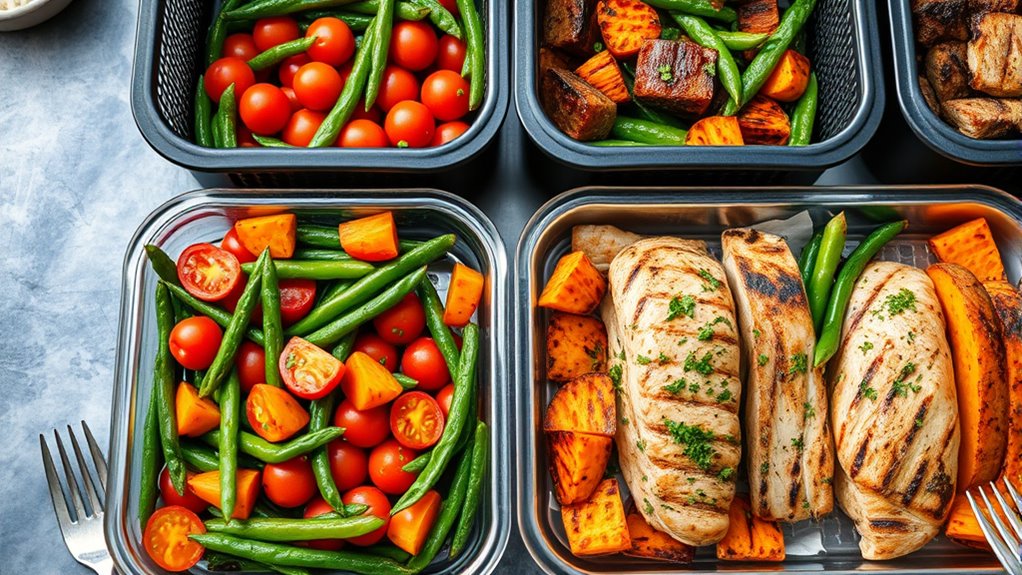
To create nutritionally complete meals with dual-zone fryers, choosing the right ingredients is essential. Focus on incorporating seasonal produce, which provides fresh nutrients and variety, ensuring your meals stay balanced and flavorful. Select a rainbow of vegetables and fruits to cover different vitamin and mineral needs. Including whole grains, like brown rice or quinoa, adds complex carbs and fiber. Spice blends are great for enhancing flavor without extra calories or salt, helping you customize each dish to your taste. Aim for a mix of healthy fats from nuts, seeds, or avocado to support overall health. Incorporating suction power and filtration systems can help ensure your ingredients are prepared in a clean environment, maximizing freshness and safety. By thoughtfully choosing ingredients that align with your nutritional goals, you’ll maximize the benefits of your meal prep, making each balanced, satisfying, and vibrant.
Preparing Proteins Separately for Optimal Cooking

Preparing proteins separately in dual-zone fryers allows you to optimize each type’s cooking process and guarantee safety. By handling proteins individually, you can tailor cooking times and temperatures, ensuring thorough doneness without overcooking. Additionally, this approach helps prevent cross-contamination and flavor transfer. To enhance flavor, focus on protein marination—absorbing spices and acids for better taste—and spice blending, which creates complex profiles that suit different proteins. Properly managing food safety practices, such as avoiding cross-contact and maintaining proper cooking temperatures, further ensures a safe and delicious meal.
Cooking Vegetables to Preserve Nutrients and Flavor

Cooking vegetables carefully is essential to retain their nutrients and vibrant flavors. One effective method is vegetable steaming, which gently cooks produce without submerging it in water, helping with nutrient preservation. Steaming preserves water-soluble vitamins like C and B, which can leach out during boiling. To maximize flavor and nutrients, keep the vegetables in the steamer just until they’re tender but still crisp. Using your dual-zone fryer, set one zone to a gentle steam or lower temperature to avoid overcooking. This way, you retain the vegetables’ bright color, texture, and nutritional value. Avoid overcooking, as high heat can degrade sensitive nutrients. Incorporating antioxidants during cooking can further support nutrient retention and health benefits. By steaming with precision, you ensure your vegetables stay flavorful, nutritious, and satisfying in your macro-balanced meal.
Managing Carbohydrate Components for Energy and Satisfaction
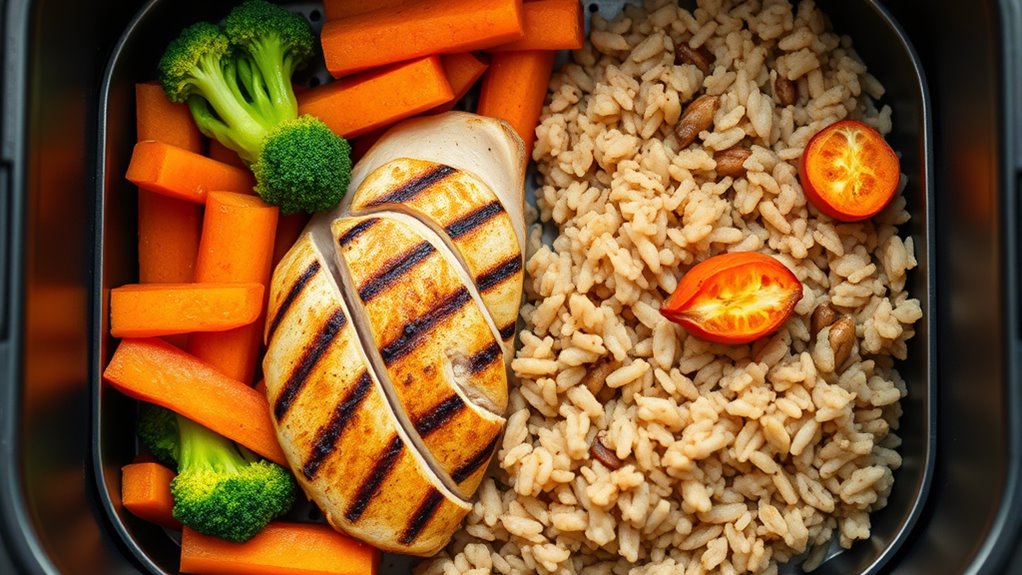
Balancing carbohydrate components in your meal is key to sustaining energy levels and enhancing satisfaction. Focus on selecting diverse carbohydrate sources that provide steady energy release, avoiding spikes and crashes. Incorporate complex carbs like whole grains, legumes, and starchy vegetables for better energy management. Combining these with moderate portions of simple carbs can optimize satiety and mood. To further support stable blood sugar levels, consider the signs of spoilage in your ingredients to ensure freshness and safety.
Balance carbs with complex sources and moderation for sustained energy and satisfaction.
Consider these strategies:
- Pairing whole grains with lean proteins and healthy fats for sustained energy
- Using portion control to prevent overconsumption of high-GI foods
- Incorporating fiber-rich foods to slow digestion and stabilize blood sugar levels
Timing and Temperature Tips for Perfect Results
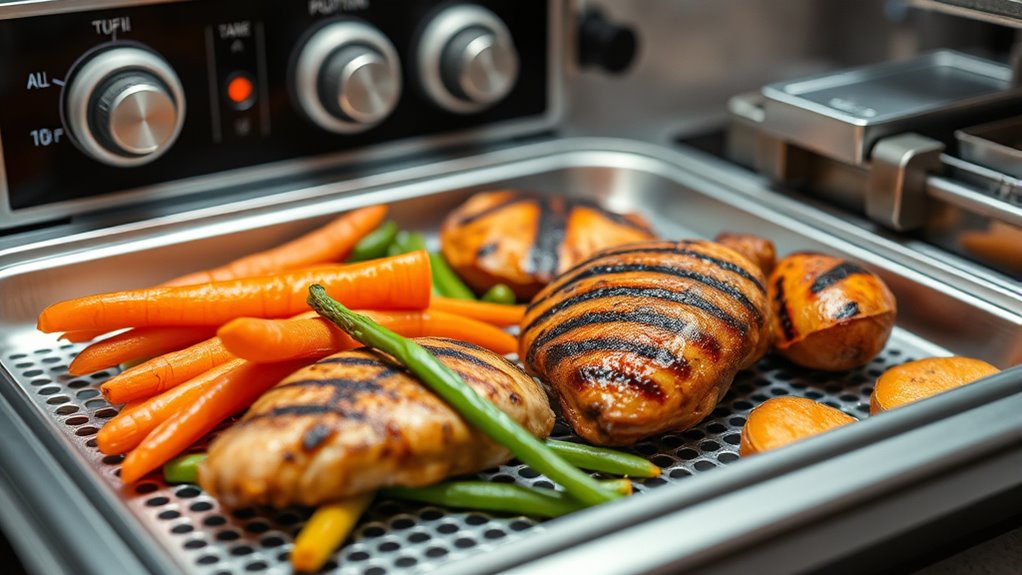
To get perfect results, focus on precise cooking times and ideal temperature settings for each component. Adjust your timing based on the specific foods you’re preparing, and use staggered meal timing to keep everything fresh. This approach ensures your meal stays balanced, flavorful, and perfectly cooked.
Precise Cooking Times
Achieving perfect results with dual-zone fryers hinges on precise timing and temperature control. To master this, you must monitor cooking times closely, adjusting based on ingredient sorting and thickness. Proper timing ensures even cooking and prevents overcooking or undercooking, especially when handling different nutrient groups. Keep these tips in mind:
- Use a timer to track specific cooking durations for each ingredient
- Adjust cooking temperature based on ingredient density and moisture content
- Regularly check for doneness, especially when cooking multiple items simultaneously
- Incorporating biodiversity principles by selecting a variety of ingredients can enhance nutritional value and flavor diversity.
Optimal Temperature Settings
Setting the right temperature is key to getting consistent, high-quality results with your dual-zone fryer. To achieve this, pay close attention to your seasoning techniques, as proper seasoning can enhance flavor without overcooking. Start by sourcing fresh, high-quality ingredients to guarantee even cooking and ideal texture. Use the fryer’s temperature controls to set specific zones for different foods; for example, cook proteins at a higher heat while vegetables stay at a moderate temperature. Always preheat your fryer to the desired setting before adding ingredients. Adjust temperatures based on the thickness and type of food, and monitor closely to prevent over- or undercooking. Precise temperature control helps you maximize flavor, texture, and nutrient retention in every meal.
Staggered Meal Timing
Staggering meal timing is essential for ensuring each dish reaches its ideal texture and flavor without overloading your fryer. By planning your cooking schedule carefully, you prevent crowding, which can affect fryer maintenance and result in uneven cooking. Proper timing also allows you to manage ingredient sourcing effectively, ensuring fresh items are cooked at the right moments. To maximize results:
- Schedule dishes with similar cooking temperatures sequentially.
- Adjust timing based on ingredient thickness and moisture content.
- Use a timer to monitor when to start each batch, maintaining optimal fryer performance.
This approach helps you avoid overloading the fryer, preserves its longevity, and guarantees perfectly cooked, flavorful meals. Proper timing is key to a smooth, efficient meal prep process.
Combining Components for a Balanced Plate

Creating a balanced plate starts with thoughtfully combining different food components to meet your nutritional needs. Focus on flavor pairing to guarantee each element complements the others, enhancing taste and satisfaction. Incorporate a variety of textures and colors to make your plate visually appealing, boosting presentation aesthetics. Aim for a balance of lean proteins, healthy fats, complex carbs, and vegetables to support your macro goals. Use dual-zone fryers to prepare different components efficiently, maintaining crispness and flavor without overcooking. When assembling, consider portion sizes to avoid overwhelming your plate and to keep your meal nutritionally balanced. By paying attention to flavor harmony and presentation, you create a meal that’s both nourishing and enticing, encouraging you to enjoy every bite while meeting your dietary objectives.
Storage and Reheating Strategies to Maintain Nutritional Value
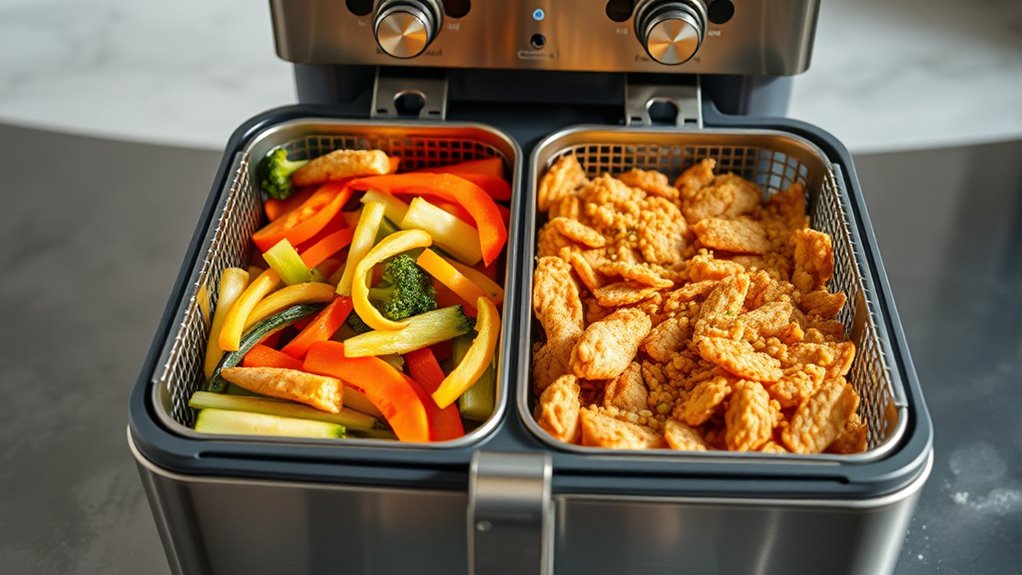
To keep your meals fresh and nutritious, you need proper storage techniques that minimize nutrient loss. When reheating, focus on methods that preserve the food’s nutritional value rather than just temperature. By following these strategies, you can enjoy healthy, balanced meals even after storage.
Proper Storage Techniques
Proper storage is essential to preserving the nutritional value of your meal prep, especially when using dual-zone fryers for macro-balanced dishes. To maintain freshness and prevent nutrient loss, focus on effective food storage and container organization. Use airtight containers to slow down spoilage and keep flavors intact. Label each container with the date to ensure proper rotation and reduce waste. Keep foods organized in your fridge or freezer by grouping similar items together, which makes meal prep more efficient. Avoid overcrowding, which can hinder airflow and promote spoilage. Additionally, store raw and cooked foods separately to prevent cross-contamination. By implementing these storage techniques, you ensure your meals stay nutritious and flavorful, making your macro-balanced meal prep both practical and sustainable.
Reheating for Nutrition
Reheating your meals correctly is essential to preserving their nutritional value and ensuring food safety. Use proper meal prep containers that are microwave-safe and airtight to prevent nutrient loss and contamination. When reheating, do so evenly, avoiding high temperatures that can degrade vitamins and minerals. Cover your food to promote flavor infusion and retain moisture, which helps maintain taste and texture. Stir or flip foods midway through reheating to ensure uniform heat distribution. Keep leftovers refrigerated promptly and reheat within safe timeframes to prevent bacterial growth. By following these strategies, you protect the integrity of your ingredients, maximize nutrient retention, and enjoy flavorful, nutritious meals with every reheat. Proper reheating is key to maintaining the benefits of your meal prep efforts.
Preventing Nutrient Loss
Since nutrient degradation can occur during storage and reheating, it’s essential to adopt strategies that minimize these losses. Proper portion control helps prevent overexposure to air and moisture, which can accelerate nutrient loss. Use airtight containers to preserve vitamins and minerals, maintaining freshness and flavor enhancement. When reheating, opt for gentle methods like steaming or using your dual-zone fryer’s lower heat setting to avoid overcooking, which destroys sensitive nutrients. Additionally, keeping food at ideal temperatures and avoiding prolonged storage can slow nutrient degradation.
- Store meals in airtight containers to limit oxygen exposure
- Reheat at moderate temperatures to preserve nutrients and flavor
- Plan portions to reduce unnecessary reheating cycles and nutrient loss
Sample Meal Plans Using Dual‑Zone Fryers
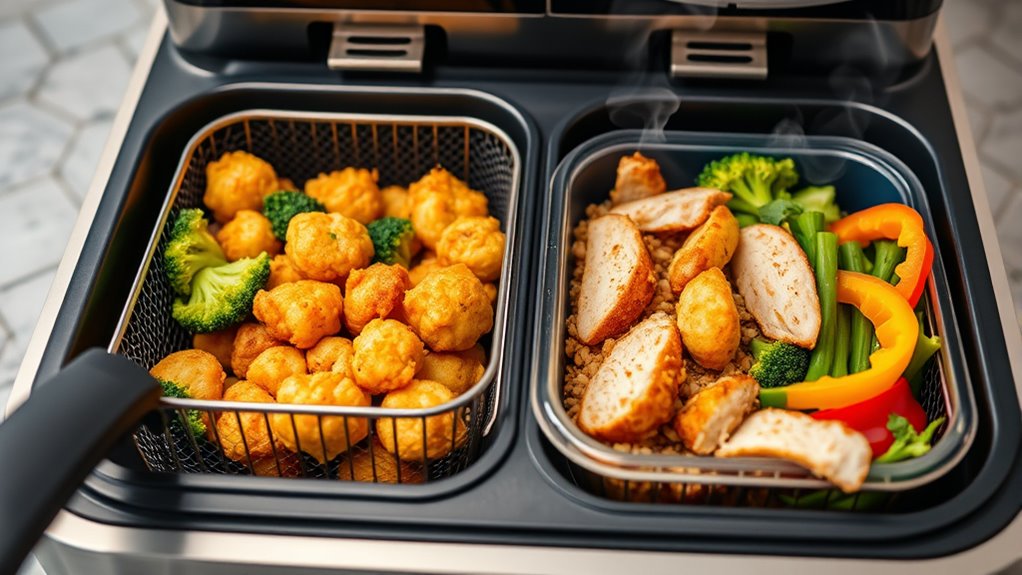
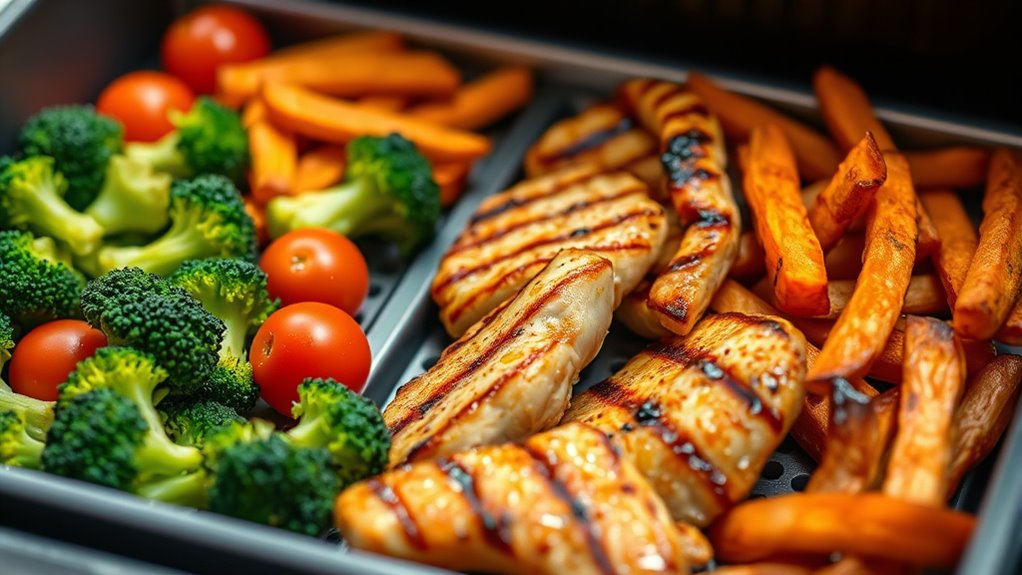
Dual-zone fryers offer a versatile solution for preparing balanced meals efficiently. With their separate compartments, you can create meal plans that include protein, carbs, and vegetables all cooked to perfection. For example, you can prepare crispy chicken in one zone while roasting sweet potatoes in the other. To keep meals interesting, experiment with ingredient substitutions—like swapping cauliflower for potatoes—or add flavor enhancements such as herbs and spices. Here’s a sample meal plan:
| Meal Component | Preparation Method |
|---|---|
| Protein | Herb-seasoned salmon fried |
| Vegetables | Crispy glazed carrots |
| Starches | Sweet potato fries |
| Extras | Lemon garlic aioli |
This setup streamlines meal prep, saves time, and allows customization to meet your nutritional goals.
Frequently Asked Questions
How Do Dual-Zone Fryers Impact Overall Meal Prep Time?
Dual-zone fryers substantially impact your overall meal prep time by boosting cooking speed and ensuring meal consistency. With separate zones, you can cook multiple ingredients simultaneously at different temperatures, saving you time. This setup also maintains uniform quality across dishes, making your meal prep more efficient. By reducing wait times and improving consistency, dual-zone fryers help you prepare balanced meals faster and more reliably.
Can Dual-Zone Fryers Accommodate Different Dietary Restrictions Simultaneously?
Diverse dietary restrictions demand diligent ingredient separation and diet compatibility. Dual-zone fryers deliver this with ease, allowing you to prepare different dishes simultaneously without cross-contamination. You can customize each zone’s temperature and oil, ensuring each meal meets specific dietary needs—vegan, gluten-free, or low-fat. This dual-device design simplifies your cooking, saving you time while tackling multiple dietary demands with precision, practicality, and perfect portioning.
What Safety Precautions Are Necessary When Using Dual-Zone Fryers for Meal Prep?
When using dual-zone fryers for meal prep, you need to prioritize safety. Always follow electrical safety guidelines by inspecting cords and plugs for damage before use. Practice proper handling by using heat-resistant gloves and tools to avoid burns. Keep the fryer on a stable surface, and never overload it. Regularly clean and maintain the equipment to prevent electrical hazards, ensuring safe and efficient operation.
How Do Cleaning and Maintenance Differ for Dual-Zone Fryers Compared to Traditional Fryers?
You’d think cleaning and maintenance would be simpler, but dual-zone fryers actually demand more attention. Their cleaning protocols are more detailed, requiring you to thoroughly clean each zone separately to prevent cross-contamination. Maintenance schedules are also more complex, as you need to monitor and service two zones independently. Ironically, this means more effort upfront, but it pays off with better performance and longer lifespan for your equipment.
Are There Specific Brands or Models Recommended for Macro-Balanced Meal Prep?
When choosing fryers, you should look at brand recommendations and compare models based on features like dual-zone capabilities, size, and ease of cleaning. Popular brands like FryMaster, Pitco, and Waring often receive positive reviews for durability and performance. Model comparisons help you find the best fit for macro-balanced meal prep, ensuring efficient cooking and maintenance. Focus on those that offer precise temperature control and versatile settings to meet your needs.
Conclusion
With a dual-zone fryer, you can master meal prep like a culinary wizard, effortlessly balancing macros and flavors. It’s your secret weapon for creating nutritionally complete, delicious meals that nourish your body and delight your taste buds. By mastering timing, temperature, and ingredient prep, you’ll open a whole new level of cooking efficiency—faster than a lightning bolt! Embrace this tool, and watch your meal prep skills soar to legendary heights.