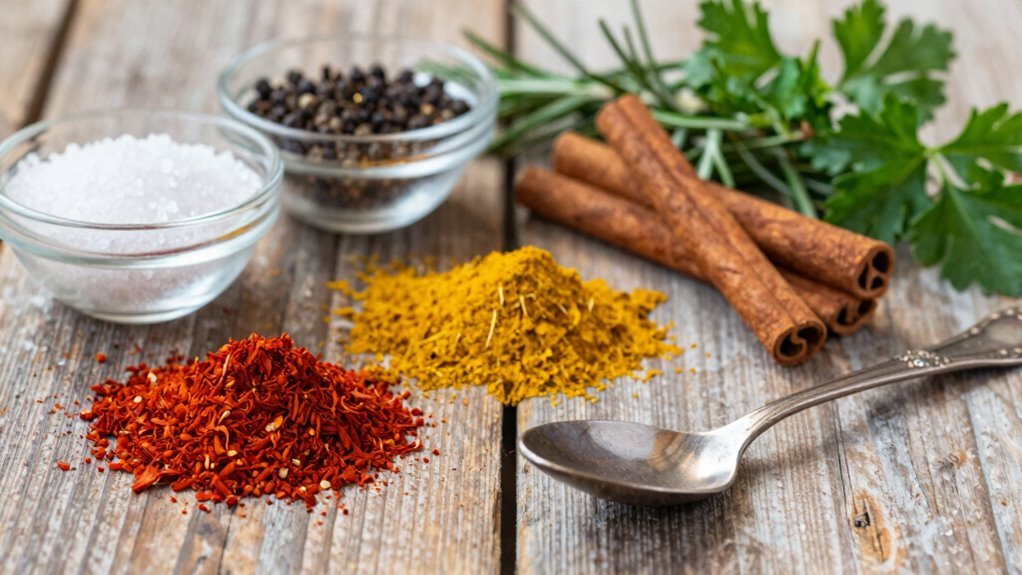

A thoughtful seasoning strategy helps you lower sodium without sacrificing flavor in your dishes. By using herbs, spices, citrus, and umami-rich ingredients, you create layers of deliciousness that compensate for less salt. This approach also allows you to explore regional cuisines and biodiverse ingredients, making your meals more vibrant and sustainable. When you apply these techniques, you’ll find that flavorful, low-sodium meals become easier and more satisfying—keep going to discover even more ways to enhance your cooking.

Get kitchen gear delivered free with Prime
- Fast, free delivery on millions of items
- Prime Video, Amazon Music and more included
- Member-only deals all year
Key Takeaways
- A strategic seasoning enhances flavor without relying on salt, making low-sodium dishes more appealing.
- Using herbs, spices, and acidic ingredients creates depth and complexity in flavor profiles.
- Thoughtful seasoning allows for ingredient substitutions that compensate for reduced sodium.
- Developing a flavor palate over time improves the ability to craft satisfying, low-sodium meals.
- A deliberate approach supports health goals by reducing sodium intake while maintaining taste enjoyment.
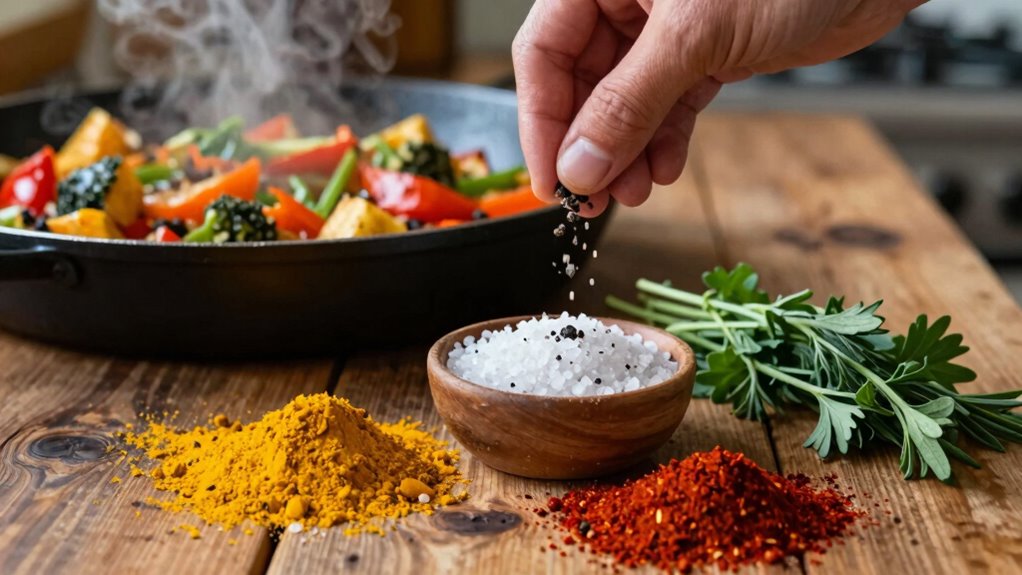
Are you looking for ways to add flavor to your low-sodium dishes without sacrificing taste? If so, understanding the importance of a solid seasoning strategy can make all the difference. When reducing salt, the challenge is to preserve the dish’s appeal while keeping sodium levels in check. This is where smart flavor enhancement becomes essential. Instead of relying on salt alone, you can boost your meals’ taste profile through ingredient substitution and clever seasoning techniques. By replacing or complementing salt with herbs, spices, and other flavorful ingredients, you can create dishes that excite the palate without the need for excess sodium.
Flavor enhancement is key to making your low-sodium recipes satisfying. Think of ingredients like garlic, onion, lemon juice, and vinegar—they add brightness and depth without salt. Fresh herbs like basil, cilantro, or parsley can also provide aromatic complexity that masks the absence of salt. These ingredients work as natural flavor amplifiers, allowing you to enjoy a more savory experience. Furthermore, incorporating umami-rich ingredients such as mushrooms, tomatoes, or nutritional yeast can mimic the savoriness that salt typically provides. These substitutions help you achieve a balanced, full-bodied flavor profile that keeps your dishes engaging.
Enhance low-sodium dishes with herbs, lemon, and umami-rich ingredients for vibrant, savory flavors.
Your seasoning strategy should also involve ingredient substitution. Instead of defaulting to salt, experiment with alternatives like low-sodium soy sauce, miso, or flavored oils. For example, a splash of balsamic vinegar can add sweetness and acidity, enhancing the overall taste. Citrus zest or juice can brighten flavors, making dishes feel more vibrant. Using spice blends that include cumin, paprika, or turmeric can add complexity and warmth without adding sodium. When you think creatively about ingredient substitution, you discover new ways to layer flavors—transforming simple ingredients into memorable meals. Additionally, understanding the role of biodiversity in flavor profiles can inspire you to incorporate a wider variety of herbs and spices, enriching your dishes while supporting sustainable practices. Moreover, exploring different regional cuisines can introduce you to a variety of flavor profiles that can inspire your seasoning choices.
A thoughtful seasoning strategy isn’t just about swapping out salt; it’s about understanding how different ingredients interact and complement each other. You want to build a flavor foundation that’s rich and satisfying, even with less sodium. This involves tasting as you go, adjusting seasonings gradually, and exploring various combinations. Developing a flavor palate over time will help you better identify which herbs and spices work best for your favorite dishes. Incorporating a diverse range of aromatic ingredients can also elevate the overall flavor complexity and make dishes more enticing. Embracing diverse ingredients not only enhances flavor complexity but also encourages a more sustainable and biodiverse approach to cooking. This approach not only reduces your sodium intake but also broadens your culinary skills, opening the door to healthier, more flavorful cooking. Ultimately, a well-planned seasoning strategy empowers you to enjoy delicious, lower-sodium meals that don’t compromise on taste.
low sodium seasoning herbs and spices
As an affiliate, we earn on qualifying purchases.
As an affiliate, we earn on qualifying purchases.
Frequently Asked Questions
How Can I Enhance Flavor Without Adding Salt?
You can enhance flavor without adding salt by using fruit infusions, like citrus or berries, to brighten dishes naturally. Incorporate umami boosters such as mushrooms, tomatoes, or nutritional yeast to add depth. Fresh herbs and spices like garlic, cumin, or black pepper also elevate taste without sodium. Combining these techniques creates complex, satisfying flavors that keep your meals flavorful and healthy, even with less salt.
Are There Specific Herbs That Work Best for Low-Sodium Dishes?
Ironically, some herbs you’d least expect can be your best friends in low-sodium dishes. Basil, thyme, and rosemary stand out for their strong flavors, helping with herb pairings and flavor balancing without salt. Parsley and cilantro also brighten dishes naturally. These herbs enhance depth and complexity, proving that you don’t need salt to make your food taste rich and satisfying. Experiment and let these flavors do the heavy lifting.
Can Seasoning Strategies Reduce Overall Sodium Intake Effectively?
Yes, your seasoning strategies can effectively reduce sodium intake. Focus on achieving flavor balance by using herbs, spices, and acid-based ingredients like lemon or vinegar. Incorporate ingredient substitutions, such as low-sodium soy sauce or salt-free seasoning blends, to enhance taste without extra salt. This approach not only lowers sodium but also keeps your dishes flavorful and satisfying, encouraging healthier eating habits without sacrificing taste.
How Do I Adjust Seasoning for Different Cuisines?
Ever wondered how to adjust seasoning for different cuisines? You focus on capturing the cultural flavor by using authentic herbs, spices, and ingredient substitutions that align with each cuisine’s unique profile. For example, swap salt with garlic, lemon, or special spice blends to preserve flavor without excess sodium. Tailoring your seasonings this way ensures your dishes stay flavorful while respecting dietary goals and celebrating diverse culinary traditions.
What Are Common Mistakes to Avoid in Low-Sodium Seasoning?
You should avoid relying solely on salt substitutes, as they can sometimes alter taste or cause unwanted aftertastes. Don’t forget that overusing herbs and spices without balancing flavors can lead to flavor masking, which dulls the dish’s natural taste. Instead, experiment with fresh herbs, citrus, and umami-rich ingredients to enhance flavor naturally. Be cautious with salt alternatives, and always taste as you go to prevent over-seasoning.
Conclusion
By mastering your seasoning strategy, you’ll transform bland, low-sodium dishes into flavorful delights. Think of it as painting a canvas—you add vibrant colors and textures that make the meal come alive. When you experiment with herbs, spices, and other flavor enhancers, you’re not just reducing salt; you’re creating a culinary masterpiece that excites your palate. So, embrace these techniques and turn healthy eating into a delicious adventure you’ll actually look forward to.
Halloween Picks
halloween
As an affiliate, we earn on qualifying purchases.