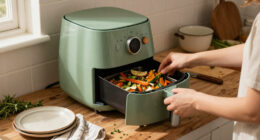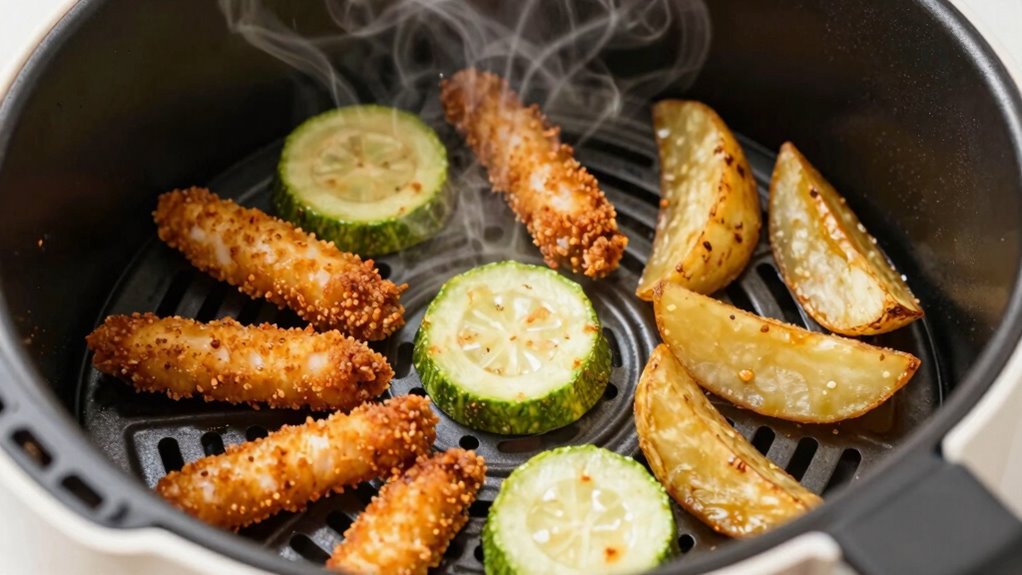

To air fry foods of different thicknesses together, start by evaluating each item’s size and adjusting placement accordingly. Place thinner foods on top or in areas with direct heat and thicker cuts on the bottom or edges to prevent overcooking. Space your ingredients to allow airflow and flip or shake items during cooking for even results. Keep an eye on doneness and extend or reduce cooking times as needed—continuing with these tips will help you master even cooking techniques.

Get kitchen gear delivered free with Prime
- Fast, free delivery on millions of items
- Prime Video, Amazon Music and more included
- Member-only deals all year
Key Takeaways
- Arrange thinner items on top or in direct heat areas for faster cooking.
- Place thicker cuts on the bottom or edges to prevent overexposure.
- Pre-cut larger items into uniform pieces for even cooking.
- Adjust temperature and cooking time based on food thickness.
- Shake or flip foods midway to promote consistent doneness.

Cooking multiple foods with varying thicknesses in an air fryer can be tricky, but with the right techniques, you can achieve perfectly cooked results every time. The key lies in understanding how different thicknesses impact cooking times and employing methods to guarantee everything finishes simultaneously. Start by evaluating the thickness of each item—thinner pieces, like sliced vegetables or thin-cut meats, cook much faster than thicker cuts, such as chicken breasts or steak. To manage this, consider cutting larger items into smaller, uniform pieces or giving thicker foods a head start by seasoning or partially pre-cooking them in the oven or microwave before air frying.
When it comes to seasoning variations, don’t be afraid to get creative. Use bold spices and marinades on thicker cuts to enhance flavor and tenderize, while lighter seasonings or herbs can be reserved for thinner items to avoid overpowering delicate flavors. Layering flavors strategically can elevate your dish, but remember that seasoning alone won’t fix uneven cooking. Instead, focus on placement within the air fryer basket. Thinner items should be placed on top or in areas with more direct heat, while thicker cuts can go on the bottom or on the edges, where they won’t be overexposed to heat too quickly. Understanding how air fryers distribute heat can help you optimize the placement of your ingredients for more even results.
Plating techniques also play an essential role in achieving a professional look with your mixed dishes. As you finish cooking, arrange the thinner, more delicate items around or atop the thicker cuts. Use contrasting colors and textures to create visual appeal, and consider drizzling sauces or garnishing with fresh herbs to add a finishing touch. If some items are done earlier, keep them warm by tenting with foil or placing them in a low oven until everything is ready to be plated. Additionally, understanding how to layer ingredients can help you prevent overcrowding and ensure even cooking. Proper air circulation within the basket is crucial for consistent results and can be improved by arranging items with space between them.
Furthermore, adjusting the temperature settings based on the thickness of your foods can significantly improve cooking consistency. To guarantee even cooking, shake or flip foods mid-cycle, especially for items that are spread out or layered. For thicker pieces, check their internal temperature using a meat thermometer to avoid undercooking. Adjust the cooking time accordingly, and don’t hesitate to remove smaller or done items early to prevent overcooking. With practice, you’ll develop a sense of timing and placement that makes cooking foods of different thicknesses in an air fryer seamless. Remember, understanding heat distribution and adopting these techniques will help you master the process and create delicious, evenly cooked dishes with multiple textures and flavors.
Products Worth Considering

Cuisinart 6-Quart Basket Air Fryer with Viewing Window, Stainless Steel and Black (AIR-200NAS)

Ninja Foodi DZ201 8-Quart DualZone 6-in-1 Air Fryer

Instant Pot Vortex Plus 10-Quart 7-in-1 Air Fryer Oven
As an affiliate, we earn on qualifying purchases.
Frequently Asked Questions
Can I Use Different Types of Oils for Air Frying?
Yes, you can use different types of oils for air frying. Oil variations like olive, avocado, or coconut oil each bring unique flavors and cooking qualities. Experimenting with different oils allows you to create flavor infusions and customize your dishes. Just remember to use oils with high smoke points for safety and ideal results. Mixing oils or trying new ones can enhance your air-fried meals with diverse tastes and textures.
How Do I Adjust Cooking Times for Uneven Food Sizes?
To adjust cooking times for uneven food sizes, focus on food size uniformity and cooking temperature adjustments. Start by cutting larger pieces into smaller, evenly-sized portions to promote uniform cooking. Use a food thermometer to monitor internal temperatures, and shake or turn items halfway through to guarantee even heat distribution. For thicker pieces, increase cooking time slightly, while thinner ones may need less. This approach helps achieve consistent results.
Is It Safe to Layer Foods During Air Frying?
Layering techniques and food stacking can be safe if done correctly, but you need to be cautious. If you layer foods too thick or overcrowd the basket, air circulation gets blocked, leading to uneven cooking or safety issues. To avoid this, place lighter or smaller items on top and leave space for air to circulate. Always check for doneness and avoid stacking raw meats with ready-to-eat foods to prevent cross-contamination.
Can I Use Aluminum Foil With Different Food Thicknesses?
Research shows aluminum foil can be used safely for food layering in air fryers if used correctly. When using aluminum foil with different food thicknesses, make sure not to obstruct airflow, which is essential for even cooking. You can place foil beneath or around foods, but avoid covering the entire basket. Proper placement ensures heat circulates evenly, preventing uneven cooking and potential safety issues.
How Do I Prevent Thinner Foods From Overcooking?
To prevent thinner foods from overcooking, you should monitor cooking times closely and adjust the temperature. Use a lower temperature or shorter cooking time for delicate items, ensuring consistent cooking and flavor enhancement. Arranging foods in a single layer allows hot air to circulate evenly, maintaining cooking consistency. Consider pre-cooking thicker items slightly or adding thinner foods later in the process to avoid overdone edges while preserving flavor.
Conclusion
Now that you know how to air fry foods of different thicknesses together, you’re all set to become a kitchen pro. Just remember, patience is key—like waiting for a pot to boil, don’t rush the process. With a little planning and attention, you’ll serve up perfectly cooked dishes every time. So go ahead, experiment, and enjoy the delicious results. After all, a well-prepared meal is the icing on the cake!