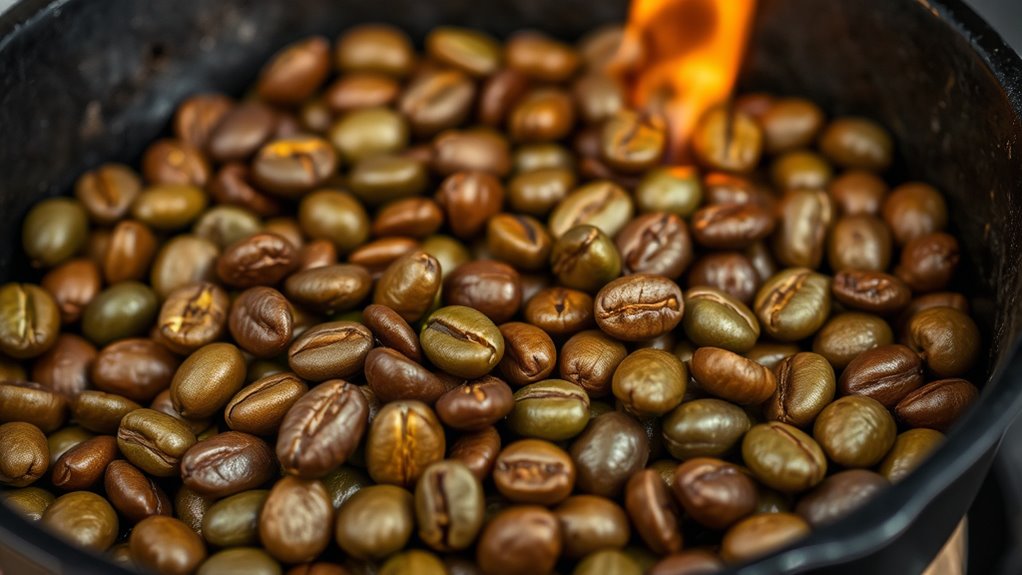

To roast coffee beans to your preferred level at home, start with quality equipment like a popcorn popper or dedicated roaster that heats evenly and offers safety features. Adjust the roasting time and temperature based on the level you want—light for bright flavors, dark for bold notes—by listening for cracks or monitoring color. Keep detailed notes for consistency, cool the beans quickly, and store them properly. Learn more tips and techniques to perfect your custom roast.
Key Takeaways
- Choose a suitable, safe home roasting device with even heat distribution and proper ventilation.
- Monitor color changes and listen for first and second crack to reach your desired roast level.
- Roast beans gradually, adjusting time and temperature based on your preferred light, medium, or dark profile.
- Record your process details to replicate consistent results and refine your roasting technique.
- Cool beans quickly after roasting, then store in airtight, opaque containers away from light and heat.
Choosing the Right Equipment for Home Roasting

When you start home roasting, selecting the right equipment can make all the difference in achieving consistent results. A good roaster helps preserve bean freshness, guaranteeing your coffee tastes vibrant and full of flavor. Safety is also essential; choose equipment with proper ventilation and built-in safety features to prevent accidents. You’ll want a device that heats evenly, so your beans roast uniformly, avoiding burnt spots or under-roasted areas. Consider whether you prefer a dedicated coffee roaster or a simple popcorn popper—just make sure it’s suitable for roasting beans safely. Proper equipment makes it easier to monitor the roast process, giving you control over the level you desire. Investing in quality tools can also aid in preservation of flavor and enhance your overall home roasting experience. Ultimately, investing in the right tools guarantees both safety and quality in your home roasting journey.
Understanding Coffee Roast Levels and Their Flavors
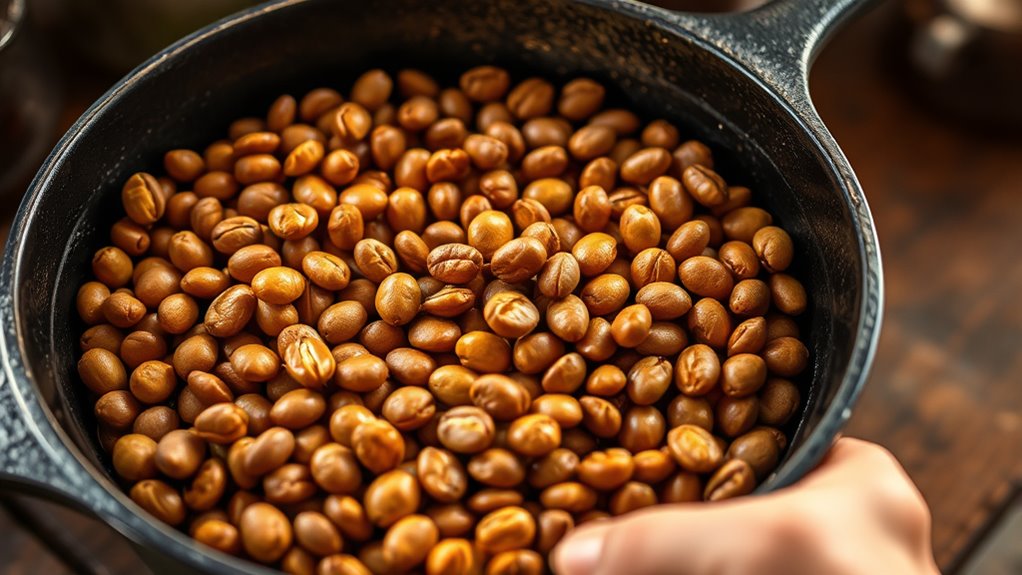
Understanding coffee roast levels is key to achieving the flavor profile you desire. As you roast, the degree of roast development influences the taste, aroma, and acidity of your coffee. Light roasts retain more of the beans’ original flavor profiles, offering brighter, fruity, and acidic notes. Medium roasts balance acidity with richer, caramelized flavors, providing a rounded taste. Dark roasts develop deeper, smoky, and bitter flavors, often with a bold profile. Recognizing these distinctions helps you tailor your roast to your preferences. The roast development process involves carefully controlling heat and duration, which determines the final roast level. Additionally, understanding how flavor profiles evolve during roasting can help you experiment and perfect your at-home roasting to match your ideal cup.
Step-by-Step Guide to Roasting at Home

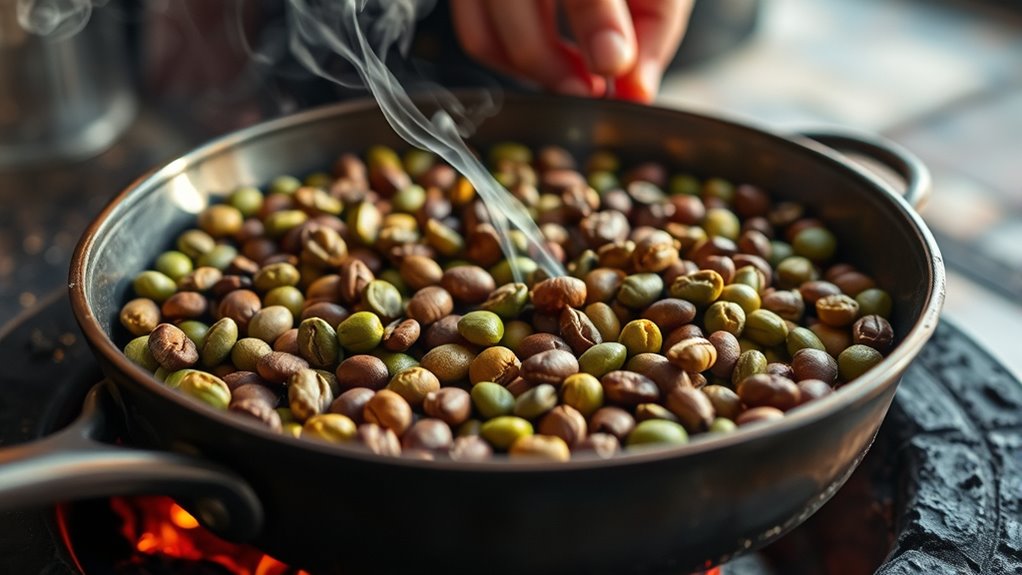
Roasting coffee at home is an accessible process that allows you to customize flavors to your preference. Begin by choosing fresh green beans, considering their origin, as bean origin influences the final coffee aroma. Use a simple home roasting method like a skillet, oven, or popcorn popper. Heat the beans gradually, stirring constantly if using a skillet, to guarantee even roasting. Listen for the first crack, a telltale sign of light roast, and monitor the aroma, which develops as the beans roast. For darker roasts, continue until you hear the second crack. Once your beans reach your desired level, cool them quickly to halt roasting. Rest the beans for at least 12 hours to allow flavors to settle before grinding and brewing. Additionally, diverse design options can enhance your roasting setup, making the process more enjoyable and visually appealing.
Tips for Achieving Consistent Results
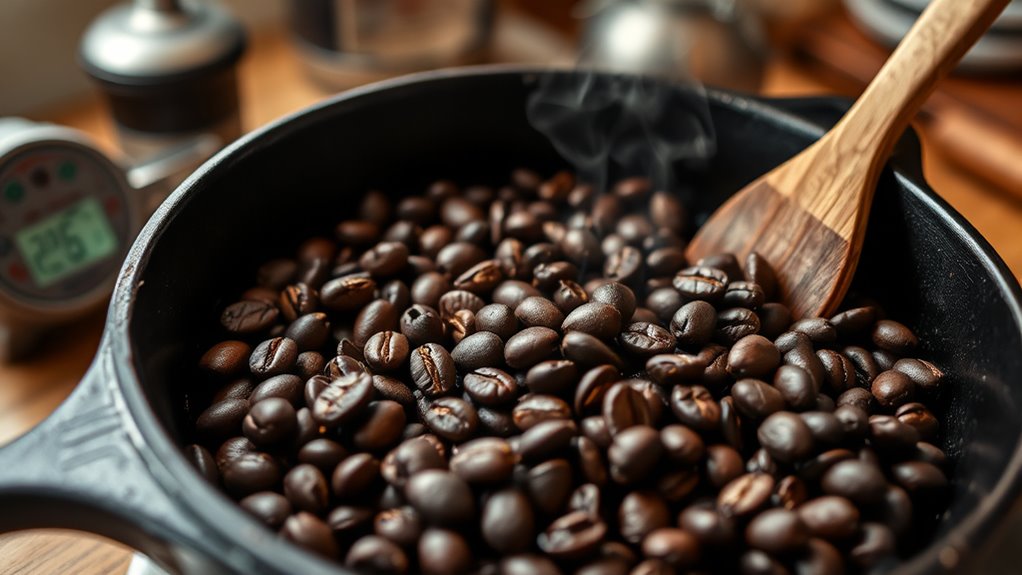
To achieve consistent results in home coffee roasting, it’s essential to develop a reliable process and stick to it. Start with fresh beans, as bean freshness greatly affects roast quality and flavor development. Use the same batch of beans for each roast until you perfect your technique. Establish a clear roast profile, including temperature, time, and cooling method, and follow it closely. Keep detailed notes of each roast, noting factors like initial bean quality and environmental conditions. Regularly monitor your equipment to ensure consistent performance. Additionally, understanding the contrast ratio of your projector can help you optimize your viewing environment for the best image quality. By maintaining a steady process, you reduce variables that can alter your results. Over time, this disciplined approach helps you produce reliably delicious, perfectly roasted coffee tailored to your preferences.
Storing and Enjoying Your Freshly Roasted Coffee
Ever wonder how to keep your freshly roasted coffee at its peak flavor? Proper coffee bean storage is essential for flavor preservation. Store your beans in an airtight container, preferably made of opaque material, to protect them from light, air, and moisture. Keep the container in a cool, dark place away from heat sources like stoves or direct sunlight. Avoid refrigerating or freezing, as temperature fluctuations can cause condensation and degrade quality. Use your beans within two to four weeks for ideal freshness. When you’re ready to enjoy your coffee, grind only what you need to maintain flavor. For added security, consider precious metals investment assets to diversify your financial portfolio. By following these storage tips, you ensure each cup tastes as fresh and vibrant as when you first roasted the beans.
Frequently Asked Questions
How Long Does It Typically Take to Roast Coffee Beans at Home?
Roasting coffee beans at home usually takes about 10 to 15 minutes, depending on your desired roasting level and roasting temperature. You’ll need to monitor the beans closely and use cooling techniques like stirring or spreading them out to prevent over-roasting. As the beans reach your preferred roast, stop the process promptly to avoid burning. Practice helps you perfect timing for consistent results.
What Are the Safest Methods for Venting During Home Roasting?
When it comes to venting safety and smoke management during home roasting, you should prioritize proper ventilation methods. Use a dedicated exhaust fan or vent hood to direct smoke outside safely. Keep windows open and consider installing a carbon filter or air purifier to minimize indoor smoke buildup. Always monitor your setup, avoid overloading the roaster, and stay attentive to any smoke or fumes, ensuring a safe and enjoyable roasting experience.
Can I Roast Different Types of Coffee Beans Together?
Did you know blending different beans can create unique flavor profiles? Yes, you can roast different types of coffee beans together, but it may affect roasting consistency. Mixing beans with varying densities and moisture levels can lead to uneven roasting, altering their flavor profiles. To get the best results, consider roasting similar beans together or adjusting your roasting time to balance the different characteristics for a harmonious blend.
How Do I Prevent Over-Roasting or Burning My Beans?
To prevent over-roasting or burning your beans, keep a close eye on bean temperature and listen for the first crack. Use cooling techniques like transferring beans to a colander or fan to quickly lower their temperature once they’ve reached your desired roast level. Regularly monitor and adjust your heat source, and stay attentive during the process to avoid burning and achieve the perfect roast tailored to your taste.
What Equipment Is Best for Beginners in Home Coffee Roasting?
You might worry about complexity, but beginner roasting tips show simple home roasting equipment like a popcorn maker or dedicated roaster makes it easy. These tools give you control and consistency, preventing over-roasting or burning. Start with straightforward options, and you’ll quickly learn the process. With the right home roasting equipment, you’ll enjoy fresh, tailored coffee without the hassle, turning you into a home barista in no time.
Conclusion
Now that you’re armed with everything you need, go ahead—become the barista of your own kitchen. Roast those beans to perfection, impress your friends with your “expertise,” and enjoy coffee so fresh it practically screams “I made this myself!” Just remember, if your smoke alarm starts singing, it’s probably just your way of saying you’ve officially mastered the art of home roasting. Cheers to your caffeinated adventures!