To dehydrate citrus slices for garnishes, start by choosing ripe, fresh fruits like lemons, oranges, or grapefruits, then wash and slice them evenly about 1/8 to 1/4 inch thick, removing any seeds. Arrange the slices on dehydrator trays or baking sheets without overlapping, and dry at around 125°F in a dehydrator or the oven’s lowest setting with the door slightly open. As they dry, they’ll shrink, become crispy, and concentrate their flavors—if you want to perfect your technique, keep reading for expert tips.

Get kitchen gear delivered free with Prime
- Fast, free delivery on millions of items
- Prime Video, Amazon Music and more included
- Member-only deals all year
Key Takeaways
- Choose fresh, ripe citrus fruits, wash, and slice into uniform 1/8 to 1/4 inch thick rounds.
- Remove seeds to prevent bitterness and ensure even dehydration.
- Arrange slices on dehydrator trays or baking sheets without overlapping for proper air circulation.
- Dehydrate at around 125°F (52°C) in a dehydrator or the lowest oven setting with the door ajar until dry and leathery.
- Store dried citrus slices in airtight containers away from sunlight to preserve flavor and appearance.
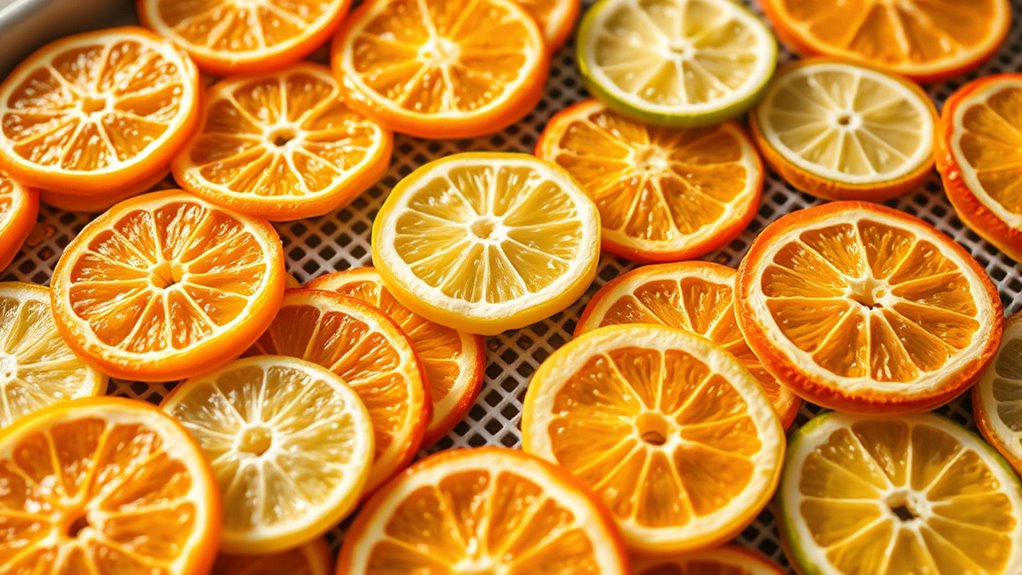
Dehydrating citrus slices is a simple way to preserve their vibrant flavor and extend their shelf life. When you dehydrate slices, you not only keep their natural brightness, but you also enhance their flavor, making them perfect for garnishes that add a pop of color and taste to your dishes. The process removes moisture, which helps prevent spoilage, so your citrus slices stay fresh longer, making them ideal for use over weeks or even months. Proper dehydration also reduces the risk of mold growth and bacterial contamination, ensuring your dried slices remain safe and tasty. To start, select fresh, ripe citrus fruits like lemons, limes, oranges, or grapefruits. Wash them thoroughly to remove any dirt or pesticides. Then, slice the citrus into thin, uniform rounds—about 1/8 to 1/4 inch thick—to ensure even dehydration. Thinner slices dry faster and more evenly, which enhances their flavor concentration. You can remove seeds beforehand to avoid any bitterness and to keep the slices looking tidy.
Dehydrate citrus slices to preserve flavor, extend shelf life, and create vibrant garnishes for months.
Next, arrange the citrus slices on a dehydrator tray or a baking sheet if you’re using an oven. Make sure the slices aren’t overlapping, as proper air circulation is key to even dehydration. If you’re using a dehydrator, follow the manufacturer’s recommended temperature—generally around 125°F (52°C)—to preserve flavor and nutrients. When using an oven, set it to the lowest possible temperature, around 170°F (77°C), and keep the door slightly ajar to allow moisture to escape. During dehydration, your goal is to remove moisture without cooking the slices, which helps retain their bright flavor and vibrant appearance.
As the slices dehydrate, you’ll notice the fruit shrinks and the texture becomes leathery but still slightly pliable. This process intensifies the flavor, making the slices more concentrated and adding a subtle sweetness or tartness depending on the citrus variety. Proper dehydration ensures the slices are crisp and dry, which contributes to a longer shelf life. Store your dried citrus slices in an airtight container, away from direct sunlight, in a cool, dry place. When stored properly, they can last several months, providing an easy way to add flavor and visual appeal to cocktails, desserts, or charcuterie boards long after the fresh fruit is gone. Understanding dehydration helps you optimize the process for the best flavor and preservation outcomes.
Dehydrating citrus slices is a practical and effective method to preserve their flavor enhancement and extend their shelf life. With just a bit of effort, you’ll have beautiful, flavorful garnishes that elevate your culinary creations while staying fresh and vibrant for months.
As an affiliate, we earn on qualifying purchases.
Frequently Asked Questions
Can I Dehydrate Citrus Slices in a Microwave?
Yes, you can dehydrate citrus slices in a microwave using microwave dehydration techniques. Place the slices on a microwave-safe plate lined with paper towels and microwave on low power in short intervals, about 30 seconds to a minute. Check frequently to prevent burning. This method can achieve a crisp citrus slice texture faster than traditional drying, but be cautious as uneven dehydration might occur, affecting the final texture.
How Long Do Dehydrated Citrus Slices Last?
Dehydrated citrus slices can last up to a year if you store them properly, like treasures in a hidden chest. To maximize their storage duration, keep them in an airtight container in a cool, dark place. Preservation methods like vacuum-sealing can extend their freshness. Regularly check for signs of moisture or mold to guarantee they stay vibrant and tasty, turning your garnishes into a lasting masterpiece.
Do Pre-Sliced Citrus Slices Dehydrate Evenly?
Pre-sliced citrus slices may not dehydrate evenly if the slice thickness isn’t consistent. Thinner slices tend to dry faster, while thicker ones might remain moist, affecting dehydration uniformity. To guarantee even drying, use a sharp knife or mandoline to cut slices uniformly. Regularly check your slices during dehydration and rotate the trays if using a dehydrator to promote consistent dehydration across all slices.
Is It Necessary to Peel Citrus Before Dehydrating?
Peel removal is like peeling back a gift to reveal the treasure inside—you don’t always need to remove it, but doing so can help preserve the flavor and appearance. If the peel is thick or bitter, peel it off for a cleaner, more delicate garnish. Leaving the peel on can add texture and zest, but it might affect dehydration time. Choose based on your desired flavor and presentation.
Can Dehydrated Citrus Slices Be Used in Baking?
Yes, dehydrated citrus slices work great in baking. They add a vibrant flavor enhancement and a unique texture to baked goods like cakes, muffins, and cookies. When you incorporate them, they preserve their shape and flavor, offering both visual appeal and a burst of citrus taste. Just chop or grind them if needed, and enjoy their preserved texture and concentrated flavor in your recipes.
Conclusion
Now that you know how to dehydrate citrus slices, you’re all set to add a beautiful, flavorful touch to your drinks and dishes. Just remember, “A little preparation goes a long way,” so take your time to get it just right. With a bit of patience, you’ll enjoy stunning garnishes that impress. Keep experimenting and enjoy the fresh, tangy flair these slices bring to every occasion!
Halloween Picks
halloween
As an affiliate, we earn on qualifying purchases.