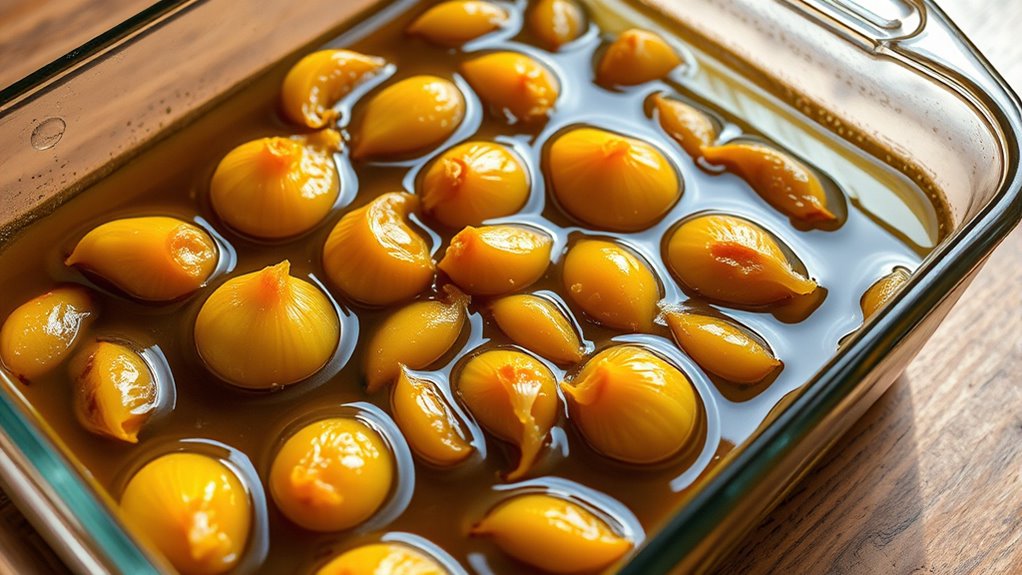

To make garlic confit safely, start by selecting good-quality garlic and gentle, neutral oils like vegetable or grapeseed. Peel the cloves carefully and cook them slowly at around 200°F (93°C), stirring occasionally to prevent sticking. Keep the garlic submerged in oil, transfer it to airtight containers, and store in the fridge for up to two weeks. Proper handling and low-temperature cooking are key—continue exploring to learn more about perfecting your garlic confit.
Key Takeaways
- Use fresh, firm garlic bulbs and peel cloves carefully to ensure even cooking and better flavor absorption.
- Cook garlic gently at around 200°F (93°C) to prevent burning and preserve delicate flavors.
- Keep garlic fully submerged in neutral oil during low and slow cooking for safety and optimal infusion.
- Store garlic confit in airtight containers in the refrigerator, consuming within one to two weeks.
- Always use clean utensils and proper storage methods to prevent contamination and ensure safety.

Emeril Lagasse Extra Large French Door Air Fryer Toaster Oven Combo, 24 Cooking Functions and Digital Controls, 7 Accessories Included, Stainless Steel Finish, 26QT Capacity
A VERSATILE AIR FRYER AND MULTI-COOKER COMBO: Elevates practically any meal, from air frying quick after-school snacks to...
As an affiliate, we earn on qualifying purchases.
Gathering Your Ingredients and Equipment
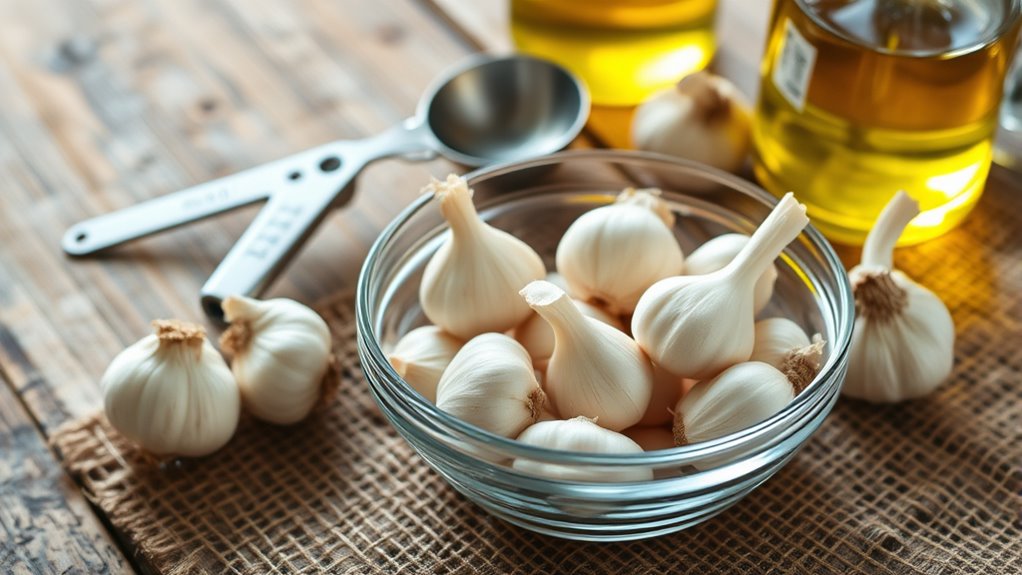
Before you begin making garlic confit, gather all the necessary ingredients and equipment to guarantee a smooth process. Start with quality garlic, as good garlic selection impacts flavor and safety. Choose firm, plump bulbs without green sprouts or blemishes. For the oil infusion, opt for a neutral oil like vegetable, canola, or grapeseed to highlight the garlic’s flavor. You’ll also need a small saucepan or oven-safe dish, a spatula, and airtight containers for storage. A thermometer can help monitor temperature if you’re slow-cooking on the stovetop. Having everything ready ensures your garlic infit is safe and flavorful. Proper preparation at this stage sets the foundation for a successful, delicious garlic confit. Vetted ingredients and equipment help ensure safety and quality throughout the process.

Nuwave Bravo XL Pro Air Fryer Toaster Oven with Grill Combo, 2025 New Ultra-Fast Convection System, 35% Crispier, 2X More Even, 142 Presets, 50-500F, Smarter Probe, PFAS Free, 30QT, Stainless Steel
142 EASY-COOK PRESETS: The Bravo toaster oven countertop is equipped with 12 versatile cooking functions including air fry,...
As an affiliate, we earn on qualifying purchases.
Preparing the Garlic for Confit
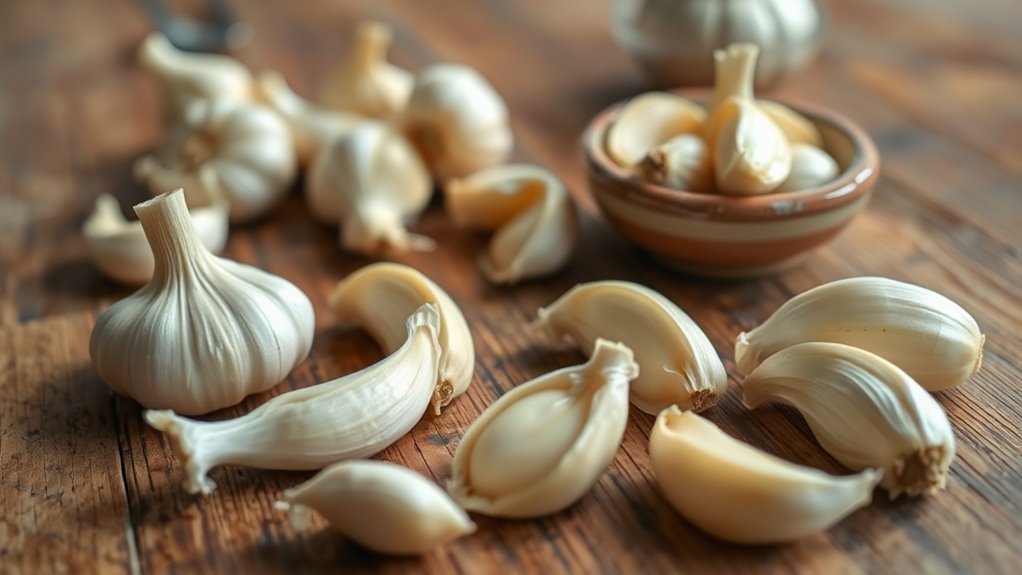
To prepare your garlic for confit, start by peeling the cloves to remove the papery skins, revealing the tender flesh beneath. Proper garlic peeling ensures even cooking and a smooth oil infusion. Here’s what to do next:
- Select fresh, firm garlic bulbs for prime flavor.
- Separate individual cloves and trim off any root ends.
- Gently peel each clove, using your fingers or a knife if needed.
- Pat the peeled garlic dry to prevent excess moisture during oil infusion.
- Proper peeling also helps prevent bitterness and promotes better flavor absorption.
Peeling garlic carefully allows the cloves to absorb flavors better and prevents bitterness. Once peeled, you’re ready to infuse the garlic in oil, creating a rich, flavorful confit. This step is vital for achieving a smooth, tender garlic with a mellow, delicious taste.
Midea Flexify French Door Toaster Oven Air Fryer Combo, 26.4 QT, Extra Large Air Fryer Countertop Oven 10-in-1 Combo, 25% Faster Cooking and 90% Less Oil, Stainless Steel
Cyclone Air Fryer: Enjoy 25% faster cooking and 90% less oil compared to traditional fryers, . This all-in-one...
As an affiliate, we earn on qualifying purchases.
Cooking the Garlic at a Gentle Temperature

Cooking the garlic at a gentle temperature is essential to achieve that mellow, butter-like texture and prevent it from browning or burning. Using gentle heat techniques allows the garlic to slowly infuse its flavor into the oil, creating a rich garlic infusion without risking overcooking. Keep your heat low—around 200°F (93°C)—and monitor closely. This slow process ensures the garlic softens evenly, releasing its sweetness and subtle aroma. Stir occasionally to prevent sticking or uneven cooking. Patience is key; rushing the process can lead to bitterness or burnt pieces. By maintaining a gentle temperature, you preserve the delicate flavors and achieve a smooth, spreadable garlic confit perfect for spreading or adding to dishes. This method guarantees a safe, flavorful garlic infusion every time. Crochet Styles for Locs can also be used to create protective styles during the infusion process if desired.

Cosori 9-in-1 TurboBlaze Air Fryer 6 Qt, PFAS-Free Ceramic Coating, 90°–450°F, Precise Heating for Even Results, Air Fry, Roast, Bake, Broil, Dry, Frozen, Proof, Reheat, Keep Warm, 120V, Dark Gray
𝘼𝙞𝙧 𝙁𝙧𝙮𝙚𝙧 𝙐𝙥𝙜𝙧𝙖𝙙𝙚: Innovative TurboBlaze Technology delivers a powerful 3600 rpm fan speed and temperatures up to 450℉,...
As an affiliate, we earn on qualifying purchases.
Properly Storing and Preserving Your Garlic Confit

Wondering how to keep your garlic confit fresh and flavorful? Proper storage is key to confit preservation. First, transfer your cooled garlic confit into an airtight container. Second, guarantee the garlic is fully submerged in the oil to prevent spoilage. Third, store the container in the refrigerator, ideally at or below 40°F. Fourth, label your jar with the date to keep track of freshness. When it comes to garlic storage, always use clean utensils to avoid contamination. Keep in mind that garlic confit can last up to two weeks if properly stored. For longer preservation, consider freezing small portions. Following these steps helps maintain flavor and safety, ensuring your confit remains delicious and ready for future use.
Tips for Safe and Flavorful Garlic Confit Enjoyment
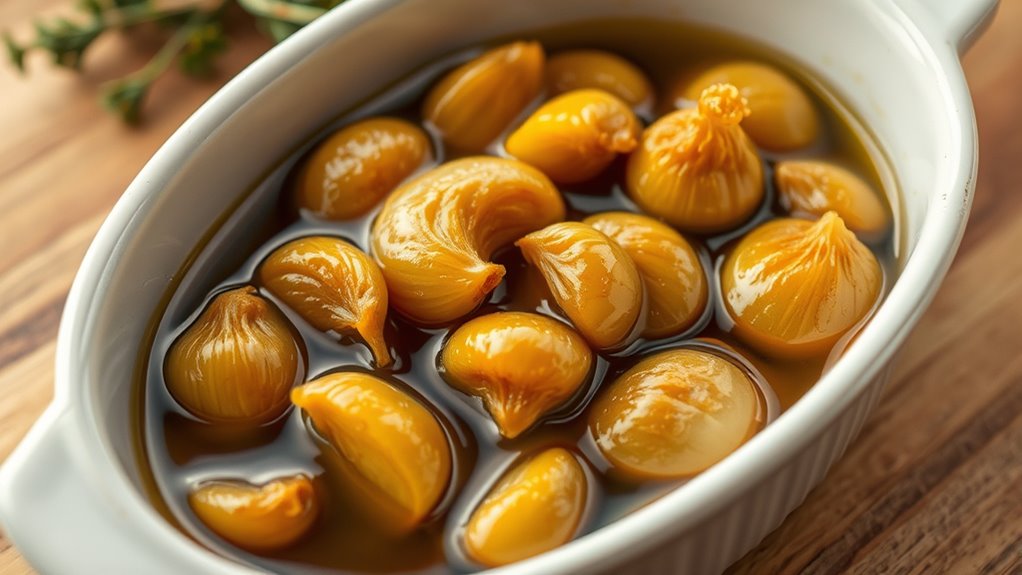
Once you’ve stored your garlic confit properly, enjoying it safely and at its best flavor is the next step. To enhance confit flavor, always use clean utensils to avoid contamination. Keep your garlic storage in the refrigerator and consume within a week for ideal freshness. When serving, gently reheat the confit to preserve its delicate flavors. For optimal safety and quality, consider vacuum sealing your garlic confit for longer storage periods.
Frequently Asked Questions
How Long Can Homemade Garlic Confit Be Stored Safely?
You can typically store homemade garlic confit safely for up to two weeks if you follow proper refrigeration guidelines. Keep it in an airtight container and make certain it stays consistently cold, ideally below 40°F (4°C). Avoid leaving it out at room temperature, as this can promote bacterial growth. Always check for signs of spoilage before consuming, such as off smell or mold, to ensure safety during the storage duration.
Can I Reuse the Garlic-Infused Oil After Making Confit?
Did you know that about 90% of home cooks reuse flavored oils? When it comes to garlic oil reuse after making confit, it’s generally safe if you follow proper confit storage tips. Strain out garlic pieces, store the oil in an airtight container in the fridge, and use it within a week. Always check for off smells or cloudiness before using, as spoiled oil can pose health risks.
What Are Signs of Spoilage in Garlic Confit?
You should watch for signs of spoilage in garlic confit, like mold growth or a foul odor. If you notice mold, discard the entire jar immediately to prevent health risks. A strong, unpleasant smell also indicates spoilage, meaning it’s unsafe to eat. Always trust your senses; if anything seems off, it’s best to throw it out. Proper storage and timely use help keep your garlic confit safe and delicious.
Is It Possible to Make Garlic Confit in the Microwave?
Think of the microwave as a lightning bolt for quick garlic prep. Yes, you can make garlic confit in the microwave, but beware—microwave safety is key. It heats unevenly, risking overcooking or spoilage, so watch carefully. Use a microwave-safe dish, cover loosely, and heat in short bursts. While it’s faster, it may not develop the same rich flavor as slow, low-temperature methods. Proceed with caution, and enjoy your speedy garlic creation!
Can I Add Herbs or Spices to Enhance Flavor Safely?
You can definitely add herbs or spices to enhance your garlic confit safely. For herb pairings, fresh thyme, rosemary, or bay leaves work well; add them during cooking for a gentle spice infusion. Just make certain you don’t overload with moisture or overpowering flavors, and keep the temperature low to prevent spoilage. This way, you’ll create a delicious, aromatic garlic confit with a perfect spice infusion.
Conclusion
Just like crafting a timeless melody, making garlic confit requires patience and care. By gathering quality ingredients, gentle cooking, and proper storage, you guarantee each bite is safe and bursting with flavor. Remember, a little attention now creates lasting enjoyment—your culinary symphony. So, take your time, savor the process, and let your homemade garlic confit become a harmonious addition to every meal. After all, greatness is in the slow, deliberate notes you play along the way.