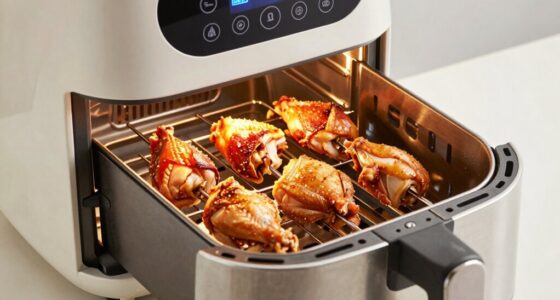
To find your air fryer’s hot spots quickly, use small test items like bread crumbs or potato slices. Run the appliance at a typical temperature and observe which areas brown or crisp faster—these are your hot spots. Rotate or move food during cooking to promote even results. Proper maintenance, like cleaning vents and the basket, also helps. Keep exploring tips to improve your air fryer’s performance and achieve perfectly cooked meals every time.
Key Takeaways
- Use small, evenly spaced test items like bread crumbs or potato slices and observe browning after 10 minutes.
- Run the air fryer with test items in different basket areas to identify uneven heating patterns.
- Rotate or shuffle food midway during cooking to see if hot spots are causing uneven results.
- Regularly clean the basket, vents, and interior to ensure unobstructed airflow and consistent heat distribution.
- Map hot spots by noting zones with faster or slower cooking and adjust food placement accordingly.
Why Do Hot Spots Cause Uneven Cooking in Your Air Fryer?
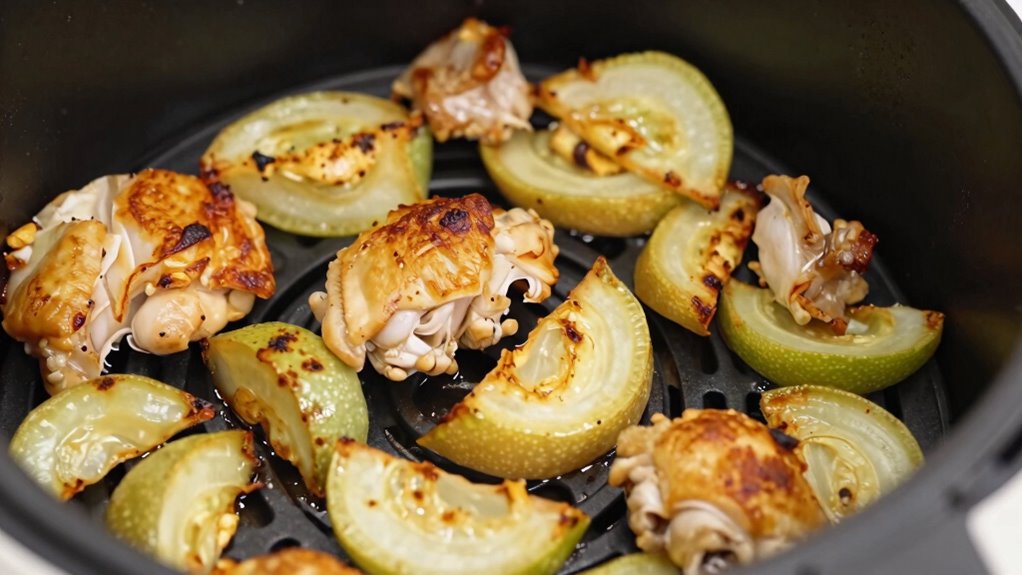
Have you ever noticed that some areas in your air fryer cook faster than others? That’s often caused by hot spots, which are areas where heat concentrates more than in surrounding spots. Hot spot causes stem from uneven air circulation inside the fryer. When air circulates poorly, certain zones get more heat, leading to uneven cooking. These hot spots can result from the design of the air fryer, placement of the heating element, or the way the fan distributes hot air. As a result, some parts of your food will cook faster or become crispier, while others remain undercooked. Understanding hot spot causes helps you recognize that uneven air circulation is a key factor behind the problem, enabling better troubleshooting and adjustments for more consistent results. Additionally, proper maintenance and positioning of food within the basket can help minimize the impact of hot spots and promote more even cooking. Recognizing that airflow patterns influence hot spots can also guide you in optimizing your cooking technique. To further improve cooking consistency, adjusting the air fryer’s settings or shaking the basket periodically can help distribute heat more evenly. Being aware of hot spot detection methods can assist you in identifying and addressing uneven heat areas more effectively.
How to Test for Hot Spots in Your Air Fryer?
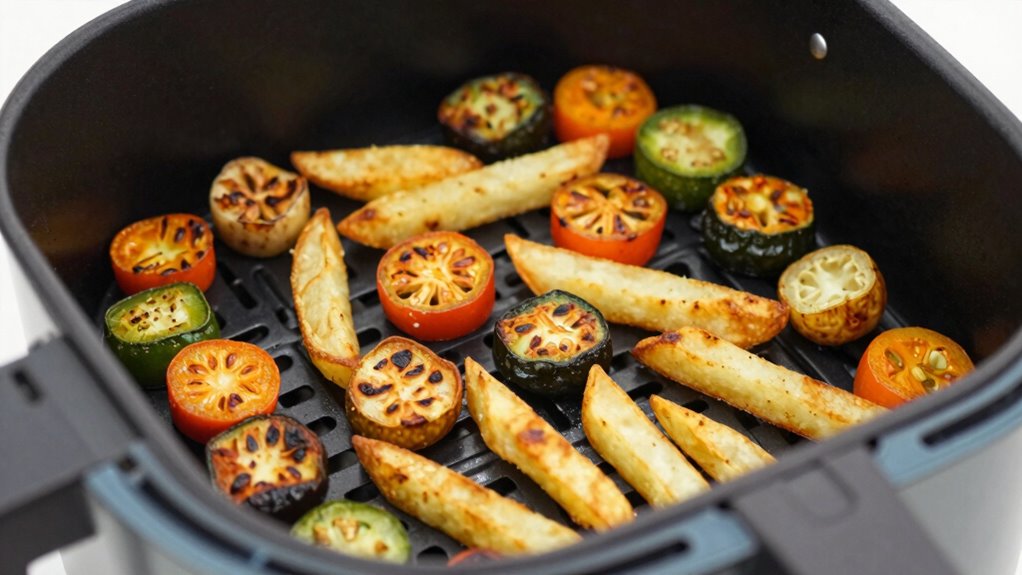
To effectively identify hot spots in your air fryer, start by conducting a simple test that reveals uneven heat distribution. Place a layer of small, evenly spaced items like bread crumbs or thin slices of potato across the basket. Run the air fryer at a standard cooking temperature for about 10 minutes. Afterward, carefully check for areas that are more toasted or browned than others. This test helps you understand how your air fryer’s heat is dispersed, which is essential for proper air fryer maintenance. Keep in mind that cookware compatibility can influence heat distribution, so always use appropriate, compatible accessories. Repeating this test periodically guarantees your appliance remains well-maintained and helps you adjust food placement for even results. Understanding your hot spots can also improve your overall outdoor and tech-savvy cooking strategies, especially when considering air fryer calibration to optimize performance. Regularly performing such tests can also help you detect uneven heat early, preventing undercooked or overcooked food. Additionally, being aware of balanced designs in your air fryer setup can contribute to more uniform heat distribution.
How to Find Hot Spots by Food Placement and Observation?
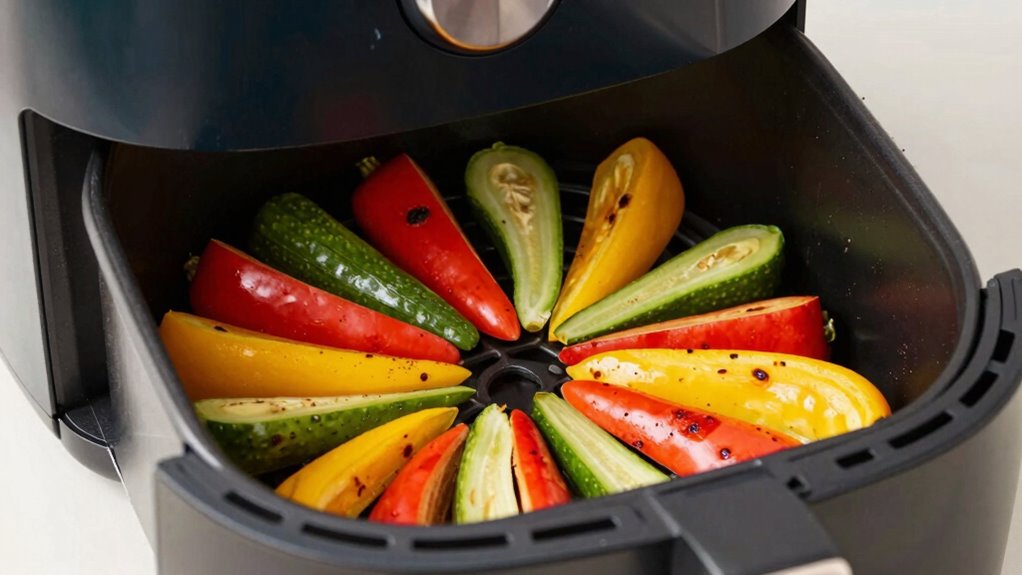
By carefully placing your food and observing the cooking process, you can identify hot spots in your air fryer without specialized equipment. Use simple placement techniques and keen observation methods to spot uneven heat. For example:
Identify hot spots by carefully placing food and observing the cooking process for even results.
- Place small test items across different areas of the basket.
- Check for signs of uneven browning or crisping after a few minutes.
- Rotate or shuffle food midway to see if cooking improves in different spots.
- Watch for areas where food cooks faster or slower than expected.
- Understanding the air circulation within your air fryer can also help you anticipate where hot spots may occur, leading to better placement strategies.
- Paying attention to the cooking patterns over multiple uses can help you develop a reliable map of hot spots specific to your model.
- Regularly inspecting the heating element can reveal uneven heat distribution that contributes to hot spots. Additionally, noting any hot spots during different cooking sessions can help you refine your placement over time.
- Recognizing the temperature fluctuations in your device can further improve your ability to predict and manage hot spots effectively.
These steps help you map out hot spots based on visual cues and cooking patterns. By adjusting placement and noting where hot spots occur, you can optimize your cooking setup for more even results every time.
How to Adjust Your Cooking to Minimize Hot Spots?
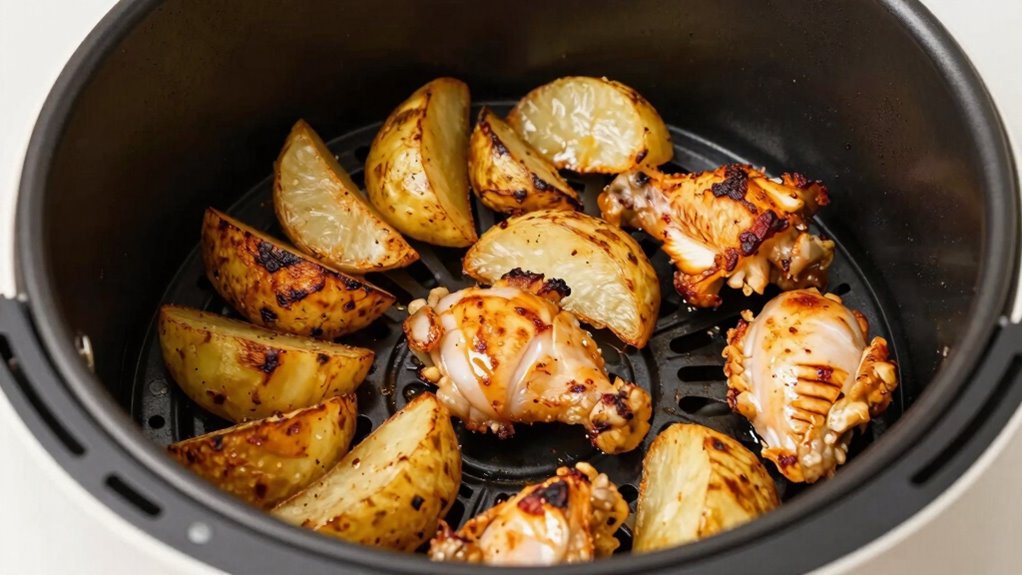
Once you’ve identified where hot spots are in your air fryer, adjusting your cooking approach can help achieve more even results. To do this, focus on improving air circulation and balancing cooking zones. Rotate or rearrange food during cooking to prevent hot spots from overcooking one area. Use a rack or tray to shift items between different zones. Additionally, consider lowering cooking times or temperatures slightly if certain zones tend to overheat. Proper airflow helps distribute heat evenly, reducing uneven cooking. Being aware of hot spot detection techniques can further enhance your ability to manage heat distribution. For example, understanding how airflow patterns influence heat zones can make your adjustments more effective. Recognizing heat source locations within your air fryer can also help in planning your cooking strategy. Moreover, regular cleaning of your air fryer can prevent obstructions that disrupt airflow and create hot spots. Implementing sensor technology can provide real-time feedback on temperature variations, allowing for more precise adjustments. Here’s a quick guide:
| Action | Purpose | Tip |
|---|---|---|
| Rotate food mid-cook | Minimize hot spots | Turn items to different zones |
| Rearrange items | Balance heat distribution | Shift food between zones |
| Use a rack or tray | Enhance air circulation | Elevate food for even cooking |
How to Keep Your Air Fryer Performing Well for Even Results?

Regularly cleaning your air fryer is essential for maintaining even cooking results. Proper air fryer maintenance prevents buildup that can cause hot spots and uneven heating. To keep your appliance performing well, follow these steps:
- Remove and wash the basket and tray with warm, soapy water to remove residue.
- Wipe down the interior with a damp cloth to eliminate grease and crumbs.
- Season the basket periodically with a light coat of oil to enhance airflow and prevent sticking.
- Check the heating element for dust or debris, and clean gently if needed.
- Incorporate essential oils into your cleaning routine to help reduce lingering odors and keep your air fryer smelling fresh. Additionally, inspecting the heating element regularly ensures any buildup is addressed before it impacts performance. Understanding hot spots can also help you identify areas that need more frequent cleaning or repositioning of food to promote even cooking. Using a smart temperature probe can assist in monitoring heat distribution and further optimize cooking results.
- Be aware that airflow obstructions can contribute to uneven heating, so keeping vents clear is important for performance.
Consistently following these maintenance tips ensures your air fryer heats evenly, prolongs its lifespan, and keeps your meals perfectly cooked every time. Proper seasoning and cleaning are key to peak performance.
Frequently Asked Questions
Can Hot Spots Vary Between Different Brands of Air Fryers?
Yes, hot spots can vary between different brands of air fryers because of brand variations in design and heat distribution. Some models may have more even heat circulation, while others develop hot spots more quickly. To find your air fryer’s hot spots, start with a simple test like cooking items at different spots. This helps you understand how heat distributes across your specific brand and model.
How Often Should I Test for Hot Spots in My Air Fryer?
You should test for hot spots every 1-2 months, balancing your maintenance schedule with your cooking needs. While initial testing helps identify uneven heat, neglecting it can lead to inconsistent results. Regular testing is like tuning an instrument—keeping everything harmonious ensures perfect dishes. Don’t wait for problems to arise; proactive checks keep your air fryer performing at its best, turning everyday cooking into a seamless experience.
Do Air Fryer Accessories Affect the Distribution of Heat?
Yes, air fryer accessories can affect heat distribution. When you add accessories like racks or silicone mats, they can block or alter airflow, leading to uneven cooking. To guarantee proper heat distribution, choose accessories that fit well and don’t obstruct vents. Regularly check your air fryer’s hot spots to see how accessories impact cooking, and adjust placement or cooking times accordingly for even results.
Are There Specific Foods That Highlight Hot Spots More Than Others?
Certain foods, like fries or small, irregularly shaped items, highlight hot spots more than others. When you’re testing, focus on food placement and monitor cooking times closely, as hot spots can cause uneven browning or overcooking. By rotating or repositioning foods during cooking, you can identify hot spots quickly and make sure even results. This approach helps you adjust your cooking technique for better performance and consistent outcomes.
What Signs Indicate My Air Fryer Needs Professional Servicing?
If your air fryer shows signs of uneven cooking, strange noises, persistent overheating, or it won’t turn on, these are clear indicators of air fryer malfunctions needing professional inspection. You should also consider service if you notice burning smells or electrical issues. Regular maintenance can prevent costly repairs. When in doubt, consult a professional to guarantee safety and proper functioning, especially if your appliance isn’t performing as expected.
Conclusion
Did you know that over 60% of air fryer users experience uneven cooking due to hot spots? By testing and adjusting your food placement, you can make certain every meal comes out perfectly crispy and evenly cooked. Regularly monitoring your air fryer’s performance and making small tweaks helps maintain consistent results. With a little effort, you’ll enjoy delicious, evenly cooked dishes every time, turning hot spots from a problem into a thing of the past.