To use skewers safely in your air fryer, choose heat-resistant metal or soak wooden skewers for at least 30 minutes beforehand. Properly prepare and arrange skewers without overcrowding, keeping them stable and spaced for good air circulation. Always handle hot skewers with oven mitts, and let them cool before cleaning. To learn detailed tips on avoiding common mistakes and ensuring even cooking, keep exploring safe and effective techniques.
Key Takeaways
- Use heat-resistant, food-safe metal or soaked wooden skewers to prevent burning or warping during air frying.
- Ensure skewers are properly spaced and arranged parallel without touching sides for optimal airflow and even cooking.
- Always handle hot skewers with oven mitts or tongs, supporting from underneath to avoid burns or spills.
- Regularly inspect skewers for damage, and clean them thoroughly after each use to maintain safety and performance.
- Follow manufacturer guidelines for placement and rotation, and allow skewers to cool before removal to prevent injuries.
Can You Use Skewers Directly in an Air Fryer?
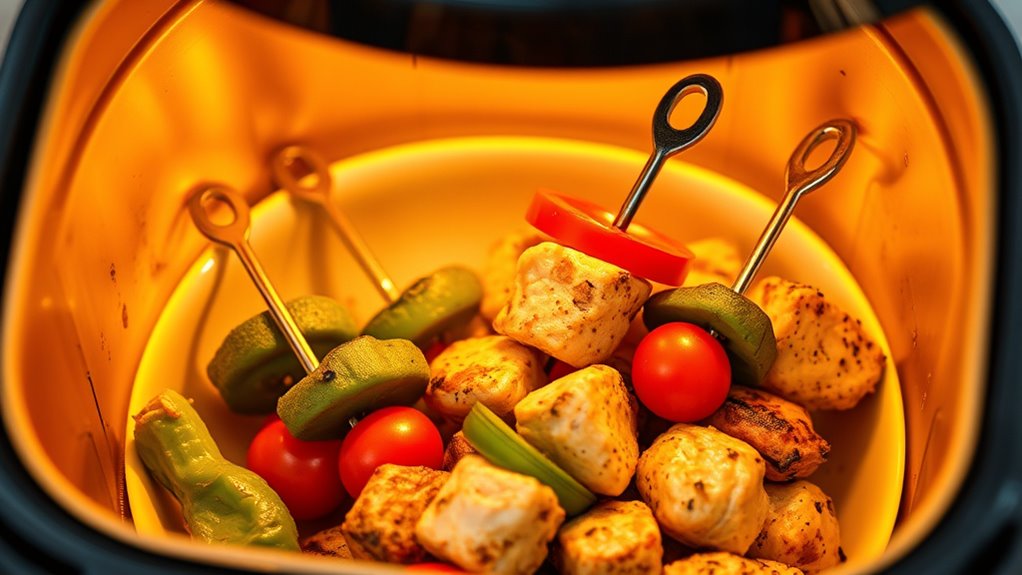
Can you use skewers directly in an air fryer? Yes, but you need to take into account skewer materials for safety. Metal skewers are ideal because they withstand high heat and are durable, making them safe for air fryer cooking. Wooden or bamboo skewers, however, require soaking in water first to prevent burning or catching fire. When using skewers, always prioritize cooking safety by avoiding overcrowding and ensuring food is securely threaded to prevent slipping. Keep in mind that some materials may warp or melt if not designed for high temperatures. Properly selecting and preparing your skewers helps prevent accidents and ensures even cooking. Additionally, understanding heat resistance of skewer materials is key to safe and successful air fryer use, especially since different materials have varying temperature tolerances. To further ensure safety, always check the manufacturer’s instructions regarding the use of skewers in your specific air fryer model. Being aware of material safety guidelines can help you choose the best skewers for your cooking needs. It is also helpful to consider air fryer capacity to prevent overcrowding that could hinder even cooking and safety.
Choosing the Right Type of Skewers for Your Air Fryer
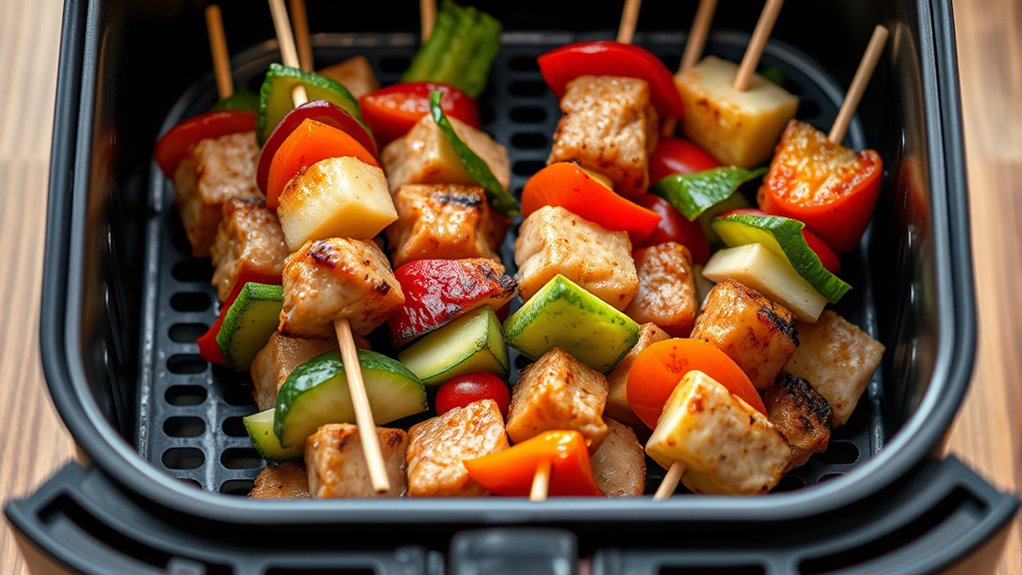
Choosing the right type of skewers for your air fryer is essential for safe and effective cooking. You want skewers made from materials with proven safety, so they won’t leach harmful chemicals into your food. Look for skewers labeled as food-safe and free from toxic coatings. Material safety is key to avoiding health risks. Additionally, select skewers with good heat resistance; they should withstand high temperatures without warping or melting. Metal skewers are usually the safest choice because they are durable and heat-resistant. Avoid plastic or wooden skewers unless specifically designed for high-heat cooking, as they may crack or emit fumes. By choosing skewers with proper material safety and heat resistance, you ensure a safer, more reliable cooking experience in your air fryer. Using heat-resistant materials can also help you prevent accidents and ensure consistent cooking results. It’s also wise to consider material durability to ensure your skewers last through many cooking sessions. Furthermore, selecting skewers with non-toxic coatings can help maintain food purity and safety during cooking. Additionally, some skewers are designed with non-stick coatings, making them easier to clean and reducing the risk of food sticking during cooking.
Preparing Skewers for Safe Air Fryer Use
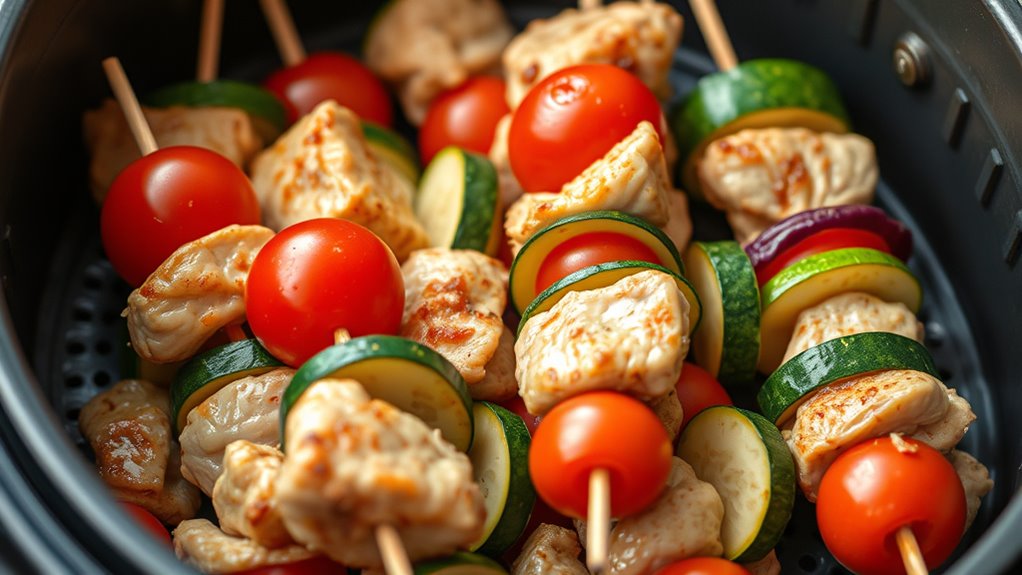
Before placing skewers in your air fryer, it’s important to prepare them properly to guarantee safety and ideal cooking results. First, choose the right skewer material—metal skewers are reusable and heat-resistant, while wooden or bamboo skewers should be soaked in water for at least 30 minutes to prevent burning. Always inspect your skewers for cracks or splinters that could cause injury or uneven cooking. Follow safety precautions by handling skewers carefully, avoiding overloading them, and ensuring ingredients are securely threaded to prevent slipping. Proper preparation minimizes the risk of accidents and ensures even heat distribution. Additionally, stove safety standards should be considered when operating any cooking appliance to prevent fire hazards. Using appropriate essential oils such as eucalyptus or lavender in your kitchen can also help maintain a safe and pleasant cooking environment. Incorporating knowledge of cooking safety and fire prevention can help prevent accidents and ensure your skewers are cooked evenly and safely. Taking these steps helps you enjoy delicious, safely cooked skewers without worry.
Proper Placement of Skewers Inside the Air Fryer
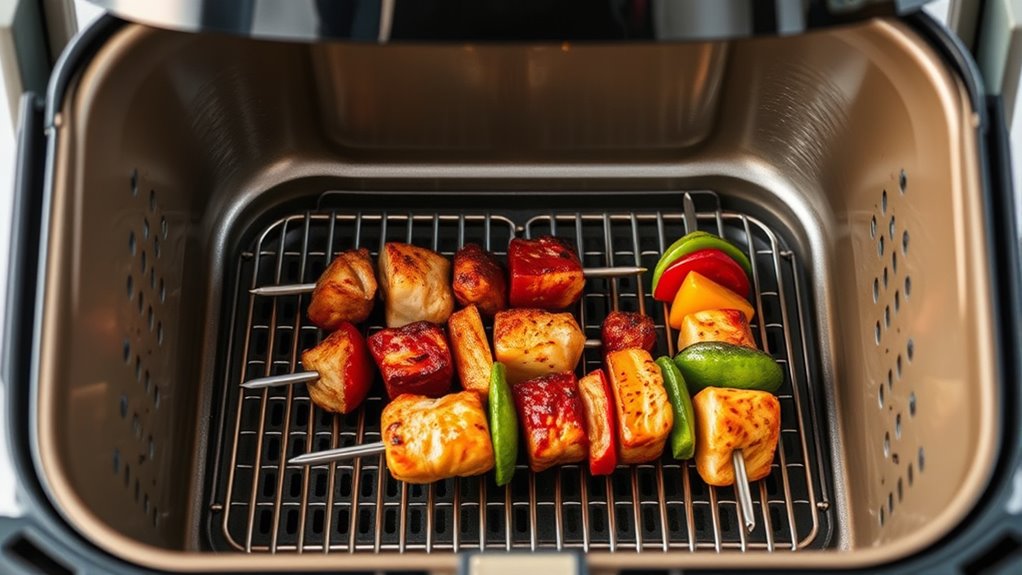
To guarantee even cooking and prevent accidents, you should carefully position your skewers inside the air fryer. Make sure the skewers are arranged so they don’t touch the sides or overlap, allowing hot air to circulate freely. Use the right skewer materials—metal or bamboo—making certain they’re sturdy and safe for air fryer use, as some materials can melt or catch fire. Place the skewers parallel to the basket’s sides, leaving space between each for even heat exposure. Here’s a quick guide:
| Positioning Tip | Material Consideration | Air fryer safety tip |
|---|---|---|
| Keep skewers spaced evenly | Metal or bamboo skewers | Avoid overcrowding |
| Don’t let skewers touch sides | Heat-resistant materials | Prevent skewers from melting |
| Arrange vertically or horizontally | Use sturdy skewers | Ensure stability during cooking |
Additionally, selecting appropriate skewer materials can help prevent safety hazards during air frying. For optimal results, consider the air circulation within your appliance to ensure all sides of the food are cooked evenly.
Tips for Preventing Skewers From Burning or Melting
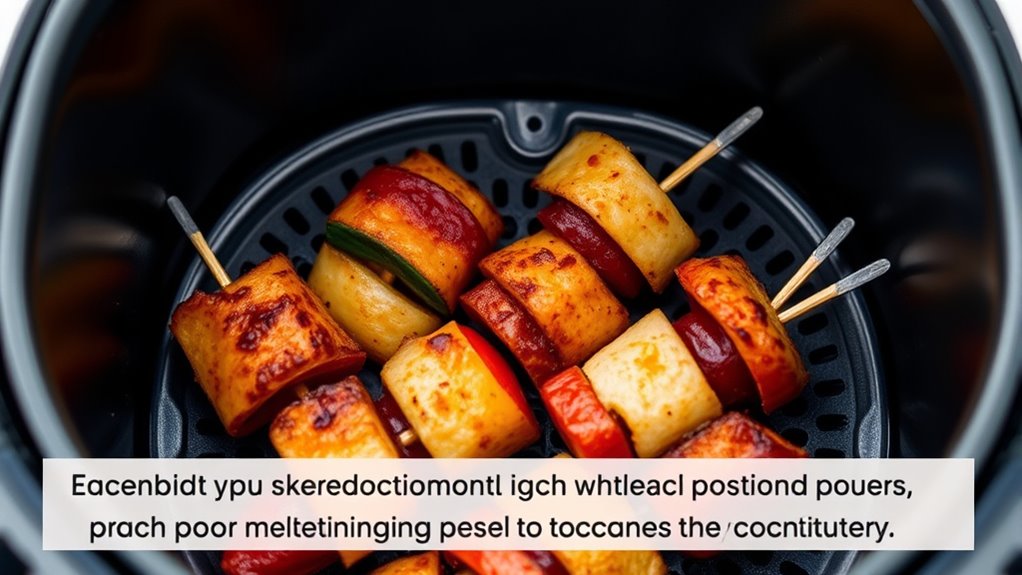
To prevent your skewers from burning or melting, start by choosing heat-resistant ones designed for high temperatures. Make certain you arrange the skewers properly on the tray, leaving space between them for even cooking. These simple steps will help you avoid damage and ensure a safe, delicious meal.
Choose Heat-Resistant Skewers
Choosing heat-resistant skewers is vital for safe and successful air fryer cooking. The skewer material plays an essential role in preventing melting or burning. Look for skewers made from metal, bamboo, or silicone, as these materials have high heat resistance. Metal skewers are durable and can withstand high temperatures without warping, while bamboo skewers with a heat-resistant coating are a good disposable option. Silicone skewers also offer excellent heat resistance and flexibility. Avoid skewers made from plastic or low-quality wood, as they can melt or catch fire. Selecting the right material guarantees your skewers hold up during cooking, reducing the risk of accidents and making cleanup easier. Proper material selection is crucial to ensure the longevity of your skewers and the safety of your cooking process. Additionally, choosing skewers with high thermal stability ensures they maintain integrity even at elevated temperatures, preventing potential hazards. It is also important to consider food safety standards to ensure the materials used are free from harmful chemicals that could leach into your food. Regularly inspect skewers for signs of wear or damage before use to maintain safety.
Properly Arrange on Tray
Arranging skewers properly on the air fryer tray is essential to prevent them from burning or melting during cooking. To guarantee even cooking, space your skewers so that heat circulates freely, avoiding overcrowding. Consider the skewer shapes—long, flat, or round—and place them accordingly to prevent contact with the heating element. For marinades with strong flavors, avoid dripping onto the heating element, which can cause smoke or flare-ups. Use a wire rack if available, elevating skewers for better air circulation. Keep thicker pieces on the outer edges where heat is more intense. Here’s a quick guide:
| Skewer Shape | Placement Tip | Marinade Consideration |
|---|---|---|
| Round | Keep distance | Avoid dripping onto heating element |
| Flat | Lay flat evenly | Prevent uneven browning |
| Long | Spread apart | Ensure even heat exposure |
| Short | Space out | Prevent overcrowding |
| Curved | Position upright | Maintain stability |
Additionally, paying attention to vegetable juices can help ensure your ingredients stay moist and cook evenly without excessive drying.
Handling and Removing Skewers Safely After Cooking
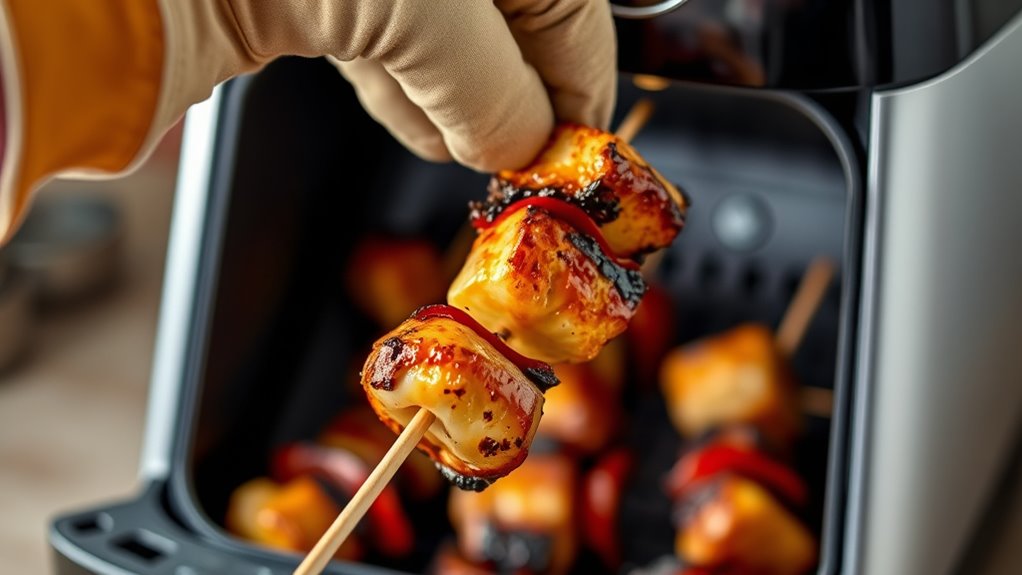
After cooking, always wear oven mitts to handle the hot skewers safely. Let the skewers cool down for a few minutes before removing them from the air fryer. Carefully extract the skewers to avoid burns or accidents.
Use Oven Mitts
Since skewers and air fryer components become very hot during cooking, it’s essential to handle them with oven mitts to prevent burns. Always wear oven mitts or heat resistant gloves when removing skewers from the air fryer. These protect your hands from the high temperatures and reduce the risk of accidental burns. When handling hot skewers, grip firmly but carefully to avoid slipping or dropping them. Use oven mitts that are thick and heat resistant, ensuring they cover your hands completely. Take your time to lift and transfer the skewers safely. Never attempt to handle hot skewers with bare hands, as the intense heat can cause serious injuries. Prioritizing safety helps you enjoy cooking without risking burns or accidents.
Let Skewers Cool
Once you’ve removed the skewers from the air fryer, give them a few minutes to cool down before handling further. The skewer material affects how quickly they cool—metal skewers heat up faster and retain heat longer, so patience is key. Use cooling techniques like placing skewers on a heat-resistant surface or a wire rack to prevent heat transfer to your countertops. If you’re using wooden or bamboo skewers, they tend to cool faster, but still wait until they’re comfortable to touch. Always handle skewers with care, especially if they’re still warm, to avoid burns. Allowing proper cooling helps you safely remove cooked food and prevents accidents. Remember, patience ensures safety and keeps your kitchen accident-free.
Carefully Remove Skewers
Handling skewers carefully is essential to prevent burns and accidents. When removing skewers from the air fryer, use heat-resistant gloves or tongs to avoid direct contact with hot surfaces. Be mindful of the sharp tips to prevent punctures or injuries. Always support the skewer from underneath to keep it steady and avoid spilling food.
- Use tongs or heat-resistant gloves to grab the skewers securely
- Support the skewer from underneath to prevent dropping or spilling
- Watch out for sharp tips to avoid punctures or injuries
These handling tips promote skewer safety and ensure you remove cooked food safely. Taking your time and staying cautious helps prevent accidents and keeps your cooking experience safe and enjoyable.
Cleaning and Maintenance of Your Air Fryer After Using Skewers
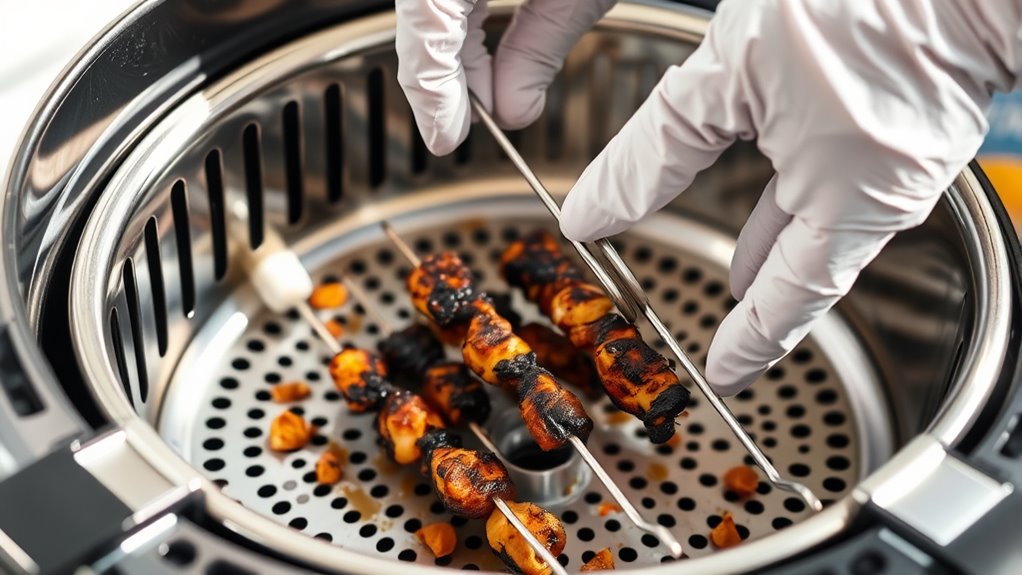
After using skewers in your air fryer, it’s important to clean it thoroughly to prevent residue buildup and guarantee peak performance. The type of skewer material affects cleaning—metal skewers are typically dishwasher safe, while bamboo or wood skewers should be soaked and washed by hand. Regular cleaning is essential, so establish a cleaning frequency based on how often you cook with skewers. After cooking, remove any leftover food and wipe down the interior with a damp cloth or sponge. Detach and wash removable parts, like the basket and tray, with warm, soapy water. Avoid abrasive scrubbing to prevent damage. Proper maintenance ensures your air fryer stays in top condition, prolongs its lifespan, and keeps your skewers and food safe for future use.
Common Mistakes to Avoid When Using Skewers in an Air Fryer
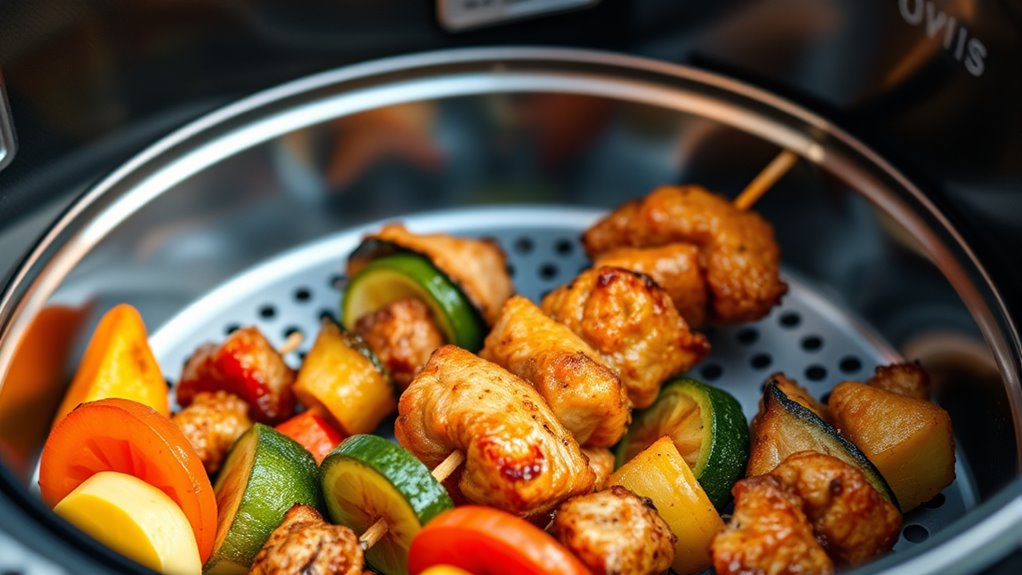
One common mistake is overcrowding your skewers, which can prevent even cooking and cause safety issues. Another is not securing the food properly on the skewers, risking ingredients falling into the air fryer’s heating element. Paying attention to these details helps make certain safe and successful grilling in your air fryer.
Overcrowding the Skewers
Overcrowding the skewers can lead to uneven cooking and prevent proper airflow in your air fryer. When stacking too many items or placing them too close together, heat can’t circulate evenly, resulting in undercooked sections. Pay attention to the skewer materials, as some materials conduct heat differently, affecting cooking times. Additionally, using skewers that are too long may block airflow or touch the sides of the air fryer, disrupting heat distribution. To avoid this, leave space between skewers and avoid overloading. Keep in mind that:
- Proper spacing allows hot air to circulate freely around each skewer
- Using the right skewer length prevents touching the sides of the air fryer
- Choosing appropriate materials, like bamboo or metal, impacts heat transfer and safety
Avoid overcrowding for evenly cooked, safe results.
Not Securing Properly
If skewers aren’t secured properly, they can spin or shift during cooking, leading to unevenly cooked food or even falling into the air fryer. Proper securing is essential for maintaining skewer stability and ensuring safety. Without it, you risk hot food spilling or skewers breaking apart. To avoid this, double-check that your ingredients are snugly fitted on the skewer before cooking. Use a method to prevent rotation, like pinching the ends or using a second skewer for support. Remember, stability is key.
| Skewer Stability | Proper Securing Tips |
|---|---|
| Prevents shifting | Tighten ingredients firmly |
| Ensures even cooking | Use supports or double skewers |
| Avoids accidents | Check secure placement before cooking |
Alternative Methods for Grilling With Skewers in Small Appliances
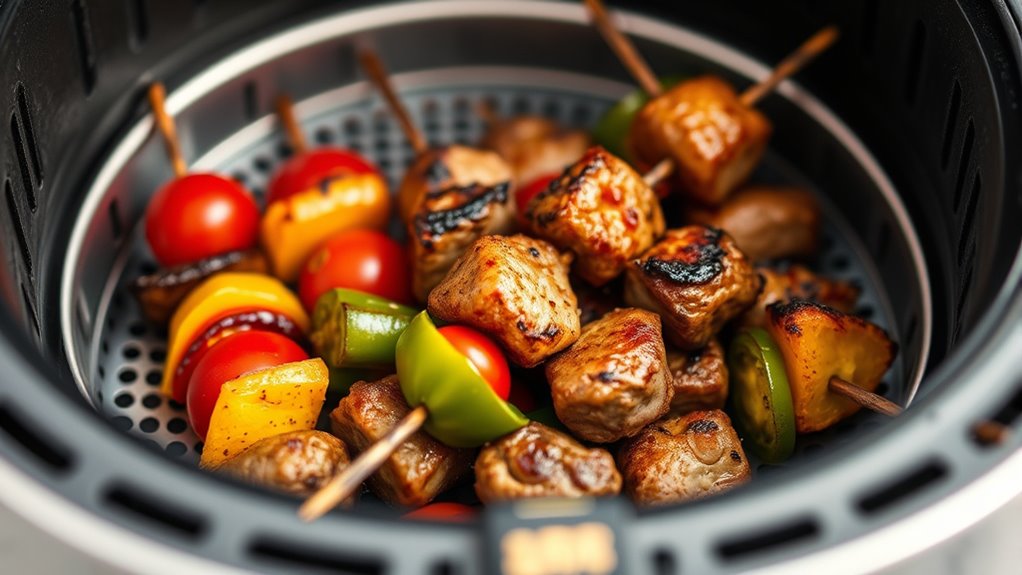
When using an air fryer for grilling skewers, traditional methods like placing them directly on the basket can sometimes be limiting. To explore alternative grilling options, consider using a grill rack or skewers with built-in handles for better skewer storage. This keeps your skewers stable and prevents them from slipping or burning. You might also use a silicone mat or foil to catch drips and promote even heat distribution. These methods help you avoid overcrowding and ensure better airflow around the food. For a more versatile approach, try a small baking pan or broiler rack that fits inside your appliance. These alternatives make grilling with skewers safer, more efficient, and allow for more control over the cooking process.
Ensuring Even Cooking When Using Skewers in Your Air Fryer
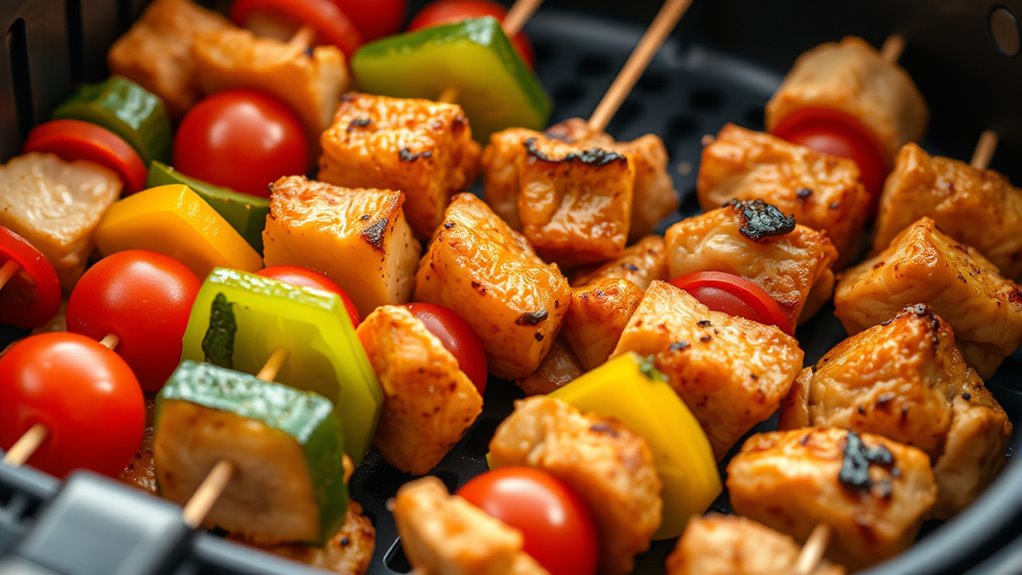
To make certain of even cooking when using skewers in your air fryer, it’s important to arrange your ingredients with space between them. Proper spacing allows hot air to circulate evenly around each piece, preventing undercooked or overcooked spots. Use the right skewer materials, like stainless steel or bamboo, ensuring they’re sturdy and heat-safe. Avoid thin or flimsy skewers that might bend or burn. When placing skewers in your air fryer, follow safety precautions by not overcrowding the basket and checking that the skewers aren’t touching the heating element. Rotating skewers halfway through cooking helps promote uniform heat distribution. Taking these steps ensures your ingredients cook evenly while maintaining safety and preventing potential accidents.
Frequently Asked Questions
Can Metal Skewers Damage the Air Fryer Basket?
Metal skewers can potentially damage your air fryer basket if they’re too thin or have sharp edges, so it’s vital to take into account skewer material and safety considerations. Use sturdy, flat metal skewers designed for grilling, and avoid those with pointed ends that might scratch or puncture the basket. Always check your air fryer’s manual for specific recommendations, and handle skewers carefully to prevent damage and ensure safe cooking.
Are Bamboo Skewers Safe to Use in an Air Fryer?
Bamboo skewer safety is a common concern when using them in an air fryer. They are generally safe if they are soaked in water for at least 30 minutes before use, which prevents burning or catching fire. Bamboo skewer compatibility with air fryers depends on proper preparation; guarantee they don’t touch heating elements. Always monitor your cooking, and avoid overloading the basket for safe, effective results.
How Long Should Skewers Be Soaked Before Air Frying?
For safe skewer soaking, you should soak bamboo skewers for the recommended duration of at least 30 minutes before air frying. This prevents them from catching fire or burning during cooking. You can extend soaking up to 2 hours if desired. Just make certain you submerge the skewers completely in water, as this helps maintain their integrity and prevents any safety hazards while you prepare your delicious meal.
Can I Use Plastic or Disposable Skewers in an Air Fryer?
You should avoid using plastic or disposable skewers in an air fryer because their material isn’t designed for high heat, compromising cooking safety. Plastic skewers can melt, releasing harmful chemicals, and even disposable wooden skewers may catch fire if not suitable for high temperatures. Always opt for metal skewers or those specifically labeled safe for air frying to guarantee safe cooking and prevent accidents.
What Safety Precautions Should I Take When Handling Hot Skewers?
Handle hot skewers carefully, keeping your hands away from sharp skewer tips. Use tongs or heat-resistant gloves to grab and guide skewers, preventing burns and punctures. Be mindful of sizzling surfaces and splattering juices that could cause spills or scalds. Stay steady, avoid sudden movements, and always set skewers down on heat-safe surfaces. Practicing patience and precision helps protect you from pain and potential accidents.
Conclusion
Using skewers in your air fryer can be easy and safe if you follow the right steps. Just remember, preparation is key—think of it as a well-oiled machine. Keep an eye on your skewers to prevent burning, and always place them properly inside. With a little care, you’ll be able to grill up delicious treats without any hiccups. It’s all about playing it safe and keeping everything running smoothly—like clockwork.