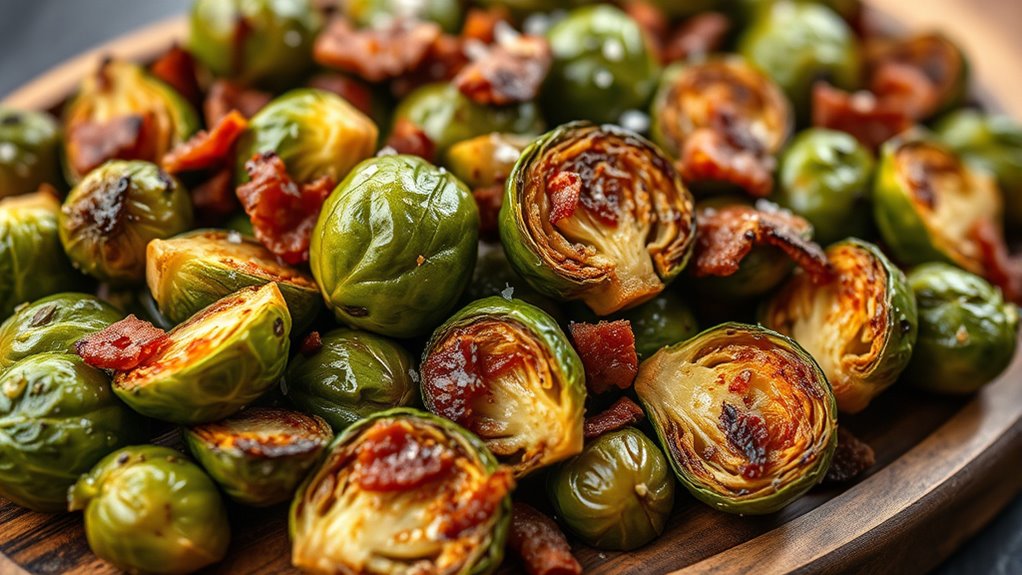

To craft restaurant-quality Brussels sprouts, start by selecting firm, vibrant green heads without blemishes. Clean and trim them evenly, then roast at 400°F for crispy edges or sauté with garlic, herbs, or seasonings for tender flavor. Balance sweet and savory elements like honey or balsamic, and finish with elegant garnishes such as nuts or herbs. Proper temperature control and beautiful presentation elevate your dish. Keep exploring for tips to perfect every step.
Key Takeaways
- Select firm, uniform, freshly harvested Brussels sprouts with vibrant green leaves for optimal flavor and texture.
- Roast at 400°F with oil and seasonings until edges are crispy and caramelized for depth of flavor.
- Incorporate aromatics like garlic, lemon zest, or herbs during sautéing to enhance fragrance and taste.
- Use natural sweeteners such as honey or maple syrup to add caramelization and complex flavor layers.
- Finish with creative garnishes like toasted nuts, fresh herbs, or balsamic glaze for visual appeal and flavor enhancement.
Selecting Fresh Brussels Sprouts for Maximum Flavor

To guarantee your Brussels sprouts are bursting with flavor, start by selecting fresh, vibrant ones. Look for firm, tight heads with bright green leaves and no yellowing or wilting. Fresh sprouts often have a slightly sweet aroma; avoid any that smell sour or off. For ideal flavor pairing, choose sprouts that are uniform in size to ensure even cooking. Proper storage techniques are essential to maintain their freshness—keep them unwashed in a breathable bag or container in the refrigerator’s crisper drawer. Use them within a week for maximum flavor and texture. When selecting, trust your senses: firm texture, bright color, and no blemishes indicate the highest quality sprouts, setting a solid foundation for delicious dishes. Additionally, choosing sprouts free from disease or pest damage ensures you get the best flavor and quality.
Preparing Brussels Sprouts: Cleaning and Cutting Techniques

Before you start cooking, you need to properly clean and cut your Brussels sprouts. Use proper washing techniques to remove dirt and any blemishes, then trim the stem ends and halve or quarter them as needed. Mastering these steps guarantees your sprouts are fresh, even, and ready for the perfect dish. For optimal results, consider tracking your intake to ensure you maintain a balanced diet while preparing tasty vegetables.
Selecting Fresh Sprouts
When selecting fresh Brussels sprouts, look for firm, compact heads with vibrant green leaves and no signs of discoloration or wilting. Your goal is to choose sprouts that reflect proper harvesting techniques, which guarantee freshness and flavor. Opt for sprout varieties known for their uniform size and tender texture, as these will cook more evenly. Avoid sprouts with loose leaves, yellowing, or blemishes, indicating age or poor storage. Freshness is key to achieving restaurant-quality results, so inspect each sprout carefully. By selecting the right sprout varieties and paying attention to the signs of freshness, you set a solid foundation for preparing delicious, tender Brussels sprouts. This mindful choice enhances both flavor and presentation in your dish.
Proper Washing Techniques
Ensuring your Brussels sprouts are thoroughly cleaned is essential for both safety and flavor. Proper washing techniques remove dirt, bacteria, and pesticide residues, supporting good food safety and maintaining kitchen hygiene. Start by placing the sprouts in a large bowl or sink filled with cold water. Gently agitate them to loosen any dirt or debris. For extra cleanliness, you can add a splash of vinegar or a vegetable wash solution, then rinse thoroughly under cold running water. Pay special attention to the crevices where dirt can hide. Avoid soaking too long, as this can lead to spoilage. Once clean, drain well and pat dry with a clean towel or paper towels. Adopting these steps ensures your Brussels sprouts are safe to eat and ready for the next stage of preparation.
Cutting and Trimming Methods
Once your Brussels sprouts are thoroughly cleaned, it’s time to prepare them for cooking by cutting and trimming. Start by placing each sprout on a stable cutting board. Use a sharp knife, practicing good knife safety to prevent accidents. Trim off the stem end, removing the tough outer layer if needed, and then cut the sprouts in half or quarters, depending on your recipe. For uniform cooking, aim for consistent sizes. When trimming, avoid excessive waste by carefully removing any damaged or brown leaves. Always keep your fingers tucked back and use controlled motions to ensure safety. Proper trimming techniques not only improve presentation but also help them cook evenly, resulting in restaurant-quality Brussels sprouts every time. Additionally, ensuring the size and shape of the cuts is consistent can significantly improve overall cooking performance and visual appeal.
The Perfect Roasting Method for Crispy, Caramelized Sprouts

To achieve perfectly crispy, caramelized Brussels sprouts, you need to master the roasting technique that brings out their natural sweetness and texture. Start by preheating your oven to 400°F (200°C) and tossing the sprouts with oil, salt, and pepper. Spread them in a single layer on a baking sheet, ensuring space for even roasting. Seasonal variations can influence flavor; in winter, sprouts tend to be sweeter, so you might reduce added sweeteners. For dietary considerations, use heart-healthy oils like olive or avocado and limit salt for low-sodium diets. Roast for 20-25 minutes, flipping halfway, until edges are browned and crispy. This method highlights their caramelization, making them irresistibly flavorful while incorporating natural ingredients and accommodating seasonal and dietary needs.
Sautéing Brussels Sprouts for a Tender and Flavorful Result

After roasting brings out a crispy, caramelized exterior, sautéing offers a different way to enjoy Brussels sprouts with a tender interior and vibrant flavor. To achieve this, heat a skillet over medium-high heat, then add oil. When the oil shimmers, toss in halved or sliced sprouts, stirring frequently. Use seasoning blends like garlic, lemon zest, or smoked paprika to enhance flavor. Proper plating techniques—arranging sprouts attractively and adding a finishing drizzle—elevate presentation. Visualize this process with the table below:
| Step | Action |
|---|---|
| 1 | Heat oil in a skillet |
| 2 | Add Brussels sprouts and sauté |
| 3 | Season with blends and herbs |
| 4 | Stir until tender and caramelized |
| 5 | Plate with garnishes for appeal |
This method guarantees tender, flavorful Brussels sprouts that shine on any plate, especially when attention is paid to proper presentation.
Enhancing Taste With Delicious Seasonings and Aromatics

Enhancing the flavor of Brussels sprouts begins with choosing the right seasonings and aromatics. Ginger spices add a warm, zesty kick that complements their natural earthiness, making each bite more vibrant. Fresh herbs like thyme, rosemary, or parsley bring brightness and depth, elevating the dish’s aroma and flavor profile. Aromatics such as garlic, shallots, or lemon zest create a fragrant base that enhances the sprouts’ natural taste. Don’t be afraid to experiment with different combinations—adding a pinch of cumin or a splash of balsamic vinegar can also make a big difference. The key is balancing these seasonings so they complement, rather than overpower, the sprouts’ natural flavor. Incorporating essential oils like lemon or peppermint in small quantities can also add a subtle aromatic layer to your dish. With thoughtful seasoning, your Brussels sprouts become truly restaurant-quality.
Incorporating Sweet and Savory Elements for Depth
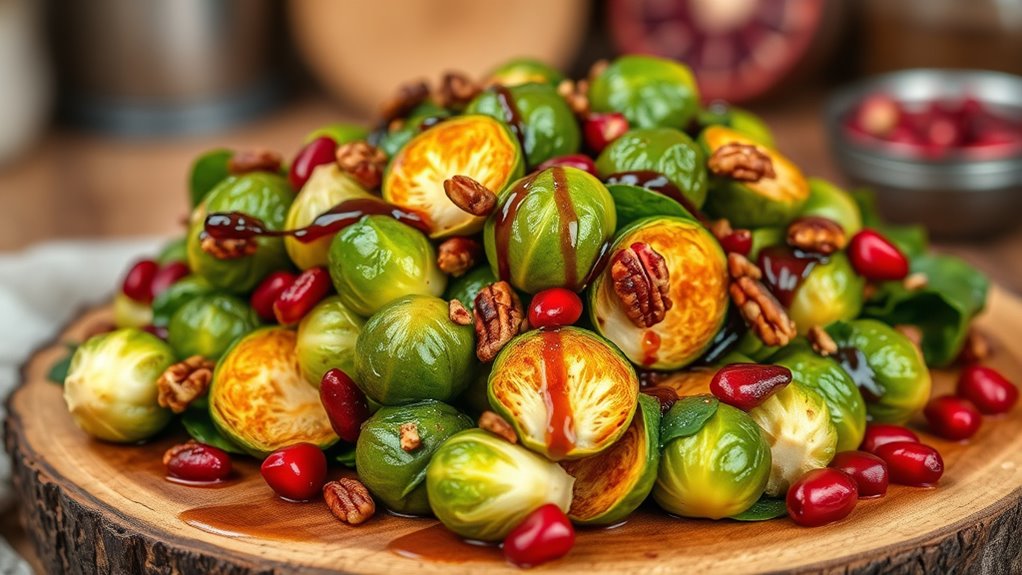
To add depth to your Brussels sprouts, balancing sweet and savory flavors is key. Natural sweeteners like honey or maple syrup can enhance their richness without overpowering. By carefully adjusting these elements, you create a well-rounded dish that excites the palate. Incorporating customer engagement techniques, such as asking for feedback on flavor balance, can also help refine your recipe over time.
Balancing Flavors Effectively
Balancing flavors effectively involves combining sweet and savory elements in a way that enhances the natural nuttiness of Brussels sprouts. To achieve this, use well-crafted seasoning blends that complement their earthy profile without overpowering it. A touch of honey or balsamic vinegar can add subtle sweetness, while savory ingredients like garlic, bacon, or Parmesan introduce depth. When plating, consider contrast—pair crispy sprouts with bright, tangy sauces or drizzle for visual appeal and flavor balance. Proper plating techniques help highlight the different flavor layers, ensuring each bite offers harmony. Taste as you go, adjusting seasonings to find the perfect balance. Incorporating flavor balance is essential to creating a dish where sweet and savory components elevate the sprouts’ natural qualities, delivering a restaurant-quality experience.
Using Natural Sweeteners
Have you ever considered how natural sweeteners can deepen the flavor profile of Brussels sprouts? Using natural sweeteners like honey, maple syrup, or agave provides subtle flavor enhancement that balances the vegetable’s natural bitterness. When added thoughtfully, these sweeteners introduce a layer of complexity, making your dish more appealing. A drizzle of honey during roasting caramelizes slightly, creating a rich, savory-sweet contrast. Maple syrup offers a smoky, earthy note that complements the sprouts’ natural flavors. Incorporating natural sweeteners doesn’t overpower; instead, it elevates the dish by adding depth and harmony. Experimenting with small amounts allows you to achieve the perfect blend of sweet and savory, transforming ordinary Brussels sprouts into a restaurant-quality side. Understanding flavor balancing can help you refine the overall taste and ensure the sweetness enhances rather than masks the natural vegetable notes.
Achieving Even Cooking With Proper Temperature Control

Achieving even cooking with Brussels sprouts depends heavily on maintaining the right temperature throughout the process. Consistent cooking temperature ensures heat distribution is uniform, preventing burnt edges or undercooked centers. To do this, monitor your oven or stovetop carefully, adjusting heat levels as needed. When roasting, set your oven to a moderate temperature—around 400°F (200°C)—to promote even caramelization. If sautéing or pan-frying, keep the heat medium to avoid hot spots. Stir or shake the sprouts regularly to distribute heat evenly. Using a reliable thermometer can help you sustain precise cooking temperature, resulting in sprouts that are tender inside and crisp outside. Proper heat management guarantees your Brussels sprouts cook uniformly, elevating their texture and flavor to restaurant-quality standards. Additionally, understanding the importance of consistent heat levels can help you achieve more predictable and delicious results.
Creative Garnishes and Finishing Touches to Elevate the Dish
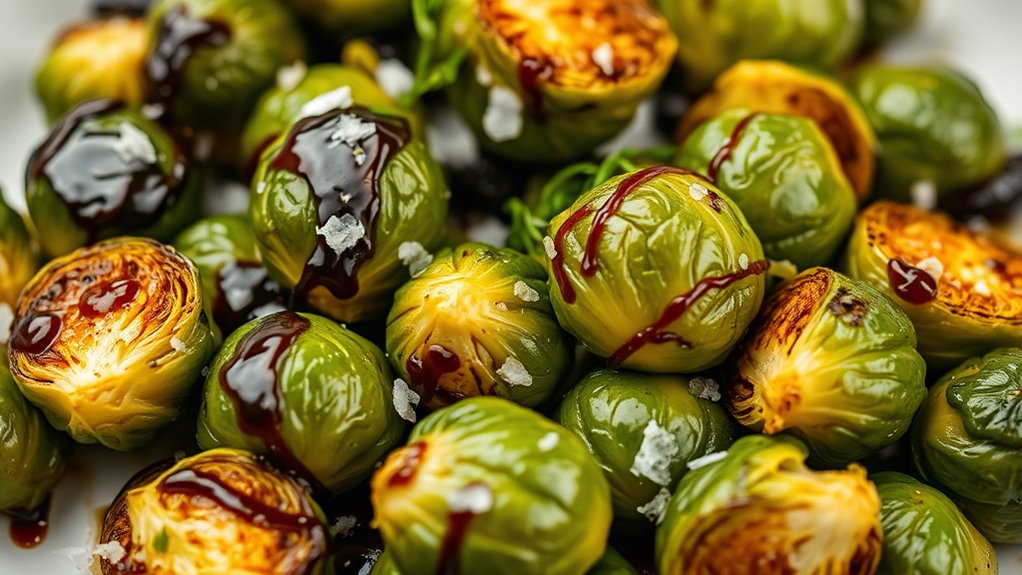
Once your Brussels sprouts are perfectly cooked, the final step is to add creative garnishes and finishing touches that make the dish visually appealing and bursting with flavor. Consider garnish ideas like a sprinkle of toasted nuts, freshly chopped herbs such as parsley or thyme, or a drizzle of balsamic glaze for sweetness and shine. Use plating techniques to arrange the sprouts attractively—place them on a clean plate and add height with a few strategically stacked sprouts. Drizzle sauces artfully around the dish or on top for added color and flavor contrast. A final dusting of flaky sea salt or a squeeze of lemon can enhance taste and presentation. These finishing touches elevate your dish, making it look as good as it tastes.
Pairing Brussels Sprouts With Complementary Ingredients and Proteins
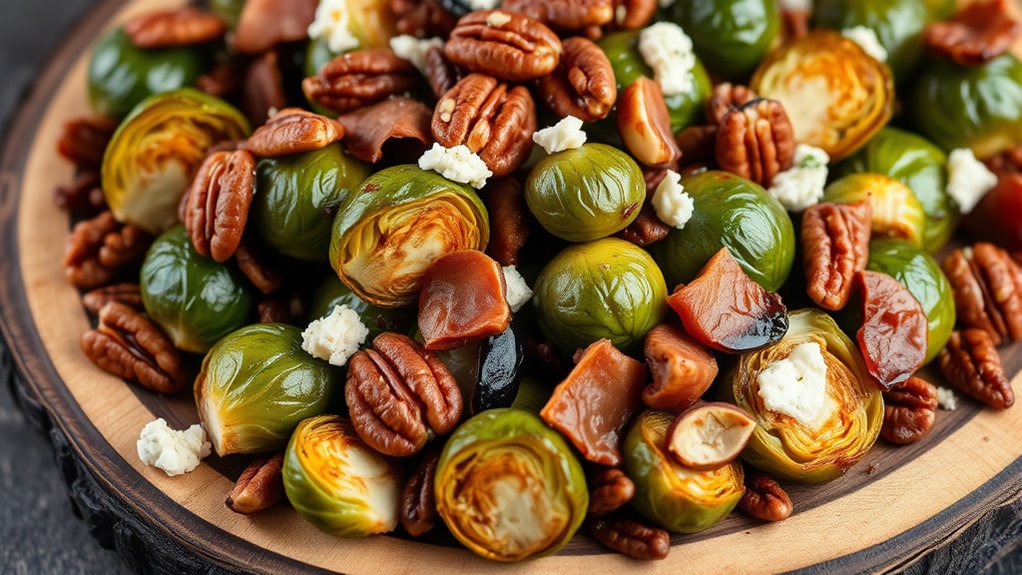
Pairing Brussels sprouts with the right ingredients can elevate their flavor and make your dish truly restaurant‑quality. Savory meats like bacon or pancetta add richness, while bright citrus accents bring freshness. Nutty cheeses and toasted nuts can also add depth and crunch to complete the plate.
Savory Meat Pairings
Brussels sprouts naturally complement savory meats, making them a versatile side or ingredient in hearty dishes. When pairing, consider seasonal variations; roasted Brussels sprouts work beautifully with winter meats like pork or ham, while grilled sprouts pair well with summer steaks. You can also tailor meat choices to dietary modifications—turkey or chicken are excellent lean options, while beef or lamb add richness. Incorporate bacon or pancetta for added depth and saltiness, enhancing the sprouts’ natural earthiness. These combinations create balanced, satisfying meals that highlight the sprouts’ savory qualities. Keep in mind that adjusting seasonings and cooking methods based on the meat choice helps elevate your dish, ensuring it aligns with both flavor profiles and dietary needs.
Bright Citrus Accents
Bright citrus accents can elevate the natural earthiness of Brussels sprouts by adding a lively, invigorating contrast. Incorporate citrus zest to introduce aromatic brightness that enhances the sprouts’ flavor without overpowering them. A squeeze of lemon juice adds a tangy sharpness that balances the slight bitterness and brings out their freshness. Use lemon juice sparingly to avoid overpowering the dish, and add citrus zest at the end for maximum aroma. These bright accents work well with proteins like chicken, fish, or pork, creating a harmonious flavor profile. The acidity from lemon juice also helps tenderize the sprouts slightly, making them more appealing. Overall, citrus zest and lemon juice provide a simple yet effective way to brighten your Brussels sprouts and brighten the entire dish.
Nutty and Cheesy Additions
Adding nutty and cheesy elements can transform Brussels sprouts into a rich, satisfying side dish. A nutty flavor from toasted nuts or seeds enhances their earthy taste, creating a warm, inviting profile. Drizzle with cheesy toppings like Parmesan, Gruyère, or crumbled feta to add creaminess and depth. These additions complement the sprouts’ natural bitterness and bring a luxurious feel to the dish. For an extra layer of flavor, consider mixing in chopped toasted almonds or hazelnuts. The cheese not only adds richness but also helps bind ingredients together, elevating the presentation. When paired thoughtfully with proteins like bacon or pancetta, the nutty and cheesy components create a harmonious, restaurant-quality dish that’s both flavorful and satisfying.
Presentation Tips for a Restaurant-Quality Plating Effect
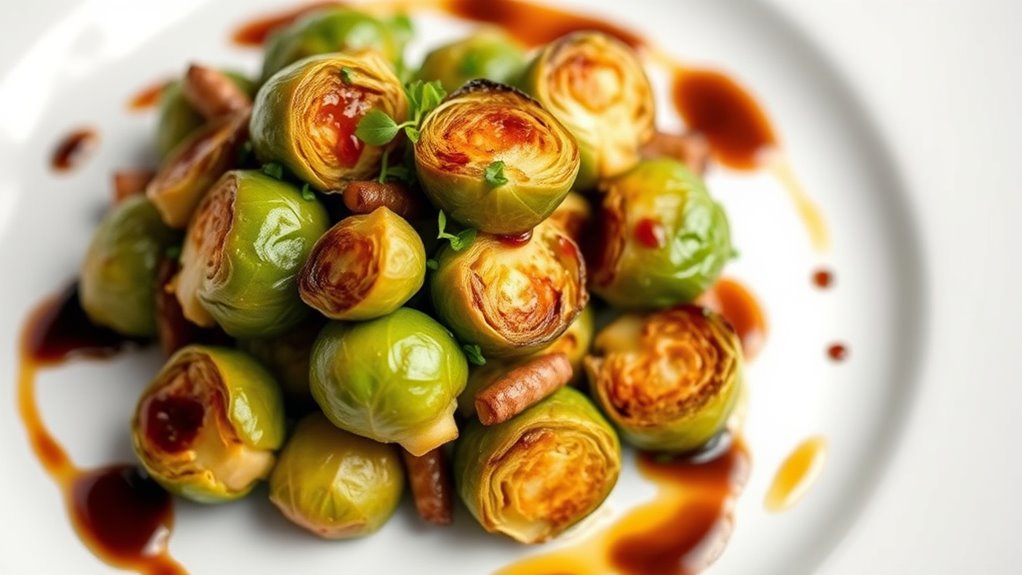
To achieve a restaurant-quality plating effect, focus on arranging your Brussels sprouts thoughtfully and purposefully. Start by placing them in a slight mound or fan shape on your plate, allowing space for visual balance. Drizzle a balsamic glaze over the sprouts for a glossy finish and added flavor contrast. Incorporate herb infusions by sprinkling finely chopped herbs like thyme or parsley around or atop the dish, enhancing both color and aroma. Use tweezers or a small spoon to add delicate garnishes precisely. Maintain symmetry or asymmetry intentionally, depending on your style. Clear, clean edges and minimal smudges elevate presentation. Remember, a well-plated dish invites anticipation and elevates the dining experience, making your Brussels sprouts look as tempting as they taste.
Frequently Asked Questions
How Can I Prevent Brussels Sprouts From Becoming Bitter?
To prevent Brussels sprouts from becoming bitter, focus on bitter flavor mitigation by trimming and removing any yellow or damaged leaves. You should also choose fresh sprouts to preserve sprout freshness, which naturally reduces bitterness. Blanching them briefly before roasting or sautéing can help preserve their flavor and texture. Additionally, adding a touch of sweetness, like balsamic vinegar or honey, can balance out any residual bitterness, making your sprouts delicious.
What Are Alternative Cooking Methods for Brussels Sprouts?
You can explore alternative cooking methods like sautéing techniques and roasting tips to vary your Brussels sprouts. Sautéing quickly over high heat with a bit of oil keeps them tender and flavorful, while roasting at high temperatures enhances their natural sweetness and crunch. These methods avoid bitterness, giving you versatile options to enjoy Brussels sprouts in different textures and flavors, perfect for elevating your meals beyond basic boiling or steaming.
How Do Seasonings Vary for Different Flavor Profiles?
You can vary seasonings easily by exploring different seasoning blends and flavor pairings. For a savory profile, try garlic, thyme, and Parmesan. For a spicy kick, add chili flakes or smoked paprika. For a sweet and tangy flavor, incorporate balsamic vinegar and honey. Adjust the seasoning blends based on the flavor profile you want—whether it’s bold, subtle, or complex—making your Brussels sprouts uniquely delicious every time.
Can Brussels Sprouts Be Prepared Ahead of Time?
Like a master chef preparing for a grand banquet, you can prepare Brussels sprouts ahead of time. For meal prep, roast or blanch them and store in an airtight container in the fridge. Use storage tips like reheating in a hot skillet or oven to maintain crispness. This way, you save time and guarantee your sprouts stay fresh and flavorful, ready to impress whenever you serve them.
What Are Creative Presentation Ideas for Brussels Sprouts?
You can elevate your Brussels sprouts with creative presentation ideas by experimenting with unique garnish ideas and plating techniques. Try slicing them thin for chips, stacking them in mini towers, or arranging them in a colorful spiral. Use vibrant herbs, citrus zest, or edible flowers as garnish ideas to add visual interest. Play with contrasting textures and colors on your plate, and consider serving on elegant platters or in stylish bowls for a restaurant-quality look.
Conclusion
By selecting the freshest Brussels sprouts, preparing them with care, and cooking them with attention to detail, you set the stage for a dish that impresses. By seasoning them boldly, garnishing thoughtfully, and plating beautifully, you elevate simple ingredients into a restaurant-quality experience. Embrace these techniques to master flavor, texture, and presentation—because when you focus on quality, creativity, and consistency, you create not just a meal, but a memorable culinary moment.