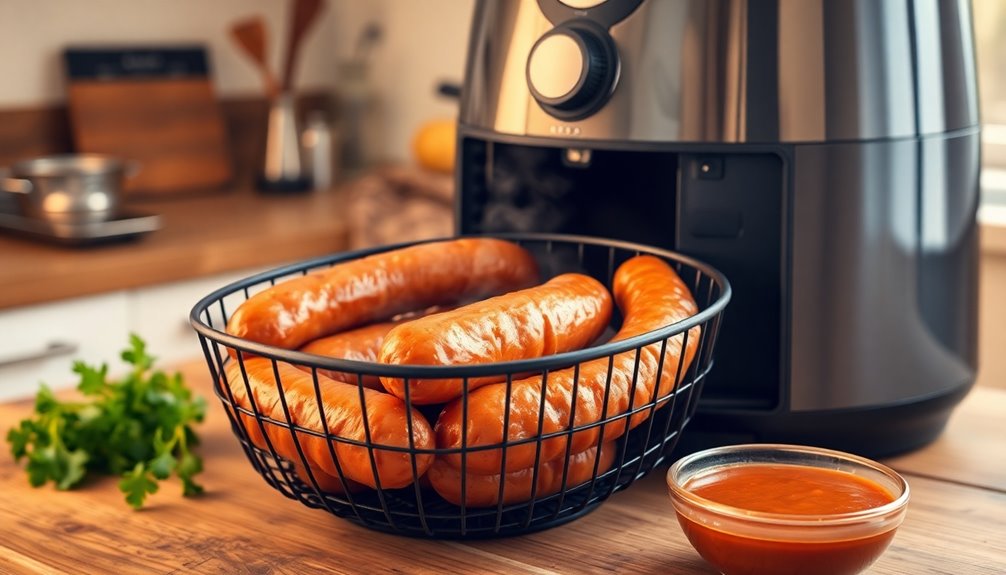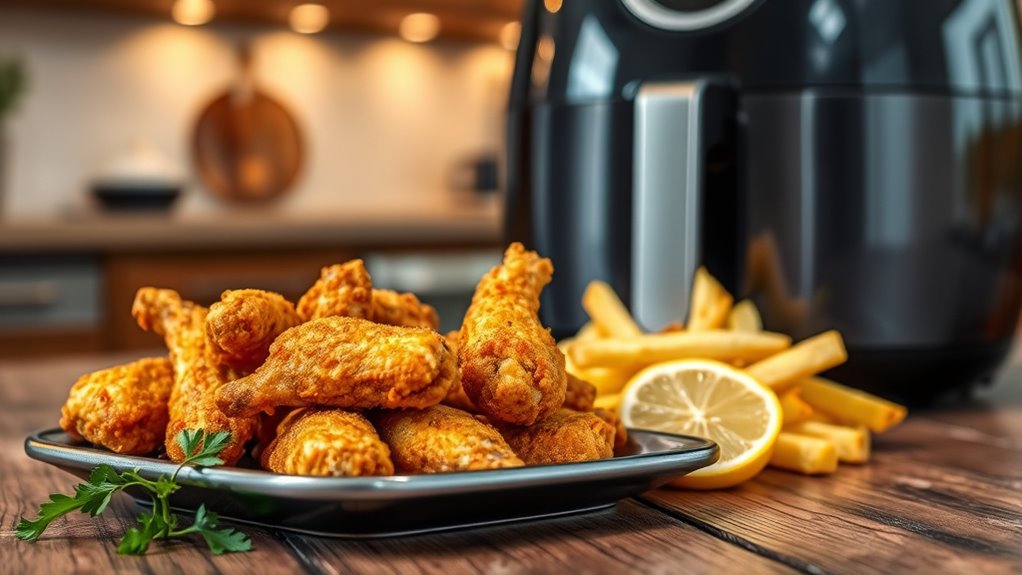
To adapt deep-fried recipes for air frying, reduce the temperature by about 25°F to 30°F and check for doneness earlier. Use light coatings like breadcrumbs or panko, and avoid thick batters. Pat ingredients dry, cut them evenly, and don’t overcrowd the basket to guarantee even cooking. Lightly spray with oil and flip halfway through. Experiment with seasonings for variety. Keep these tips in mind to achieve crispy results and explore more helpful strategies as you continue.
Key Takeaways
- Reduce cooking temperature by 25°F to 30°F and monitor doneness earlier due to faster air frying times.
- Use light coatings like panko breadcrumbs or flour, avoiding thick batters for crispier results.
- Pat ingredients dry and cut them uniformly to ensure even cooking and better air circulation.
- Avoid overcrowding the basket; leave space for hot air to circulate and flip or shake midway.
- Experiment with seasonings and flavors to create tasty variations tailored for air frying.
Adjusting Cooking Times and Temperatures

When switching from deep-frying to air frying, you’ll need to modify your cooking times and temperatures to attain the same crispy results. Usually, air frying requires a slightly lower temperature—about 25°F to 30°F less—because hot air circulates more efficiently. Start by reducing the temperature from your deep-fry setting and check for doneness earlier than usual, as air fryers cook faster. For example, if a deep-fried recipe calls for 375°F, try setting your air fryer to 350°F. Keep an eye on your food, as cooking times can vary based on thickness and moisture content. Use a meat thermometer or visual cues to determine doneness rather than relying solely on time. Adjusting these factors ensures crispy, evenly cooked results every time. Incorporating proper air circulation techniques can further enhance the crispiness and cooking efficiency, helping you achieve consistent crispiness and texture. Additionally, understanding cooking times and temperatures can help you better adapt recipes to your air fryer, ensuring optimal results.
Choosing the Right Coatings and Breading Techniques
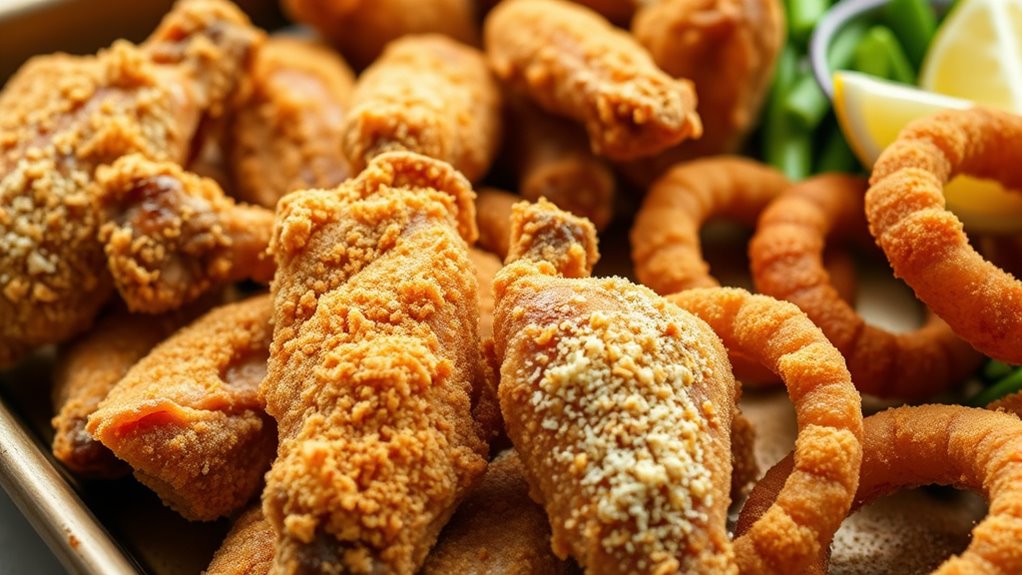
Selecting the right coatings and breading techniques is crucial for achieving that signature crispy texture when air frying. Start with a dry batter or coating to help achieve even crispiness. Use a combination of flour, cornstarch, or breadcrumbs to create a sturdy barrier that crisps up well. Dipping your food in seasoned flour, then egg wash, and finally breadcrumbs or panko ensures a crunchy exterior. For added crunch, consider double coating—dip in egg and bread again. Avoid thick batters that can become soggy; instead, opt for lighter coatings. Using panko breadcrumbs gives a more airy, crispy finish compared to regular breadcrumbs. Properly prepared coatings not only improve texture but also help lock in moisture, resulting in a deliciously crispy, golden exterior every time. Incorporating coating techniques that emphasize even layer application can further enhance crispiness and prevent sogginess. Additionally, choosing appropriate breading materials that are light yet durable can further improve the overall crispiness of your air-fried foods. Being mindful of food safety standards when preparing and handling your ingredients ensures a safe cooking environment, especially when working near heat sources or open flames.
Preparing Ingredients for Optimal Air-Frying Results
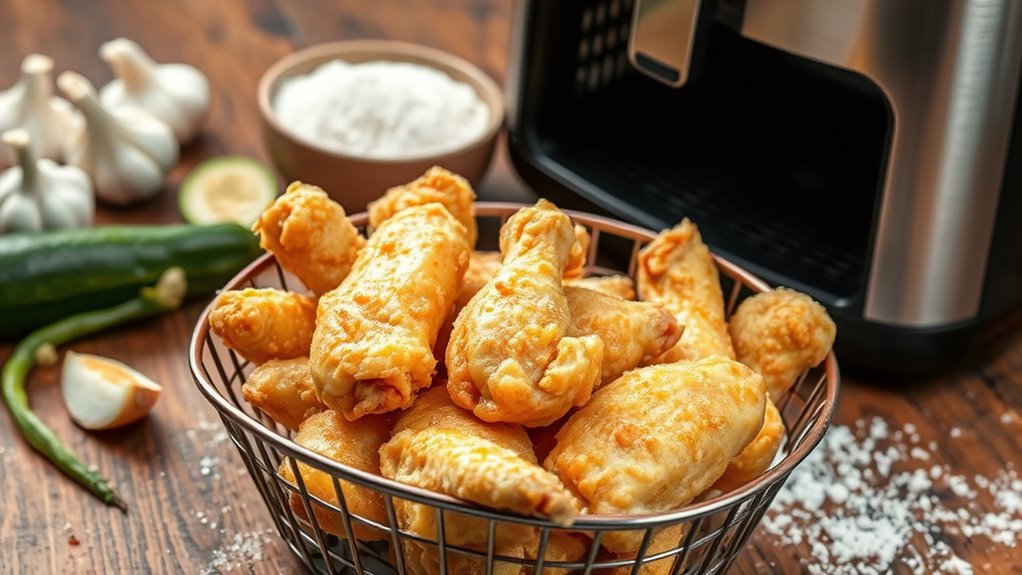
To guarantee your air-fried dishes turn out perfectly crispy and evenly cooked, start by properly preparing your ingredients. Pat your foods dry with paper towels to remove excess moisture, which helps achieve crispiness. For items like vegetables or proteins, cut them into uniform sizes to ensure even cooking. Marinate or season your ingredients beforehand to enhance flavor, but avoid adding too much moisture or wet batter that can hinder crisping. If using breading or coatings, lightly dust the surface with flour or cornstarch to improve adhesion. Remove any excess moisture or loose crumbs before placing in the air fryer. Proper preparation ensures heat circulates efficiently, resulting in a crispy exterior and tender interior. Additionally, understanding the importance of food safety and proper storage can prevent spoilage and ensure the best quality for your dishes. Incorporating techniques from hydrotherapy, such as using water-based methods for cleaning or prepping ingredients, can also contribute to maintaining hygiene. Taking these steps sets a solid foundation for delicious, well-cooked air-fried dishes.
Avoiding Common Pitfalls and Ensuring Even Cooking

Even with careful preparation, common pitfalls can prevent your air-fried dishes from turning out perfectly. One mistake is overcrowding the basket, which blocks hot air and causes uneven cooking. Always arrange food in a single layer and leave space for airflow. Another issue is not preheating the air fryer, leading to inconsistent results. Make sure to preheat for a few minutes before adding your food. Also, avoid using too much oil, as it can cause sogginess and uneven browning; a light spray or brush is sufficient. Ultimately, don’t forget to shake or flip your food halfway through cooking. This simple step promotes even browning and prevents sticking. Additionally, understanding the comparative advantage of different ingredients can help optimize cooking times and flavors. For example, selecting ingredients with similar cooking times ensures more uniform results. Recognizing the importance of color accuracy can also influence your ingredient choices, particularly when aiming for appealing presentation and texture. By being mindful of these pitfalls, you’ll achieve consistent, delicious results every time.
Experimenting With Flavors and Seasonings for Delicious Variations

By experimenting with different flavors and seasonings, you can transform basic deep-fried recipes into exciting new dishes using your air fryer. Get creative to suit your taste buds and make each meal unique. Here are some ideas to get you started:
- Spice things up with paprika, cayenne, or chili powder for a kick.
- Add herbs like rosemary, thyme, or oregano for an aromatic touch.
- Mix in grated cheese or nutritional yeast for extra richness.
- Try Asian-inspired flavors with soy sauce, ginger, or sesame oil.
- Incorporate body awareness elements into your culinary experiments to better understand how different seasonings affect taste and aroma, enhancing your overall cooking experience. Recognizing how different seasonings influence flavor profiles can help you refine your recipes over time, leading to more satisfying results.
- Keep in mind that the integration of AI in media and entertainment is rapidly evolving, offering new ways to discover and enjoy your culinary creations through immersive experiences or innovative content.
Don’t be afraid to combine seasonings or adjust quantities—this is your chance to craft signature dishes that are flavorful and personalized. Experimenting makes your air-fried creations more exciting and delicious.
Frequently Asked Questions
Can I Use Frozen Ingredients Directly in the Air Fryer?
You can usually cook frozen ingredients directly in the air fryer, but it’s important to guarantee the cooking time. Preheat your air fryer for even results. Shake or turn the food halfway through to ensure it cooks evenly and crisps up nicely. Keep an eye on the process, as frozen items might cook faster or need a little extra time depending on their thickness. Always check for doneness before serving.
How Do I Prevent Sticking or Tearing of Delicate Coatings?
Think of your delicate coatings like a fragile butterfly needing gentle handling. To prevent sticking or tearing in the air fryer, lightly spray your items with cooking spray before cooking. Use parchment paper or a silicone mat to create a non-stick surface. Avoid overcrowding the basket to guarantee even heat circulation. Turn or shake your food halfway through cooking to keep coatings intact and prevent sticking.
Is There a Way to Reduce Oil Usage Further?
To reduce oil usage further, you should limit the amount of oil you spray or brush onto your food before air frying. Use a light coating of oil or opt for oil-free cooking sprays, which help achieve crispiness with minimal oil. Additionally, preheating the air fryer and avoiding overcrowding can improve air circulation, reducing the need for extra oil and enhancing the overall texture of your dishes.
How Do I Store Leftovers to Maintain Crispiness?
To keep your leftovers crispy, store them in an airtight container lined with paper towels to absorb excess moisture. Avoid stacking items directly on top of each other; instead, leave some space for air circulation. When reheating, use your air fryer at a moderate temperature for a few minutes. This method helps restore crunchiness and prevents sogginess, so your leftovers taste fresh and crispy when you enjoy them again.
Can I Adapt Breaded Recipes for Different Air Fryer Brands?
You can definitely adapt breaded recipes for different air fryer brands. Start by checking your air fryer’s recommended cooking times and temperatures, as they can vary. Use a similar temperature setting as your traditional method, but keep an eye on the food to prevent overcooking. Adjust cooking times based on your specific model’s performance, and don’t hesitate to experiment until you find the perfect crunch and doneness for each brand.
Conclusion
Adapting deep-fried recipes to air frying is like transforming a caterpillar into a butterfly—simple yet transformative. By tweaking times, coatings, and seasonings, you’ll reveal a world of crispy, flavorful delights without the excess oil. Don’t be afraid to experiment and trust your instincts. With a little practice, you’ll craft healthier favorites that soar on the wings of innovation, turning your kitchen into a playground of delicious possibilities.