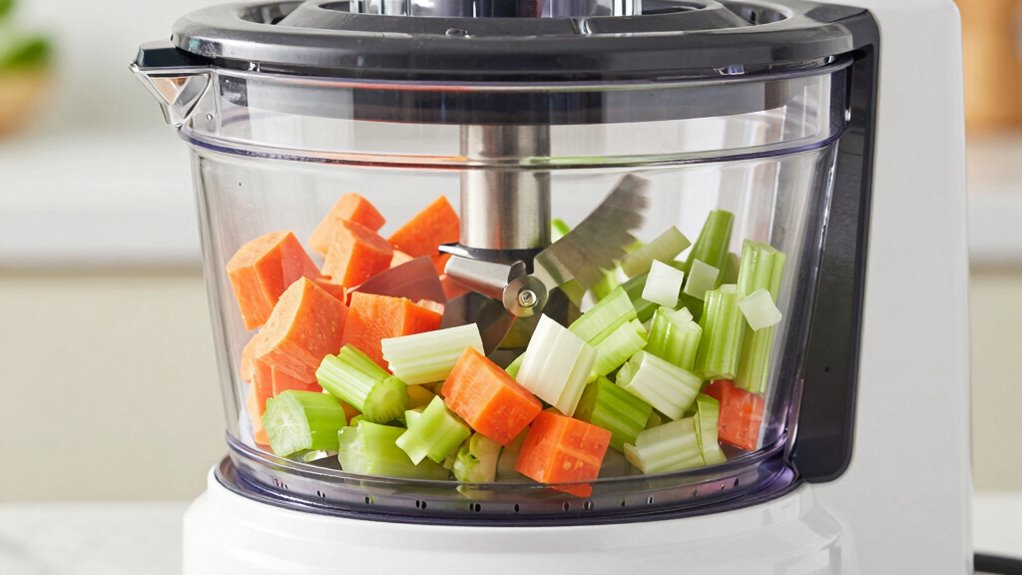
To get even chopping and avoid mush, first make sure your blade is properly aligned and securely tightened—check for wobbling before use. Adjust the blade height based on the ingredient’s texture and choose the right blade attachment for your task. Always sharpen dull blades and avoid overloading the bowl. Use controlled pulses and keep ingredients dry and at room temperature. For more tips on perfect results, keep exploring these essential setup tricks.
Key Takeaways
- Properly align and tighten the blade to prevent wobbling and ensure even chopping.
- Adjust the blade height based on ingredient type for optimal control and texture.
- Use sharp blades and avoid overloading the bowl to prevent mushy results.
- Process ingredients in short pulses and keep them dry for consistent, uniform texture.
- Regularly inspect, clean, and maintain the blade setup for safe, efficient operation.
Why Your Food Processor Isn’t Chopping Properly (And How Blade Setup Matters)
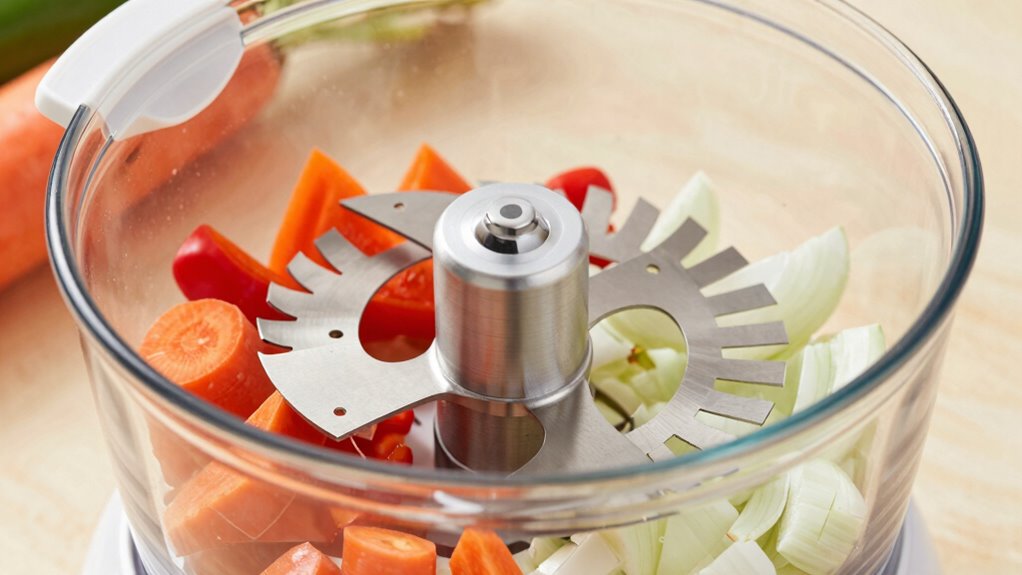
If your food processor isn’t chopping ingredients evenly, the problem often lies in the blade setup. One key factor is blade sharpness; dull blades can tear or push ingredients rather than cut them cleanly, resulting in uneven texture. Check if the blades are sharp enough—dull blades require more effort and can impair performance. Additionally, your processor’s capacity affects chopping consistency. Overloading it prevents blades from moving freely, leading to uneven cuts or mush. Make sure you’re not filling the bowl beyond its recommended capacity, and chop ingredients in smaller batches if needed. Proper blade sharpness combined with appropriate processor capacity ensures your food processor can chop ingredients evenly, giving you the desired texture without turning everything into mush. Ensuring your blade alignment is correct can also improve chopping performance and prevent uneven results. Regularly inspecting and maintaining your blades can help sustain optimal cutting efficiency, especially when dealing with diverse ingredient textures.
How to Adjust Your Food Processor Blade for Different Ingredients
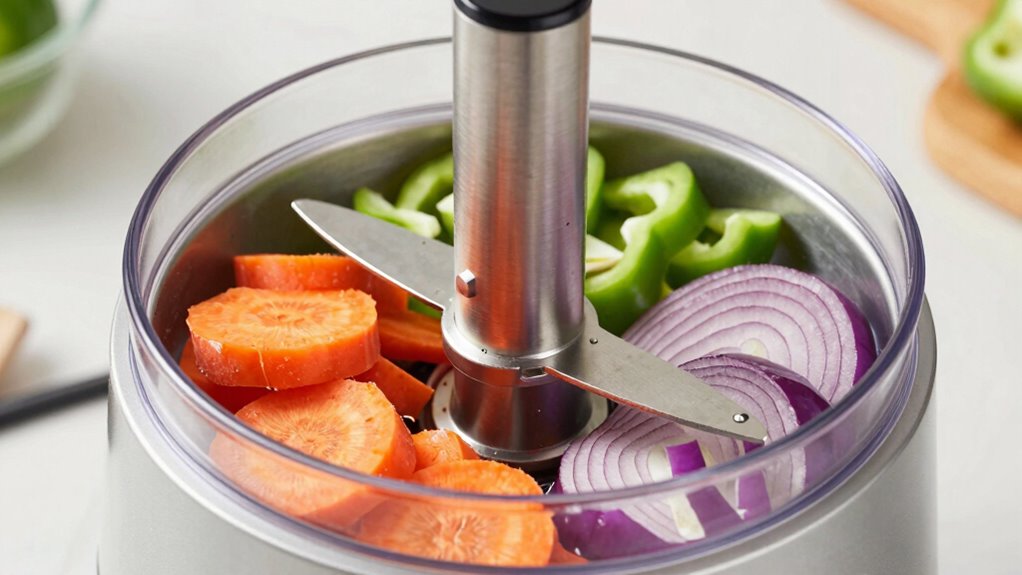
To get the best results with your food processor, you need to adjust the blade height for different ingredients. Changing the blade attachment can also enhance how well it handles tasks like slicing or shredding. Using the proper technique ensures your ingredients are processed evenly and safely. Additionally, incorporating smart kitchen appliances can help optimize your food prep process and ensure consistent results. Properly calibrated blades contribute to uniform chopping, reducing the risk of mushy or uneven textures. Adjusting the blade height according to the ingredient’s size and texture is essential for achieving consistent results, which can be further improved by understanding the importance of blade calibration techniques.
Adjust Blade Height
Adjusting the blade height on your food processor makes sure you get the best results for different ingredients. Proper blade height helps you control chopping consistency, whether you’re aiming for fine mince or chunkier pieces. To modify the height, remove the blade assembly carefully and reposition the blade so it sits just above or below the ingredient level, depending on your needs. For delicate ingredients like herbs or soft fruits, set the blade higher to prevent over-processing. For tougher items like nuts or dense vegetables, lower the blade to ensure even chopping and prevent mush. Always double-check the blade’s position before processing to maintain ideal control. Adjusting the blade height is a simple step that makes a big difference in achieving consistent, precise results. Additionally, being aware of ingredient characteristics can help you determine the optimal blade placement for each task. Understanding the design features of your food processor can also assist in making precise adjustments easily. Knowing how to adjust blade height properly can extend the lifespan of your appliance and improve your overall results. Proper adjustment can also help prevent damage to the motor, ensuring your food processor remains reliable for years to come.
Change Blade Attachments
Changing the blade attachment on your food processor is essential for handling different ingredients effectively. Different blades provide blade versatility, ensuring you get the best results whether chopping nuts or pureeing soups. To switch blades, unplug the machine, remove the current attachment, and align the new blade securely. Check for accessory compatibility to avoid damage or improper fit. Use the table below to identify common blades and their best uses:
| Blade Type | Suitable for |
|---|---|
| S-Blade | Chopping, mixing, pureeing |
| Slicing Blade | Slicing vegetables or fruits |
| Shredding Blade | Shredding cheese or vegetables |
Always handle blades carefully and confirm proper attachment before use. Proper sizing and load‑planning ensures your food processor performs safely and efficiently with different blade attachments. Additionally, understanding the importance of proper blade selection can significantly improve your chopping results and prolong the lifespan of your appliance. Being aware of blade maintenance routines can help keep your blades sharp and effective over time, which is especially important for maintaining consistent food processing results.
Use Proper Technique
Choosing the right technique when using your food processor guarantees ideal results for different ingredients. Always start with a properly sharpened blade; dull blades can cause uneven chopping and strain the motor, leading to costly damage. Use steady, controlled pulses rather than continuous runs to prevent overprocessing and ensure even texture. When chopping delicate items like herbs or soft fruits, keep the blade at a gentle angle to avoid turning them into mush. Regular motor maintenance, such as cleaning the vents and checking for overheating, helps the appliance run smoothly and extends its lifespan. Adjust your technique based on the ingredient’s consistency, and avoid forcing ingredients into the blade. Being aware of ear wax odor and other odors associated with kitchen mishaps can help you maintain a fresh environment and prevent unpleasant surprises. Proper technique maximizes efficiency, prevents damage, and delivers perfectly chopped results every time. Additionally, understanding blade sharpness and maintaining it ensures your food processor performs optimally. Incorporating auditory cues can also help in timing your pulses more precisely for consistent results. Paying attention to motor noise levels can alert you to potential issues before they become serious, ensuring longevity and performance. Recognizing proper cleaning methods is essential to prevent residue buildup and maintain hygiene.
A Step-by-Step Guide to Correctly Setting Up Your Blade

To guarantee your food processor works safely and efficiently, you need to set up the blade correctly. Start by aligning the blade properly so it sits evenly, preventing uneven processing or damage. Then, make sure the blade is secured tightly to avoid any accidents during use.
Proper Blade Alignment
Ensuring your blade is properly aligned is essential for safe and efficient food processing. Start by carefully inspecting the blade’s position, making sure it’s centered and balanced. Proper blade calibration prevents uneven chopping and reduces strain on your motor. Always follow safety precautions—unplug your food processor before adjusting the blade to avoid accidental injury. Use a flat surface to check the blade’s alignment, ensuring it sits flush and straight. If you notice any wobbling or misalignment, loosen the mounting nut slightly and reposition the blade carefully, then tighten securely. Proper alignment not only promotes even chopping but also minimizes wear and tear on your machine. Take your time during this step; a correctly aligned blade is key to achieving consistent results. Additionally, regularly checking your blade’s blade setup ensures optimal performance and longevity of your processor.
Securing the Blade Tightness
Have you properly secured the blade to prevent accidents and guarantee efficient chopping? First, ensure the blade is firmly attached, with no wobble or looseness. Check for blade wobble by gently rocking the blade; if it moves, tighten it until it’s secure. Many food processors feature a safety lock mechanism—activate this lock before tightening the blade to keep everything in place. Once secured, recheck for wobble and make sure the safety lock is engaged. Proper tightness prevents the blade from shifting during operation, reducing the risk of accidents. Never force the blade into place; if it’s difficult to secure, double-check alignment. Securing the blade tightly with the safety lock guarantees safe, efficient, and even chopping every time. Ensuring proper blade tightness is essential for optimal performance and safety.
Common Blade Setup Mistakes That Make Food Mushy: And How to Fix Them
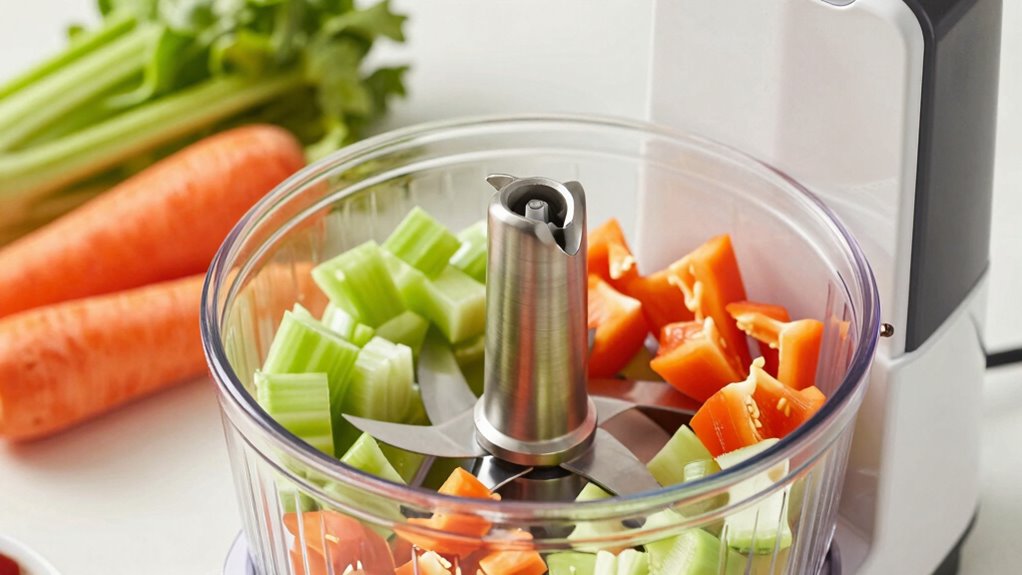
One common mistake that leads to mushy food is using the wrong blade setup for the task at hand. If your blade isn’t sharp enough, it can tear and crush ingredients instead of chopping cleanly, resulting in a mushy texture. Regular blade sharpening guarantees your blades cut smoothly, reducing the need for excessive motor speed. Using high motor speeds with dull blades can also overprocess ingredients, turning them to mush. To fix this, always sharpen your blades when needed, and select the appropriate speed for the texture you want. For more delicate chopping, lower speeds help prevent overprocessing. Additionally, understanding the food consistency you aim for can help you choose the right settings and blade configurations. Adjusting your blade setup and motor speed accordingly keeps food chunky and evenly chopped, avoiding the mushy mess that comes from improper blade use.
Tips for Achieving Consistent Texture With Vegetables, Nuts, and More
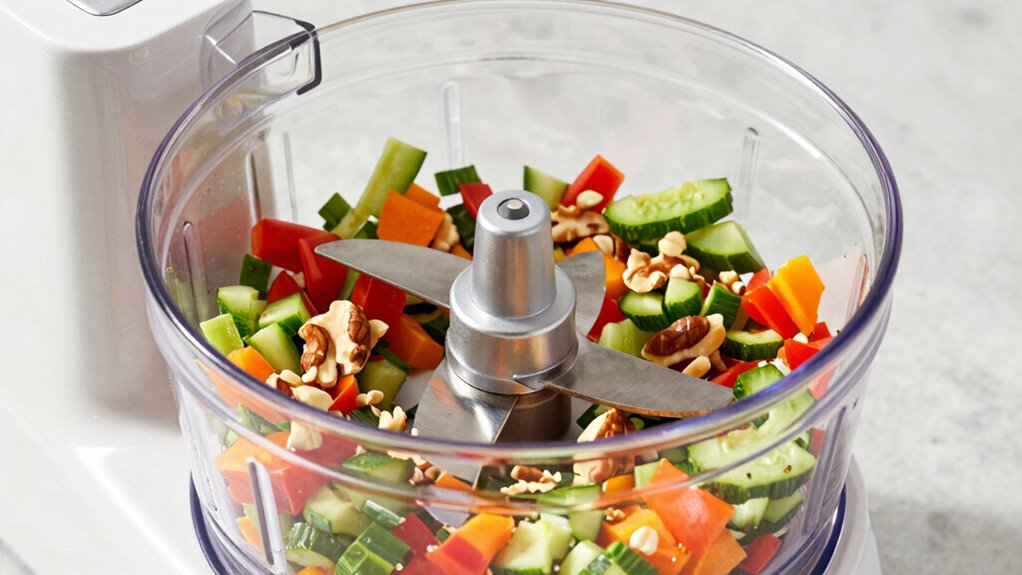
Achieving a consistent texture when processing vegetables, nuts, and similar ingredients depends heavily on your blade setup and processing technique. To guarantee vegetable uniformity, start by choosing the right blade for your desired outcome—whether you want finely chopped or coarsely diced pieces. Use short pulses to prevent over-processing and control the texture. For nuts, processing in small batches helps maintain nut consistency and prevents clumping or uneven chopping. Keep ingredients dry and at room temperature to avoid sticking or uneven results. Adjust the processing time based on the ingredient, stopping when you reach the desired texture. Consistent technique and proper blade setup are key to achieving evenly processed vegetables and nuts, giving you predictable, professional results every time. Blade configuration plays a crucial role in ensuring even processing and preventing mush. Proper processing techniques also help maintain ingredient integrity and desired texture, and understanding the food’s structure can guide you in selecting the optimal processing method.
Troubleshooting Your Blade Setup for Perfectly Chopped Ingredients
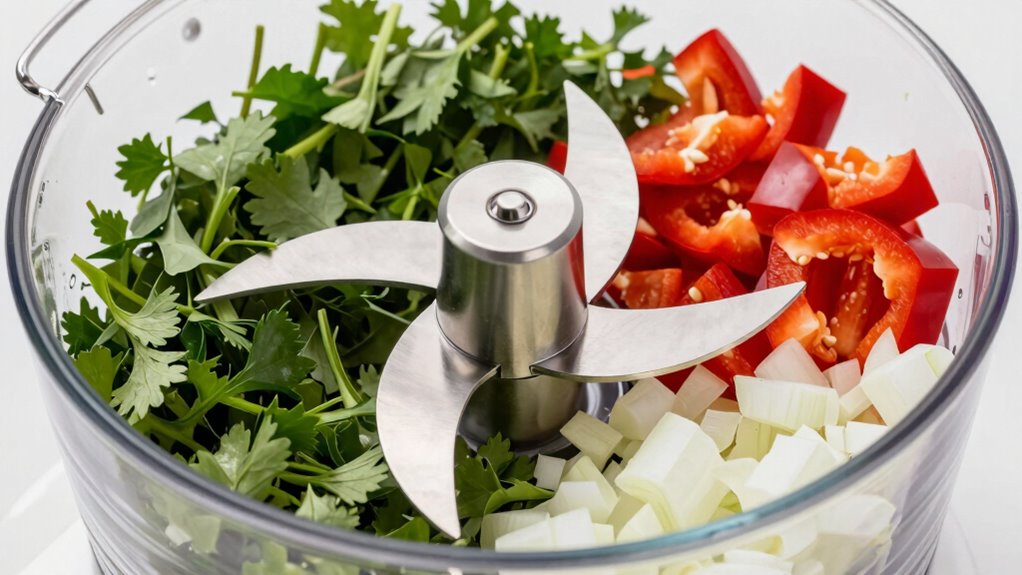
Proper blade setup is essential for consistently achieving the desired texture in your ingredients. First, check that the blade is securely attached and sharp, as dull blades can cause uneven chopping or mush. Regular blade maintenance, including cleaning and sharpening, helps maintain ideal performance. When troubleshooting, ensure the blade is aligned correctly—improper positioning can lead to inconsistent results. Always follow safety precautions by unplugging the food processor before handling the blade to prevent injuries. If your ingredients aren’t chopping evenly, adjust the blade or pulse in short bursts to control the texture. Keep an eye on blade condition, replacing it when dull or damaged. Proper setup, combined with regular maintenance and safety, guarantees perfectly chopped ingredients every time.
Frequently Asked Questions
Can Different Blade Types Affect Chopping Results?
Yes, different blade types greatly affect your chopping results. Using the right blade guarantees compatibility with your food processor and prevents mushy or uneven textures. Sharp blades cut more efficiently and produce cleaner results, so regular blade sharpening is essential. Choosing the appropriate blade for your ingredients and maintaining it properly helps you achieve consistent, even chopping every time, making your food prep smoother and more precise.
How Often Should I Replace My Food Processor Blades?
You should replace your food processor blades when they become dull or chipped, typically every 1-2 years with regular use. Coincidentally, sharpening blades can extend their life, so consider sharpening before replacing. Proper storage tips, like keeping blades in a protective case, prevent damage and keep them sharp longer. By maintaining and sharpening your blades regularly, you’ll ensure even chopping and avoid mushy results.
Does Ingredient Temperature Influence Chopping Consistency?
Yes, ingredient temperature impacts chopping consistency. When ingredients are too cold, they tend to resist cutting, resulting in uneven or mushy texture. Conversely, room temperature ingredients chop more evenly because they’re softer and easier to process. To achieve consistent results, let ingredients reach room temperature before chopping, especially for items like cheese or vegetables. Adjusting ingredient temperature helps you maintain even chopping and avoid mushy or uneven textures.
Are There Safety Tips for Adjusting Blades?
When adjusting blades, always prioritize safety precautions by unplugging the food processor first. Check blade alignment carefully to make sure it’s securely in place before use. Avoid forcing blades into position, and handle them with care to prevent cuts. Regularly inspect for damage, and always wash blades separately. Following these safety precautions helps prevent accidents and guarantees your blades stay properly aligned for even chopping every time.
Can Improper Blade Setup Damage My Food Processor?
Improper blade setup can indeed damage your food processor. If the blade isn’t aligned correctly, it puts unnecessary strain on the motor, leading to potential motor burnout or gear damage. Misaligned blades can also cause uneven chopping, making your food processor work harder than it needs to. Always make certain of proper blade alignment before use, so you avoid motor strain and keep your appliance functioning smoothly and safely.
Conclusion
Getting your blade setup right is like tuning a musical instrument—you need precision for harmony. When I first tried chopping nuts, I ended up with mush until I adjusted the blade correctly. Now, my food processor produces perfectly uniform pieces every time. Remember, small tweaks make a big difference—think of your blade as the conductor of your kitchen symphony. With patience and practice, you’ll master even chopping, turning messy ingredients into culinary masterpieces.