To roast garlic without burning, start with firm, fresh bulbs and preheat your oven to around 375°F. Wrap the garlic in foil or use parchment paper to guarantee even heat distribution and prevent hot spots. Keep an eye on the cloves and check periodically, adjusting temperature if needed. Spread cloves evenly and avoid overcrowding for perfect caramelization. If you’re curious about mastering this, there’s more to uncover below.
Key Takeaways
- Preheat the oven to a moderate 375°F (190°C) to ensure gentle, even roasting without burning.
- Wrap garlic in foil or use parchment paper to promote uniform heat and prevent direct contact with high heat.
- Roast for 40-45 minutes, checking periodically; start checking around the 35-minute mark to avoid overcooking.
- Spread garlic evenly and avoid overcrowding to ensure consistent heat distribution and caramelization.
- Use an oven thermometer to monitor temperature accurately and rotate the tray if uneven browning occurs.
Choosing the Right Garlic and Preparation Techniques
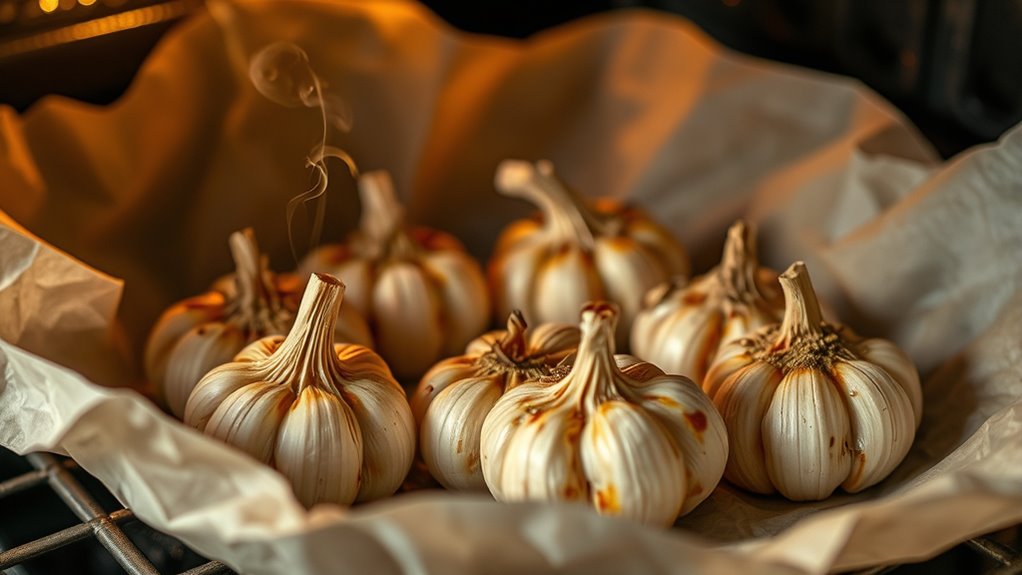
When choosing garlic for roasting, it’s important to select firm, plump bulbs with tight skins, as these indicate freshness and good flavor. Different garlic varieties, like softneck and hardneck, offer unique taste profiles and textures, so pick based on your flavor preference. Softneck garlic tends to be milder and is easier to braid, while hardneck has a more robust flavor. Preparation methods also matter; you can roast garlic whole, halved, or sliced, but keeping the bulbs intact preserves moisture and develops a sweeter taste. Before roasting, trim the tops, peel away any loose outer layers, and remove excess dirt. Proper selection and preparation guarantee your garlic will be flavorful, tender, and easy to spread after roasting. Additionally, understanding the varieties of garlic can help you choose the best type for your specific roasting technique. Knowing about garlic varieties can also guide you in selecting the right roasting method to enhance its natural flavors.
Optimal Oven Settings and Timing for Roasting
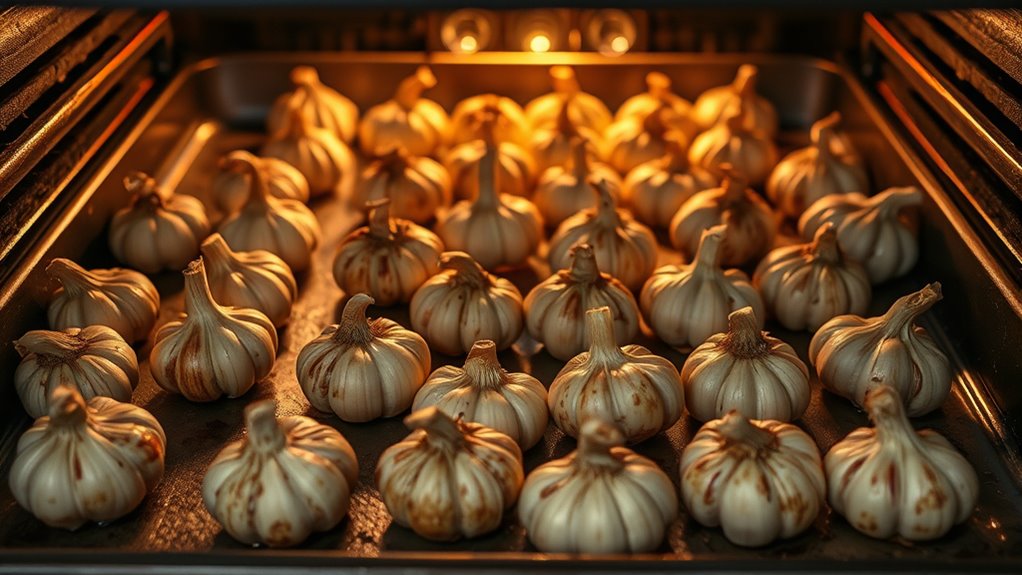
To achieve perfectly roasted garlic, setting your oven to the right temperature and timing is key. For ideal results, preheat your oven to 375°F (190°C). This moderate temperature allows the garlic to cook evenly without burning. Use sturdy roasting utensils, like a baking dish or a sheet with a rim, to contain the garlic and prevent messes. Proper garlic storage before roasting is also important—keep bulbs in a cool, dark place to preserve freshness. Typically, roasting takes about 40 to 45 minutes; check for a soft, golden-brown exterior. Keep an eye on the garlic as it roasts to avoid overcooking. Adjust the timing slightly if your oven runs hot or cold, ensuring perfectly roasted garlic every time. Additionally, security awareness is essential when handling kitchen appliances to prevent accidents or fires.
Using Foil or Parchment for Even Cooking
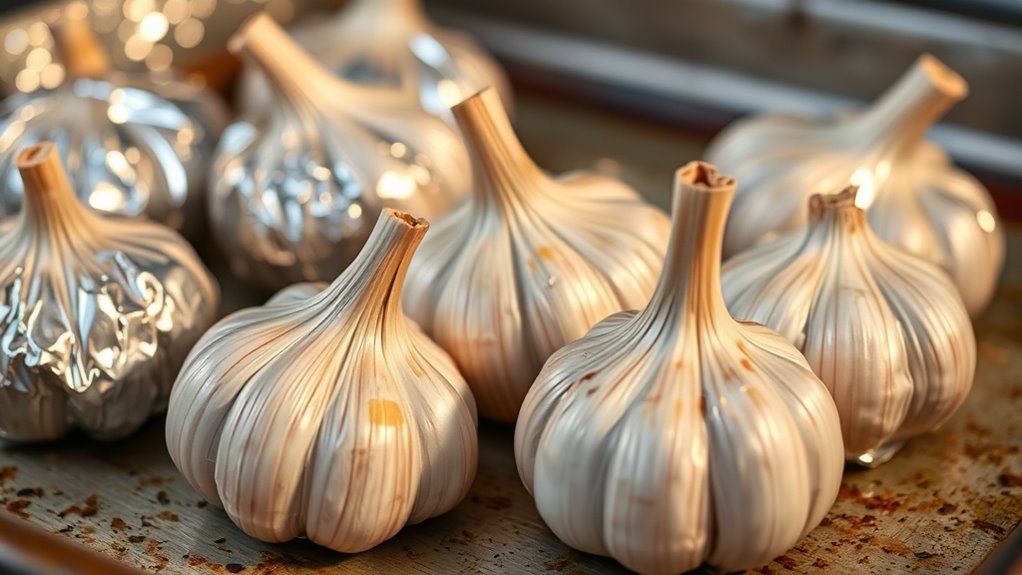
Using foil or parchment paper while roasting garlic helps guarantee even cooking and easy cleanup. Wrapping garlic in foil traps steam, promoting uniform heat distribution and preventing burning. Additionally, filtration technology in kitchen appliances can help reduce lingering cooking odors, making cleanup more pleasant. Alternatively, parchment paper allows for direct contact with the garlic, reducing sticking and making cleanup simpler. Proper garlic storage before roasting ensures the cloves stay firm, which helps maintain consistent roasting results. When applying roasting techniques, consider wrapping garlic tightly or placing it in a parchment-lined baking dish to control heat exposure. This method minimizes hot spots, ensuring all cloves cook evenly without burning. Using foil or parchment also offers flexibility in how long you roast, making it easier to monitor and achieve perfect caramelization and softness, especially if you’re experimenting with different roasting techniques. Additionally, understanding how heat distribution influences home cooking practices can enhance your roasting results by encouraging patience and attention to detail. Paying attention to temperature control can also help prevent overcooking or burning, ensuring delicious, evenly roasted garlic every time.
Monitoring and Adjusting Temperature During Roasting
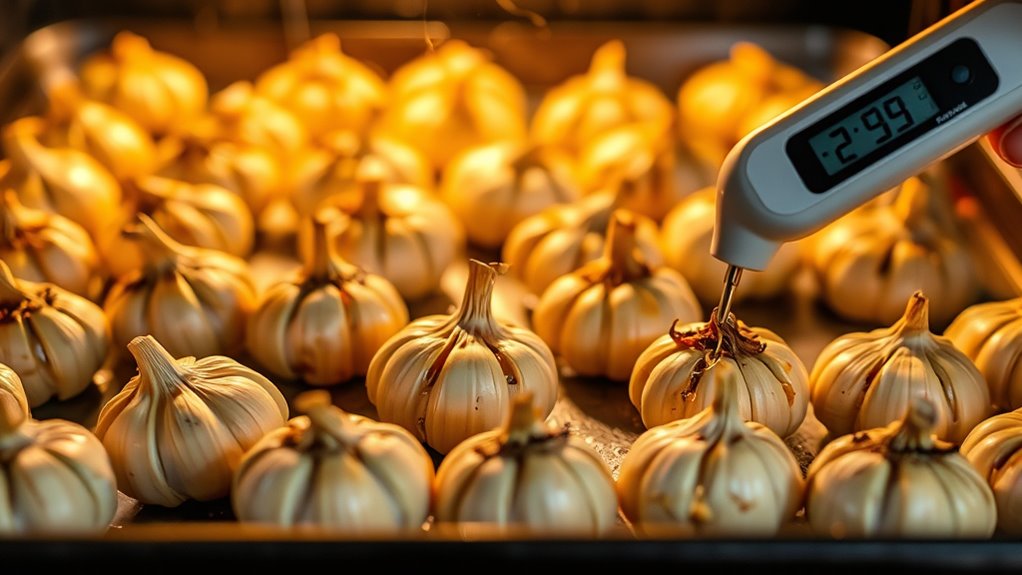
Monitoring and adjusting the oven temperature during roasting guarantees your garlic reaches the perfect level of caramelization without burning. Keep an eye on your garlic, especially since different garlic varieties and storage methods can affect cooking times. To maintain ideal heat:
- Start with a moderate temperature, around 375°F (190°C), to prevent burning.
- Check periodically, especially if your garlic is stored longer or is a different variety.
- Use an oven thermometer to ensure consistent heat, adjusting as needed.
- Rotate the garlic or shift the tray if you notice uneven browning, especially with diverse garlic varieties.
Tips for Achieving Perfectly Caramelized Cloves Every Time
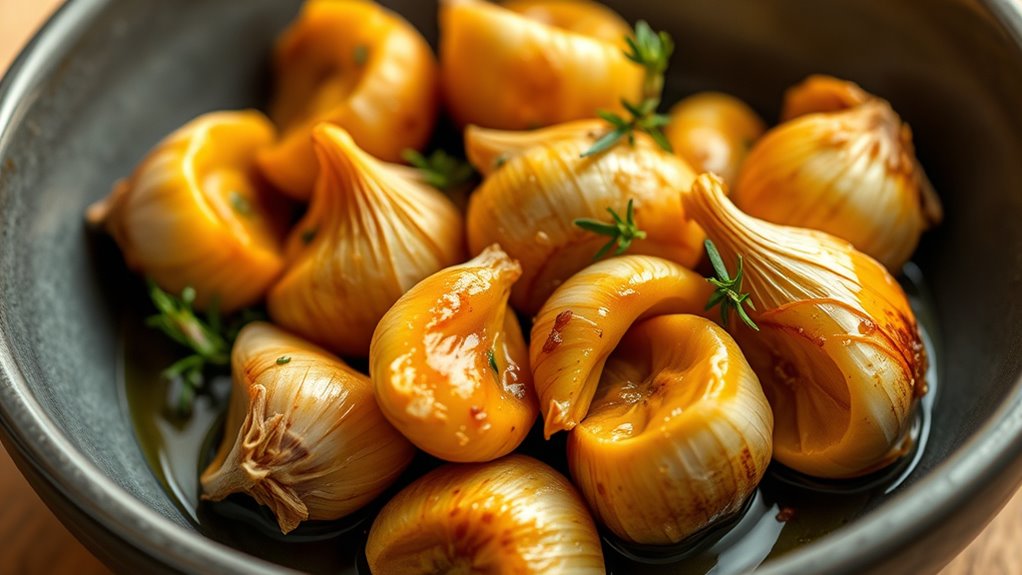
Achieving perfectly caramelized garlic cloves requires attention to detail and patience. To guarantee consistent results, store garlic properly—keep it in a cool, dark place to preserve freshness and flavor. For caramelization, spread the cloves evenly and avoid overcrowding; this helps them cook uniformly. Use a moderate oven temperature and monitor closely to prevent burning. For maximum flavor enhancement, toss garlic with a little oil and a pinch of salt before roasting. Keep in mind, gentle heat encourages natural sugars to develop, resulting in a rich, sweet flavor. Additionally, understanding the importance of contrast ratio can help you better appreciate the visual quality of your roasted garlic when presented on a properly calibrated display. Developing leadership skills such as patience and attention to detail can also improve your culinary results and overall kitchen management. Moreover, incorporating knowledge about glycolic acid benefits can inspire you to care for your skin just as carefully as you tend to your garlic, ensuring a radiant complexion. Paying attention to oven calibration can further enhance your roasting success by maintaining consistent heat levels.
Frequently Asked Questions
Can I Roast Garlic in a Microwave Instead of an Oven?
You can try microwave roasting garlic instead of using an oven, but it’s tricky to do it evenly. Microwave roasting can speed up garlic preservation, making it soft and flavorful quickly. Just place garlic cloves in a microwave-safe dish, cover loosely, and microwave in short bursts, checking frequently to prevent burning. Keep in mind, the texture and flavor might differ from oven-roasted garlic, so experiment to find what works best for you.
How Do I Store Roasted Garlic to Keep It Fresh Longer?
Your garlic preservation skills can turn ordinary dishes into culinary masterpieces! To keep roasted garlic fresh longer, store it in airtight storage containers, like glass jars or plastic containers. For ideal freshness, refrigerate it and use within a week or freeze portions for months. Proper storage prevents spoilage and preserves flavor, making your garlic last longer and taste amazing each time you use it.
Is It Okay to Roast Garlic Directly on a Baking Sheet?
Yes, you can roast garlic directly on a baking sheet. This roasting technique enhances the garlic flavor, giving it a rich, sweet taste. Just spread the garlic evenly, keep an eye on it, and turn the cloves occasionally to prevent burning. Using a parchment-lined sheet can help prevent sticking and make cleanup easier. This simple method brings out the best in your garlic without burning, making it perfect for your dishes.
What Are Alternative Methods for Roasting Garlic Without an Oven?
You can roast garlic without an oven by using a stovetop method like a skillet or double boiler. Wrap garlic in foil or place it in a heatproof dish, then gently cook over low heat, preserving its flavor and preventing burning. This method enhances flavor and helps with garlic preservation, especially if you prefer not to heat your kitchen or lack an oven. Just keep the heat low and watch closely.
How Do Different Garlic Varieties Impact Roasting Outcomes?
Imagine slicing into a bulb of different garlic varieties—each offering a unique garlic flavor and roasting texture. Some varieties, like softneck, produce a milder, sweeter taste with a tender texture, perfect for spreading. Others, like hardneck, deliver a sharper, more pungent flavor with a firmer bite. Choosing the right garlic variety influences your roasting outcome, letting you craft dishes with the perfect balance of flavor and texture.
Conclusion
Now that you know how to roast garlic without burning, you’re armed with the secrets to perfect, caramelized cloves. Think of your oven as a magic wand—when you control the heat and follow these tips, you transform humble garlic into a rich, flavorful treasure. So, go ahead, embrace the art of roasting; your taste buds will thank you for the delicious reward that’s just a roast away. Happy cooking!