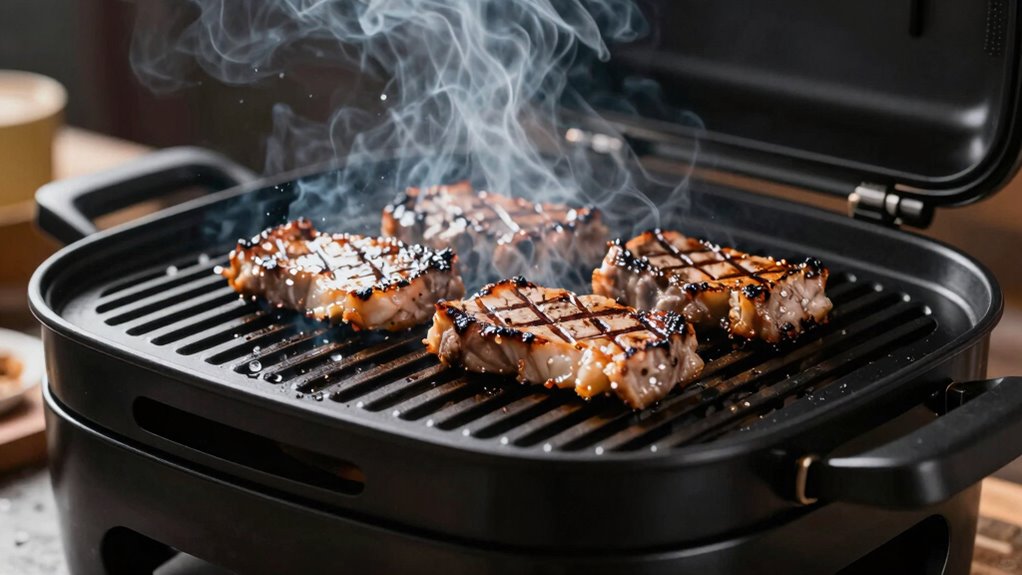
Smokeless grills can substantially reduce smoke by capturing fumes with advanced filters, optimized vent design, and built-in fans. However, they can’t eliminate all smoke because fats still drip onto hot surfaces, causing flare-ups. To get the closest to smokeless, control temperature, use leaner meats, and guarantee proper ventilation. If you want to learn more tips and tricks to minimize smoke effectively, there’s plenty more to explore below.
Key Takeaways
- Optimize ventilation by ensuring vents are unobstructed and use exhaust fans to improve smoke extraction.
- Choose leaner meats and trim excess fat to reduce drippings that cause smoke.
- Use drip trays, shields, or foil to manage grease and prevent flare-ups.
- Maintain proper cooking temperatures to avoid burning drippings and producing smoke.
- Regularly clean filters, vents, and drip trays to prevent grease buildup and minimize smoke emissions.
How Do Smokeless Grills Reduce Smoke?

Smokeless grills reduce smoke primarily by capturing and venting the fumes before they escape into the air. The key lies in effective smoke filtration and smart vent design. These grills use advanced filters that trap smoke particles and grease, preventing them from rising into your kitchen. The vent design directs fumes toward these filters efficiently, ensuring minimal smoke escapes. Some models feature built-in fans that draw fumes away from the cooking surface and push them through filtration systems. By controlling airflow and optimizing vent placement, these grills markedly cut down smoke emissions. Additionally, incorporating smoke filtration techniques such as precious metals in filtration systems can enhance the overall effectiveness of smoke removal and improve durability. The combination of high-quality smoke filtration and strategic vent design ensures you can enjoy grilling indoors without the overwhelming smoke, making your cooking experience cleaner and more pleasant. Using advanced filtration technologies further boosts their performance and longevity.
Why Does My Smokeless Grill Still Smoke? Common Causes Explained
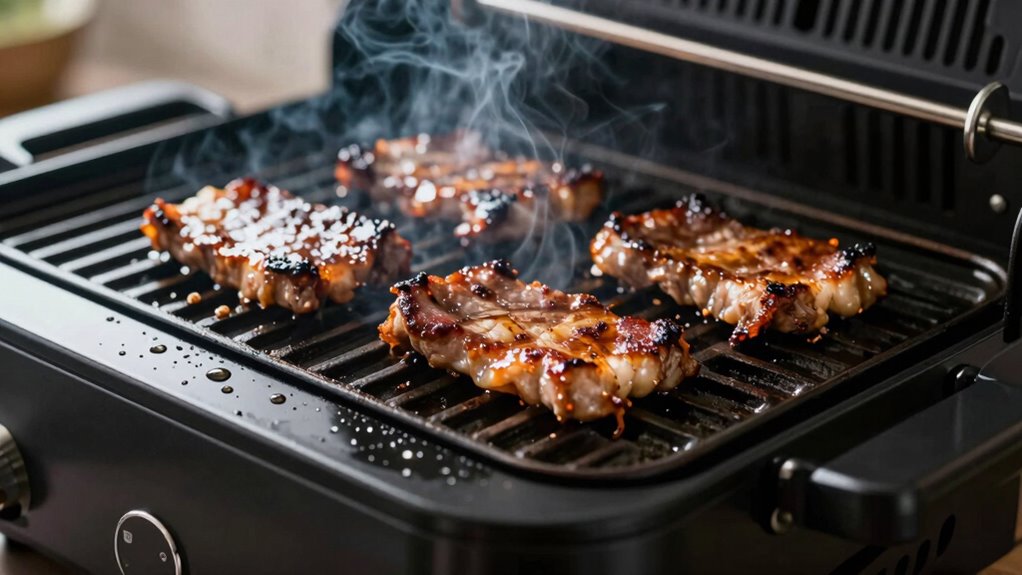
If your smokeless grill still produces smoke, the issue might be due to excess fat dripping onto the heating element. Improper ventilation can also cause smoke to linger, so make sure your vents are clear and functioning. Additionally, cooking at too high a temperature can lead to smoke, even with a smokeless design. Incorporating connected equipment and monitoring your cooking habits through apps can help optimize your grilling process and reduce smoke. Understanding AI cybersecurity is also crucial for protecting your smart grilling devices from potential cyber threats, ensuring safe and secure operation. Developing a better understanding of creative problem-solving can help you troubleshoot and adapt your grilling techniques more effectively. Employing performance metrics can also provide insights into how your grill operates under different conditions, helping you make adjustments for cleaner grilling. Being aware of natural ventilation techniques can further assist in reducing smoke emissions during grilling sessions.
Excess Fat Drips
Ever wonder why your smokeless grill still produces smoke despite its design? Excess fat and grease buildup is often the culprit. When you cook, fat drips onto the heating element or the grill’s base, causing smoke if it’s not managed properly. Poor fat management leads to flare-ups and smoke, even in models designed to minimize it. Regularly cleaning your grill helps prevent grease buildup that can cause smoking. Using a drip tray or catching excess fat also reduces the chances of drips hitting hot surfaces. Additionally, trimming excess fat from your meat can considerably cut down on drips. Incorporating fat management techniques into your grill maintenance routine can further minimize smoke production. Proper grill maintenance not only extends the lifespan of your grill but also enhances its performance and safety. A clean grill surface is essential for optimal performance and smoke reduction. By maintaining a clean grill and managing fat effectively, you can keep smoke to a minimum and enjoy your grilling experience.
Improper Ventilation
Even when your grill is designed to produce little or no smoke, improper ventilation can cause it to still emit smoke. Poor ventilation affects indoor air quality and prevents smoke from dispersing properly. If your ventilation system isn’t effective, smoke can linger and reduce air quality, making your cooking environment uncomfortable. Check if your grill’s airflow vents are blocked or clogged, and ensure there’s enough space around the grill for proper air circulation. Using the right accessories, like exhaust fans, can improve ventilation efficiency. Here’s a quick overview of common causes:
| Cause | Solution |
|---|---|
| Blocked vents | Clear or adjust vents for better airflow |
| Insufficient airflow | Add or upgrade ventilation systems |
| Poor placement | Move grill to an open, ventilated area |
| Inadequate exhaust | Install or improve exhaust fans |
High Cooking Temperatures
High cooking temperatures are a common reason your smokeless grill still produces smoke, especially when you crank up the heat too much. When you set the grill temperature too high, fats and juices from your food can drip onto the heating element or hot surfaces, causing smoke production. This is because the intense heat causes these drippings to burn quickly, creating smoke even in models designed to minimize it. To reduce smoke, avoid pushing the grill to its maximum temperature and instead cook at moderate heat levels. Monitoring and adjusting the grill temperature helps prevent excessive smoke and ensures a cleaner cooking process. Remember, high heat can be tempting, but it often leads to more smoke, defeating the purpose of a smokeless grill. Additionally, understanding proper heat control techniques can help you achieve better results and minimize smoke during your grilling sessions.
How Can I Maximize Smoke Reduction When Grilling?
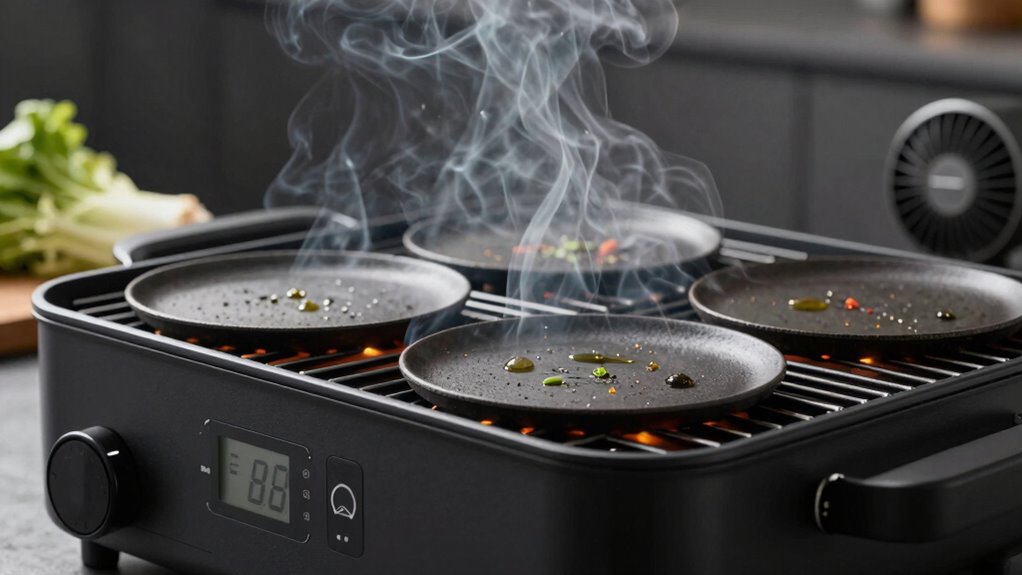
To reduce smoke when grilling, start by choosing leaner cuts of meat to minimize fat drippings. You should also control the amount of fat that hits the grill surface, as excess fat causes smoke. Improving your grill’s ventilation system can help vent smoke more effectively and keep the air cleaner. Additionally, using a properly designed ventilation system can significantly enhance smoke extraction during grilling sessions. Considering the size of your grill and the room‑size wattage can also influence overall smoke management and safety. Monitoring your grill’s air flow with simple tools like an anemometer can help ensure optimal ventilation and smoke reduction. Furthermore, selecting a grill that incorporates advanced water filtration features can help reduce airborne smoke particles and improve indoor air quality during grilling. Ensuring proper air circulation within your grilling area can also assist in dispersing smoke more efficiently and maintaining a cleaner environment.
Use Leaner Meat Cuts
Using leaner meat cuts can considerably reduce smoke while grilling because they produce less fat that drips onto the heat source. When it comes to meat selection, opt for lean cuts like chicken breasts, turkey, or sirloin steaks. Incorporate cooking techniques that minimize fat release, such as longer, lower-temperature grilling or indirect heat. This helps keep excess drippings from burning and creating smoke. This approach can also maximize flavor retention while reducing smoke production. To further maximize smoke reduction, consider these tips:
- Trim excess fat before grilling
- Marinate with low-fat ingredients
- Use a drip pan to catch fat runoff
- Maintain proper grill temperature
- Avoid overcooking, which can cause fat to melt and smoke
- Proper grill maintenance can also significantly reduce smoke production by preventing grease buildup and ensuring efficient combustion. Additionally, choosing smoke-reducing grill accessories can help contain and minimize smoke during cooking. Selecting the right cooking techniques can further enhance smoke control and improve your grilling experience.
Control Fat Drippings
Wondering how to minimize smoke caused by fat drippings? Effective fat control starts with good drip management. Use a grill with a drip tray or catch pan positioned away from the heating element to prevent fat from igniting and creating smoke. Consider placing a water tray beneath the grill grate to catch drippings safely, reducing flare-ups. Trim excess fat from your meat beforehand to lessen the amount that drips and smokes. Using a drip shield or foil underneath the meat can also direct grease away from heat sources. Regularly cleaning the drip tray prevents buildup that could cause smoke. Implementing herbalism techniques in your grilling setup can help optimize resource use for better smoke management. These strategies help manage fat drippings more effectively, reducing smoke and making your grilling experience cleaner and more more enjoyable.
Enhance Ventilation Systems
Maximizing smoke reduction starts with optimizing your grill’s ventilation system. A well-designed airflow design allows smoke to escape efficiently, preventing buildup inside the grill. Focus on enhancing your exhaust systems to direct smoke away from your cooking area. Proper placement of vents and exhaust fans can considerably cut down on lingering smoke. To improve airflow, consider these tips:
- Adjust vents to increase airflow without cooling the fire
- Use exhaust fans to draw smoke upward and outward
- Ensure vents are unobstructed and clean
- Position your grill in a well-ventilated outdoor space
- Opt for grills with adjustable airflow controls
What Should I Look for When Choosing a Smokeless Grill?
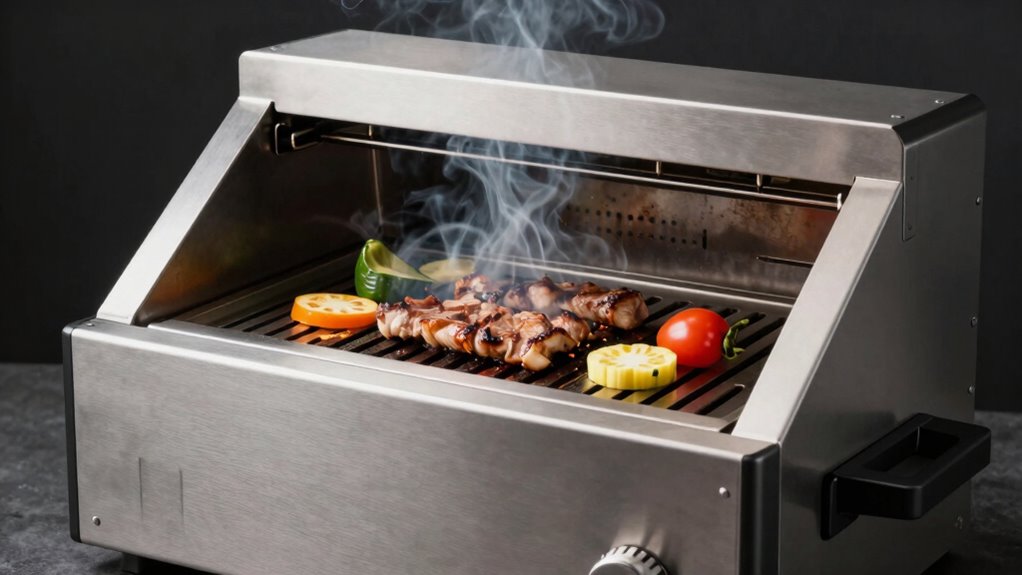
Choosing the right smokeless grill requires paying attention to several key features. First, consider the grill capacity to ensure it suits your typical cooking needs, whether for family meals or entertaining guests. A larger capacity allows you to cook more food at once, saving time and effort. Next, check the warranty coverage; a solid warranty indicates the manufacturer’s confidence in the product’s durability and gives you peace of mind if issues arise. Also, look for adjustable temperature controls for better cooking precision. Ease of cleaning is important too—non-stick surfaces and removable parts make cleanup easier. Finally, pay attention to the grill’s overall build quality and safety features, ensuring it’s reliable and safe for regular use.
How to Set Up and Maintain Your Grill for Less Smoke
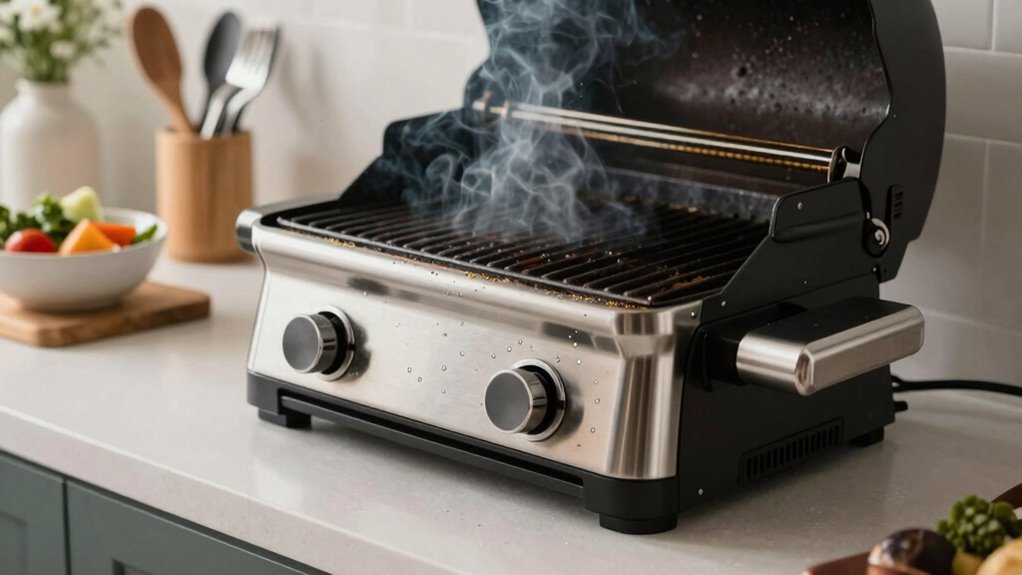
To set up and maintain your smokeless grill for less smoke, start by placing it on a stable, level surface in a well-ventilated area. Regular maintenance is key: clean your grill thoroughly after each use to prevent grease buildup, which can cause excess smoke. Install smoke alarms nearby and check them regularly to make sure they’re working correctly. Additionally, consider these tips:
Place your smokeless grill on a stable surface, clean regularly, and ensure proper ventilation for less smoke.
- Use a drip tray to catch fats and juices
- Preheat the grill properly before cooking
- Avoid overcrowding food on the grates
- Keep vents clear for proper airflow
- Perform routine grill cleaning to prevent smoke from residues
Troubleshooting Smoke Issues: What to Do When Your Grill Isn’t So Smokeless
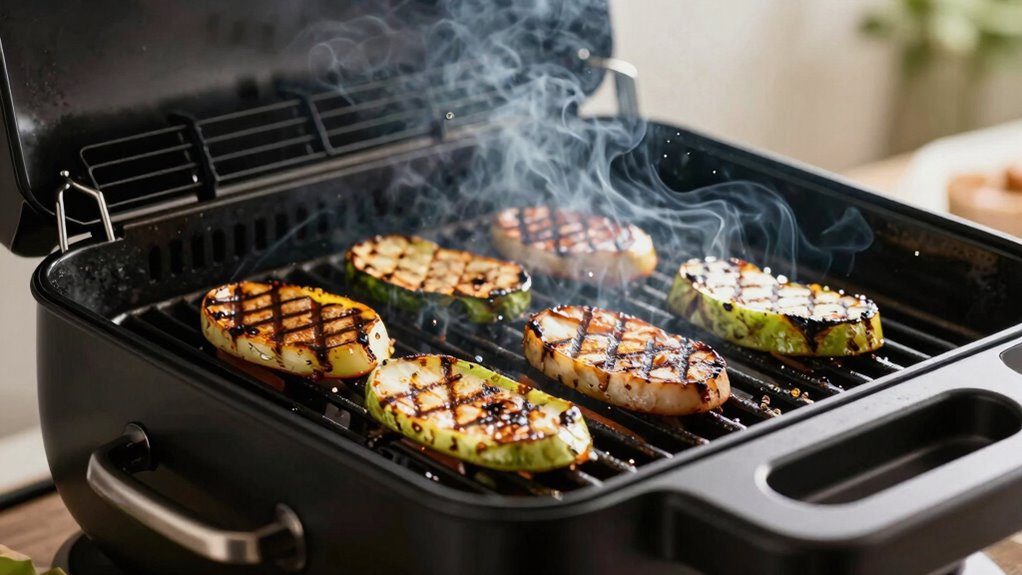
If your smokeless grill isn’t living up to its name and still producing excess smoke, it’s vital to identify the underlying cause quickly. Seasonal maintenance is essential—clean the drip trays and heating elements regularly to prevent buildup that can cause smoke. Also, check your grill placement; setting it too close to walls or in enclosed spaces traps smoke instead of dispersing it. Make sure your grill is on a stable, heat-resistant surface and keep it away from drafts that might interfere with airflow. Proper maintenance and strategic placement make a big difference in reducing smoke. If you’ve addressed these factors and still face issues, consider adjusting cooking techniques or consulting the manufacturer’s troubleshooting guide for specific advice.
How Close Can a Smokeless Grill Get to Zero Smoke? Realistic Expectations
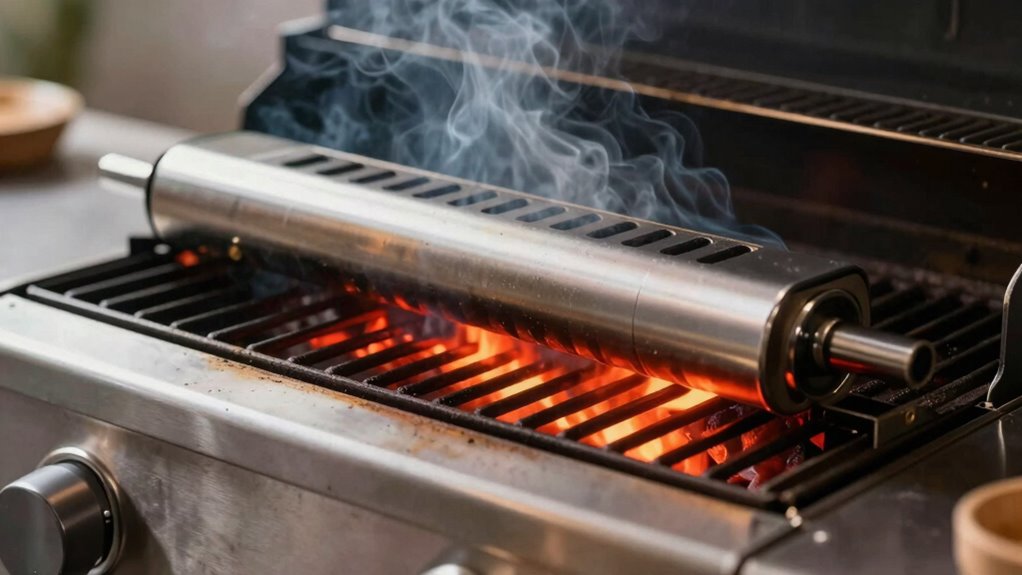
While many smokeless grills are marketed as nearly smoke-free, achieving absolute zero smoke is unrealistic. You can, however, minimize smoke considerably by understanding their limits. Expect some smoke during high-fat cooking or when juices hit hot surfaces. To keep safety concerns at bay and ensure ideal performance, follow maintenance tips like cleaning grease traps regularly and avoiding overloading. Remember, proper ventilation is essential to prevent smoke buildup. Here are key points to set realistic expectations:
- Smoke reduction varies with food type and cooking method
- Regular maintenance minimizes smoke emissions
- Avoid high-fat foods that produce more smoke
- Proper ventilation enhances safety and reduces smoke
- No grill is completely smoke-free—adjust your expectations accordingly
This way, you can enjoy your grill without surprises, knowing its capabilities and limits.
Frequently Asked Questions
Are Smokeless Grills Suitable for Indoor Use Safely?
Yes, smokeless grills are suitable for indoor use if you prioritize indoor ventilation and fire safety. Make sure your space has good airflow to reduce smoke and prevent buildup. Always follow the manufacturer’s safety guidelines, keep a fire extinguisher nearby, and avoid leaving the grill unattended. Proper ventilation and adherence to safety measures help you enjoy grilling indoors without risks.
Do All Smokeless Grills Produce the Same Smoke Reduction Results?
No, not all smokeless grills deliver the same smoke reduction results—think of them as chefs with different skills in smoke control. Some excel at cooking versatility and perfected smoke reduction techniques, while others just barely tame the smoke dragon. You’ll notice variations in how well they keep your kitchen smoke-free, so choose based on your priorities, because not all grills are equally committed to keeping your indoor air crisp and clear.
How Long Does a Typical Smokeless Grill Last Before Needing Replacement?
A typical smokeless grill lasts around 3 to 5 years before needing replacement, depending on usage and maintenance. You should keep an eye on its grill lifespan, as signs of wear or malfunction indicate it’s time for a replacement. Regular cleaning can extend its life, but eventually, you’ll need to take into account the replacement timeframe to guarantee ideal performance and safety during your grilling sessions.
Can I Cook All Types of Foods on a Smokeless Grill?
You can cook a wide variety of foods on a smokeless grill, thanks to its great cooking versatility. Whether you’re grilling steaks, vegetables, seafood, or even sandwiches, these grills handle food variety well. Just adjust the temperature and cooking time accordingly. Keep in mind some delicate items may require extra care, but overall, a smokeless grill offers flexibility to prepare most of your favorite dishes effortlessly.
What Are the Best Cleaning Practices to Maintain Smoke Reduction?
To maintain smoke reduction, you should follow proper cleaning routines and maintenance tips. After each use, wipe down the grill surface and remove any grease or food residue. Regularly clean the drip tray and heating elements to prevent buildup. Keep vents and fans clear of dust. By staying consistent with these practices, you’ll reduce smoke effectively and prolong your grill’s lifespan, ensuring ideal performance every time.
Conclusion
While no grill can claim to be truly smokeless, with the right setup and maintenance, you can get remarkably close—almost like taming a wildfire into a gentle flicker. Keep an eye on common issues, choose wisely, and follow best practices to minimize smoke. Remember, a well-maintained smokeless grill isn’t just a kitchen gadget; it’s your ticket to a smoke-free grilling paradise—where smoky chaos is almost entirely tamed.