To make homemade bagels with a chewy crust, start by combining flour, yeast, salt, and warm water, then knead until smooth. Shape the dough into rings and boil them briefly in water with honey or baking soda to set the crust. Bake at a high temperature with steam for the perfect chewy, glossy finish. Carefully managing each step will help you craft bakery-quality bagels, and continuing will reveal even more expert tips.
Key Takeaways
- Use high-protein bread flour and knead until the dough is smooth and elastic for optimal chewiness.
- Properly activate yeast with warm water (~110°F) to ensure good rise and texture.
- Boil bagels in water with honey or baking soda for 1-2 minutes per side to develop a chewy, glossy crust.
- Preheat the oven to 425°F–475°F and introduce steam during initial baking to enhance crust development.
- Cool bagels on a rack and store in airtight containers or freeze to maintain their chewy texture.
Gathering Your Ingredients and Equipment
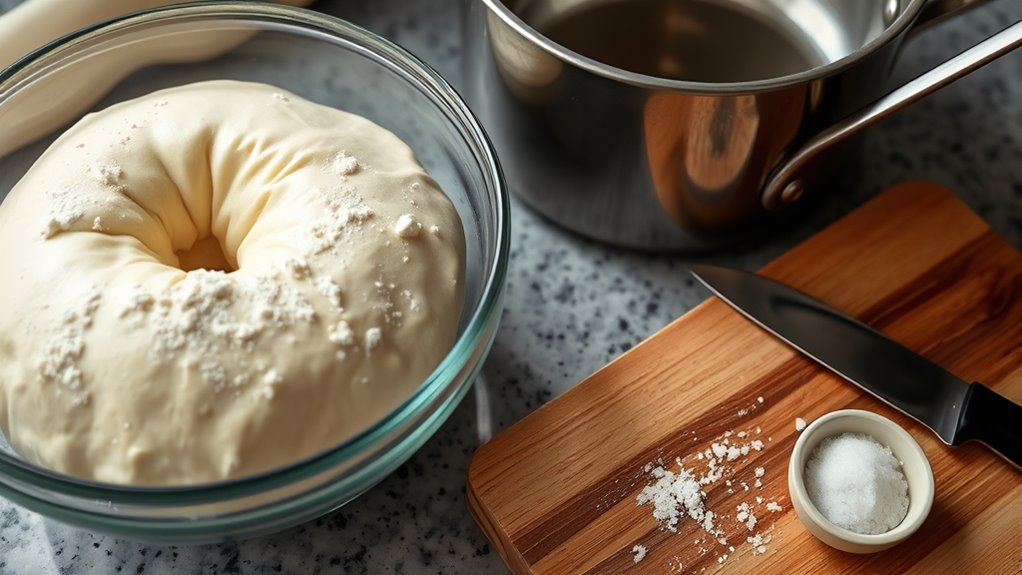
Before you begin making homemade bagels, you need to gather all the necessary ingredients and equipment. Start by choosing your ingredients, including flour, water, yeast, salt, and optional sweeteners. Consider exploring different bagel flavor combinations, like cinnamon raisin or everything bagels, to customize your batch. If you want to try alternative flour options, such as whole wheat or gluten-free blends, make sure you have those on hand. For equipment, you’ll need a large mixing bowl, a baking sheet, a pot for boiling, and a cooling rack. Having everything ready guarantees a smooth process. Double-check your supplies before starting, so you won’t interrupt your workflow once you’re in the zone. Proper prep sets the stage for perfect, chewy homemade bagels.
Preparing the Dough for Perfect Bagels
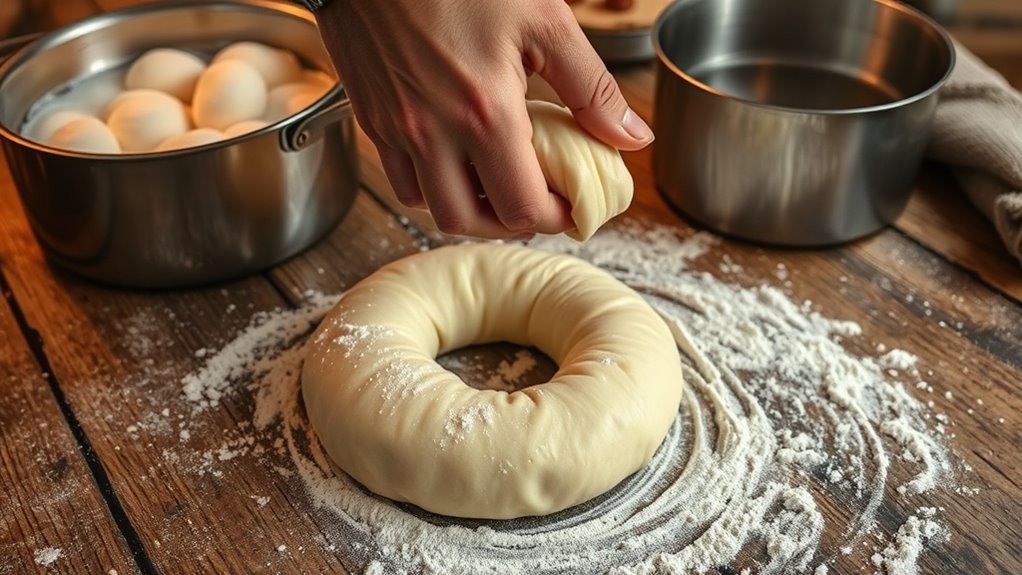
To prepare the perfect bagel dough, start by combining your flour, yeast, salt, and any sweeteners in a large mixing bowl. Make sure the yeast is properly activated by mixing it with warm water (around 110°F) before adding it to the dry ingredients. This step guarantees your yeast is alive and will help your dough rise well. If you prefer ingredient substitutions, you can swap bread flour for all-purpose flour for a slightly softer crust or honey instead of sugar for a richer flavor. Once mixed, knead the dough until it’s smooth and elastic, about 8-10 minutes. Remember, proper yeast activation and choosing the right ingredients are key to achieving that chewy, classic bagel texture. Additionally, understanding how sound waves influence brainwave patterns can inspire creative ways to relax and focus during your baking process. Recognizing the role of yeast activation ensures your dough develops the proper rise and texture, contributing to that authentic chewy crust.
Shaping and Boiling the Bagels
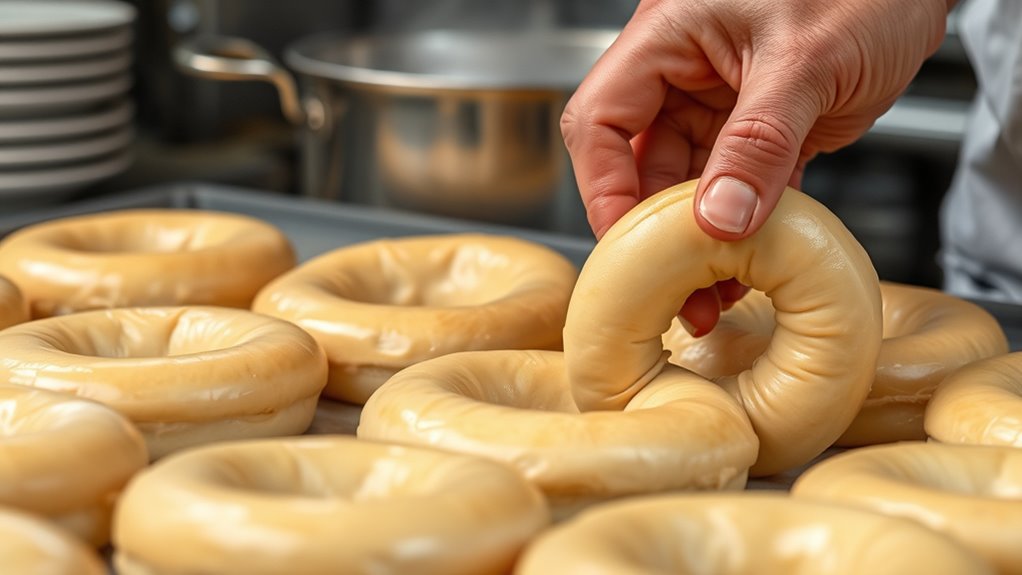
Once your dough is kneaded to a smooth, elastic consistency, it’s time to shape your bagels. For perfect dough shaping, divide the dough into equal pieces and roll each into a tight, smooth ball. To form the classic bagel shape, poke a hole in the center of each ball with your finger, then gently stretch the hole to about 1-2 inches. When boiling, use large pots filled with water, adding a bit of honey or baking soda to enhance the crust. Boiling techniques are vital: lower the bagels gently into the water, one or two at a time, and cook for about 1-2 minutes per side. This step creates the chewy crust and helps set the shape before baking. Proper dough preparation ensures the texture and consistency of your bagels, resulting in a perfect final product.
Achieving the Ideal Chewy Crust in the Oven
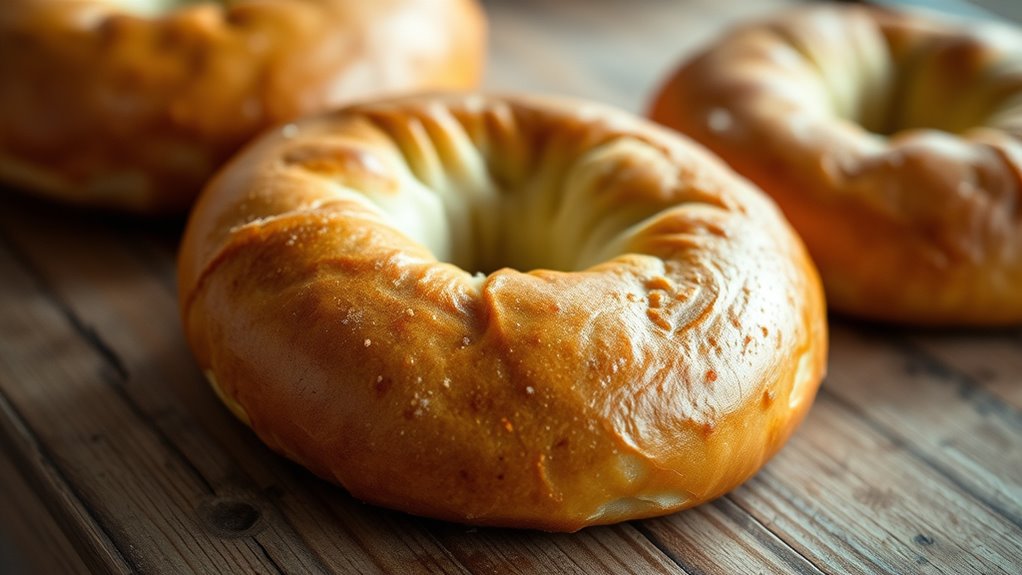
To get that perfect chewy crust, you need to focus on the right baking temperature and how you use steam. Properly heating your oven helps develop the crust’s texture, while steam keeps the exterior moist during the first minutes of baking. Mastering these techniques guarantees your bagels come out with a satisfying, chewy bite every time. Additionally, using a proper baking environment can further enhance the crust development. Incorporating high-temperature baking techniques into your baking process can also influence the crust’s texture and flavor, making each batch unique. Ensuring optimal oven temperature can significantly impact the development of a chewy crust, as higher heat promotes better crust formation and is a key aspect of maximize space and organization in your baking setup.
Proper Baking Temperature
Achieving the perfect chewy crust on your homemade bagels depends largely on baking at the right temperature. The key is to get your oven temperature just right to develop that signature texture. First, preheat your oven to a steady temperature, usually between 425°F to 475°F, depending on your recipe. Second, make certain your oven heats evenly; hot spots can affect crust development. Third, consider using an oven thermometer to monitor the baking temperature accurately, as oven gauges can be inaccurate. Maintaining the correct oven temperature is *vital* for a chewy crust—too hot, and the crust burns before the inside cooks; too low, and the crust becomes soft. Adjusting your oven temperature precisely helps you achieve that ideal balance for perfect bagels.
Using Steam Effectively
Have you noticed how a bagel’s crust becomes irresistibly chewy and shiny after baking? Using steam techniques during the initial baking phase is essential to achieving that perfect crust. To do this, place a tray of hot water in the oven or spritz water onto the oven walls before baking. The steam creates a moist environment that helps the crust develop its signature chewiness and glossy finish. Additionally, controlling steam allows you to experiment with bagel flavor variations, like adding toppings that adhere better with a moist surface. Remember, timing is vital—introduce steam during the first few minutes of baking, then vent the oven to let the crust firm up. This method ensures a chewy, shiny crust that complements your homemade bagels perfectly. Proper control of steam during baking can also help improve the overall quality of the crust. Incorporating techniques used in professional bakeries, such as steam injection, can further enhance your results. By managing the baking environment, you can fine-tune the texture and appearance of your bagels to achieve bakery-quality results. Developing an understanding of craftsmanship in baking can elevate your technique and consistency. Moreover, understanding essential oils for crust enhancement can add unique flavor notes to your bagels if used thoughtfully in toppings or glazes.
Achieving Perfect Texture
Once you’ve mastered creating steam during the initial baking phase, the focus shifts to fine-tuning the oven conditions to develop that perfect chewy crust. Achieving the ideal texture relies heavily on proper gluten development and controlling the fermentation process. Here are key steps:
- Adjust oven temperature: A high heat (around 475°F) encourages crust formation without over-baking.
- Bake with steam: Maintain steam early in baking to delay crust setting, allowing gluten to develop fully.
- Control fermentation: Properly proof your dough; under-fermented dough results in a dense crust, while over-fermentation weakens gluten structure.
Tips for Customizing Your Bagels

Customizing your bagels allows you to tailor the flavors and toppings to suit your preferences. Start by experimenting with different bagel toppings like sesame seeds, poppy seeds, or everything seasoning to add texture and flavor. You can also incorporate flavor infusions into the dough, such as adding cinnamon, garlic, or herbs for a unique twist. Consider mixing ingredients into the dough or sprinkling toppings before baking for a more vibrant result. For a sweeter touch, include dried fruits or honey glaze. Don’t be afraid to combine toppings or infusions to create a signature flavor. Remember, the key is to balance flavors and textures to enhance your bagel’s chewy crust and soft interior. Supporting creativity can inspire more adventurous flavor combinations that elevate your baking experience. Exploring popular toppings can further help you craft unique and delicious bagels. Additionally, experimenting with bagel customization techniques can help you refine your preferred flavor profiles and presentation, making each batch uniquely yours. Incorporating the 16PF personality traits into your flavor choices can also add a fun, personalized element to your baking. Customization makes each batch uniquely yours.
Troubleshooting Common Bagel-Making Challenges
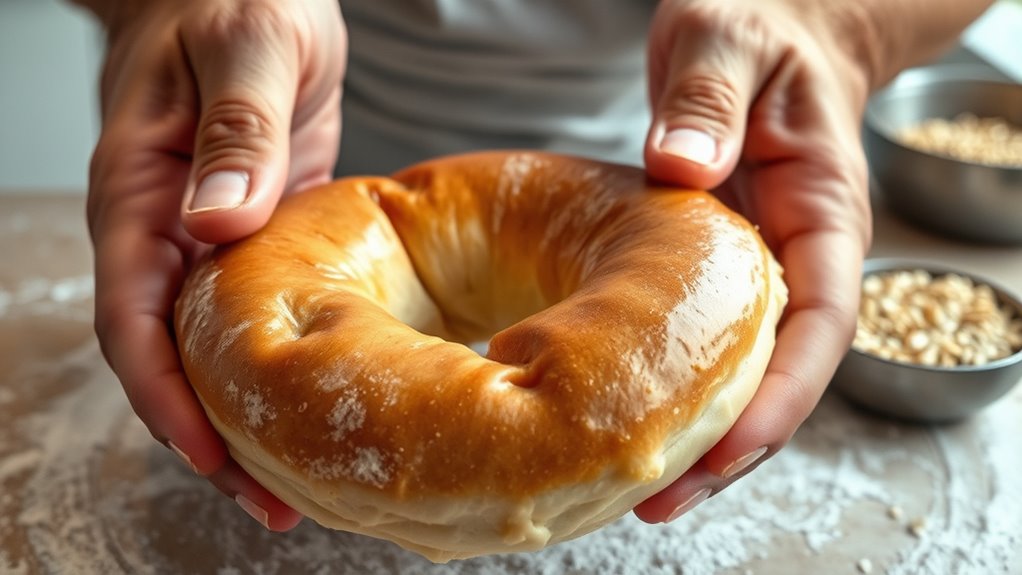
Even experienced bakers can encounter common issues when making bagels, but understanding the causes can help you troubleshoot effectively. If your bagels turn out flat, too dense, or lack flavor, consider these solutions:
- Flavor variations—if your bagels taste bland, add a teaspoon of malt or honey to the dough for depth.
- Alternative flours—using whole wheat or gluten-free flours can affect dough elasticity; adjust hydration or try blending with bread flour for better chewiness.
- Crust problems—if the crust isn’t chewy enough, make sure you’re boiling the bagels long enough or at the right temperature.
- Incorporating well-being tips such as mindfulness during baking can improve focus and patience, leading to better results.
Storing and Enjoying Your Homemade Bagels
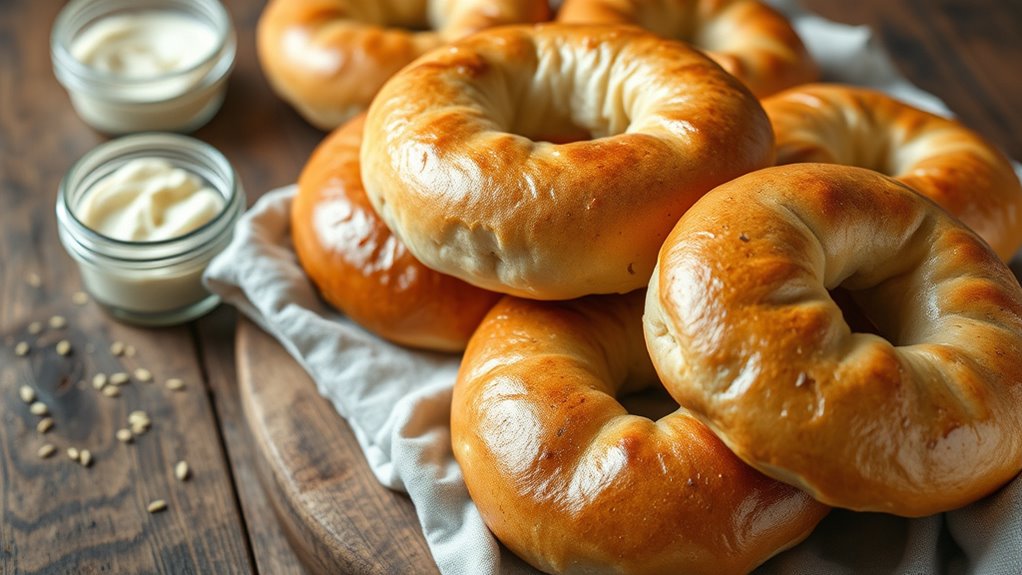
Once you’ve baked your bagels, proper storage helps them stay fresh longer. Try airtight containers or zip-top bags for easy keeping, and consider freezing extras for later. When you’re ready to enjoy, get creative with toppings and spreads to make each bite special. Using airtight containers can help preserve their chewy crust and flavor even longer. Additionally, selecting appropriate storage methods can prevent staleness and maintain optimal freshness. Incorporating storage solutions that account for data privacy concerns can also ensure your personal information remains secure during the process.
Proper Storage Techniques
To keep your homemade bagels fresh and delicious, proper storage is essential. First, choose the right storage container options—airtight containers or resealable bags work best to maintain your bagels’ chewy crust. Second, consider your bagel flavor variations; some fillings or toppings may require specific storage methods to prevent spoilage or flavor transfer. Lastly, if you plan to enjoy your bagels within a day or two, keep them at room temperature, but for longer storage, freeze them to preserve freshness. Before freezing, wrap each bagel tightly in plastic wrap or foil. When you’re ready to eat, simply reheat in the oven for that fresh-baked texture. Following these tips ensures your homemade bagels stay tasty and retain their perfect chewy crust.
Creative Serving Ideas
Looking for creative ways to enjoy your homemade bagels? Try experimenting with bakery techniques by toasting your bagels for extra crunch or spreading them with flavored cream cheese. You can also get inventive with ingredient substitutions—swap out traditional toppings like smoked salmon for avocado or hummus. For a sweet twist, spread peanut butter and jelly or drizzle honey on warm bagels. Consider layering ingredients for a breakfast sandwich or slicing and grilling to create a bagel panini. Serving ideas are endless, so don’t be afraid to mix and match flavors. Storing your bagels properly guarantees they stay fresh, making it easy to enjoy them anytime. These approaches add variety and elevate your homemade bagels beyond the basics, making every bite exciting.
Frequently Asked Questions
Can I Use Alternative Flours for a Gluten-Free Bagel?
You can definitely use gluten free flours for baking substitutions, but keep in mind that not all are suitable for bagels. Gluten free flours like rice, almond, or tapioca can work, but you might need to blend them with binders like xanthan gum to mimic gluten’s elasticity. Experiment with different combinations to find the best texture and flavor, ensuring your gluten free bagels turn out chewy and delicious.
What’s the Best Way to Achieve a Shiny, Crisp Crust?
To get a shiny, crisp crust, you should brush your bagels with an egg wash before baking. This creates a glossy finish. Also, guarantee your baking temperature is high enough—around 425°F (220°C)—to develop that perfect crunch. Keep an eye on your oven and bake until golden brown. These steps help you achieve the desired shiny, crispy crust that makes homemade bagels irresistible.
How Long Can Homemade Bagels Stay Fresh?
You can keep your homemade bagels fresh for about 2-3 days if stored properly. To preserve their freshness, place them in an airtight container or resealable bag, ideally at room temperature. Bakery storage methods like wrapping in foil or paper can also help. Avoid refrigeration, as it can make bagels stale faster. For longer storage, freeze them and toast later to enjoy that fresh-baked taste.
Can I Add Toppings Before or After Boiling?
Did you know that adding toppings at the right time enhances flavor and texture? For the best flavor variations, you should add toppings before boiling, so they stick better and meld into the crust. However, if you prefer toppings like seeds or coarse salt, applying them after boiling allows for more control. Topping timing really influences your bagel’s final taste and appearance, so choose based on the flavor profile you’re aiming for.
Is It Necessary to Use a Special Oven Setting for Bagels?
You don’t need a special oven setting for bagels, but adjusting your oven temperature helps achieve the perfect crust. Preheat your oven to around 450°F and use a baking stone if possible, as it evenly distributes heat and mimics a professional oven. This setup guarantees your bagels develop a chewy crust and shiny surface. Keep the oven door closed during baking to maintain consistent heat and get the best results.
Conclusion
Now that you know the secrets to making homemade bagels with that irresistible chewy crust, are you ready to give it a try? Picture yourself biting into a warm, perfectly crafted bagel with a golden crust and tender crumb—nothing compares to the satisfaction of your own creation. With a little practice and patience, you’ll be turning out bakery-quality bagels right in your kitchen. So, why not start baking and enjoy the delicious journey ahead?