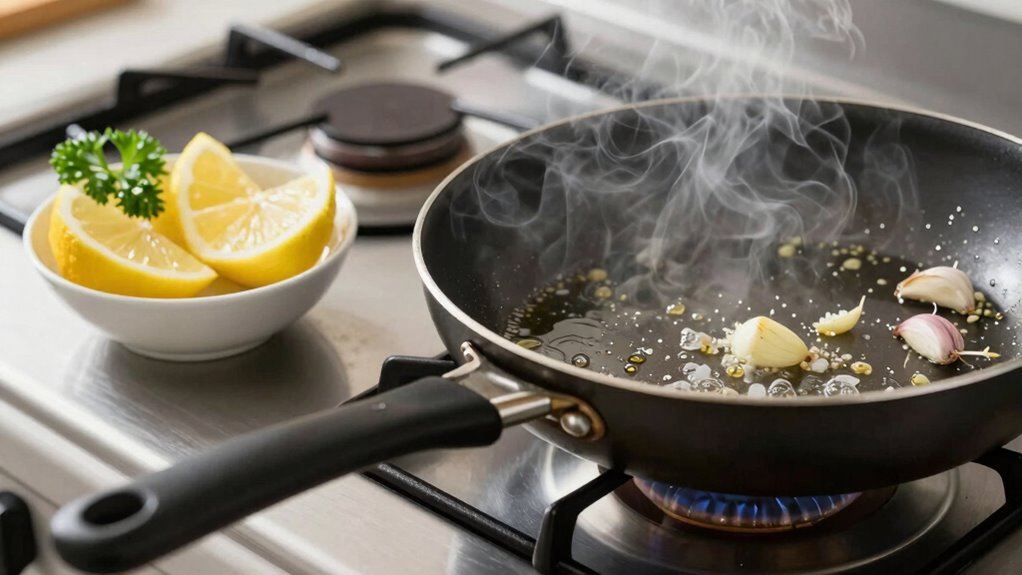

To tackle lingering smells after fatty foods, start by opening windows and using exhaust fans or range hoods during and after cooking to improve ventilation. Use an air purifier with HEPA and activated carbon filters to trap particles and odors, and clean surfaces and fabrics regularly with warm soapy water or vinegar solutions. Placing baking soda or charcoal in your kitchen helps absorb remaining odors. Keep these tips in mind, and you’ll discover more ways to keep your space fresh long after cooking.

Get kitchen gear delivered free — and shop member deals
- Fast, free delivery on millions of items
- Access to Prime Big Deal Days deals on October 6–7
- Prime Video, Amazon Music and more included
Key Takeaways
- Use air purifiers with HEPA and activated carbon filters immediately after cooking to trap particles and absorb odors.
- Ventilate the space by opening windows or using exhaust fans during and after cooking.
- Clean all surfaces, fabrics, and kitchen items regularly to remove grease residues that trap lingering smells.
- Place natural odor absorbers like baking soda or activated charcoal in the kitchen to maintain freshness.
- Run air purifiers for at least 30 minutes post-cooking to accelerate odor removal and restore clean air.
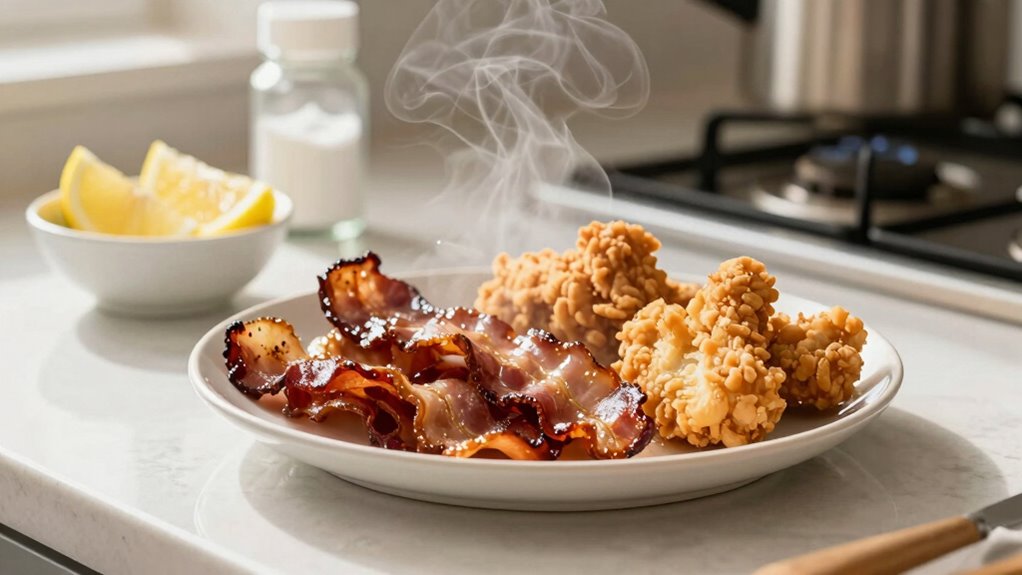
After enjoying a greasy or fatty meal, you might notice lingering odors that are tough to eliminate. These cooking odors tend to stick around long after your meal is over, filling your space with a scent that’s both unpleasant and stubborn. Luckily, there are effective ways to combat these smells and restore fresh air to your home. The key lies in proper air purification methods and smart cleaning habits that target the source of the odors rather than just masking them.
First, it’s important to understand that cooking odors from fatty foods often settle on surfaces, fabrics, and in the air itself. To clear them out, you need to focus on air purification. Turning on an air purifier equipped with a HEPA or activated carbon filter can make a significant difference. HEPA filters trap small particles, including grease particles that float in the air after cooking. Activated carbon filters, on the other hand, absorb odors and volatile compounds responsible for those lingering smells. Running the purifier for at least 30 minutes after cooking helps remove the odors from the environment, making your space smell fresher faster.
In addition to using an air purifier, you can also improve air quality by ventilating your kitchen thoroughly. Open windows and doors to create cross-ventilation that pushes the cooking odors outside. If natural ventilation isn’t possible, run your exhaust fan or range hood while cooking, and keep it on for a while afterward to draw out lingering smells. This simple step can drastically reduce the amount of odor particles that settle in your home, making air purification more effective. Understanding how air filtration systems work can help you choose the right solution for your space. Incorporating proper ventilation techniques enhances the overall effectiveness of odor removal efforts.
Cleaning surfaces is equally important. Grease and food residues cling to countertops, stovetops, and cabinets, continuously releasing odors. Wipe down these surfaces with warm soapy water or a mixture of vinegar and water to cut through grease and neutralize smells. Don’t forget to wash dishcloths, sponges, and towels regularly, as they can harbor odors themselves. Cleaning fabrics that trap odors, like curtains or chair cushions, with appropriate cleaning agents can also help reduce residual smells.
Finally, natural odor absorbers like baking soda or activated charcoal can be placed in your kitchen or near cooking areas. These substances absorb lingering odors and help keep the air fresh over time. Consider placing bowls of baking soda or charcoal in your kitchen, especially after cooking fatty foods, to help maintain a cleaner, odor-free environment. Combining air purification with diligent cleaning and ventilation creates an all-encompassing approach, ensuring cooking odors don’t linger long enough to bother you after your meal.
HEPA activated carbon air purifier for kitchen
As an affiliate, we earn on qualifying purchases.
As an affiliate, we earn on qualifying purchases.
Frequently Asked Questions
Can Air Purifiers Eliminate Lingering Food Smells Effectively?
Yes, air purifiers can effectively eliminate lingering food smells. They work by improving air circulation and using filters that absorb and trap scents. Look for purifiers with activated carbon filters, which are great at scent absorption, especially for fatty food odors. Keep the purifier running in the kitchen or dining area after cooking, and you’ll notice the smell diminishes faster, leaving your space fresher and more inviting.
Are There Natural Remedies to Remove Fatty Food Odors?
Think of herbal remedies and citrus scents as a revitalizing breeze sweeping away stubborn kitchen odors. You can simmer herbs like rosemary or thyme, or use citrus peels, to naturally neutralize fatty food smells. These natural remedies act like a gentle gust, clearing out the lingering aroma and replacing it with a crisp, clean scent. Incorporate them into your routine for a simple, chemical-free way to freshen your space effortlessly.
How Long Do These Smells Typically Last in a Home?
Usually, these smells last a few hours to a day in your home, but it varies with factors like kitchen ventilation and odor absorption. If you open windows and turn on fans, you help air out the space faster. Using odor absorbers like baking soda or activated charcoal can also speed up the process. Consistent ventilation and odor absorption techniques are key to minimizing lingering fatty food smells quickly.
Does Washing Fabrics Help Remove Lingering Food Odors?
Washing fabrics is like hitting the reset button on stubborn odors, and it definitely helps with lingering food smells. Fabric cleaning, especially with odor-absorbing detergents or adding baking soda, can pull those greasy scents out of your clothes, curtains, or upholstery. Regular laundering breaks down odor particles, leaving your fabrics fresh. So go ahead—clean those fabrics, and enjoy a burst of fresh air without the unwanted aftertaste of fatty foods.
Are Commercial Odor Eliminators Safe for Daily Use?
Commercial odor eliminators are generally safe for daily use if you follow the instructions carefully. However, you should consider chemical safety and potential long-term effects. Some products may contain strong chemicals that could irritate your skin or respiratory system over time. It’s best to use them in well-ventilated areas and opt for natural or less harsh options when possible. Regularly check labels to guarantee safe, responsible usage.
Conclusion
So, next time your kitchen smells like a greasy diner on steroids, remember, you’re the master of odor warfare. Arm yourself with lemon, vinegar, or a good old-fashioned ventilation system. After all, who wouldn’t want to win the battle against stubborn fatty fumes and reclaim their airspace? Just think of yourself as the hero of your own olfactory saga—minus the cape, but with plenty of citrus. Smell ya later, greasy ghosts!
Fall Picks
fall essentials
As an affiliate, we earn on qualifying purchases.