If your nonstick pan starts peeling, stop using it immediately to avoid ingesting flakes. To fix or prevent further damage, hand wash gently with non-abrasive sponges, avoid high heat, and use wooden or silicone utensils. Regularly inspect for scratches or peeling, and replace cookware when the coating is noticeably worn. Proper care can extend its life, but knowing how to care for and when to replace it helps keep your cooking safe—stay tuned to learn more.
Key Takeaways
- Use silicone or wooden utensils to prevent scratching the nonstick surface.
- Avoid cooking at high temperatures to reduce coating wear and peeling risk.
- Hand wash with mild detergents and soft sponges to preserve the coating’s integrity.
- Regularly inspect your cookware for signs of peeling or damage to address issues early.
- Replace peeling or heavily worn nonstick pans promptly to ensure safety and health.
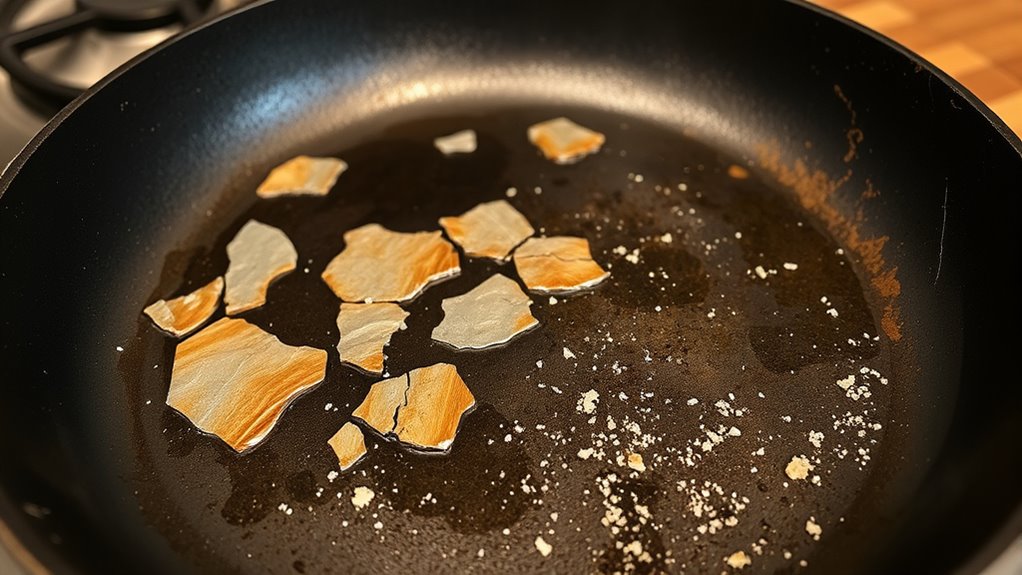
Have you ever noticed your nonstick pan starting to peel? It’s frustrating, especially since you rely on it for easy cooking and cleanup. Peeling usually signals that the coating has worn out, but it can also be linked to improper cookware maintenance. To prevent this from happening, consider switching to eco friendly cookware options that are designed to last longer and are gentler on the environment. These alternatives often have more durable coatings or are made from natural materials, reducing the risk of peeling and exposing you to harmful chemicals. Staying mindful of how you care for your cookware is essential; gentle cleaning, avoiding metal utensils, and not overheating your pans can markedly extend their lifespan.
When your nonstick cookware begins to peel, it’s tempting to keep using it, but that’s risky. Peeling coatings can flake off into your food, which is not only unappetizing but potentially harmful. The first step is to assess the extent of the damage. If the peeling is minor, you might be able to continue using it temporarily, but it’s best to replace it sooner rather than later. For ongoing cookware maintenance, always hand wash your nonstick pans with soft sponges and mild detergents. Avoid abrasive scrubbers that can scratch and weaken the coating. Also, steer clear of high heat settings, as excessive heat breaks down the nonstick surface faster, leading to peeling.
Another proactive approach involves selecting the right cookware from the outset. Opt for eco friendly cookware made from ceramics, cast iron, or stainless steel, which don’t peel or degrade like traditional nonstick coatings. These materials often require a bit more care but tend to be more durable and safer. When using any nonstick pan, always follow the manufacturer’s instructions regarding heat and cleaning. Proper cookware maintenance isn’t just about prolonging the life of your pans; it’s also about ensuring your food stays safe and healthy. Using the right utensils—preferably silicone or wooden—can prevent scratches that compromise the coating. Regularly checking for signs of wear and replacing damaged cookware helps prevent ingestion of peeling bits.
Additionally, being aware of coating degradation and how it occurs can help you make informed choices about your cookware investments.
Frequently Asked Questions
Can Nonstick Pans Be Repaired After Peeling?
You can’t really repair nonstick pans after peeling, but you do have some options. Repair options are limited because the coating itself can’t be fixed easily. You might consider coating replacement if the pan allows for it, but most nonstick pans aren’t designed for this. Usually, replacing the pan is the best choice to ensure safe, nonstick cooking and to avoid health risks from peeling coating.
How Long Does Nonstick Coating Typically Last?
Think of your nonstick pan like a delicate dance partner—if you treat it well, it lasts longer. Typically, the coating lasts about 3 to 5 years, depending on care tips and durability factors. To extend its life, avoid metal utensils, high heat, and harsh cleaning. With gentle handling, you’ll enjoy smooth cooking and maximize your pan’s performance for years to come.
Are There Eco-Friendly Nonstick Pan Options?
Yes, you can find eco-friendly nonstick pan options made with sustainable coatings and eco-friendly materials. Look for pans with ceramic, silicone, or bio-based nonstick coatings, which are safer for the environment and your health. These options avoid harmful chemicals like PTFE and PFOA. By choosing pans with sustainable coatings, you support eco-conscious manufacturing and reduce your carbon footprint while enjoying nonstick convenience.
What Brands Are Most Resistant to Peeling?
You’ll find that brands like All-Clad, Scanpan, and GreenPan are most resistant to peeling because they invest in superior coating technology and focus on brand durability. These manufacturers use advanced materials and manufacturing processes that enhance the longevity of their nonstick coatings. When choosing a pan, look for brands known for high-quality construction and innovative coating technology, which helps prevent peeling and extends the life of your cookware.
How Does Cleaning Affect Nonstick Longevity?
Scratched surface or not, improper cleaning can shorten your nonstick pan’s life. Using harsh scrubbing pads or abrasive cleaners damages the coating, making peeling more likely. Instead, opt for gentle cleaning methods like hand washing with soft sponges and mild detergents. This care preserves the nonstick surface, preventing scratches and extending its lifespan. Remember, how you clean directly impacts how long your nonstick stays smooth and effective.
Conclusion
To keep your nonstick pan shining like a mirror, treat it gently and avoid harsh scrapes. Think of your pan as a delicate dance partner—handle it with care to prevent peeling and preserve its glide. With proper love and attention, your cookware will stay smooth and reliable, turning every cooking session into a graceful performance. Protect your investment, and your culinary future will stay bright and beautiful, free from peeling setbacks.