
To prevent grease buildup around heating areas, you should use proper ventilation systems like quality range hoods that pull away fumes and grease. Keep surfaces clean by wiping them down immediately after cooking and regularly cleaning filters and vents. Make practical cooking choices, such as covering pots, lowering heat when frying, and using splatter guards. Installing barriers or grease screens near heat sources and ensuring good airflow around the kitchen also help. For more tips, keep exploring effective strategies.

Get kitchen gear delivered free — and shop member deals
- Fast, free delivery on millions of items
- Access to Prime Big Deal Days deals on October 6–7
- Prime Video, Amazon Music and more included
Key Takeaways
- Use high-quality range hoods and ensure they are properly maintained and cleaned regularly.
- Cover pots and pans to contain grease splatters during cooking.
- Improve kitchen airflow with strategic ventilation to direct grease away from heating areas.
- Install grease filters or screens around heat sources to trap residual grease particles.
- Wipe down surfaces immediately after cooking to prevent grease buildup.
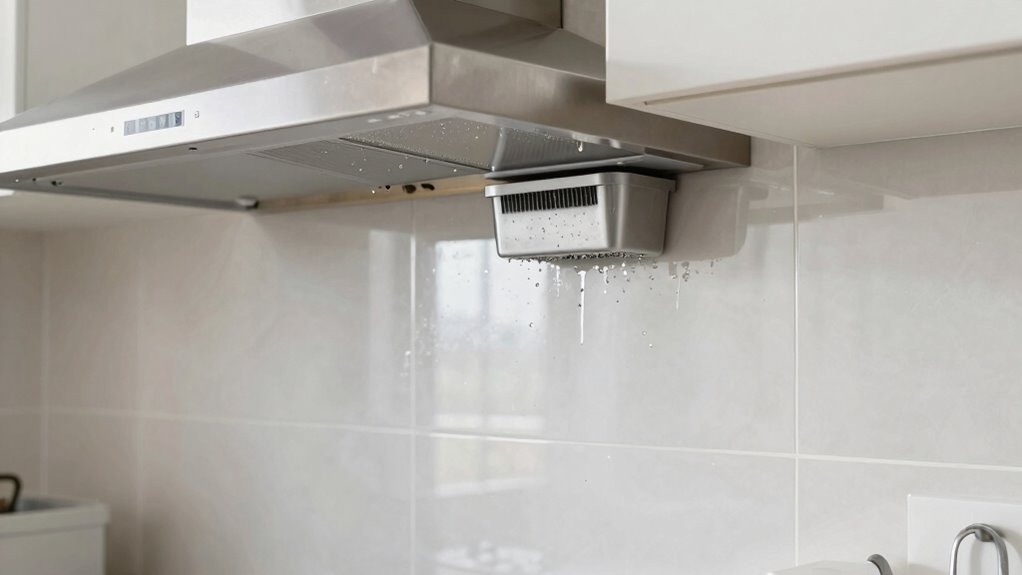
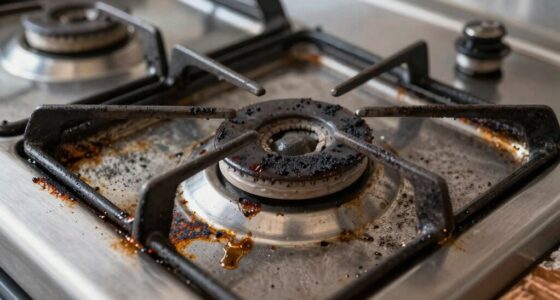
Grease buildup around heating areas can pose safety hazards and make cleaning more difficult. When you cook, especially with frying or grilling, cooking fumes release tiny grease particles into the air. These fumes tend to settle on nearby surfaces, including radiators, stoves, and other heating equipment. Over time, this creates a greasy film that attracts dust and dirt, making it harder to keep your kitchen clean. More importantly, accumulated grease can become a fire hazard if not addressed. That’s why managing cooking fumes and guaranteeing proper ventilation are essential steps to prevent grease from building up around heating areas.
Grease buildup on heating surfaces causes fire hazards and makes cleaning more difficult. Proper ventilation is essential.
Your ventilation systems are your first line of defense. When functioning correctly, they pull cooking fumes and airborne grease away from your cooking zone, preventing excess grease from settling onto surfaces. Regularly cleaning or replacing filters in range hoods and exhaust fans ensures they operate efficiently. A well-maintained ventilation system captures a significant portion of the fumes before they can settle on your heating areas. Installing high-quality range hoods that extend over the stove can dramatically reduce the amount of grease reaching your walls and appliances. Keep in mind that even the best systems need routine maintenance—clean filters weekly and check vents for blockages to sustain ideal airflow. Maintaining proper ventilation efficiency is crucial for reducing grease buildup and ensuring safety. Additionally, choosing the right ventilation equipment for your kitchen layout can further enhance grease control and air quality.
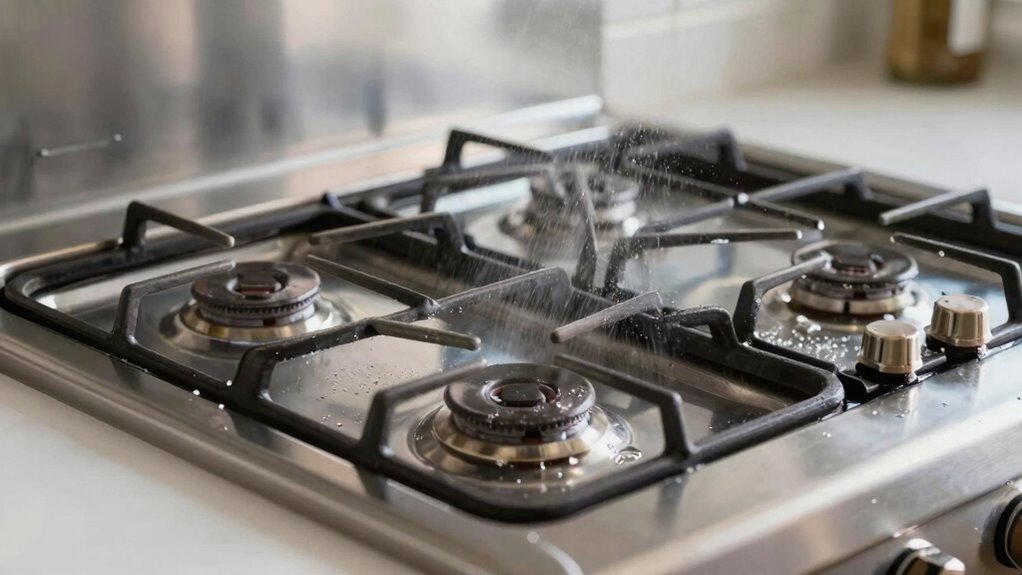
In addition to proper ventilation, you should implement practical cooking habits. Cover pots and pans whenever possible to contain fumes and grease. Lowering the heat when cooking greasy foods can reduce the amount of airborne grease particles released into the air. Using splatter guards also helps trap grease at the source, preventing it from dispersing into the space. When you finish cooking, wipe down surfaces immediately to prevent grease from settling and hardening over time. Regular cleaning with degreasers helps break down stubborn grease deposits before they become a bigger problem. This routine not only keeps your heating areas cleaner but also minimizes fire risks. Additionally, understanding grease deposits and how they form can help you better target your cleaning efforts and prevent buildup. Proper ventilation plays a crucial role in reducing airborne grease and keeping your kitchen safer, especially around heating units.
Another smart move is to create a barrier between your cooking and heating zones. If your kitchen layout allows, keep grease-prone cooking activities away from radiators or heating vents. Installing grease filters or screens around heating equipment can catch residual grease particles before they settle. Ensuring good air circulation throughout your kitchen can also help prevent grease from settling on surfaces. Properly ventilating your kitchen and practicing good cleaning habits mean you’re actively reducing the buildup of grease around your heating areas. Ultimately, staying vigilant about managing cooking fumes and maintaining your ventilation systems saves you time and effort in cleaning while keeping your kitchen safer.
As an affiliate, we earn on qualifying purchases.
Frequently Asked Questions
Can Using Fans Reduce Grease Buildup Near Heaters?
Yes, using fans can help reduce grease buildup near heaters by improving airflow and disrupting stagnant air, which limits grease particles settling in that area. Fans promote better moisture control, preventing grease from accumulating on surfaces. Keep the fans at a safe distance from heat sources to avoid airflow disruption caused by excessive turbulence. Proper ventilation, combined with fans, effectively minimizes grease buildup around heating areas.
Are There Specific Cleaning Agents Recommended for Grease Prevention?
For grease prevention, you should use cleaning agents specifically designed for grease removal, like degreasers or dish soap mixed with warm water. These agents break down grease effectively and make cleaning easier. Regularly wiping down surfaces near heaters with these cleaning agents prevents grease buildup, ensuring your heating areas stay clean and safe. Always follow the manufacturer’s instructions for best results and safety.
How Often Should Heating Areas Be Inspected for Grease Accumulation?
You should include heating areas in your maintenance schedule with an inspection frequency of at least once every three months. Regular inspections help you catch grease buildup early before it becomes a fire hazard or causes equipment malfunction. During each check, look for signs of grease accumulation, and clean or address issues promptly. Staying consistent with these inspections guarantees your heating areas remain safe and efficient, preventing potential problems down the line.
Does the Type of Heating System Affect Grease Buildup?
Yes, the type of heating system influences grease buildup. For instance, oil or gas heaters generate more heat and potential fumes, which can cause grease to accumulate faster around vents and heating areas. Electric systems tend to produce less grease-related issues since they operate more cleanly. You should regularly inspect your heating system, especially if it’s oil or gas, to prevent excessive grease accumulation and reduce fire hazards.
Are There Safety Precautions When Cleaning Grease Around Heat Sources?
Yes, there are safety precautions when cleaning grease around heat sources. You should always prioritize fire safety by ensuring the heat source is turned off and cooled down before cleaning. Use appropriate cleaning tools, like non-sparking brushes and damp cloths, to avoid sparks or static. Keep a fire extinguisher nearby, and never use flammable cleaning agents. These steps help prevent accidents and keep your space safe.
Conclusion
By keeping your cooking area clean and dry, you’re like a vigilant gardener tending to delicate blooms, preventing grease from taking root and spreading. Regularly wiping down surfaces and using protective barriers creates a shield, much like a fortress guarding precious treasures. Think of your kitchen as a well-oiled machine—when you maintain it, grease remains just a fleeting shadow, never settling in to tarnish your culinary haven. Stay proactive, and your kitchen will shine bright and grease-free.
Fall Picks
fall essentials
As an affiliate, we earn on qualifying purchases.