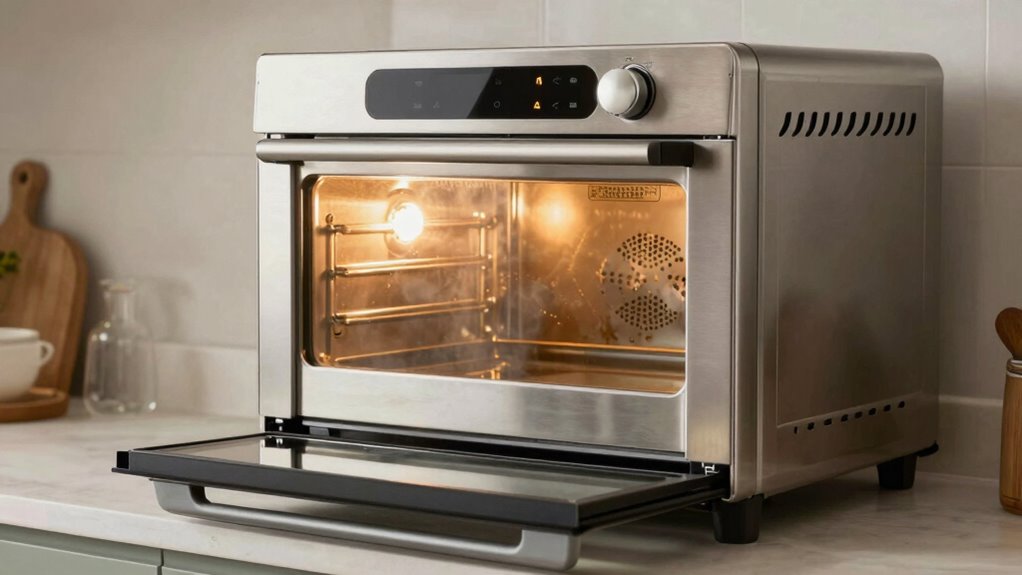
The self-clean cycle on countertop ovens uses high heat to burn off baked-on food and grease, making it effective for reducing food residues inside the oven. However, it can’t clean external surfaces, stubborn stains, or heavy spills like melted plastic. It’s best for routine grime, not all messes. Proper maintenance and understanding its limits help keep your oven functioning well—continue to explore for detailed tips and safety advice.
Key Takeaways
- The self-clean cycle effectively removes baked-on food residues, grease, and charred spills inside the oven.
- It cannot clean external surfaces, removable parts, or non-baked-on stains.
- Heavy or melted materials like plastic or thick grease may require manual cleaning.
- Proper ventilation and oven positioning enhance cleaning effectiveness and safety.
- Regular maintenance prevents buildup, ensuring the self-clean cycle works efficiently.
How Does the Self-Clean Cycle Work on Countertop Ovens?

The self-clean cycle on countertop ovens works by heating the interior to extremely high temperatures, which burns off food residues and grease. During this process, you should prioritize oven safety by ensuring the oven is empty and properly ventilated, as the high heat can produce smoke or odors. To maintain safety and efficiency, follow the recommended cleaning frequency—usually once a month or when buildup becomes noticeable. This cycle effectively reduces grime without manual scrubbing, but it’s important not to overuse it, as excessive heating may strain the oven components. Always stay nearby during the cycle and avoid opening the oven door until it’s completely finished. Proper use of the self-clean feature helps keep your countertop oven clean and safe to operate. Additionally, understanding the self-clean mechanism can help prevent damage and ensure optimal performance over time. Being aware of the self-clean cycle limitations can also help you avoid potential issues and prolong your oven’s lifespan. Regular maintenance and awareness of how the high-temperature process works can further enhance your oven’s longevity and safety. Incorporating proper ventilation can also reduce the buildup of odors and smoke during cleaning.
What Messes Can the Self-Clean Cycle Remove Effectively?
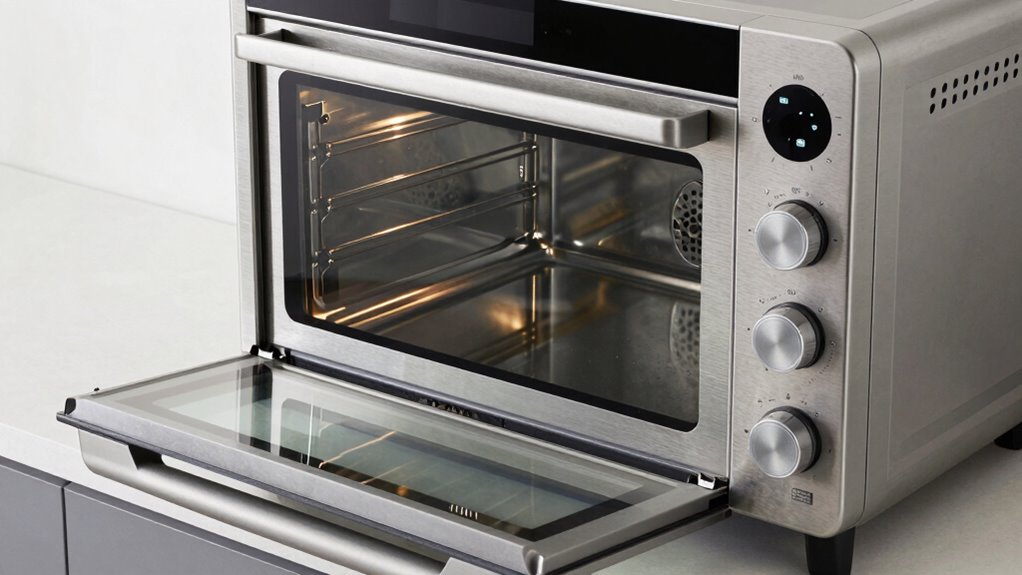
The self-clean cycle effectively removes common deposits like baked-on food, grease, and grime that accumulate during regular oven use. When it comes to oven cleaning, this cycle targets stubborn residues that are difficult to wipe away manually. It’s especially good at breaking down carbonized spills and splatters on the oven walls and floor. Mess removal is efficient for food drippings that have become hard or charred, making cleanup easier and quicker. Additionally, the cycle is designed to clean oven surfaces rather than removable or external parts. It’s important to understand the cleaning capabilities of the cycle and what it cannot do. Keep in mind that the cycle is optimized for baked-on residues and may not be suitable for all types of messes or materials. For best results, understanding the limitations of the cycle can help prevent damage or ineffective cleaning attempts. Overall, the self-clean cycle is a helpful tool for tackling baked-on messes, saving you time and effort in oven cleaning.
What Limitations Does the Self-Clean Cycle Have?
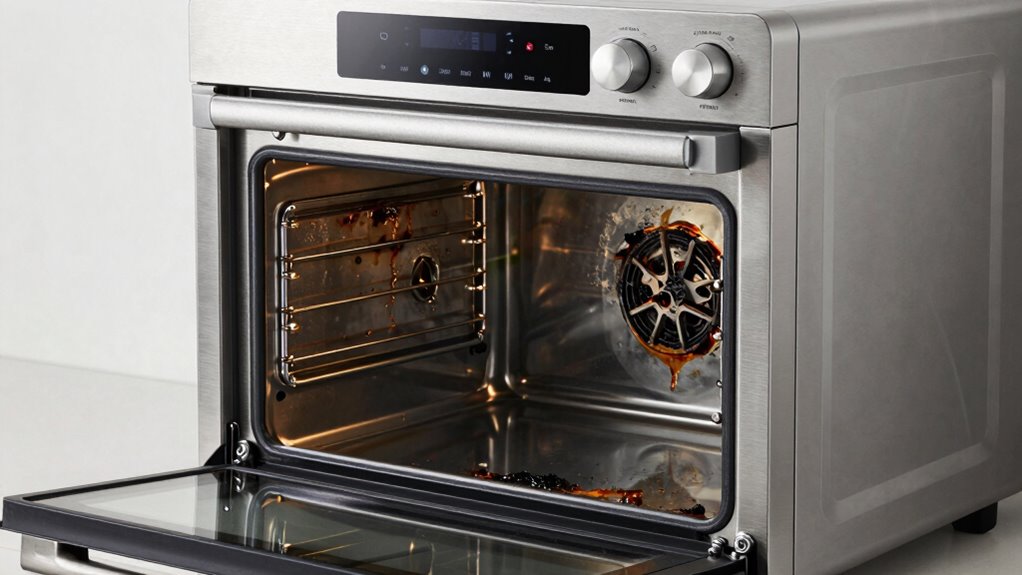
While the self-clean cycle is effective at removing many stubborn residues, it has notable limitations. One major constraint is oven placement; if your oven isn’t properly positioned, heat may not distribute evenly, reducing cleaning effectiveness. Additionally, the cycle can’t handle heavy, baked-on messes like melted plastic or thick grease buildup. You might also find that frequent cleaning isn’t always necessary or practical, as excessive use can wear down components over time. The cycle won’t remove food particles or spills that are outside the oven or on the exterior surfaces. Remember, the self-clean cycle isn’t a substitute for regular, manual cleaning. Proper oven placement and judicious cleaning frequency help maximize its benefits, but certain stubborn messes still require manual attention.
How Can You Maintain Your Oven for Better Self-Clean Results?

Maintaining your oven regularly can considerably improve the effectiveness of the self-clean cycle. To do this, you should clean up spills and food debris after each use, preventing buildup that might hinder cleaning performance. Ensuring oven safety is vital—avoid using harsh chemicals or abrasive tools that could damage surfaces. Keep the oven door and vents clear of obstructions, which helps the heat circulate evenly during cleaning. Adopting a consistent cleaning frequency, such as wiping down weekly, reduces the need for intense cleaning sessions and improves self-clean results. Regular maintenance minimizes smoke, odors, and residual grime, making the self-clean cycle more efficient. Additionally, understanding home cleaning systems can help you better maintain your oven and other appliances for optimal performance. Incorporating cleaning schedules and routine inspections into your maintenance routine can further enhance your oven’s longevity. Being aware of proper oven ventilation is crucial, as poor airflow can impede the self-clean process and cause safety concerns. Maintaining proper airflow not only benefits your oven but also contributes to a safer kitchen environment. To optimize the self-clean cycle, ensure that your oven’s ventilation system is functioning correctly and free of obstructions. By staying proactive with cleaning and safety, you’ll help your oven operate ideally and extend its lifespan.
When Should You Manually Clean Your Countertop Oven?
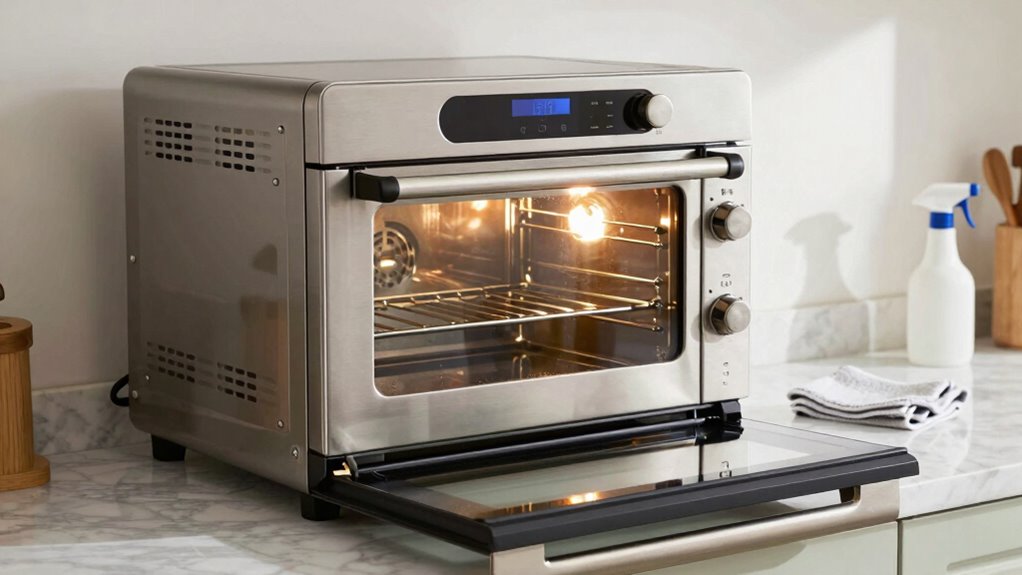
You should manually clean your countertop oven whenever you notice stubborn stains, food splatters, or grease buildup that the self-clean cycle can’t fully remove. Leftover grime can cause lingering oven odor and may compromise appliance safety if it worsens over time. Manual cleaning helps guarantee your oven remains odor-free and functions properly. It’s especially important if you see burnt-on residue or heavy spills that resist the self-clean process. Regular hand cleaning also reduces the risk of damage from harsh cleaning agents or excessive heat during the cycle. Additionally, cleaning frequency is key to maintaining optimal appliance performance and safety. Remember, a clean oven not only improves performance but also maintains safety by preventing potential fire hazards associated with grease buildup. When in doubt, manual cleaning is your best option to keep your countertop oven in prime condition, especially considering that self-cleaning limitations can leave certain residues behind. Proper appliance maintenance ensures your oven continues to operate efficiently and safely over time.
Frequently Asked Questions
Can the Self-Clean Cycle Eliminate Grease Buildup From Oven Racks?
The self-clean cycle typically won’t fully eliminate grease buildup from oven racks. For effective oven rack cleaning, you should use grease removal techniques like soaking racks in warm, soapy water or applying a baking soda paste. The self-clean cycle is better suited for interior oven surfaces, but for stubborn grease on racks, manual cleaning gives you better results and guarantees thorough grease removal.
Does the Self-Clean Cycle Remove Baked-On Food From Glass Surfaces?
Ever wonder if the self-clean cycle can handle baked-on residue on your glass surface? It generally doesn’t remove baked-on food from glass surfaces effectively because high heat isn’t enough to break down stubborn deposits. For better glass surface cleaning, use a scraper and a specialized cleaner. The self-clean cycle is mainly designed for oven interior cleanup, not for delicate or stubborn baked-on residues on glass.
Are There Safety Precautions During the Self-Cleaning Process?
During the self-cleaning process, you should guarantee oven temperature is set to the recommended level and keep the area well-ventilated. Always open windows or turn on the exhaust fan to vent smoke or fumes. Avoid leaving the oven unattended, and keep children and pets away. Follow your manufacturer’s safety instructions carefully to prevent accidents or carbon monoxide buildup, ensuring a safe and effective cleaning cycle.
How Long Does a Typical Self-Clean Cycle Usually Last?
Imagine a quiet, steamy haze filling your kitchen as the oven begins its self-clean cycle. Typically, the cleaning time lasts about 2 to 4 hours, depending on your oven model and how dirty it is. The oven cycle duration guarantees thorough cleaning, but don’t forget to stay nearby and ventilate the area. This way, you’re ready when the cycle ends, and your oven’s ready for its next use.
Is It Necessary to Remove Oven Accessories Before Cleaning?
Yes, you should remove oven accessories before running the self-clean cycle. This includes racks, pans, and any items inside the oven, as they can get damaged or cause smoke. Make sure the oven door is securely closed, and avoid using cleaning solutions during the cycle. Removing accessories helps the cycle work efficiently and prevents damage, ensuring a safer, more effective cleaning process.
Conclusion
Think of your countertop oven’s self-clean cycle as a gentle rain that washes away surface dirt, but it can’t reach every nook and cranny. To keep your oven shining like a polished gem, regular manual cleaning is essential. By combining the power of the self-clean cycle with your own TLC, you’ll prolong its life and ensure it works like a well-tuned instrument. Keep up the maintenance, and your oven will serve you faithfully for years to come.