

Uneven browning often happens because hot spots in your oven cause certain areas to heat more than others, and improper load management blocks proper air circulation. Overloading your oven or placing items too close together can intensify these hot spots, leading to uneven results. To fix this, make sure your oven is properly calibrated, avoid overcrowding, and rotate your baked goods during baking. Keep exploring for tips on how to prevent hot spots and achieve more consistent baking results.
Key Takeaways
- Hot spots in ovens cause localized higher temperatures leading to uneven browning.
- Proper oven calibration and using an oven thermometer ensure accurate heat distribution.
- Overloading the oven impedes air circulation, increasing the risk of hot spots and uneven baking.
- Rotating trays during baking helps compensate for hot spots and promotes uniform browning.
- Regular oven maintenance and correct load arrangement prevent hot spots and ensure consistent results.
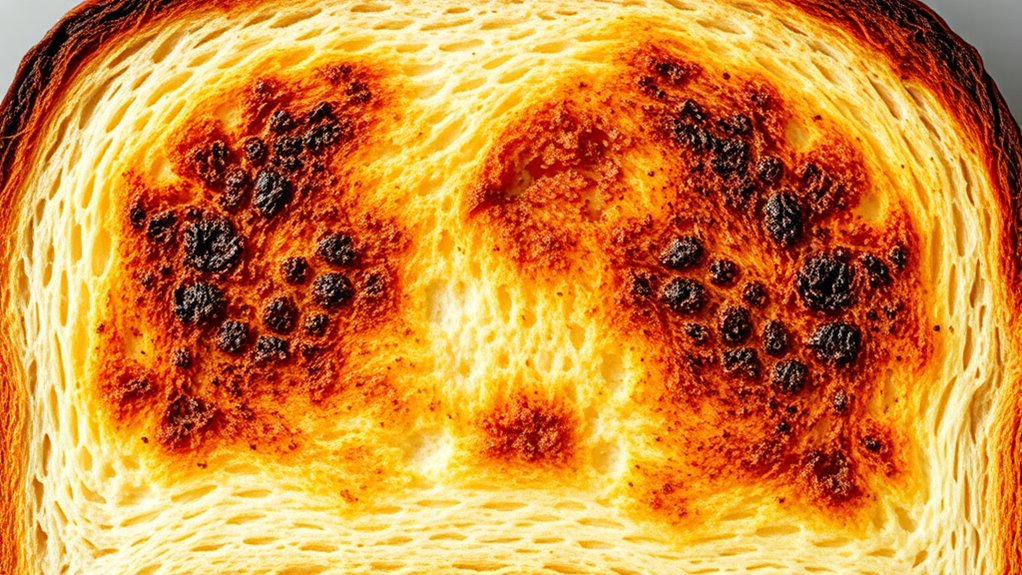
Have you ever noticed that some areas of your skin tan more than others after sun exposure? The same phenomenon can happen in your oven, leading to uneven browning of baked goods. This unevenness often results from hot spots and load issues, which are closely tied to baking temperature and oven calibration. When your oven isn’t properly calibrated, certain spots become hotter than others, causing your baked items to brown unevenly. You might see some parts overcooked or burnt while others remain underdone, and it’s usually frustrating because it’s not about your baking skills but rather about how your oven distributes heat. Additionally, understanding heat distribution can help in troubleshooting these issues more effectively. Hot spots are a common culprit because most household ovens don’t heat uniformly. Even if the oven’s temperature setting is correct, localized areas can be substantially hotter. These uneven temperatures are often caused by manufacturing inconsistencies, aging components, or the placement of heating elements. If your oven isn’t calibrated correctly, it may give off misleading temperature readings, making it seem fine when it’s not. As a result, you might set your oven to a specific baking temperature, but certain sections of your baked goods get more heat, leading to uneven browning. Load issues also play an important role. Overloading the oven can block proper air circulation, causing uneven heat distribution. When you cram multiple trays or dishes too close together, some areas may receive too much heat while others get insufficient warmth. This imbalance leads to hot spots, where those parts brown faster, and cooler zones, where baking is slow or uneven. To prevent this, it’s essential to space out your items properly and avoid overcrowding. This simple adjustment helps ensure heat circulates evenly, promoting uniform browning. Addressing uneven browning starts with verifying your oven’s calibration. You can do this by using an oven thermometer to check the actual temperature inside at the center and around different spots. If you notice discrepancies, it’s time to recalibrate your oven or have it serviced. Regular calibration ensures the baking temperature you set aligns with the actual heat, minimizing hot spots and load-related issues. Additionally, rotating your baked goods halfway through baking can help compensate for uneven heat distribution. By understanding these factors and taking proactive steps, you’ll achieve more consistent browning and better baking results every time.
Frequently Asked Questions
Can Uneven Browning Occur With All Types of Bread?
Yes, uneven browning can happen with all types of bread. When you notice this, it often affects the bread’s texture and flavor consistency. Different bread types, like dense sourdough or soft sandwich bread, can brown unevenly due to variations in dough density, oven hot spots, or baking time. To prevent this, you should monitor your oven temperature and rotate the bread during baking for a more consistent outcome.
How Do Hot Spots Develop in My Oven?
Did you know that about 60% of oven heat loss occurs through poor insulation? Hot spots develop when your oven’s heating element heats unevenly, creating areas with higher temperatures. These spots form because uneven oven insulation causes heat to concentrate in certain zones. As a result, some parts of your bread brown faster. To prevent this, verify your oven’s insulation is intact and the heating element heats evenly.
Are Certain Baking Pans More Prone to Causing Uneven Browning?
Yes, certain baking pans are more prone to causing uneven browning. Metal pans with thin or reflective surfaces, like aluminum, can heat unevenly, creating hot spots. Non-stick pans may also contribute, especially if they have warped shapes. Pans with irregular shapes or dark coatings absorb heat differently, leading to uneven baking. Choosing thick, high-quality pans made from materials like heavy-duty steel or anodized aluminum can help achieve more consistent browning.
What Role Does Ingredient Temperature Play in Browning?
Think of ingredient temperature as your secret ingredient, much like a well-tuned orchestra. When ingredients are at the right temperature, they promote an even Maillard reaction, ensuring your baked goods brown beautifully. Cold ingredients can slow down browning, while warm ones encourage it. To achieve consistent results, always bring ingredients to room temperature before baking, allowing the Maillard reaction to work harmoniously for that perfect golden crust.
Can Altitude Affect the Evenness of Browning?
Altitude effects can definitely influence the evenness of browning in baked goods. At higher altitudes, the air pressure drops, which often means you need to adapt your baking temperature to prevent hot spots or uneven browning. You might find that increasing the baking temperature slightly helps ensure more consistent browning, while also monitoring bake times closely to avoid overcooking. Always tweak your baking temperature based on altitude for best results.
Conclusion
Think of your oven as a garden, where hot spots are like patches of stubborn weeds that resist uniform growth. Just as a gardener tends carefully, adjusting and balancing your oven’s heat guarantees every fruit and vegetable blooms evenly. When you master this, your baking becomes a harmonious landscape, free of uneven browning. By tending to your oven’s quirks, you’ll cultivate perfect results every time—turning a once chaotic garden into a flourishing, flawless paradise.