
To avoid uniform textures in your air fryer, experiment with different techniques like tossing vegetables in oil and coatings for crunch, or wrapping items in foil to trap moisture and create tenderness. Vary cooking temperatures and times to develop softer or crispier results, and prevent overcrowding to guarantee even airflow. Rotating or shaking the basket helps achieve consistent texture. Keep exploring these methods, and you’ll uncover how to achieve diverse, tasty textures every time.

Get kitchen gear delivered free with Prime
- Fast, free delivery on millions of items
- Prime Video, Amazon Music and more included
- Member-only deals all year
Key Takeaways
- Vary cooking temperatures and times to achieve different textures in your meals.
- Use coatings like panko or marination to create diverse outer textures.
- Avoid overcrowding the basket to promote even airflow and prevent sogginess.
- Incorporate moisture via foil wrapping or layering to contrast crispiness and tenderness.
- Experiment with preheating and rotating food during cooking for varied textures.
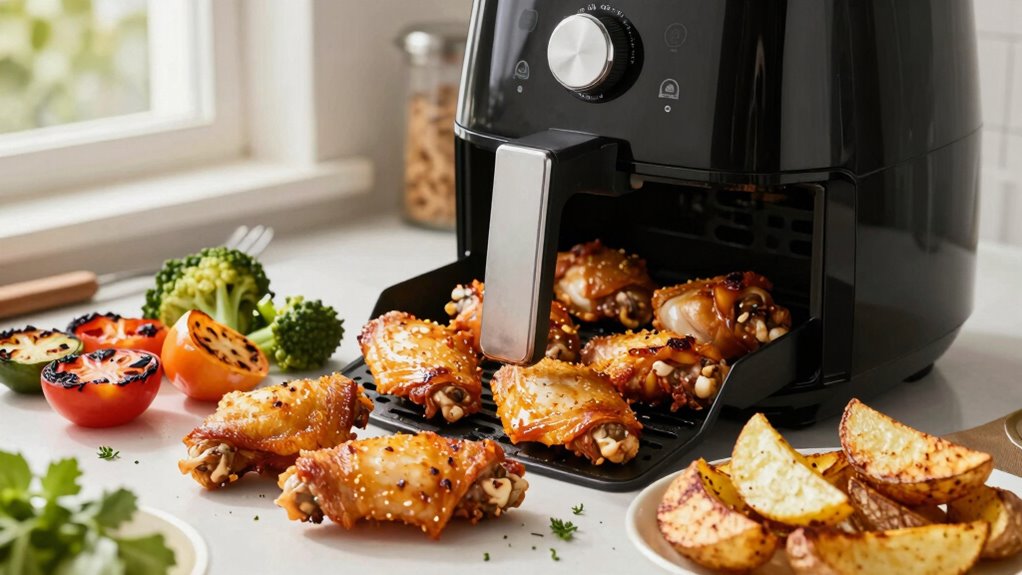
Using an air fryer is a quick way to achieve crispy, flavorful dishes, but without proper techniques, every meal can start to taste and feel the same. To keep your meals interesting and guarantee a variety of textures, you need to master different cooking techniques and understand how to vary textures in your dishes. The key is not just in setting the right temperature or cooking time but also in how you prepare and layer your ingredients. For example, if you’re cooking vegetables, tossing them with a little oil and seasoning can create a crispy exterior, but adding a coating like panko breadcrumbs can give you an extra crunch, creating a contrast in texture. Similarly, when cooking proteins like chicken or fish, experimenting with different marination times and breading can help you achieve a variety of textures, from tender and juicy to crisp and crunchy.
The way you arrange food in the air fryer basket also affects texture variety. Overcrowding can lead to uneven cooking, making some parts soggy while others become overly crispy. To avoid this, arrange your ingredients in a single layer whenever possible, allowing hot air to circulate freely. This technique ensures even crispiness and prevents one texture from dominating. Rotating or shaking the basket during cooking further helps distribute heat evenly, giving you a more consistent texture across your dish. You can also experiment with different cooking techniques, such as preheating your air fryer to create a sear or using lower temperatures for longer periods to develop a different texture profile. For instance, slow-cooking chicken at a lower temp can produce tender meat with a slightly softer exterior, contrasting with the crispiness of fried items.
Incorporating moisture into some dishes can also add another layer of texture. For example, wrapping veggies or meats in foil can trap steam, keeping parts of your meal moist while the outside crisps up. Additionally, understanding how different cooking techniques affect texture can help you craft more interesting dishes. Using techniques like marinating not only enhances flavor but can also influence the final texture of ingredients. Moreover, varying the layering methods can further diversify your dish’s mouthfeel and appearance. By mixing and matching these techniques—like coating, layering, preheating, and controlling moisture—you’ll develop a more diverse range of textures in your meals. Remember, the goal isn’t just to make everything crispy but to create a balance that excites the palate. Pay attention to how each ingredient responds to different techniques, and don’t be afraid to experiment. With a bit of practice and a focus on cooking techniques that promote texture variety, you’ll keep your meals interesting, flavorful, and perfectly textured every time you use your air fryer.
air fryer vegetable coating panko breadcrumbs
As an affiliate, we earn on qualifying purchases.
As an affiliate, we earn on qualifying purchases.
Frequently Asked Questions
Can I Use Aluminum Foil in My Air Fryer?
Yes, you can use aluminum foil in your air fryer, but you should consider aluminum alternatives for safer cooking. Make sure the foil isn’t too close to the heating element to avoid potential fire hazards. Use foil with good foil durability, and don’t block airflow, which is essential for even cooking. Properly placed, foil can help with cleanup and prevent messes without compromising your air fryer’s performance.
What Are the Best Oils for Air Frying?
Think of your cooking oil as the compass guiding your culinary journey. For air frying, choose oils with high smoke points like avocado, grapeseed, or refined olive oil, ensuring they won’t burn easily. These cooking oil varieties withstand the heat, giving your food crispness without smoke or flavor loss. By selecting the right oil, you keep your dishes flavorful and textures diverse, elevating your air frying experience beyond the ordinary.
How Do I Prevent Food From Sticking?
To prevent food from sticking, spray your air fryer basket with a light layer of cooking spray before adding ingredients. Using non-stick liners can also help, especially for delicate foods or sticky sauces. Make certain your food is dry before placing it in the basket, and avoid overcrowding to allow proper airflow. These tips help keep your meals intact and make cleanup easier, guaranteeing consistent, crispy results every time.
Is It Safe to Cook Raw Meat in an Air Fryer?
Cooking raw meat in an air fryer is as safe as crossing a busy street—if you follow proper steps. You should set the correct cooking temperature and guarantee thorough meat preparation, including seasoning and marinating if needed. Always check the internal temperature with a meat thermometer to ensure it’s cooked properly. This way, you keep your meals safe, juicy, and delicious, avoiding undercooking or overcooking.
How Do I Clean My Air Fryer Properly?
To clean your air fryer properly, start by unplugging it and letting it cool. Remove the basket and tray, then wash them with warm, soapy water or a non-abrasive sponge. Wipe down the interior with a damp cloth, making certain no food residue remains. Regular air fryer maintenance keeps it functioning safely and efficiently, supporting your cooking safety. Avoid harsh cleaners to prevent damage and guarantee your appliance stays in top condition.
Conclusion
So, next time you fire up your air fryer, remember it’s your trusty sidekick, not a one-trick pony. Mix up your ingredients, tweak your settings, and don’t be afraid to experiment—think of it as your culinary time machine, keeping your meals exciting and varied. With a little creativity, you’ll keep your taste buds happy and avoid turning every dish into a crispy, uniform masterpiece. After all, variety is the spice of life—even in the age of hoverboards!
Halloween Picks
halloween
As an affiliate, we earn on qualifying purchases.