TL;DR

Get kitchen gear delivered free — and shop member deals
- Fast, free delivery on millions of items
- Access to Prime Big Deal Days deals on October 6–7
- Prime Video, Amazon Music and more included
Livingetc describes how homeowners can ask local stone yards about leftover marble and other stone pieces for smaller renovation projects. Designers cited in the report show offcuts used for floor repairs, shelves, mirror trims and architectural details; costs, availability and suitability vary by yard and material.
Livingetc has reported that leftover marble and other stone pieces from local yards can be used in smaller renovation projects, such as shelves, windowsills and floor repairs. The report brings together the writer’s personal experience and examples from interior designers, making the case that homeowners may be able to use natural stone without buying a large slab.
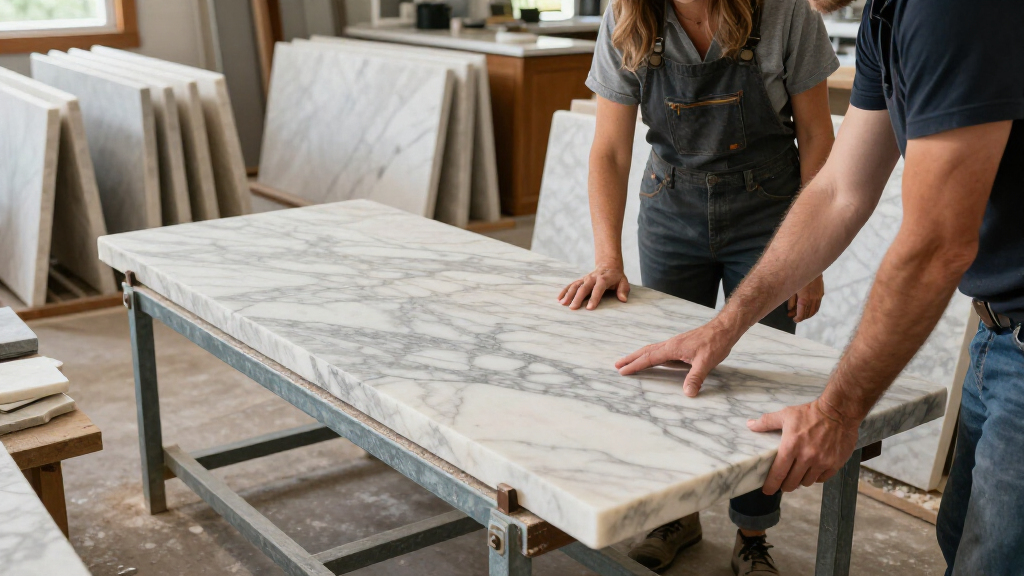
The article describes stone-yard offcuts as small or awkwardly shaped remnants left over from other jobs. Rather than going to waste, these pieces may suit projects that need a limited amount of material. The writer says they have bought offcuts in different sizes and used materials including granite, marble, travertine and quartz for shelves, windowsills, a kitchen island counter and a coffee table.
Examples in the report show several design approaches. In a renovation by Australian practice Other Architects, colorful marble scraps were used to patch areas of flooring rather than resurfacing an entire apartment. Sally Caroline used marble at a junction between timber and plaster, while designer Shona McElroy of SMAC Studio used offcuts for floating bathroom shelves and mirror trims. Alexander & CO used a bold marble feature in an entryway.
The report says stone yards often serve trade customers, but may also welcome homeowners. It advises calling ahead if a customer is unsure about visiting. The article does not provide prices, a directory of yards, or a guarantee that a particular yard will have suitable remnants.
Smaller Projects, Less Stone
Using remnants can give homeowners access to natural stone in smaller quantities, potentially avoiding the expense of purchasing a full slab for a modest feature. It can also offer a way to introduce a distinctive color or pattern in a limited area, rather than committing a whole kitchen or bathroom to a dramatic material.
The approach has a possible reuse benefit: Other Architects’ floor project, as described in the report, repurposed pieces that otherwise might have been discarded. That does not establish the overall environmental impact of buying or installing stone, which depends on factors such as sourcing, transport and processing. The practical takeaway is narrower: ask what remnants are available before assuming a project requires newly cut, full-size material.
As an affiliate, we earn on qualifying purchases.
From Yard Remnants to Home Details
The Livingetc article responds to the gap between expansive stone surfaces often seen in interior inspiration and the cost or practical demands of using natural stone across a large area. Its proposal is to use marble and other materials selectively, in small, purposeful details rather than treating a full countertop or wall as the only option.
The design examples span different functions: flooring repair, a material junction, an entryway feature, and bathroom storage and trim. Sally Knibbs, design director of Sally Caroline, says stone can have an impact when used with restraint. The examples are project-specific, however; they do not establish that offcuts are suitable for every surface, installation or household budget.
“We believe natural stone can be equally impactful when used with restraint.”
— Sally Knibbs, design director of Sally Caroline, as quoted by Livingetc
Availability and Project Costs
The report does not state how much offcuts cost, how frequently yards have them, or whether particular sizes and stone types are available in a given area. The writer’s examples reflect personal experience and selected design projects, not a survey of stone yards or a comparison of renovation costs.
It is also not clear whether every remnant will be appropriate for a homeowner’s intended use. Suitability can depend on the material, dimensions, condition and installation requirements. Readers should check measurements and ask the yard and an appropriate fabricator or installer about cutting, finishing and fitting before purchasing.
Ask Before You Visit
For homeowners interested in the idea, the report’s practical next step is to contact a local stone yard and ask whether it sells remnants to the public. Calling ahead can clarify access, current stock and whether the yard can cut or finish a piece. Shoppers can bring project measurements and photos, then confirm the stone’s suitability and installation needs before committing.
Livingetc does not announce a follow-up project or report, and the source does not identify a specific next milestone. Availability and any savings will depend on local stock and the work required to prepare and install a piece.
Key Questions
What are stone-yard offcuts?
Offcuts are leftover pieces of stone from other projects, often smaller or irregularly shaped. A yard may have marble, granite or other materials available, but stock varies.
What can marble offcuts be used for?
The Livingetc report gives examples including shelves, windowsills, mirror trims, floor repairs and decorative features. The right use depends on the piece’s size, condition and suitability for the installation.
Can homeowners visit a local stone yard?
The report says many yards focus on trade customers but may welcome homeowners. It recommends calling before visiting to check access and ask about available remnants.
Are offcuts cheaper than buying a full slab?
The report does not give prices or verify a typical saving. Ask the yard about the piece’s price and confirm any additional cutting, finishing and installation costs before deciding.
Source: rss
Halloween Picks
halloween
As an affiliate, we earn on qualifying purchases.