As an air fryer owner, you learn that balancing salt enhances flavor and crispness without making foods soggy. Using just enough oil helps achieve even browning and a crispy texture, but too much can cause sogginess. Adjust cooking times based on thickness, checking often to prevent over- or undercooking. Small tweaks in seasoning, oil, or timing can make a big difference. Keep exploring these tips to reveal even better results in your air-fried favorites.

Get kitchen gear delivered free with Prime
- Fast, free delivery on millions of items
- Prime Video, Amazon Music and more included
- Member-only deals all year
Key Takeaways
- Proper seasoning and timing are essential for achieving the desired flavor and crispness in air-fried foods.
- Using a light spray of oil promotes browning without making foods greasy or soggy.
- Adjusting salt before or after cooking enhances flavor without compromising crunch.
- Thicker ingredients require longer cooking times for optimal crispness.
- High-quality, sustainably sourced ingredients improve overall texture and flavor in air-fried dishes.
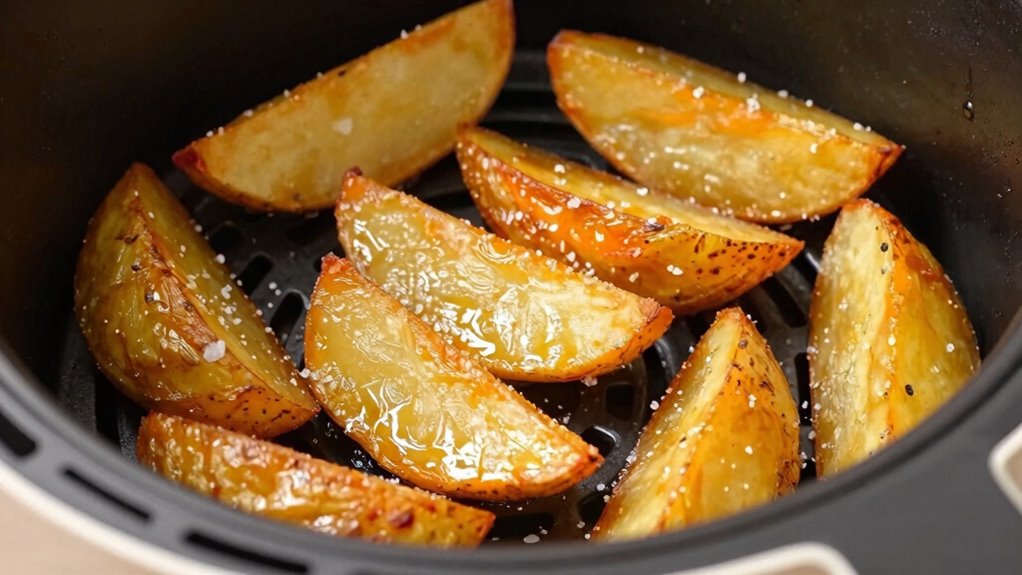
Using an air fryer can transform your cooking, but mastering how salt, oil, and crispness interact is essential to perfect results. When you start experimenting with seasoning variations, you’ll notice that the amount of salt you use can influence how your food tastes and even how it crisps up. Too much salt can make foods overly salty and dampen the desired crunch, while too little might leave flavors flat. It’s best to season lightly at first, then adjust to your preference. Remember, if you’re adding salt to raw ingredients, it can draw out moisture, impacting how the food crisps. For best results, sprinkle salt just before cooking or after cooking, depending on the dish.
Season lightly with salt before or after cooking for perfect crispness and balanced flavor.
Oil plays a vital role in achieving that satisfying crispness. Not only does it help seasonings stick, but it also promotes even browning. A light coating of oil can enhance texture without making the food greasy. When you’re trying different recipes, consider how varying your oil amount affects the outcome. Using too much can lead to sogginess, while too little might result in uneven browning. For some foods, a spray of oil is enough, especially when you’re aiming for a healthier, less greasy finish. Keep in mind that different oils have different smoke points, so choosing the right one can prevent burning and help you fine-tune crispness. Additionally, selecting oils with appropriate smoke points can prevent undesirable flavors or burning during cooking.
Crispness, the hallmark of a good air-fried dish, depends heavily on proper cooking time adjustments. As you learn what works for various foods, you’ll discover that small tweaks in cooking time can make a big difference in texture. For example, thicker cuts of vegetables or proteins may need a longer cook, while thinner slices or smaller items cook faster and crisp up quicker. Don’t be afraid to experiment with timing—checking on your food periodically helps you avoid overcooking or undercooking. Keep notes of your adjustments so you can dial in the perfect crispness for each dish. Additionally, understanding how biodiversity influences food quality can inspire more sustainable choices in your preparation and ingredient sourcing. Recognizing the importance of ingredient quality can further improve the results of your air frying endeavors.
In the end, understanding how salt, oil, and cooking time adjustments work together turns you into a more confident air fryer chef. You’ll learn that balancing seasoning variations with precise timing and oil application leads to consistently delicious, crispy results. It’s a process of trial and error, but with each attempt, you get better at tailoring your approach to suit every recipe. The key is paying attention to how your ingredients react and making small modifications, so your air-fried creations are always perfectly seasoned and irresistibly crisp.
As an affiliate, we earn on qualifying purchases.
Frequently Asked Questions
Can I Cook Frozen Foods Directly in My Air Fryer?
Yes, you can cook frozen foods directly in your air fryer. Just guarantee frozen food safety by avoiding overcrowding, which helps it cook evenly. Use air fryer seasoning techniques like tossing the food with a little oil or spices before cooking to enhance flavor. Adjust the cooking time since frozen items typically need a few extra minutes. Keep an eye on your food to prevent overcooking, and enjoy crispy, delicious results!
How Do I Prevent Food From Sticking Without Extra Oil?
Your air fryer’s non-stick surface is a game-changer, so you don’t need extra oil to prevent sticking. Instead, try seasoning alternatives like herbs, spices, or a light spray of non-stick spray. These options keep your food from clinging while maintaining crispness. Using non-stick sprays evenly coats surfaces, ensuring easy release. With these tips, your meals stay perfect without excess oil, making every bite irresistibly crispy and healthy.
What’s the Best Type of Salt for Air Frying?
You should use fine sea salt or kosher salt for air frying, as they distribute evenly and stick well. If you’re looking for seasoning alternatives or salt substitutes, consider using herbs, spices, garlic powder, or smoked paprika to boost flavor without added salt. These options enhance crispness and taste, and help you control sodium intake. Experimenting with different seasonings can make your air-fried dishes more exciting and healthier.
How Do I Achieve Maximum Crispiness Without Overcooking?
To achieve maximum crispiness without overcooking, focus on seasoning techniques that evenly coat your food with just a light layer of oil and salt. Use precise temperature control—set your air fryer to the ideal temperature for your dish, usually between 375-400°F. Keep an eye on cooking times, checking periodically to prevent overcooking. This way, you get crispy results without sacrificing texture or doneness.
Are There Safety Concerns With Using Too Much Oil in an Air Fryer?
Using too much oil in your air fryer can pose safety concerns and impact health considerations. An excess of oil may cause smoke, fires, or damage your appliance. Studies show that overusing oil increases calorie intake and fat consumption, which isn’t ideal for health. To stay safe and healthy, use minimal oil—just enough to achieve crispness—ensuring proper oil safety and reducing health risks while enjoying your favorite crispy foods.
Conclusion
Now that you’ve mastered balancing salt and oil, your air fryer creations become like a well-orchestrated symphony—each element playing its part to achieve perfect crispness. Remember, like a painter adding the final strokes, your choices transform simple ingredients into culinary art. With each crispy bite, you’re crafting a masterpiece, turning everyday snacks into extraordinary delights. Keep experimenting, and soon, your kitchen will echo with the delightful harmony of flavor and texture, just like a well-loved song.
Halloween Picks
halloween
As an affiliate, we earn on qualifying purchases.