You don’t need a traditional steamer basket to cook dumplings. Instead, you can use household items like a metal colander or fine mesh sieve that fits over a pot, or place a heatproof plate on crumpled foil or a small rack inside a pot filled with a few inches of water. You can also create a DIY steamer with aluminum foil and a lid, or use a microwave-safe container with some water. Keep exploring for more simple solutions.
Key Takeaways
- Use household items like a metal colander, sieve, or heatproof plate elevated with foil or a rack inside a pot.
- Create a DIY steamer by placing crumpled aluminum foil balls at the bottom, then set a heatproof dish or plate on top.
- Employ microwave-safe containers with a small amount of water and a vented cover for quick, effective steaming.
- Ensure dumplings are placed on parchment-lined surfaces above boiling water, with the setup covered tightly to trap steam.
- Monitor water levels to prevent boiling dry and maintain a gentle simmer for even, thorough cooking.
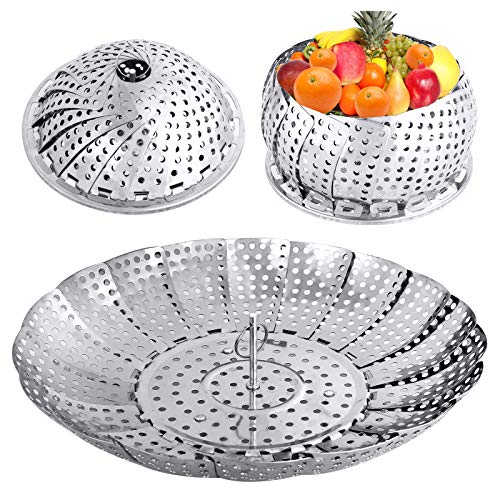
Veggie Vegetable Steamer Basket, Folding Steaming Basket, Metal Collapsible Stainless Steel Steamer Basket Insert for Cooking Food, Expandable Fit Various Size Pot(5.9" to 9.8") YLYL
- COLLAPSIBLE STEAMER BASKET: Veggie vegetable steamer basket collapsed…
- MULTIPLE FUNCTIONS FOLDING STEAMING BASKET: Our veggie steamer basket can…
- FOOD GRADE STAINLESS STEEL: Our metal stainless steel steamer…
As an affiliate, we earn on qualifying purchases.
As an affiliate, we earn on qualifying purchases.
Using a Metal Colander or Sieve
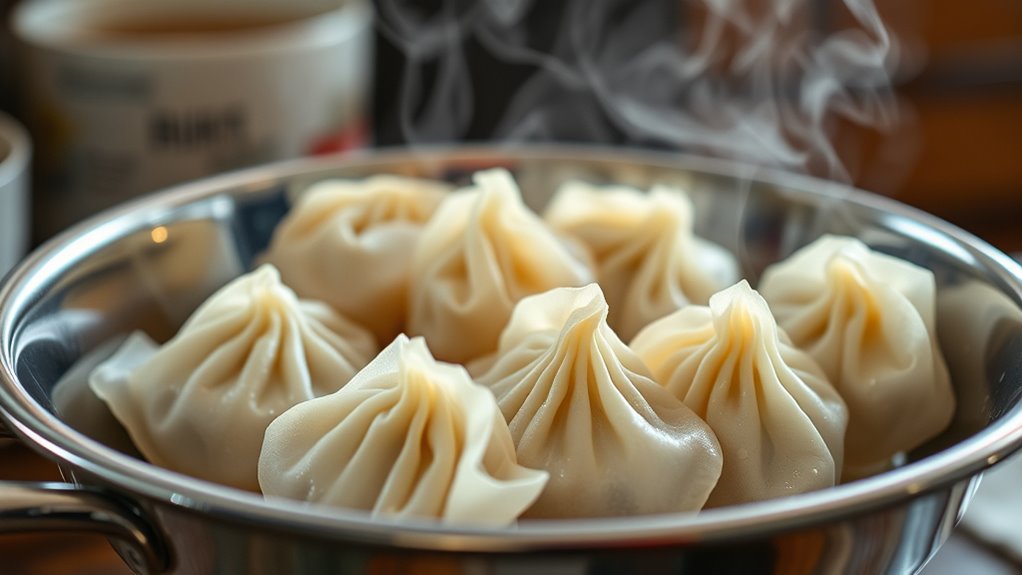
If you don’t have a traditional steamer basket, a metal colander or sieve can be a handy substitute. A metal colander works well because it’s sturdy and allows steam to circulate freely around your dumplings. Just verify it fits securely over a pot with a lid or aluminum foil to trap the steam. Sieve alternatives like a fine mesh or a small-mesh strainer can also work, especially if they’re heat-safe and fit snugly on your pot. Place the dumplings on a parchment-lined or greased surface inside the colander or sieve, then set it over boiling water. Cover the top with a lid or foil to trap the steam and cook your dumplings evenly. This simple method makes steaming accessible without specialized equipment. Ensuring proper heat distribution helps achieve evenly cooked dumplings and is an important aspect of effective steaming techniques.
Repurposing a Stovetop Steamer Insert
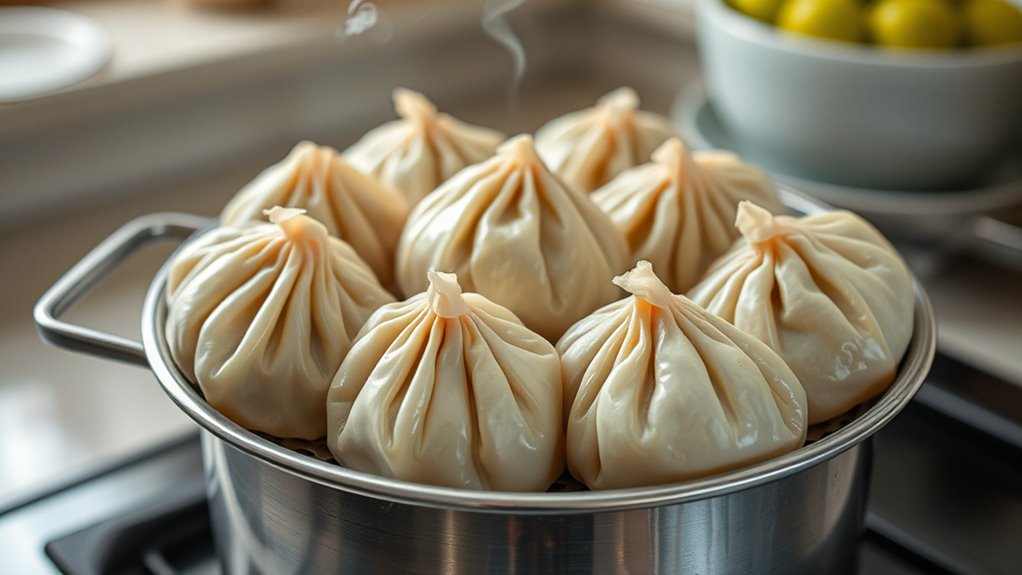
A stovetop steamer insert offers an easy way to steam dumplings without a dedicated steamer basket. To repurpose it, verify the insert fits securely over your pot, acting as a steamer basket alternative. Fill the pot with a few inches of water, making sure it doesn’t touch the insert. Bring the water to a simmer, then place your dumplings inside the insert, spaced apart. Cover the pot with a lid to trap steam, and cook until the dumplings are tender. This method aligns with simple dumpling steaming techniques, eliminating the need for specialized steamer basket alternatives. Keep an eye on the water level to prevent it from boiling dry. This approach provides an effective, low-cost solution for steaming dumplings on your stovetop.
Employing a Heatproof Plate or Baking Dish in a Pot
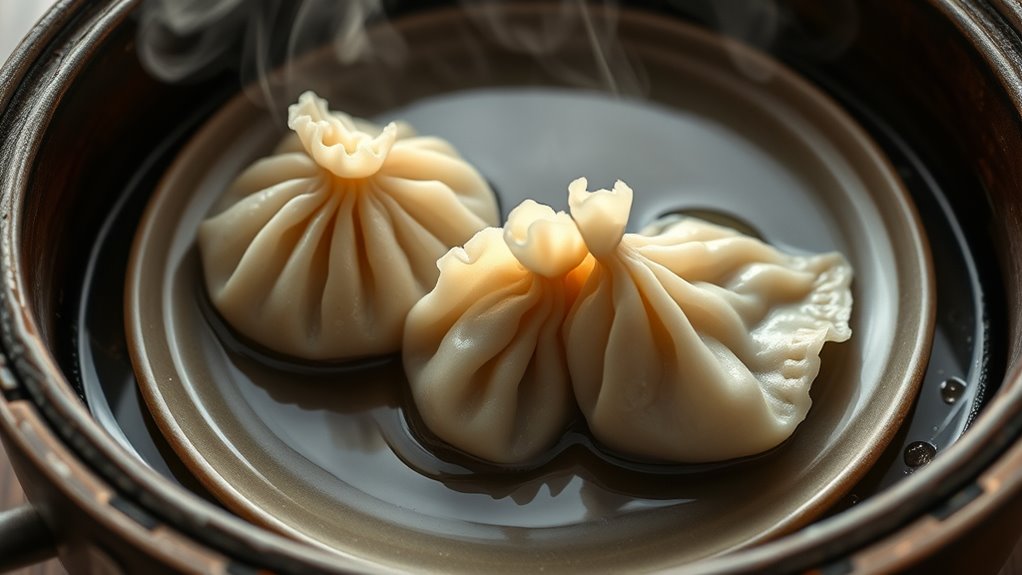
Choosing the right heatproof plate or baking dish is key to successful steaming. You’ll want one that fits comfortably inside your pot without touching the water. Properly positioning the dish guarantees even steam circulation and perfect dumplings every time. Using a self-watering plant pot concept, ensure your dish maintains a balanced moisture environment for optimal steaming.
Choosing the Right Plate
Selecting the right plate is essential for steaming dumplings without a steamer basket. Your choice of plate affects even heat distribution and prevents sticking. When considering plate selection, material considerations are key—glass, ceramic, or metal plates each have pros and cons. Using a heatproof material ensures safety and durability during steaming.
| Material | Heat Resistance | Ease of Cleaning |
|---|---|---|
| Glass | High | Easy, transparent |
| Ceramic | Very high | Moderate |
| Metal | Very high | Easy, durable |
Use a heatproof plate that can withstand steam temperatures. Avoid plastic or thin metal that warps or melts. Proper material considerations ensure your dumplings steam evenly and come out perfectly cooked.
Properly Positioning the Dish
To guarantee your dumplings cook evenly when steaming without a steamer basket, properly positioning your heatproof dish inside the pot is key. Use a sturdy, heatproof plate or baking dish that fits inside your pot without touching the sides or bottom directly. Place a few inches of water in the pot, ensuring it doesn’t touch the dish. Elevate the dish slightly by adding a small rack or crumpled foil underneath, preventing direct contact with boiling water. This ensures even heat distribution and prevents the dish from cracking. Always prioritize kitchen safety—avoid overfilling water and monitor the steam to prevent boiling over. Proper positioning is essential for consistent cooking and maintaining safe cooking techniques throughout the process. Additionally, understanding cooking techniques can help you achieve perfect results every time.
Crafting a DIY Steamer With Aluminum Foil and a Lid
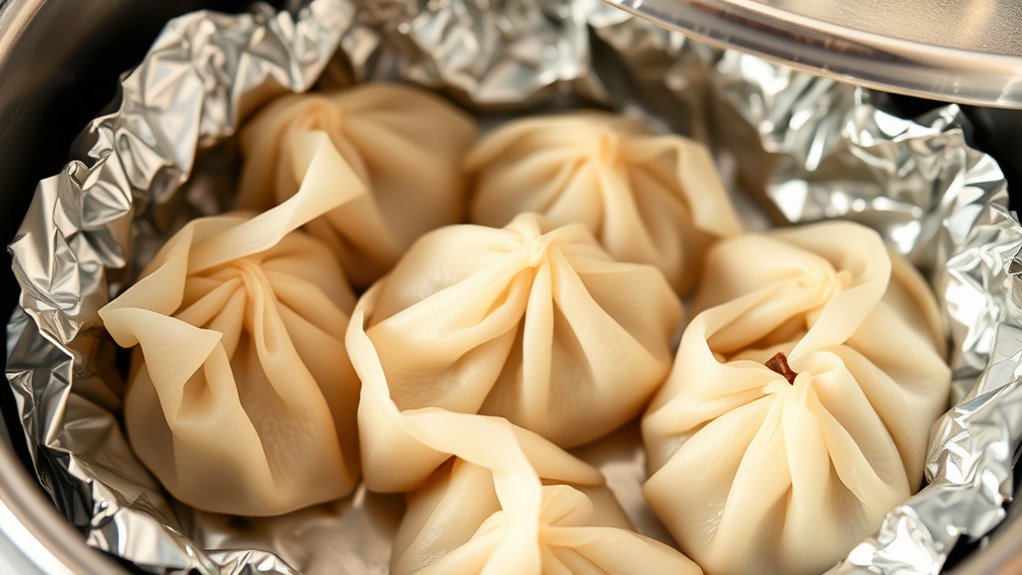
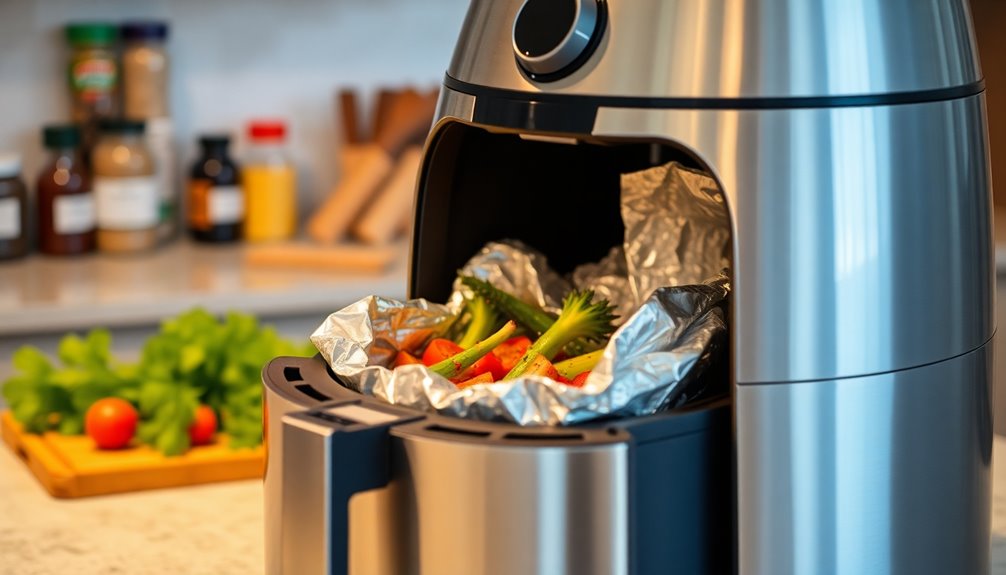
If you don’t have a traditional steamer basket, you can easily create a makeshift steamer using diy aluminum foil and a makeshift lid. To do this, crumple several layers of aluminum foil into a ball, then flatten it into a disc that fits inside your pot. Place the foil disc at the bottom, ensuring it doesn’t touch the water directly. Next, set a heatproof plate or a small rack on top of the foil, creating a platform for your dumplings. Cover the top tightly with your makeshift lid, which can be a large plate or another piece of foil folded over and secured with clips or a rubber band. This setup traps steam effectively, allowing you to steam your dumplings without a traditional steamer basket. Making sure the water level stays below the steaming surface prevents boiling over and maintains consistent steam is key to successful steaming.
Utilizing a Microwave-Safe Steaming Method
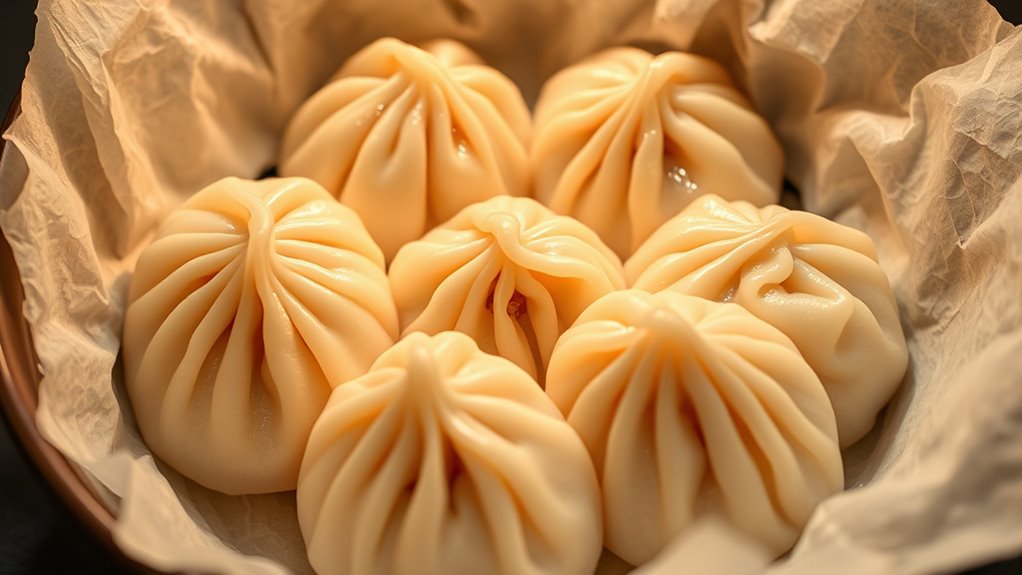
Using your microwave offers a quick and convenient way to steam dumplings without any special equipment. Instead of traditional steamer basket alternatives, you can use microwave-safe containers like a glass bowl or a ceramic plate with a microwave-safe cover or plastic wrap. To prevent water from spilling or dumplings from sticking, add a small amount of water to the bottom of the container—about a quarter cup—and place a microwave-safe plate or lid on top, leaving a small vent for steam escape. Microwave steaming tips include cooking on medium power in short intervals, typically 1-2 minutes at a time, checking for doneness. This method guarantees your dumplings stay moist and tender, all without a traditional steamer basket.
Making a Makeshift Steamer Using a Pot and a Wire Rack
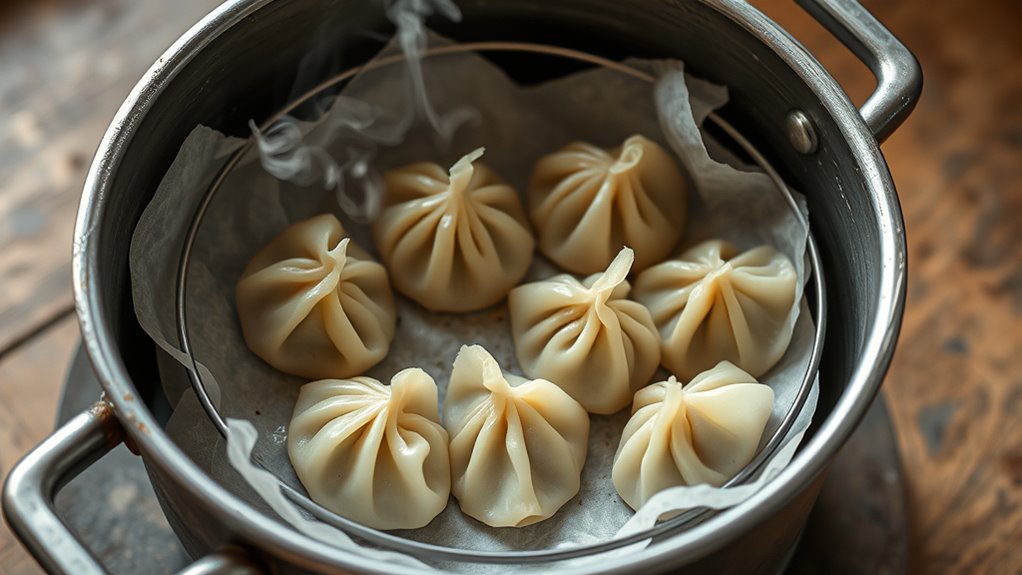
To make a makeshift steamer, start by selecting a sturdy pot that fits your dumplings comfortably. Place a wire rack inside the pot, making sure it’s stable and elevated above the water level. Proper preparation guarantees even steaming and prevents your dumplings from sitting in water. Using a portable camping stove or heat source can make the steaming process more convenient and controlled.
Choosing the Right Pot and Rack
Choosing the right pot and rack is essential for steaming dumplings without a traditional steamer basket. Start with a sturdy, medium-sized pot that fits comfortably on your stove, ensuring it’s deep enough to hold water without touching the rack. When selecting a pot, consider its heat distribution and stability. For rack placement, use a heat-resistant wire rack or a metal trivet that fits inside the pot with enough clearance to keep dumplings above the water. The rack should be stable and allow steam to circulate evenly around the dumplings. Proper pot selection and rack placement ensure consistent steaming, preventing the dumplings from sitting in water or sticking to each other. This setup provides a reliable makeshift steamer for perfectly cooked dumplings. Additionally, choosing the right steaming equipment can greatly improve the overall cooking process and results.
Preparing for Even Steaming
Once you’ve selected a sturdy pot and a stable wire rack, the next step is to prepare your makeshift steamer so it heats evenly. Place a layer of parchment paper or cabbage leaves on the wire rack to prevent sticking. Arrange your dumplings with enough space to avoid touching, which promotes even cooking. Make sure the dumpling dough is sealed tightly to prevent steam from seeping in and making the dough soggy. Add water to the pot below the rack, ensuring it doesn’t touch the dumplings. Cover the pot with a tight-fitting lid or foil to trap steam. Use steady steaming techniques by maintaining a consistent simmer, ensuring the heat is gentle. This setup helps your dumplings steam evenly, resulting in perfectly cooked dumpling dough every time.
Using a Bamboo Steamer Substitute With Common Household Items
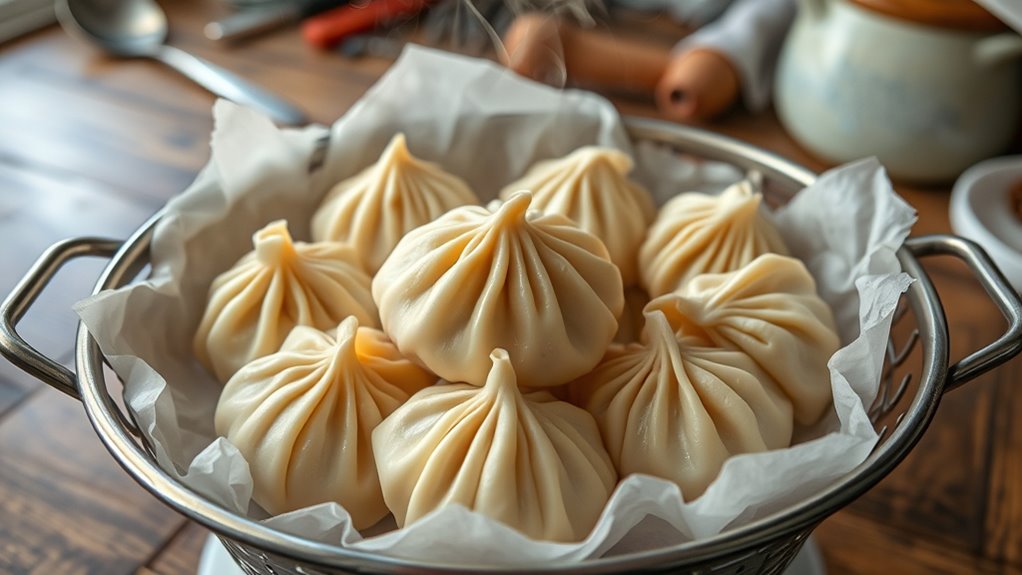
If you don’t have a bamboo steamer, you can easily create a makeshift steamer using common household items. This approach allows you to enjoy the authentic flavor of steamed dumplings without traditional bamboo. To do this, find a heatproof bowl or plate that fits inside a larger pot. Place a few crumpled aluminum foil balls or a heat-safe rack at the bottom to elevate the bowl, preventing direct contact with boiling water. Cover tightly with a lid or aluminum foil to trap steam. Imagine the aroma of your favorite dumplings filling your kitchen, bringing comfort and satisfaction. Using sound vibrations and frequencies similar to traditional healing practices, you can enhance the steaming process by creating a more consistent and gentle heat environment.
- Feel the joy of crafting a simple, effective steaming setup at home
- Recreate the authentic flavor of traditional bamboo steaming
- Save money while still enjoying delicious, tender dumplings
- Experience the satisfaction of improvising with household items
Frequently Asked Questions
Can I Steam Dumplings Without Any Special Equipment?
Yes, you can steam dumplings without special equipment. Simply use a heatproof plate or a metal colander placed over a pot with boiling water. Cover tightly and steam until cooked. Focus on good dumpling wrapping techniques to prevent leaks, and experiment with filling variations for flavor. Make certain the dumplings don’t touch the water, and keep an eye on the steam to ensure they cook evenly.
Are There Alternative Methods for Steaming Dumplings Quickly?
You can steam dumplings quickly using alternatives like microwave steaming or oven steaming. For microwave steaming, place dumplings on a microwave-safe plate with a damp paper towel over them and microwave for a few minutes. For oven steaming, set your oven to a low temperature, put dumplings in a covered dish with a bit of water, and bake until cooked through. Both methods save time and don’t require a traditional steamer basket.
Will Homemade Steamers Affect Dumpling Flavor or Texture?
Imagine your kitchen as a stage, where your homemade steamer acts as the magic curtain. Using a homemade steamer won’t compromise the dumpling aroma or texture preservation. It’s like an artist’s brush — the quality of tools influences the masterpiece, but your skill shines through. As long as you maintain proper steaming techniques, your dumplings will have that delightful aroma and tender texture, making every bite a culinary performance.
How Do I Prevent Dumplings From Sticking During Steaming?
To prevent your dumplings from sticking during steaming, make certain your dough has good elasticity by kneading it well. Use parchment paper or a clean cloth underneath the dumplings, and verify the water temperature is just right—not boiling too vigorously. This helps maintain the dough’s elasticity and prevents sticking. Keep an eye on steam levels, and avoid overcrowding, so each dumpling has enough space and stays intact.
Can I Reuse Household Items for Steaming Multiple Times?
You can definitely reuse household items for steaming multiple times, making your process more eco-friendly and budget-conscious. Reusable cookware like metal or silicone steamers, or even makeshift alternatives like a colander or a heat-safe plate, serve as great options for alternative steaming. Just make certain they’re durable, food-safe, and fit well over your pot. Reusing these items not only saves money but also reduces waste, turning everyday household items into effective steaming tools.
Conclusion
Did you know that steaming dumplings at home can reduce sodium intake by up to 30% compared to fried options? With these simple alternatives, you can easily enjoy perfectly steamed dumplings without a traditional steamer basket. Whether you use a colander, microwave, or DIY setup, you’ll save time and money while maintaining delicious results. So go ahead—get creative in your kitchen and elevate your dumpling game with just household items!