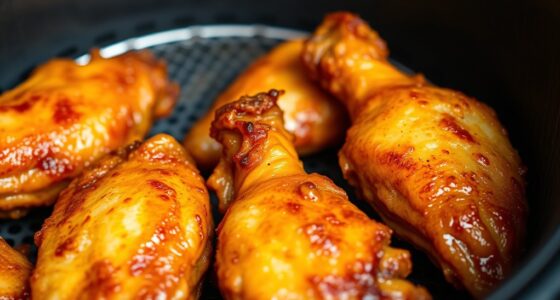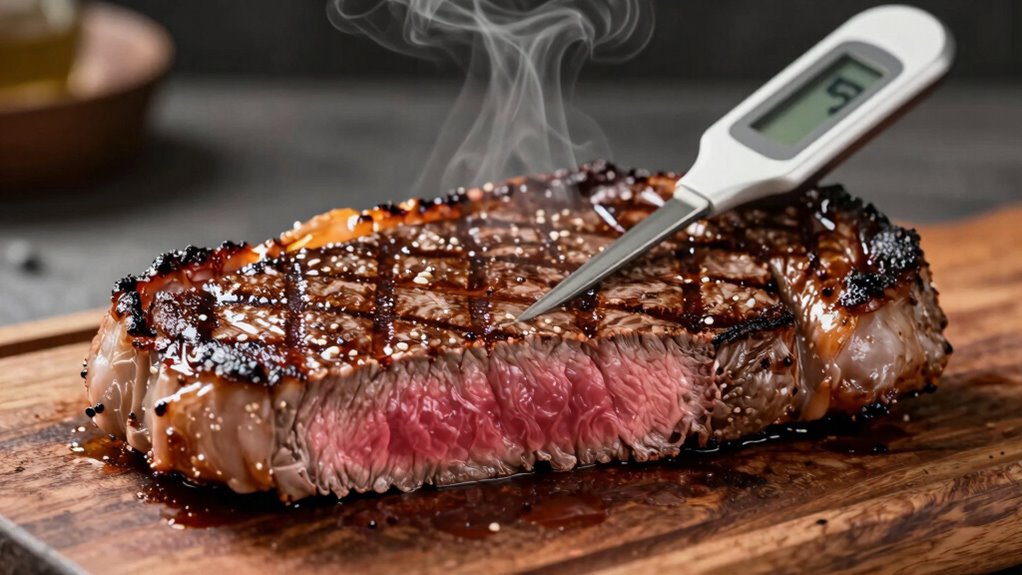
To think about doneness without guessing, pay attention to visual, tactile, and aromatic cues. Notice changes in color, texture, and smell as food cooks—vegetables become tender and fragrant, meats develop richer aromas, and grains fluff up. Use your sense of touch to test firmness and feel for the right consistency. With practice, you’ll recognize these signs more naturally. Keep exploring, and you’ll discover how to cook perfectly without relying solely on timers.

Get kitchen gear delivered free — and shop member deals
- Fast, free delivery on millions of items
- Access to Prime Big Deal Days deals on October 6–7
- Prime Video, Amazon Music and more included
Key Takeaways
- Develop sensory awareness by regularly tasting, smelling, and feeling your food at different cooking stages.
- Learn specific visual and texture cues for each ingredient to recognize doneness confidently.
- Understand how flavor and aroma evolve during cooking to signal readiness.
- Use your understanding of heat transfer and food behavior to anticipate changes without relying solely on timers.
- Practice and experience refine your intuition, allowing you to judge doneness accurately through sensory cues.
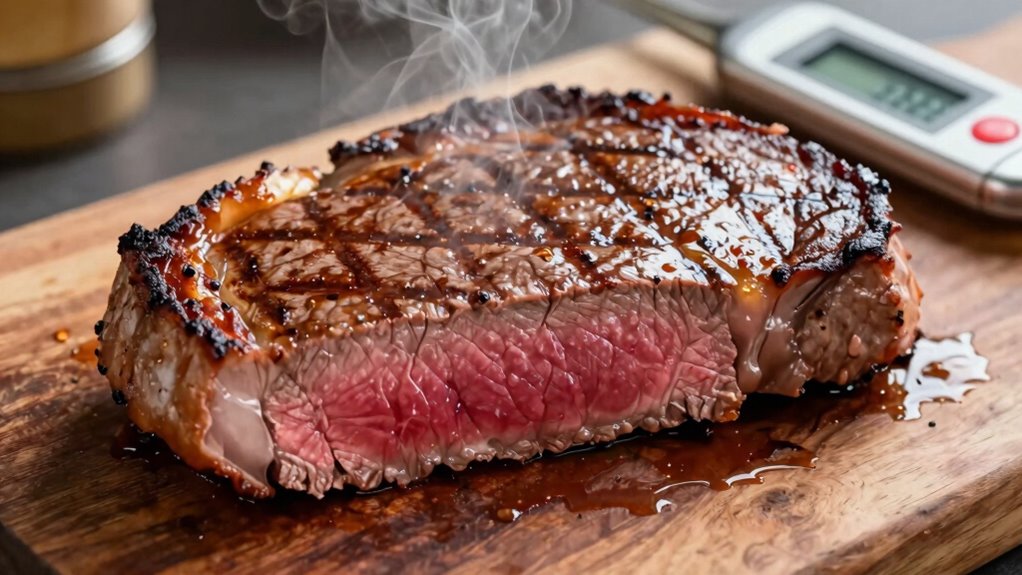
Have you ever wondered how to tell when your food is perfectly cooked? It’s a common question, and the answer isn’t always straightforward. Instead of relying on guesswork, you can develop a better sense of doneness by paying attention to how flavors and textures evolve during cooking. When you understand these changes, you’ll gain confidence in achieving consistently perfect results.
Flavor development is a key indicator of doneness. As food cooks, its natural flavors intensify and transform. For instance, vegetables become sweeter as their sugars caramelize, and meats develop richer, more complex tastes through the Maillard reaction. When you notice a shift in aroma or taste—like a more fragrant smell or a deeper, more savory flavor—it’s often a sign that your dish is nearing readiness. Tasting at different stages can help you recognize these flavor milestones, so you don’t have to rely solely on time or visual cues. Over time, you’ll start to associate specific aroma and flavor profiles with perfect doneness, making it easier to judge future dishes. Developing an intuitive sense of doneness can significantly improve your cooking results and confidence.
Flavor changes like caramelized vegetables and richer meats signal your dish is nearly done.
Texture changes are equally important clues. As foods cook, their structure shifts—vegetables soften, proteins firm up or become tender, and grains become fluffy. You can often feel these changes through touch or by checking with a fork or knife. For example, when roasting potatoes, you’ll notice their exterior becomes crispy while the interior turns creamy and tender. With meats, a firm but yielding texture suggests it’s cooked through, while a mushy or overly soft feel might mean overcooking. Paying attention to these tactile cues helps you avoid undercooking or overcooking, ensuring your food has the perfect bite. Recognizing cooking cues through experience allows you to refine your timing and avoid relying solely on external tools. Additionally, understanding how heat affects food structure can help you anticipate these changes more accurately. Understanding heat transfer and how it influences cooking stages can also improve your ability to judge doneness and prevent common errors.
Combining awareness of flavor development and texture changes allows you to cook with greater precision. Instead of watching a clock, you listen to your food’s signals. This approach also encourages you to trust your senses rather than solely relying on external tools or timers. Over time, you’ll develop an intuitive sense of doneness, making cooking more enjoyable and less stressful. Remember, every ingredient and method has its unique cues, so stay observant and curious. With practice, you’ll learn to read your food’s signs effortlessly, resulting in dishes that taste just right and have the ideal mouthfeel. So, next time you cook, focus on how your food smells, tastes, and feels—these clues will become your best guide to perfect doneness.
As an affiliate, we earn on qualifying purchases.
Frequently Asked Questions
Can I Use a Food Thermometer Instead of Visual Cues?
Yes, you can definitely use a food thermometer instead of relying solely on visual cues. A digital probe is especially useful for precise readings, ensuring your food reaches the perfect doneness. Just make sure your oven is properly calibrated to avoid inaccurate temperatures. Using a thermometer takes the guesswork out, giving you confidence that your meat, baked goods, or other dishes are cooked safely and perfectly every time.
How Does Altitude Affect Cooking Doneness?
Altitude affects cooking doneness because higher elevations lower the boiling point of water, making foods take longer to cook. You should make altitude adjustments by increasing cooking times or using a pressure cooker. At higher altitudes, water boils at lower temperatures, so foods like pasta or rice need more time to reach doneness. Keep an eye on texture and use a thermometer to guarantee foods are cooked thoroughly despite these changes.
Are There Specific Signs for Doneness in Different Meats?
You can tell meat’s done by observing its meat texture and color indicators. For beef, look for a firm texture and a pink to brown hue, depending on your preferred doneness. Chicken should be firm with clear juices, while pork reaches a firm texture and a slight blush of pink. Fish turns opaque and flakes easily. Use a thermometer for precise results, but these signs help you gauge doneness confidently.
What Role Does Resting Time Play in Meat Doneness?
Resting time plays a surprisingly essential role in meat doneness. As you let the meat sit, carryover cooking continues, thanks to residual heat, nudging the internal temperature upward. Ironically, that juicy, perfectly cooked piece you crave hinges on patience. Without resting, you risk losing moisture and overcooking. So, give your meat a break, and it’ll reward you with ideal doneness, flavor, and tenderness.
How Do Cooking Methods Influence Doneness Indicators?
Cooking methods directly influence doneness indicators through cooking precision and sensory evaluation. For example, grilling quickly sears meat, creating a crust that signals doneness, while slow roasting develops tenderness and color cues. You should rely on sensory evaluation—like texture, color, and aroma—to gauge doneness accurately, as different methods produce distinct indicators. Adjust your approach based on the cooking method to achieve perfect results consistently.
Conclusion
By understanding the signs of doneness, you trust your instincts rather than guesswork. For example, imagine you’re baking chicken; instead of relying solely on time, you check the juices run clear and the meat’s firm. Over time, you’ll develop a feel for perfect doneness, making cooking more intuitive. Remember, patience and observation are your best tools—soon, you’ll cook with confidence and never rely on guesswork again.
Halloween Picks
halloween
As an affiliate, we earn on qualifying purchases.